
Safety
General information, not medical advice
Your prescriber and the leaflet in your pack know your situation. This page does not.
- Follow your prescriber and the leaflet
- Don't start, stop, or change a dose on your own
- Doses and warnings differ by country and product
Vincristine Injection: Uses, Dosage, Side Effects, Precautions and Alternates
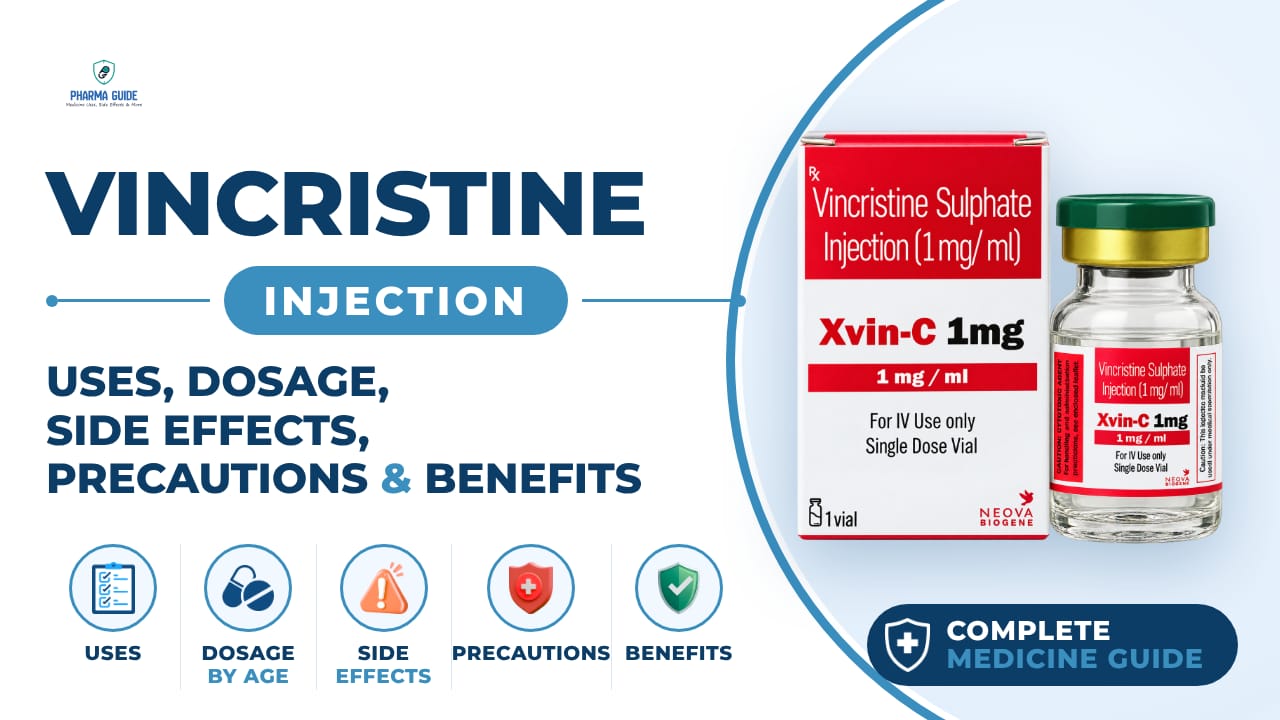
| Generic name | vincristine sulfate |
|---|---|
| Drug class | Vinca alkaloid |
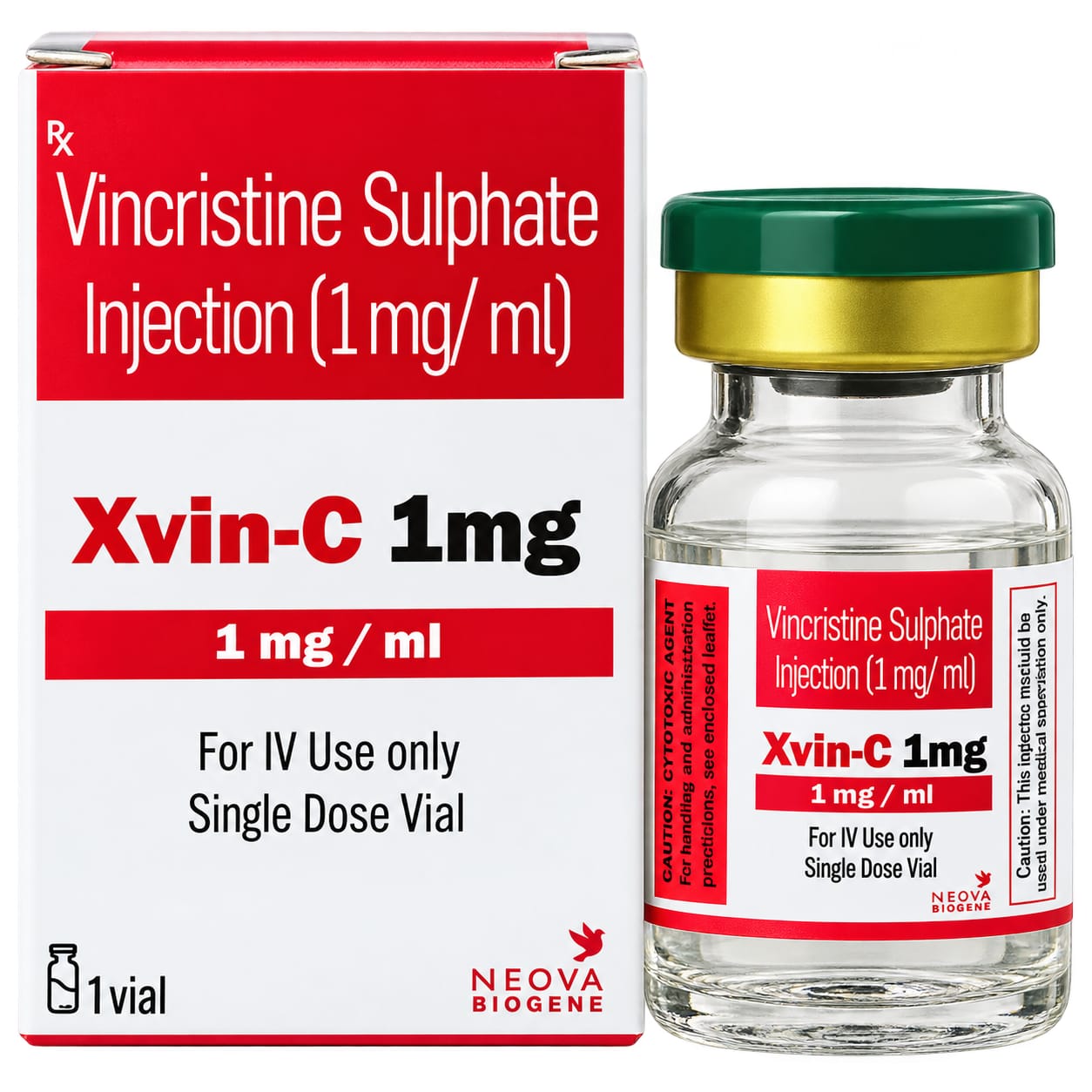
| Forms | Injection (solution in a vial) |
Quick overview
Vincristine Sulfate Injection is a chemotherapy medicine made from an ingredient found in the periwinkle plant. It is used to treat several types of cancer and is given only as an injection into a vein, administered by a doctor or nurse. It is usually given as part of a weekly treatment course, often alongside other anti-cancer medicines.
What is Vincristine Injection
Vincristine Sulfate Injection is a chemotherapy medicine made from an ingredient found in the periwinkle plant. It is given to treat several types of cancer and is only given by injection into a vein by a doctor or nurse.
Vincristine Injection uses
- Acute leukaemia
- Hodgkin's disease
- Non-Hodgkin's disease
- Rhabdomyosarcoma
- Neuroblastoma
- Wilm's tumour
- Bone cancer
- Mycosis fungoides
- Ewing's sarcoma
- Uterine or cervical cancer
- Breast cancer
- Malignant melanoma
- Lung cancer
- Gynaecological childhood tumours
Benefits of Vincristine Injection
- Vincristine stops the cancer cells growing and eventually kills them, which can slow or stop tumour growth.
- It is often used alongside other anti-cancer medicines because, at recommended doses, it does not cause major bone-marrow suppression.
- Used in treatment regimens for certain leukemias
- Used for certain lymphomas
- Used in several pediatric solid-tumor chemotherapy protocols
How Vincristine Injection works
Vincristine works by stopping the structures inside cancer cells that are needed for them to divide. This blocks the cells from splitting into two new cells at a key stage of division, which stops the cancer from growing.
Vincristine Injection dosage
This medicine is given as a slow injection into a vein and must only be given by a doctor or nurse. It is usually given as a course of injections at weekly intervals. Several courses of treatment may be needed depending on how you respond. A new treatment course should not be given until your blood cell counts return to acceptable levels and any side effects have settled. Drink extra fluids on treatment days to help support kidney function.
| Age group | Dose |
|---|---|
| Children >10 kg | Usually 1.5–2 mg/m² IV once weekly |
| 18–64 years | Usually 1.4 mg/m² IV once weekly, according to the cancer protocol |
Available forms and strengths
- Injection (solution in a vial)
Side effects of Vincristine Injection
Common
- Hair loss
- Diarrhoea, nausea, vomiting
- Loss of appetite, weight loss
- Headache
- Unusual perspiration
- Increased sunburn
- Tingling or burning sensation
- Inflamed gums
- Impotence or reduced sexual drive
- Dizziness or light-headedness
- Constipation
- Loss of feeling, hearing or taste
- Difficulty walking
- Muscle wasting, aches or spasms
- Mouth ulcers
- Changes in urination frequency
- Jaw, bone, limb or back pain
Serious
- Vision problems such as blurred or double vision, or temporary blindness
- Trouble sleeping, depression, nervousness, hallucinations, confusion or personality changes
- Tightness or pain in the chest, neck, back or arms, and abnormal heartbeat
- Signs of an allergic reaction such as itchy rash, high temperature, swelling of the face, lips, tongue or throat, and difficulty breathing
- Signs of infection such as fever, chills, cough, hoarseness or sore throat
- Unusual bleeding or bruising, black tarry stools, blood in stools or urine, or pinpoint red spots on the skin
- Abdominal or stomach cramps
- Abdominal pain or swelling, sudden weight gain
- Yellowing of the skin and eyes
- Loss of movement or coordination
- Fits, seizures or convulsions
Warnings and precautions
- This medicine is for injection into a vein only. If it is given by any other route, such as into the spine, it can be fatal.
- Do not receive this medicine if you have ever had an allergic reaction to vincristine or related medicines, if you have a certain inherited nerve disease (demyelinating Charcot-Marie-Tooth syndrome), or if you are receiving or have received radiation therapy that includes the liver.
- This medicine can increase your risk of infection and bleeding, and can be present in your body fluids and waste for a period after treatment. Take precautions to protect yourself and others.
- Do not have any vaccinations without your doctor's approval during treatment and for up to 12 months after stopping, as this medicine can lower your resistance to infection.
- Leakage of this medicine outside the vein during injection can cause serious tissue irritation or damage.
- Other people in your household should not receive the oral polio vaccine while you are being treated, as there is a chance the virus could be passed to you.
- Do not receive this medicine if you are pregnant or planning to become pregnant, as it may harm the developing baby. Women who could become pregnant should use effective contraception during treatment and for at least 7 months after the last dose.
- Men should use effective contraception during treatment and for at least 4 months after the last dose if their partner could become pregnant.
- Do not breastfeed while being treated with this medicine and for one month after your last dose, since it is not known whether it passes into breast milk.
- Tell your doctor if you have kidney stones, as this medicine may need extra monitoring in people with kidney problems.
- Tell your doctor if you have liver problems or jaundice. People with higher bilirubin levels may need a lower dose of this medicine, and it should not be given if you are receiving radiation therapy that includes the liver.
- Be careful driving or operating machinery until you know how this medicine affects you, as it may cause dizziness, tiredness, or affect your vision or movement.
Storage
- This medicine will be stored in the pharmacy or on the ward.
- It must be kept in a refrigerator, where the temperature stays between 2-8°C.
- Store upright and protect from light.
- Discard unused solution.
- Your doctor, nurse or pharmacist will dispose of any leftover medicine.
When to see a doctor
- Check with your doctor immediately if you think you are getting an infection, or if you get a fever or chills, cough or hoarseness, lower back or side pain, or painful or difficult urination.
- Check with your doctor immediately if you notice any unusual bleeding or bruising, black stools, blood in urine or stools, or pinpoint red spots on your skin.
- Call your doctor or nurse straight away if you notice signs of an allergic reaction, infection, chest pain or abnormal heartbeat, unusual bleeding, severe stomach pain or swelling, yellowing of the skin or eyes, loss of movement or coordination, muscle spasms, or fits — these may be serious and need urgent medical attention.
- Tell your doctor, pharmacist or nurse as soon as possible if you do not feel well while being given this medicine, even if you do not think the problem is connected to it.
- If you or your partner become pregnant during or soon after treatment, tell your doctor or pharmacist right away.
Alternatives
- Vinblastine
- Paclitaxel
- Docetaxel
Watch the video
FAQs
What is Vincristine Injection used for?
It is used to treat several cancers, including acute leukaemia, Hodgkin's and non-Hodgkin's disease, rhabdomyosarcoma, neuroblastoma, Wilm's tumour, bone cancer, Ewing's sarcoma, uterine or cervical cancer, breast cancer, malignant melanoma and lung cancer.
How is Vincristine Injection given?
It is given only as a slow injection into a vein by a doctor or nurse, usually as a course of injections at weekly intervals, often alongside other anti-cancer medicines.
What happens if Vincristine Injection is given incorrectly?
This medicine is for injection into a vein only. If it is given by any other route, such as into the spine, it can be fatal.
What are the common side effects of Vincristine Injection?
Common side effects include hair loss, diarrhoea, nausea, vomiting, loss of appetite, headache, tingling or burning sensations, constipation, mouth ulcers, and muscle aches or spasms.
Can I have vaccinations during Vincristine treatment?
You should not have any vaccinations without your doctor's approval during treatment and for up to 12 months after stopping, as this medicine can lower your resistance to infection.
General information, not medical advice
Your prescriber and the leaflet in your pack know your situation. This page does not.
- Follow your prescriber and the leaflet
- Don't start, stop, or change a dose on your own
- Doses and warnings differ by country and product
Sources
Video
Related medicines

Injectafer Injection: Uses, Dosage, Side Effects, Precautions and Alternates
Iron products
Injectafer (ferric carboxymaltose) treats iron deficiency anemia and heart failure-related iron deficiency via IV. Learn uses, dosage, side effects, and

Gliclazide Tablet: Uses, Dosage, Side Effects, Precautions and Alternates
Sulfonylurea (hypoglycemic/antidiabetic agent)
Gliclazide Tablet is a sulfonylurea for type 2 diabetes that boosts insulin release. Learn about dosage, side effects, warnings, and precautions.