
Safety
General information, not medical advice
Your prescriber and the leaflet in your pack know your situation. This page does not.
- Follow your prescriber and the leaflet
- Don't start, stop, or change a dose on your own
- Doses and warnings differ by country and product
Vistide Injection: Uses, Dosage, Side Effects, Precautions and Alternates
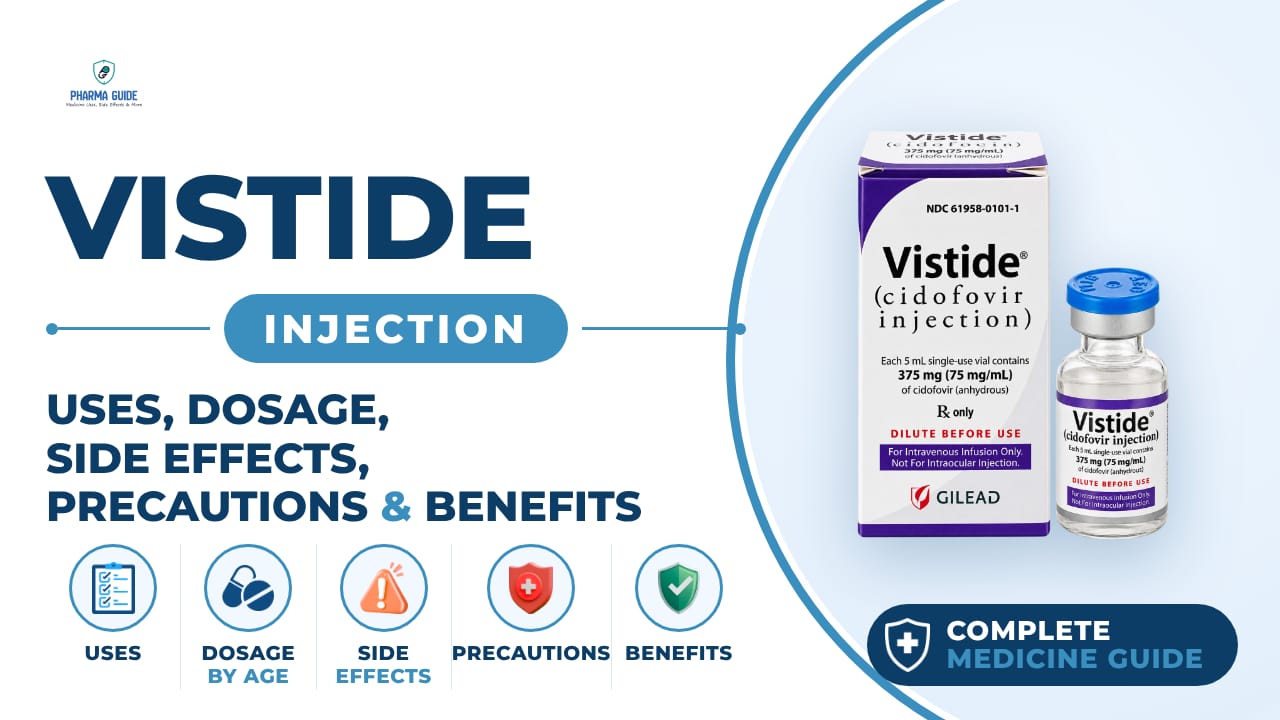
| Generic name | cidofovir |
|---|---|
| Drug class | Purine nucleosides (antiviral; also described as Antivirals, CMV) |
| Forms | Injection/intravenous infusion (liquid solution given into a vein) |
Quick overview
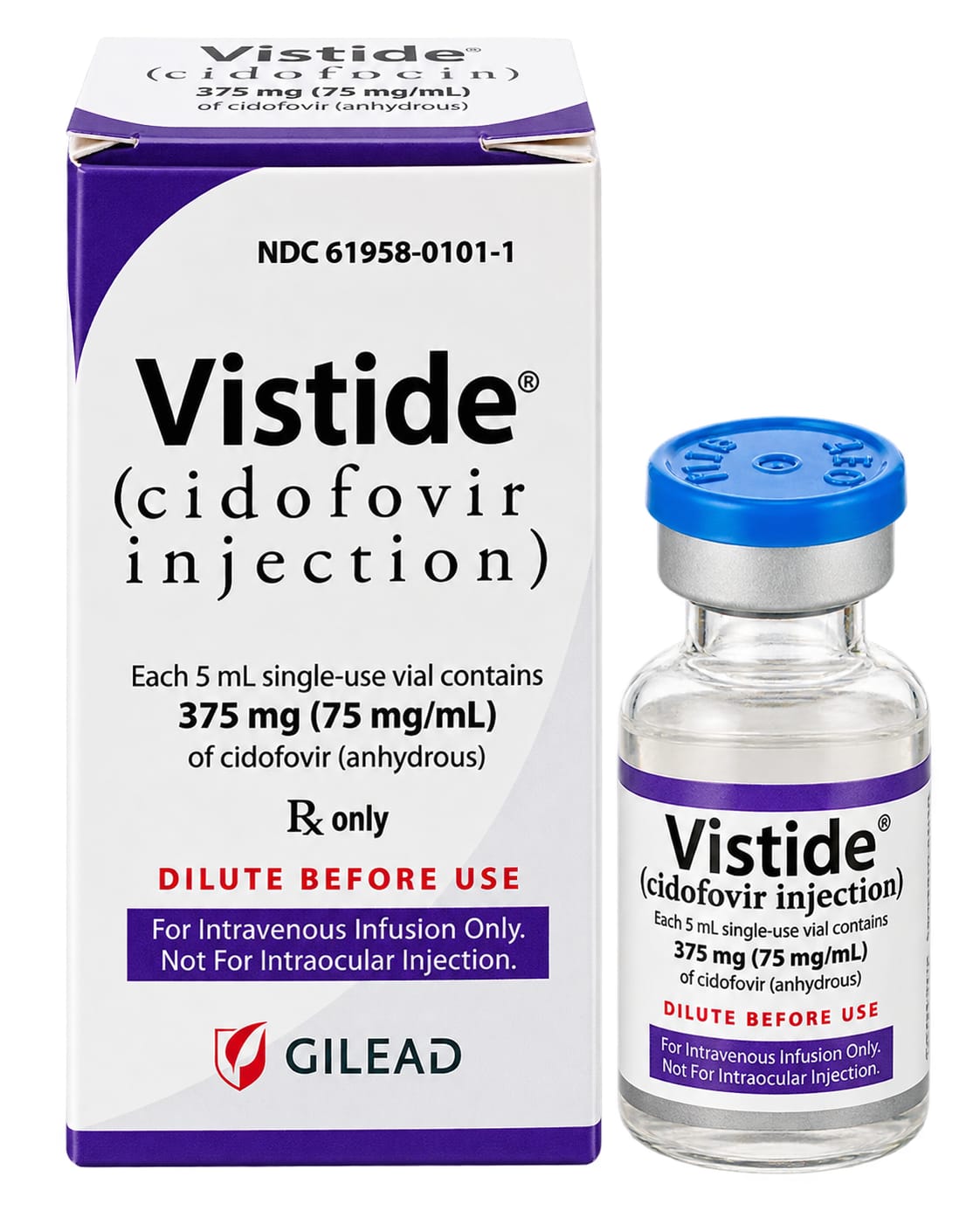
Vistide Injection (cidofovir) is a prescription antiviral medicine from the purine nucleoside class, given as an infusion into a vein. It is used to treat cytomegalovirus (CMV) retinitis, a serious eye infection, in adults with AIDS. Vistide does not cure CMV and will not reverse vision loss that has already happened, but it can slow down the progression of the eye disease.
What is Vistide Injection
Vistide is a prescription antiviral medicine given as an infusion into a vein. It is used to treat a serious eye infection called cytomegalovirus (CMV) retinitis in people with AIDS. It does not cure CMV and will not reverse vision loss that has already happened, but it can slow down the eye disease.
Vistide Injection uses
- Treats cytomegalovirus (CMV) retinitis, a viral eye infection, in adults with AIDS
Benefits of Vistide Injection
- Helps slow down the progression of CMV retinitis eye disease even though it does not cure the infection or reverse existing vision loss
How Vistide Injection works
Vistide works by stopping the CMV virus from making new copies of its DNA, which keeps it from multiplying in the body.
Vistide Injection dosage
Vistide is given to you as an infusion into a vein by a healthcare provider in a hospital or clinic setting. You will also need to take a medicine called probenecid by mouth with each dose; take probenecid with food if it upsets your stomach. Keep taking probenecid for the full prescribed length of time — skipping doses may increase your risk of complications.
You will receive IV fluids before and during your infusion to help protect your kidneys. The infusion and IV fluids are given slowly, and the whole treatment visit can take up to 6 hours. Your doctor will test your kidney function shortly before each dose.
Tell your doctor if you also take zidovudine for HIV, since your dose may need to change or be paused on the day of your Vistide infusion. Keep all follow-up appointments for your doses and lab tests; your next infusion may be delayed based on test results. Special care may be needed when this medicine is used in children.
| Age group | Dose |
|---|---|
| Under 18 years | Safety and effectiveness are not established; specialist-directed only |
| 18–64 years – induction | 5 mg/kg IV once weekly for 2 consecutive weeks |
| 18–64 years – maintenance | 5 mg/kg IV once every 2 weeks |
| 65 years and older | Same weight-based regimen only when appropriate, with very close kidney monitoring |
Available forms and strengths
- Injection/intravenous infusion (liquid solution given into a vein)
Side effects of Vistide Injection
Common
- Nausea and vomiting
- Diarrhea
- Headache
- Fever and chills
- Hair loss (alopecia)
- Muscle and joint pain, weakness
- Cough
- Rash or sores in the mouth or on the lips
- Shortness of breath
Serious
- Kidney damage — swelling, rapid weight gain, little or no urinating, increased thirst, loss of appetite, constipation, pain in your side or lower back
- Low blood cell counts (neutropenia) — fever, chills, tiredness, mouth sores, skin sores, easy bruising, unusual bleeding, pale skin, cold hands and feet, feeling light-headed or short of breath
- Eye problems — uveitis or iritis (eye inflammation), vision changes, white or yellow patches on the eyes, decreased eye pressure, eye pain or redness, sensitivity to light, vision loss
- Pancreatitis — severe pain in the upper stomach spreading to the back, with nausea and vomiting
- Metabolic acidosis (too much acid in the blood) — fast breathing or heartbeat, headache, confusion, weakness, tiredness, loss of appetite, nausea or vomiting
- Severe allergic reaction — hives, difficulty breathing, swelling of the face, lips, tongue, or throat, wheezing, racing heart, dizziness or fainting
Warnings and precautions
- Kidney damage is the most dangerous risk of this medicine, and can happen after just one or two doses, possibly leading to kidney failure or dialysis. You must receive IV fluids and take probenecid by mouth with each dose to help protect your kidneys.
- This medicine must never be injected directly into the eye — it is only given as an infusion into a vein. Direct eye injection has caused serious eye damage and permanent vision loss.
- Do not use this medicine if you have taken certain other kidney-damaging drugs within the past 7 days, including some medicines for infections, cancer, osteoporosis, organ transplant rejection, bowel disorders, high blood pressure, or pain/arthritis medicines like ibuprofen or naproxen.
- This medicine can lower white blood cell counts (neutropenia), which raises your risk of infection. Your blood counts will need to be checked during treatment.
- This medicine is only approved for treating CMV retinitis in people with AIDS, not for other CMV infections or in people without AIDS.
- In animal studies, this medicine caused cancer, birth defects, and reduced sperm count, so similar risks are possible in humans.
- Vistide can harm an unborn baby if either the mother or the father is using it. Women should not use Vistide if pregnant, and should use effective birth control during treatment and for at least 1 month after the last dose. Men should use effective birth control for at least 3 months after their last dose.
- Women with HIV or AIDS should not breastfeed, since the virus can be passed to the baby through breast milk, and it isn't known whether this medicine also passes into breast milk.
- This medicine must not be used if you have moderate to severe kidney disease, and it can cause serious kidney damage even after just one or two doses. Your doctor will test your kidney function before each dose.
- Metabolic acidosis in association with liver dysfunction and pancreatitis has led to death in some patients receiving this medicine.
- There are no known interactions between this medicine and alcohol, but heavy drinking can slow your immune response and make it harder for your body to fight infection.
- Avoid driving if dizziness, weakness, or visual problems occur.
Storage
- This medication is given in a hospital or clinic. It will not be stored at home.
- Keep this and all other medicines out of the reach of children, never share your medicines with others, and use this medication only for the indication prescribed.
When to see a doctor
- Get emergency help right away if you have signs of a serious allergic reaction, such as hives, trouble breathing, or swelling of your face, lips, tongue, or throat.
- Call your doctor right away if you notice vision changes or white/yellow patches on your eyes.
- Call your doctor right away if you have signs of kidney problems, such as swelling, rapid weight gain, little or no urinating, increased thirst, loss of appetite, constipation, or pain in your side or lower back.
- Call your doctor right away if you have signs of low blood cell counts, such as fever, chills, tiredness, mouth sores, skin sores, easy bruising, unusual bleeding, pale skin, cold hands and feet, or feeling light-headed or short of breath.
- Call your doctor right away if you have signs of pancreatitis, such as severe pain in your upper stomach spreading to your back, along with nausea and vomiting.
- Check with your care team if you have severe diarrhea, nausea and vomiting, or heavy sweating, since losing too much body fluid can make it dangerous to take this medicine.
- Tell your care team right away if you have any change in your eyesight.
Alternatives
- Maribavir
- Foscarnet
- Valganciclovir
- Ganciclovir
Watch the video
FAQs
What is Vistide Injection used for?
Vistide is used to treat cytomegalovirus (CMV) retinitis, a serious eye infection, in adults with AIDS. It does not cure CMV or reverse existing vision loss, but it can slow the progression of the eye disease.
How is Vistide Injection given?
Vistide is given as an infusion into a vein by a healthcare provider in a hospital or clinic. You must also take probenecid by mouth with each dose and receive IV fluids before and during the infusion to help protect your kidneys. A treatment visit can take up to 6 hours.
What is the dosage of Vistide Injection?
For adults 18–64 years, the induction dose is 5 mg/kg IV once weekly for 2 consecutive weeks, followed by a maintenance dose of 5 mg/kg IV once every 2 weeks. Safety and effectiveness have not been established in children under 18.
What are the serious side effects of Vistide Injection?
Serious side effects include kidney damage, low blood cell counts (neutropenia), eye problems such as uveitis or vision changes, pancreatitis, metabolic acidosis, and severe allergic reactions.
Why is probenecid given with Vistide Injection?
Probenecid is taken by mouth with each Vistide dose, along with IV fluids, to help protect the kidneys, since kidney damage is the most dangerous risk of this medicine and can occur after just one or two doses.
General information, not medical advice
Your prescriber and the leaflet in your pack know your situation. This page does not.
- Follow your prescriber and the leaflet
- Don't start, stop, or change a dose on your own
- Doses and warnings differ by country and product
Sources
Video
Related medicines

Injectafer Injection: Uses, Dosage, Side Effects, Precautions and Alternates
Iron products
Injectafer (ferric carboxymaltose) treats iron deficiency anemia and heart failure-related iron deficiency via IV. Learn uses, dosage, side effects, and

Gliclazide Tablet: Uses, Dosage, Side Effects, Precautions and Alternates
Sulfonylurea (hypoglycemic/antidiabetic agent)
Gliclazide Tablet is a sulfonylurea for type 2 diabetes that boosts insulin release. Learn about dosage, side effects, warnings, and precautions.