
Safety
General information, not medical advice
Your prescriber and the leaflet in your pack know your situation. This page does not.
- Follow your prescriber and the leaflet
- Don't start, stop, or change a dose on your own
- Doses and warnings differ by country and product
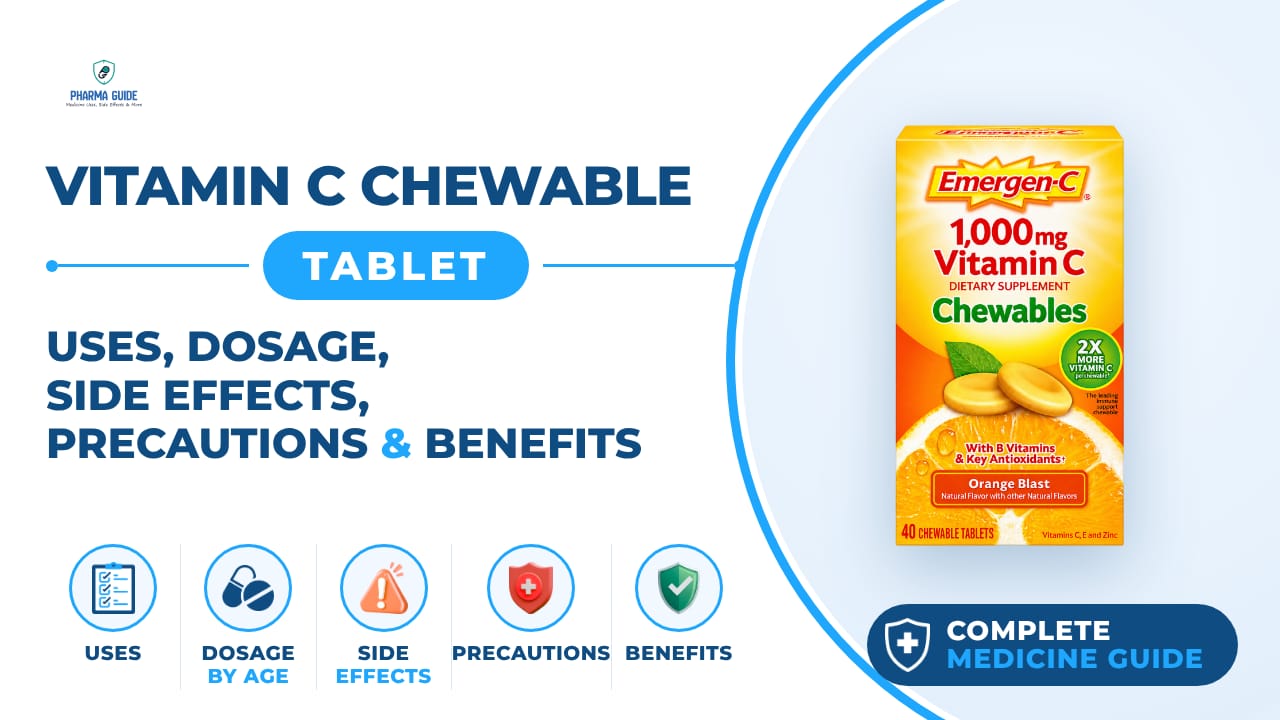
Vitamin C Chewable Tablet: Uses, Dosage, Side Effects, Precautions and Alternates
| Generic name | Ascorbic acid |
|---|---|
| Drug class | Vitamins |
| Forms | Chewable tablet, Capsule, Extended-release capsule, Oral powder, Orally disintegrating tablet, Liquid |
Quick overview
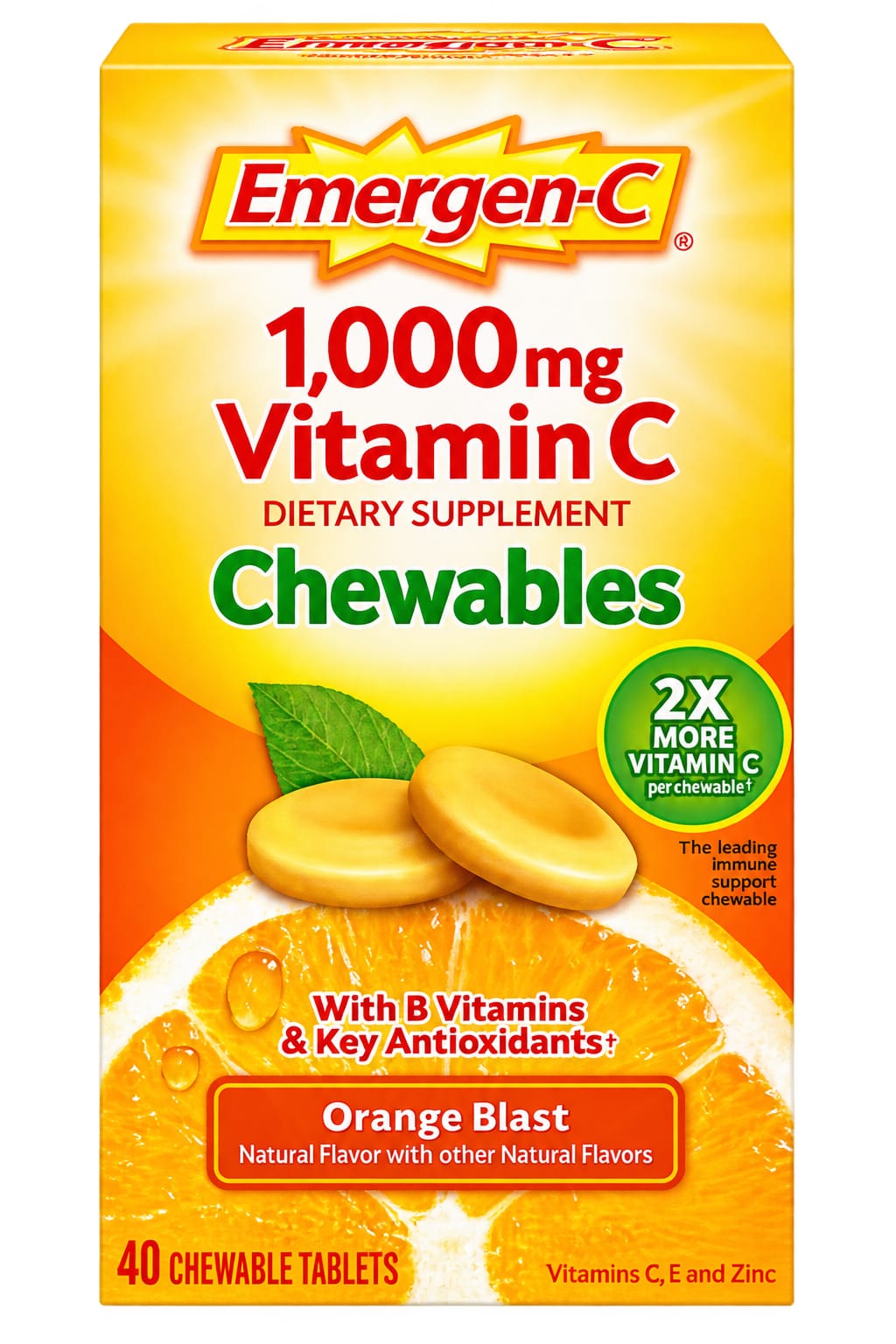
Vitamin C Chewable Tablet, also known as ascorbic acid, is an antioxidant vitamin medicine that prevents and treats low vitamin C levels in the body. It helps keep blood vessels, bones, and the immune system healthy, supports wound healing, and helps the body absorb iron. It is available in chewable tablet form and belongs to the vitamins drug class.
What is Vitamin C Chewable Tablet
Vitamin C, also called ascorbic acid, is an antioxidant medicine that comes in chewable tablets. It prevents and treats low vitamin C levels in the body and helps keep blood vessels, bones, and the immune system healthy. It can also help wounds heal.
Vitamin C Chewable Tablet uses
- Prevent and treat low vitamin C levels (vitamin C deficiency), including scurvy
- Support antioxidant activity
- Support healthy tissues and skin
- Support the immune system
- Help wounds heal
- Help the body absorb iron
Benefits of Vitamin C Chewable Tablet
- Helps maintain the health of blood vessels, bones, and the immune system
- Acts as an antioxidant, protecting cells from damage
- Helps the body absorb iron from food
How Vitamin C Chewable Tablet works
Vitamin C is an antioxidant, which helps protect your cells from damage caused by free radicals. It also plays a role in producing collagen, which is important for healthy skin, bones, and wound healing.
Vitamin C Chewable Tablet dosage
Take by mouth and chew the tablet completely before swallowing. It may be taken with or without food; take it with food if it upsets your stomach. Take it at regular intervals and do not take it more often than directed. Talk to your care team before giving this medicine to children. This medicine is only for the person it was prescribed or recommended for; do not share it with others. If you miss a dose, take it as soon as you can, but if it is almost time for your next dose, just take that dose — do not double up.
| Age group | Dose |
|---|---|
| Under 1 Year | Use only if prescribed by a doctor |
| 1–3 Years | 15 mg/day (recommended intake) |
| 4–8 Years | 25 mg/day (recommended intake) |
| 9–13 Years | 45 mg/day (recommended intake) |
| 14–18 Years | 65–75 mg/day (recommended intake) |
Available forms and strengths
- Chewable tablet
- Capsule
- Extended-release capsule
- Oral powder
- Orally disintegrating tablet
- Liquid
Side effects of Vitamin C Chewable Tablet
Common
- Diarrhea
- Heartburn
- Nausea
- Upset stomach
- Difficult or painful swallowing
- Headache
- Vomiting
- Stomach cramps
Serious
- Allergic reactions—skin rash, itching, hives, swelling of the face, lips, tongue, or throat
- Kidney stones—blood in the urine, pain or trouble passing urine, pain in the lower back or sides
Warnings and precautions
- Tell your care team if you are pregnant or trying to get pregnant before taking this medicine. Tell your care team if you are breastfeeding before taking this medicine. Tell your care team if you have kidney stones, since this medicine can be linked to kidney stone side effects.
- Do not exceed the recommended daily dose. Use with caution if you have kidney stones or kidney disease. Tell your health care provider if you drink alcohol, since it may interact with this medicine.
- Avoid high doses for long periods unless advised by a healthcare professional. Chew the tablet properly and avoid swallowing it whole unless directed.
- Tell your care team if you have anemia, diabetes, G6PD deficiency, kidney stones, or if you are on a low sodium diet, before taking this medicine.
- Tell your care team about any unusual or allergic reaction you've had to ascorbic acid, tartrazine, other medicines, foods, dyes, or preservatives.
- If you are diabetic, very high doses of this medicine can interfere with urine sugar tests. Talk to your care team if you check your urine glucose levels.
- Rinse or brush your teeth after taking the chewable tablet to help avoid tooth cavities.
- This medicine may interact with deferoxamine and iron supplements.
Storage
- Keep out of the reach of children
- Store at room temperature between 15 and 30 degrees C (59 and 86 degrees F) or as directed on the package label
- Protect from heat and moisture
- Throw away any unused medication after the expiration date
When to see a doctor
- Get help right away if you notice signs of an allergic reaction such as skin rash, itching, hives, or swelling of the face, lips, tongue, or throat.
- Contact your care team if you notice signs of kidney stones, such as blood in the urine, pain or trouble passing urine, or pain in the lower back or sides.
- If you think you have taken too much of this medicine, contact a poison control center or emergency room right away.
Alternatives
- Ascorbic Acid Tablet
- Redoxon
- Nature Made Vitamin C
Watch the video
FAQs
What is Vitamin C Chewable Tablet used for?
It is used to prevent and treat low vitamin C levels, including scurvy, support antioxidant activity, maintain healthy tissues and skin, support the immune system, help wounds heal, and help the body absorb iron.
How should I take Vitamin C Chewable Tablet?
Chew the tablet completely before swallowing. It may be taken with or without food, though food can help if it upsets your stomach. Take it at regular intervals and do not take it more often than directed.
What are the side effects of Vitamin C Chewable Tablet?
Common side effects include diarrhea, heartburn, nausea, upset stomach, difficult or painful swallowing, headache, vomiting, and stomach cramps. Serious side effects include allergic reactions and kidney stones.
Who should be cautious when taking Vitamin C Chewable Tablet?
People with kidney stones or kidney disease, anemia, diabetes, G6PD deficiency, or those on a low sodium diet should talk to their care team before use, as should pregnant or breastfeeding individuals.
Does Vitamin C Chewable Tablet interact with other medicines?
Yes, it may interact with deferoxamine and iron supplements.
General information, not medical advice
Your prescriber and the leaflet in your pack know your situation. This page does not.
- Follow your prescriber and the leaflet
- Don't start, stop, or change a dose on your own
- Doses and warnings differ by country and product
Sources
Video
Related medicines
Cyanocobalamin (Vitamin B12) Injection: Uses, Dosage, Side Effects, Precautions and Alternates
Vitamins
Cyanocobalamin (Vitamin B12) Injection treats and prevents B12 deficiency and pernicious anemia, supporting nerve, blood cell, and DNA health.
Vitamin E Capsule: Uses, Dosage, Side Effects, Precautions and Alternates
Vitamins
Vitamin E Capsule is an antioxidant supplement used to treat or prevent vitamin E deficiency. Learn its uses, dosage, side effects, and precautions.