
Safety
General information, not medical advice
Your prescriber and the leaflet in your pack know your situation. This page does not.
- Follow your prescriber and the leaflet
- Don't start, stop, or change a dose on your own
- Doses and warnings differ by country and product
Vitamin K Injection: Uses, Dosage, Side Effects, Precautions and Alternates
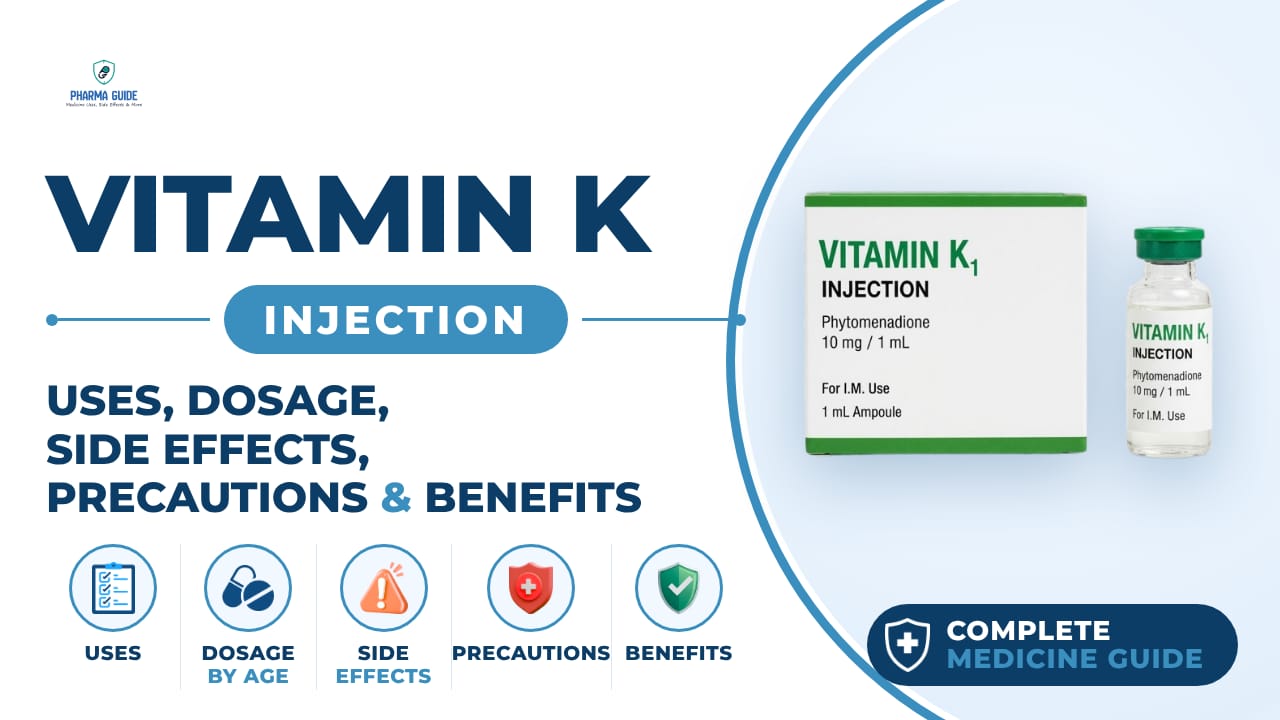
| Generic name | phytonadione (phytomenadione, vitamin K1) |
|---|---|
| Drug class | fat-soluble vitamin |
| Forms | Tablet, Injection |
Quick overview
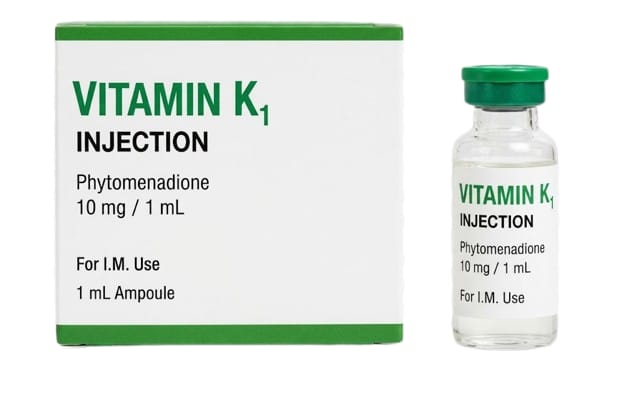
Vitamin K Injection, also known as phytonadione or phytomenadione (vitamin K1), is a fat-soluble vitamin medicine given as a shot by a health care provider. It helps the body form proper blood clots and is used to treat or prevent bleeding problems caused by low vitamin K levels. It is given under the skin whenever possible, as this route carries less risk of serious reactions than injection into a vein or muscle.
What is Vitamin K Injection
Vitamin K Injection is a fat-soluble vitamin medicine given as a shot by a health care provider. It is used to help the body form proper blood clots and to treat or prevent bleeding problems caused by low vitamin K levels.
Vitamin K Injection uses
- Prevent and control bleeding caused by low prothrombin or factor VII levels
- Treat vitamin K deficiency
- Treat hypoprothrombinemia caused by blood thinners such as warfarin, antibiotics, or other drugs that interfere with vitamin K
- Prevent and treat vitamin K-deficiency bleeding in newborn babies
- Reduce bleeding risk and correct clotting problems from conditions that limit absorption or use of vitamin K
Benefits of Vitamin K Injection
- Helps restore normal blood clotting in people with vitamin K deficiency
- Can reverse excess effects of blood-thinning medicines like warfarin
- Reduces the risk of serious bleeding in newborns who have low vitamin K levels
How Vitamin K Injection works
Vitamin K helps the liver make proteins called clotting factors, which the body needs to form blood clots and stop bleeding. It acts as a helper substance for an enzyme that turns inactive clotting factor building blocks into their active, working form.
Vitamin K Injection dosage
This medicine is usually given as a shot by a health care provider in a hospital or clinic. Whenever possible it is given under the skin rather than into a muscle or vein, because the under-the-skin route carries less risk of serious reactions. If it must be given into a vein, it is injected very slowly by the health care provider. Follow all instructions given by your doctor if you are told to store or use this medicine at home. Do not share this medicine with other people, even if they have the same condition.
| Age group | Dose |
|---|---|
| Under 18 years | Not recommended |
| 18–64 years | 5,000 mg, once/day |
| 65+ years | 5,000 mg, once/day |
Available forms and strengths
- Tablet
- Injection
Side effects of Vitamin K Injection
Common
- Pain, itching, swelling, or redness near the injection site
- Skin rash
- Muscle stiffness
- Dizziness
- Chills
- Chest pain
- Nausea or vomiting
- Abdominal pain
- Decreased appetite
- Headache
- Flushing of face
- Excessive sweating
- Dry mouth
- Diarrhea
- Tiredness
Serious
- Severe allergic reactions including breathing problems or wheezing, racing heart, swelling of the face, lips, mouth, tongue or throat, trouble swallowing or throat tightness, hives, dizziness or fainting
- Fatal hypersensitivity reactions including anaphylaxis, shock, and cardiorespiratory arrest, which have occurred during and immediately after intravenous or intramuscular injection
- Skin reactions such as eczema-like patches, scleroderma-like patches, hives, and delayed reactions that can appear up to a year after the injection
- Gasping syndrome in newborns and infants linked to a preservative (benzyl alcohol) in some formulations, involving nervous system depression and gasping breathing
- Build-up of aluminum in the body with long-term use in people with kidney problems, which can lead to bone and nervous system problems
Warnings and precautions
- Serious and sometimes fatal allergic reactions, including anaphylaxis, have happened during or right after this medicine was given into a vein or muscle. This can happen even with careful dosing and on the first dose. Because of this, the under-the-skin route is preferred unless it isn't possible.
- A preservative in some formulations, called benzyl alcohol, can cause a dangerous condition in newborns and infants called 'gasping syndrome,' so preservative-free versions should be used in babies when available.
- Skin reactions can occur after this medicine is injected, and may appear anywhere from one day to a year later. The medicine should be stopped if this happens.
- This medicine should not be used by people who are allergic to it or to any of its ingredients.
- This medicine contains aluminum, which may become toxic with long-term use, especially in people with poor kidney function or in premature babies.
- Regular blood tests are needed to check how well your blood is clotting while you are receiving this medicine.
- It is not fully known how this medicine affects pregnancy. Tell your doctor if you are pregnant, and a preservative-free form may be used if needed.
- Small amounts of this medicine can pass into breast milk. Tell your doctor if you are breastfeeding.
- This medicine contains aluminum, which is removed from the body through urine. People with kidney problems who use this medicine long-term may build up too much aluminum, which can harm bones and the nervous system.
- This medicine will not fix blood clotting problems caused by liver disease, and it should be used with extra caution in people with liver problems because it may make their condition worse.
- It is not known for certain how alcohol affects this medicine. It's best to check with your doctor and limit alcohol, since alcohol can raise your risk of bleeding.
Storage
- Store at 20°C to 25°C (68°F to 77°F)
- Protect from light at all times
- Keep ampuls in tray until time of use
- If you will store vitamin K at home, follow the instructions given by your health care provider
- Keep vitamin K out of the reach of children
When to see a doctor
- Get help right away if you have trouble breathing, wheezing, a racing heart, fever, swollen glands, swelling of the face, lips, mouth, tongue, or throat, trouble swallowing, throat tightness, itching, skin rash, hives, nausea, vomiting, dizziness, fainting, stomach cramps, or joint pain after receiving this medicine.
- Contact your doctor right away if you notice any new skin rash after getting this medicine, even if it appears a long time afterward.
- Seek medical help right away if too much of this medicine is used or an overdose is suspected.
Alternatives
- Kcentra
- Andexxa
- Idarucizumab
Watch the video
FAQs
What is Vitamin K Injection used for?
It is used to prevent and control bleeding caused by low prothrombin or factor VII levels, treat vitamin K deficiency, treat hypoprothrombinemia caused by blood thinners like warfarin or certain antibiotics, prevent and treat vitamin K-deficiency bleeding in newborns, and correct clotting problems from conditions that limit absorption or use of vitamin K.
How is Vitamin K Injection given?
It is usually given as a shot by a health care provider in a hospital or clinic. Whenever possible it is given under the skin rather than into a muscle or vein, because this route carries less risk of serious reactions. If it must be given into a vein, it is injected very slowly.
What are the serious side effects of Vitamin K Injection?
Serious side effects include severe allergic reactions and fatal hypersensitivity reactions such as anaphylaxis, shock, and cardiorespiratory arrest, which have occurred during or right after intravenous or intramuscular injection. Other serious effects include skin reactions that can appear up to a year later, gasping syndrome in newborns linked to a preservative, and aluminum build-up with long-term use in people with kidney problems.
Why is Vitamin K Injection given under the skin instead of into a vein or muscle?
The under-the-skin route is preferred because it carries less risk of serious reactions, including the fatal allergic reactions that have happened during or right after injection into a vein or muscle, even with careful dosing.
Is Vitamin K Injection safe for newborns?
It is used to prevent and treat vitamin K-deficiency bleeding in newborns, but a preservative called benzyl alcohol found in some formulations can cause a dangerous condition called 'gasping syndrome' in newborns and infants, so preservative-free versions should be used in babies when available.
General information, not medical advice
Your prescriber and the leaflet in your pack know your situation. This page does not.
- Follow your prescriber and the leaflet
- Don't start, stop, or change a dose on your own
- Doses and warnings differ by country and product
Sources
Video
Related medicines

Injectafer Injection: Uses, Dosage, Side Effects, Precautions and Alternates
Iron products
Injectafer (ferric carboxymaltose) treats iron deficiency anemia and heart failure-related iron deficiency via IV. Learn uses, dosage, side effects, and

Gliclazide Tablet: Uses, Dosage, Side Effects, Precautions and Alternates
Sulfonylurea (hypoglycemic/antidiabetic agent)
Gliclazide Tablet is a sulfonylurea for type 2 diabetes that boosts insulin release. Learn about dosage, side effects, warnings, and precautions.