
Safety
General information, not medical advice
Your prescriber and the leaflet in your pack know your situation. This page does not.
- Follow your prescriber and the leaflet
- Don't start, stop, or change a dose on your own
- Doses and warnings differ by country and product
Vocabria Injection: Uses, Dosage, Side Effects, Precautions and Alternates
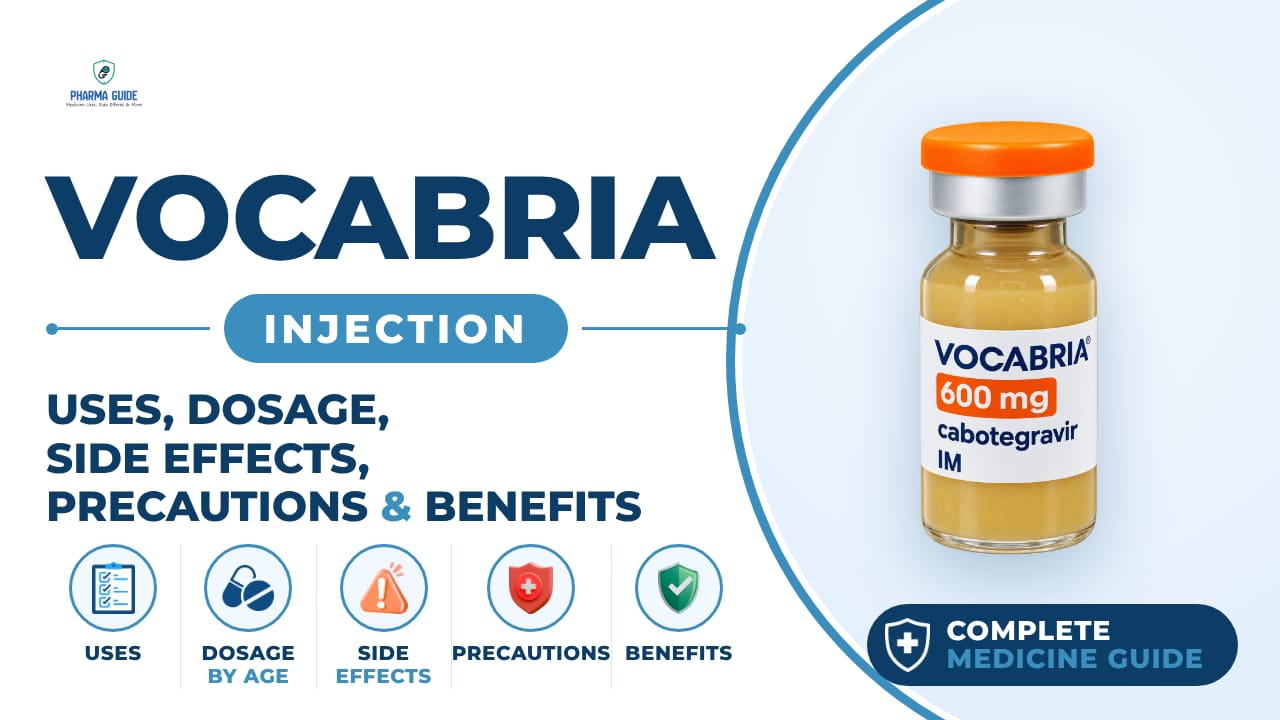
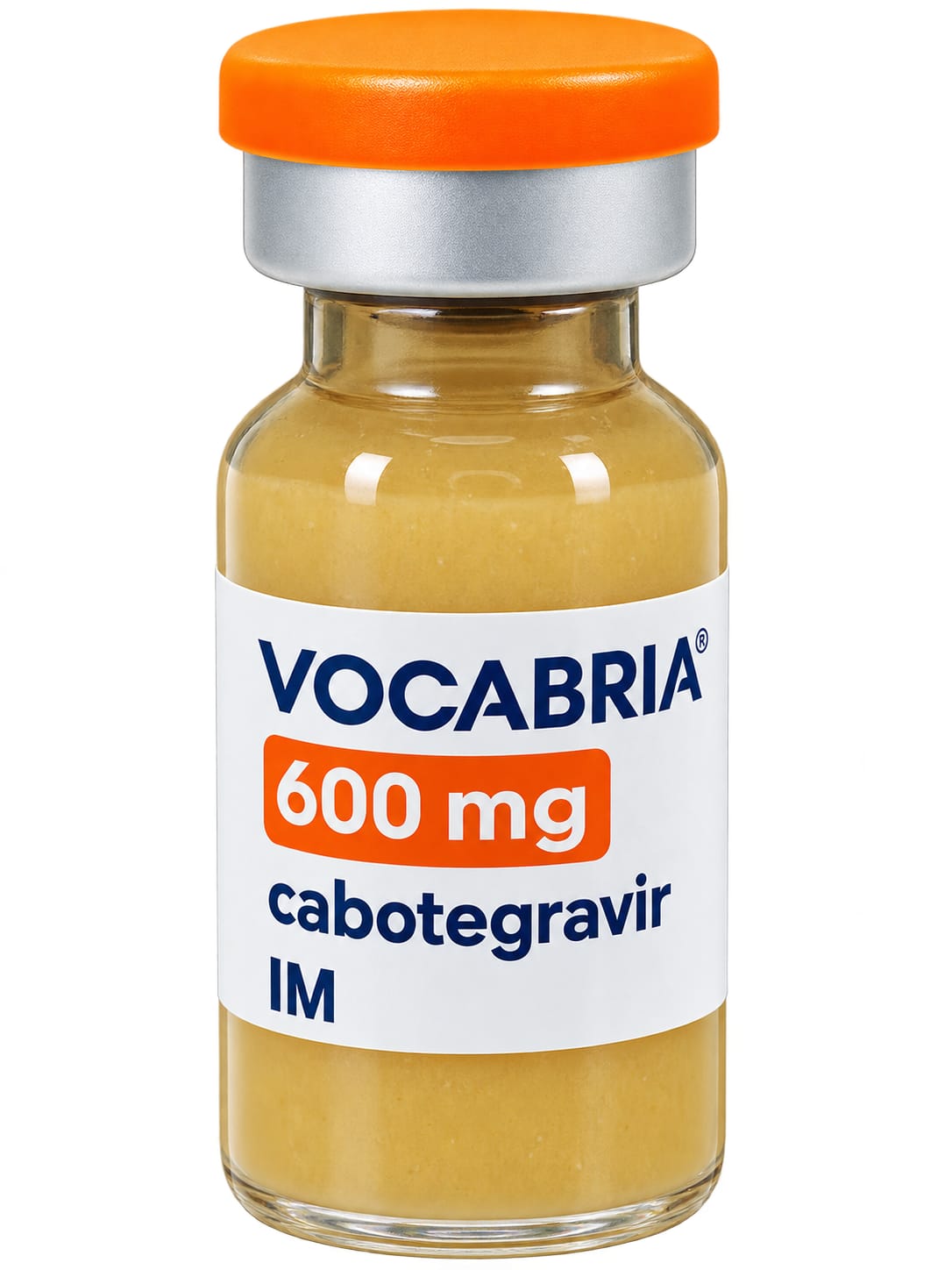
| Generic name | cabotegravir |
|---|---|
| Drug class | Integrase strand transfer inhibitor (integrase inhibitor) |
| Forms | Tablet, Prolonged-release suspension for injection |
Quick overview
Vocabria Injection contains cabotegravir, an integrase strand transfer inhibitor. It is used together with another HIV medicine to treat HIV-1 infection in adults, and the tablet form can also be used short-term before switching to long-acting injections. It works by blocking an enzyme the virus needs to multiply, helping to keep HIV levels low in the body.
What is Vocabria Injection
Vocabria is an antiviral medicine containing cabotegravir. It is used together with another HIV medicine to treat HIV infection in adults, and the tablets can also be used short-term before switching to long-acting injections.
Vocabria Injection uses
- Treats HIV-1 infection in adults (and adolescents 12 years and older weighing at least 35 kg) when used together with rilpivirine, in people whose virus is already controlled on stable treatment
- Used as an oral 'lead-in' for about one month to check how well a person tolerates cabotegravir before starting the long-acting injection
- Used as oral therapy to cover a dose if a scheduled cabotegravir/rilpivirine injection will be missed
- Used for short-term HIV pre-exposure prophylaxis (PrEP) to help reduce the risk of getting HIV through sex, in people who are HIV-negative
Benefits of Vocabria Injection
- Keeps the amount of HIV virus in the body at a low level
- Helps maintain CD4+ cell numbers, which are important for fighting infection
- Allows transition to a long-acting injectable regimen taken only once a month or every two months
How Vocabria Injection works
Cabotegravir blocks an HIV enzyme called integrase, stopping the virus from inserting its genetic material into human cells, which is a necessary step for the virus to multiply.
Vocabria Injection dosage
Take VOCABRIA once a day at the same time each day, together with rilpivirine, for about one month before switching to the injection. Swallow the tablet whole with some liquid. VOCABRIA can be taken with or without food, but if taken together with rilpivirine tablets, it must be taken with a meal.
If you need to take an antacid, take it at least 2 hours before or 4 hours after your VOCABRIA tablet. Do not stop taking VOCABRIA or lower the dose without talking to your doctor first.
If you miss a dose, take it as soon as you remember; if it's almost time for the next dose, skip the missed one and continue as normal - do not double up. Keep taking VOCABRIA for as long as your doctor tells you, even if you feel well.
| Age group | Dose |
|---|---|
| Under 12 years | Safety and effectiveness not established |
| 12–17 years, ≥35 kg | 30 mg once daily, when used as the prescribed oral lead-in/short-term regimen |
| 18–64 years | 30 mg once daily, according to the prescribed regimen |
Available forms and strengths
- Tablet
- Prolonged-release suspension for injection
Side effects of Vocabria Injection
Common
- Headache
- Feeling hot
- Diarrhoea
- Nausea
- Vomiting
- Stomach pain
- Wind (flatulence)
- Dizziness
- Depression
- Anxiety
- Abnormal dreams
- Insomnia
- Muscle pain
- Rash
- Fatigue
- Weight gain
Serious
- Allergic reaction: rash, itching or hives, swelling of face/lips/tongue, wheezing or difficulty breathing
- Liver problems: yellowing of skin or eyes, loss of appetite, itching, tenderness of stomach, dark urine or light-coloured stools
- Suicidal thoughts or suicide attempts, especially in those with a history of depression or mental health problems
- Stevens-Johnson syndrome (SJS) and toxic epidermal necrolysis (TEN): painful red or purple skin that looks burned and peels, blisters in mouth/nose/genitals, red painful watery eyes
Warnings and precautions
- Do not take this medicine with certain other drugs, including rifampicin, rifapentine, and some anticonvulsant medicines, as they can stop it from working properly.
- Starting HIV treatment can sometimes cause your immune system to react strongly to hidden infections or attack your own body, so tell your doctor right away about new symptoms.
- Serious, life-threatening skin reactions (SJS and TEN) have rarely occurred; seek help immediately if you notice severe skin symptoms.
- This medicine does not cure HIV and does not guarantee you cannot pass HIV to others, so continue practicing safer sex and avoiding blood exposure.
- Never stop or skip doses without medical advice, as this increases the risk of the virus becoming resistant to treatment.
- Talk to your doctor if you are pregnant or planning to become pregnant, so you can discuss the risks and benefits together.
- Talk to your doctor before breastfeeding, as HIV can be passed to a baby through breast milk and it isn't known if this medicine also passes into breast milk.
- No dose change is generally needed for kidney problems, but the medicine should be used carefully in people on kidney dialysis.
- Tell your doctor if you have liver problems, since your liver function will be checked during treatment.
- No major direct interaction is established, but heavy alcohol use can affect liver health and treatment adherence.
- This medicine can cause dizziness and other effects that make you less alert, so don't drive or use machines unless you know it's safe for you.
Storage
- Keep your tablets in the bottle until it is time to take them
- Keep your tablets in a cool, dry place where the temperature stays below 30°C
- Do not store in the bathroom, near a sink, in the car, or on window sills
- Keep it where young children cannot reach it
- If you no longer need the medicine or it is out of date, take it to any pharmacy for safe disposal
- Do not use this medicine after the expiry date
When to see a doctor
- Get medical help right away if you have signs of a serious allergic reaction, such as rash, swelling of the face/lips/tongue, or difficulty breathing.
- Seek medical attention immediately for a rash with fever, tiredness, muscle or joint pain, blisters, or red painful eyes, as these may indicate a serious skin reaction.
- Call your doctor straight away if you notice signs of liver problems such as yellowing skin or eyes, dark urine, or loss of appetite.
- Contact your doctor immediately if you have thoughts of self-harm or suicide, or notice big changes in your mood.
- If you think you've taken too many tablets, get urgent medical attention even if you feel fine.
Alternatives
- Dolutegravir-based HIV regimens
- Bictegravir-based HIV regimens
- Raltegravir-based HIV regimens
Watch the video
FAQs
What is Vocabria Injection used for?
It is used together with rilpivirine to treat HIV-1 infection in adults and certain adolescents whose virus is already controlled, with tablets also used short-term as a lead-in before switching to long-acting injections or to cover a missed injection dose.
How is Vocabria Injection taken?
The tablet is taken once a day at the same time each day with rilpivirine for about one month before switching to the injection, swallowed whole with liquid, and taken with a meal when combined with rilpivirine tablets.
What are the common side effects of Vocabria Injection?
Common side effects include headache, feeling hot, diarrhoea, nausea, vomiting, stomach pain, wind, dizziness, depression, anxiety, abnormal dreams, insomnia, muscle pain, rash, fatigue, and weight gain.
What should I avoid while taking Vocabria Injection?
Avoid taking it with certain drugs like rifampicin, rifapentine, and some anticonvulsants, as they can stop it from working, and never stop or skip doses without medical advice due to resistance risk.
Does Vocabria Injection cure HIV?
No, it does not cure HIV and does not guarantee you cannot pass HIV to others, so safer sex practices and avoiding blood exposure should continue.
General information, not medical advice
Your prescriber and the leaflet in your pack know your situation. This page does not.
- Follow your prescriber and the leaflet
- Don't start, stop, or change a dose on your own
- Doses and warnings differ by country and product
Sources
Video
Related medicines

Injectafer Injection: Uses, Dosage, Side Effects, Precautions and Alternates
Iron products
Injectafer (ferric carboxymaltose) treats iron deficiency anemia and heart failure-related iron deficiency via IV. Learn uses, dosage, side effects, and

Gliclazide Tablet: Uses, Dosage, Side Effects, Precautions and Alternates
Sulfonylurea (hypoglycemic/antidiabetic agent)
Gliclazide Tablet is a sulfonylurea for type 2 diabetes that boosts insulin release. Learn about dosage, side effects, warnings, and precautions.