
Safety
General information, not medical advice
Your prescriber and the leaflet in your pack know your situation. This page does not.
- Follow your prescriber and the leaflet
- Don't start, stop, or change a dose on your own
- Doses and warnings differ by country and product
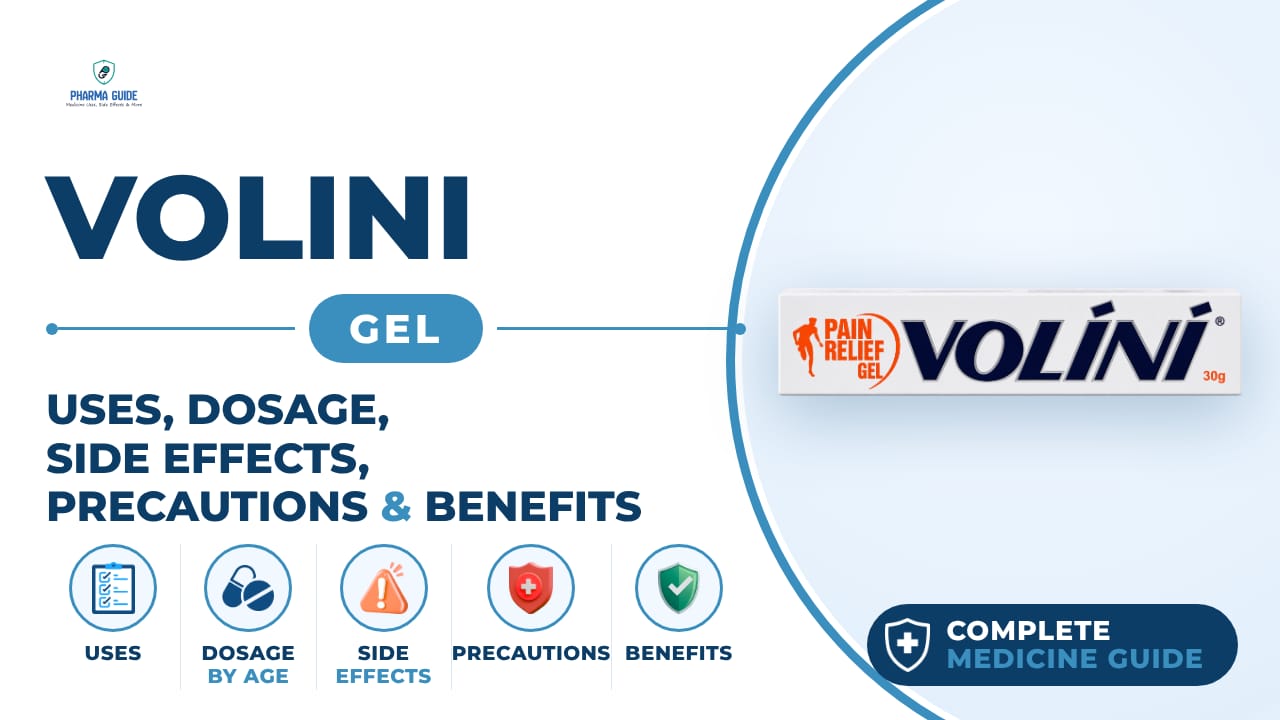
Volini Gel: Uses, Dosage, Side Effects, Precautions and Alternates
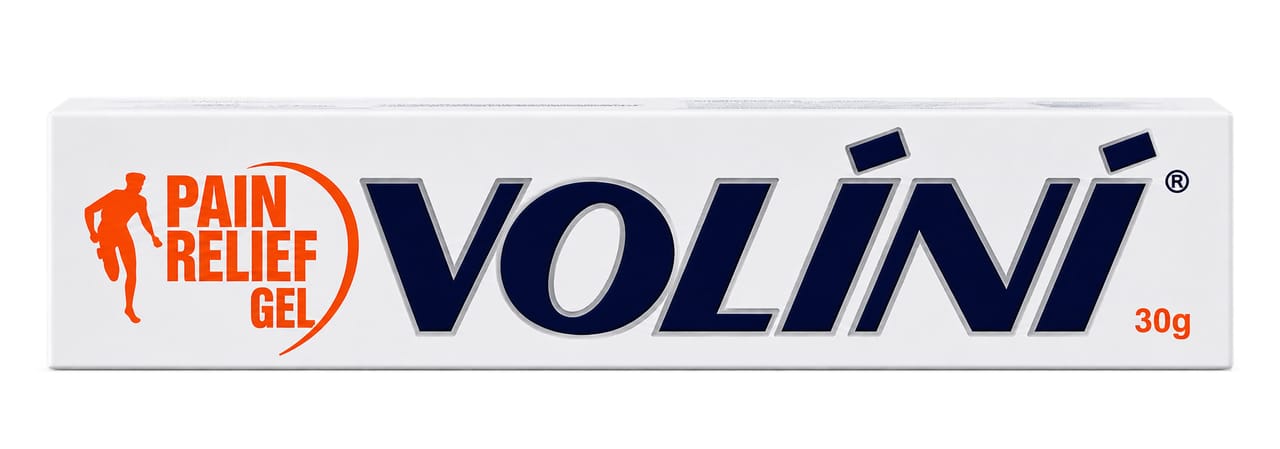
| Generic name | Diclofenac Diethylamine + Methyl Salicylate + Menthol + Linseed Oil |
|---|---|
| Drug class | Nonsteroidal anti-inflammatory drug (NSAID), topical |
| Forms | Gel |
Quick overview
Volini Gel is a topical pain relief gel containing Diclofenac Diethylamine, Methyl Salicylate, Menthol, and Linseed Oil. It belongs to the NSAID (nonsteroidal anti-inflammatory drug) class and is applied to the skin to relieve pain and swelling from muscle and joint problems. It is used for conditions such as arthritis-related joint pain, muscle sprains and strains, and mild to moderate pain in areas like the back, neck, shoulder, calf, and wrist.
What is Volini Gel
Volini Gel is a topical pain relief gel that contains Diclofenac, Methyl Salicylate, Menthol and Linseed Oil. It is applied to the skin to relieve pain and swelling from muscle and joint problems.
Volini Gel uses
- Joint pain associated with arthritis (swelling, tenderness, and pain of one or more joints)
- Muscle injuries such as sprain or strain
- Mild to moderate pain
- Back pain
- Neck pain
- Shoulder pain
- Calf pain
- Wrist pain
Benefits of Volini Gel
- Promotes joint and muscle health
- May help in managing muscle sprains
- Supports muscle, joint, neck and lower back pain
- Has anti-inflammatory properties
- Regular application helps improve mobility and provides targeted pain relief
How Volini Gel works
Diclofenac is absorbed through the skin and reduces the production of prostaglandins, the chemicals that cause inflammation and pain. Methyl Salicylate and Menthol create cooling and warming sensations on the skin that help distract from and soothe pain.
Volini Gel dosage
Wash and dry the affected area before applying the gel. Apply a thin layer of the gel to the affected area and gently rub it in. Do not cover the area or apply a hot bag to it after application. Keep the area away from water for at least 1 hour to prevent the medicine from getting rinsed off. Wash your hands after applying the medicine, unless you are treating your hands. Do not apply right before, during, or after activities that raise skin temperature such as bathing, swimming, or heavy exercise; wait until your skin has cooled before applying. Apply only to intact skin, not to wounds or open injuries. For external use only; do not swallow it.
| Age group | Dose |
|---|---|
| Under 12 Years | Use only if prescribed by a healthcare professional |
| 12–17 Years | Apply a thin layer to the painful area 3–4 times daily as directed |
| Adults (18–64 Years) | Apply a thin layer to the affected area 3–4 times daily |
| Older Adults (65+ Years) | Apply a thin layer 3–4 times daily; use cautiously on sensitive skin |
Available forms and strengths
- Gel
Side effects of Volini Gel
Common
- Skin rash
- Itching
- Redness of skin
- Mild cold or burning sensation at the application site
Serious
- Skin blistering
- Allergic contact dermatitis
- High blood pressure
- Anaphylactic reactions
Warnings and precautions
- Avoid using the gel on broken skin or open wounds.
- If the gel gets into your eyes, nose, mouth, or other sensitive areas, rinse with water right away, as it may cause irritation.
- Do not use this gel if you are allergic to its ingredients, and it should not be used in infants or children.
- Do not apply the gel to sunburnt skin, cuts, wounds, or other soft tissue injuries.
- Do not apply more than the recommended amount or more often than directed, as using too much will not give extra pain relief and may cause overdose symptoms.
- Volini Gel is not considered safe to use during pregnancy because it may harm the unborn baby. Talk to your doctor before using it.
- Volini Gel is not known to be harmful to breastfeeding women, but applying it on or near the nipple may increase the risk of diarrhoea in the infant. Use it only if your doctor has prescribed it.
- Apply only to intact skin; do not use on cuts, wounds, or infected skin.
- Do not cover with tight bandages or apply external heat unless advised.
- It is not known whether Volini Gel interacts with alcohol, so it is best to check with your doctor before drinking alcohol while using it.
- Avoid excessive sunlight on treated areas.
Storage
- Store in a cool and dry place away from direct sunlight.
- Keep the Volini Gel in a cool, dark, and dry place at room temperature.
- Store Below 30° C
When to see a doctor
- Tell your doctor if skin redness, rash, or itching at the application site does not go away or gets worse.
- If you apply the gel too often and notice signs of overdose, get medical help right away.
Alternatives
- Methyl Salicylate Ointment
- Ketoprofen Gel
- Ibuprofen Gel
- Diclofenac Gel
Watch the video
FAQs
What is Volini Gel used for?
Volini Gel is used for joint pain from arthritis, muscle sprains or strains, and mild to moderate pain in the back, neck, shoulder, calf, and wrist.
How does Volini Gel work?
Diclofenac is absorbed through the skin and reduces prostaglandin production to ease inflammation and pain, while Methyl Salicylate and Menthol create cooling and warming sensations that help soothe pain.
How should Volini Gel be applied?
Wash and dry the affected area, apply a thin layer and rub it in gently, avoid covering it or applying heat, and keep it away from water for at least an hour. Adults typically apply it 3–4 times daily.
What are the side effects of Volini Gel?
Common side effects include skin rash, itching, redness, and mild cold or burning sensation at the application site. Serious effects can include skin blistering, allergic contact dermatitis, high blood pressure, and anaphylactic reactions.
Is Volini Gel safe during pregnancy?
Volini Gel is not considered safe during pregnancy because it may harm the unborn baby, so a doctor should be consulted before use.
General information, not medical advice
Your prescriber and the leaflet in your pack know your situation. This page does not.
- Follow your prescriber and the leaflet
- Don't start, stop, or change a dose on your own
- Doses and warnings differ by country and product
Sources
Video
Related medicines

Injectafer Injection: Uses, Dosage, Side Effects, Precautions and Alternates
Iron products
Injectafer (ferric carboxymaltose) treats iron deficiency anemia and heart failure-related iron deficiency via IV. Learn uses, dosage, side effects, and

Gliclazide Tablet: Uses, Dosage, Side Effects, Precautions and Alternates
Sulfonylurea (hypoglycemic/antidiabetic agent)
Gliclazide Tablet is a sulfonylurea for type 2 diabetes that boosts insulin release. Learn about dosage, side effects, warnings, and precautions.