
Safety
General information, not medical advice
Your prescriber and the leaflet in your pack know your situation. This page does not.
- Follow your prescriber and the leaflet
- Don't start, stop, or change a dose on your own
- Doses and warnings differ by country and product
Voriconazole Tablet: Uses, Dosage, Side Effects, Precautions and Alternates
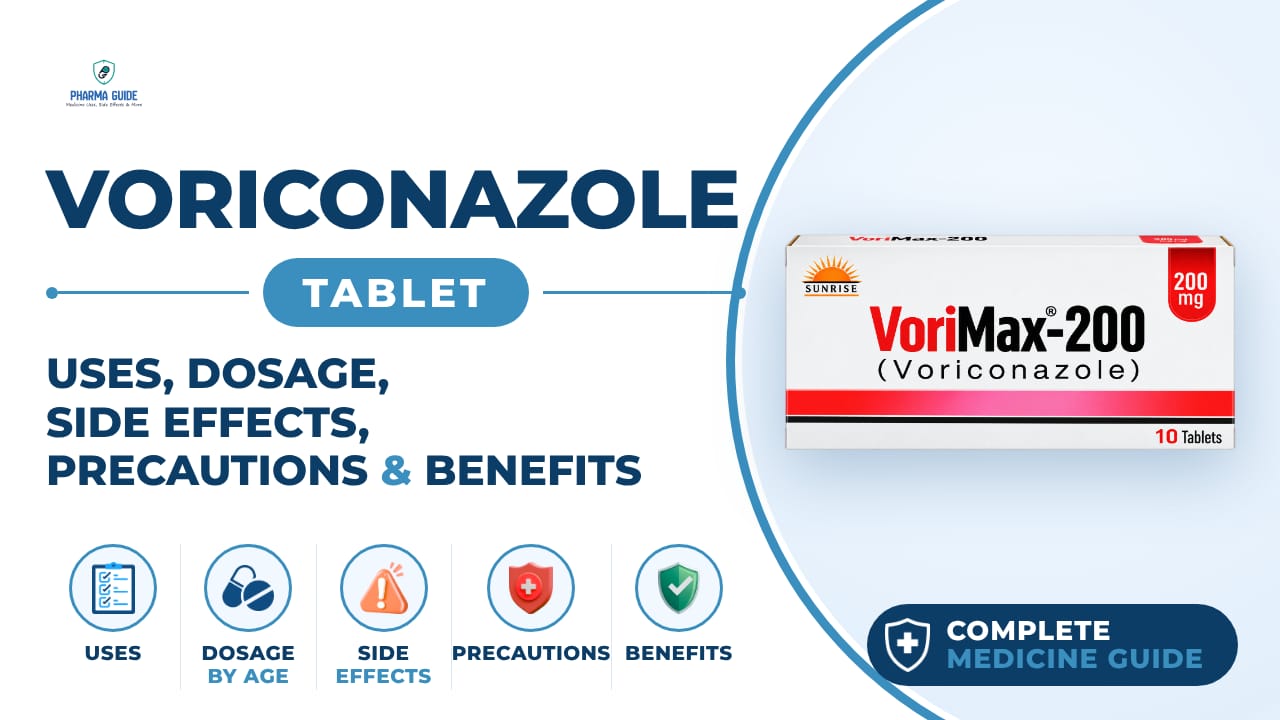
| Generic name | Voriconazole |
|---|---|
| Drug class | Triazole antifungal |
| Forms | Tablets, Oral suspension (liquid), Injection (intravenous) |
Quick overview
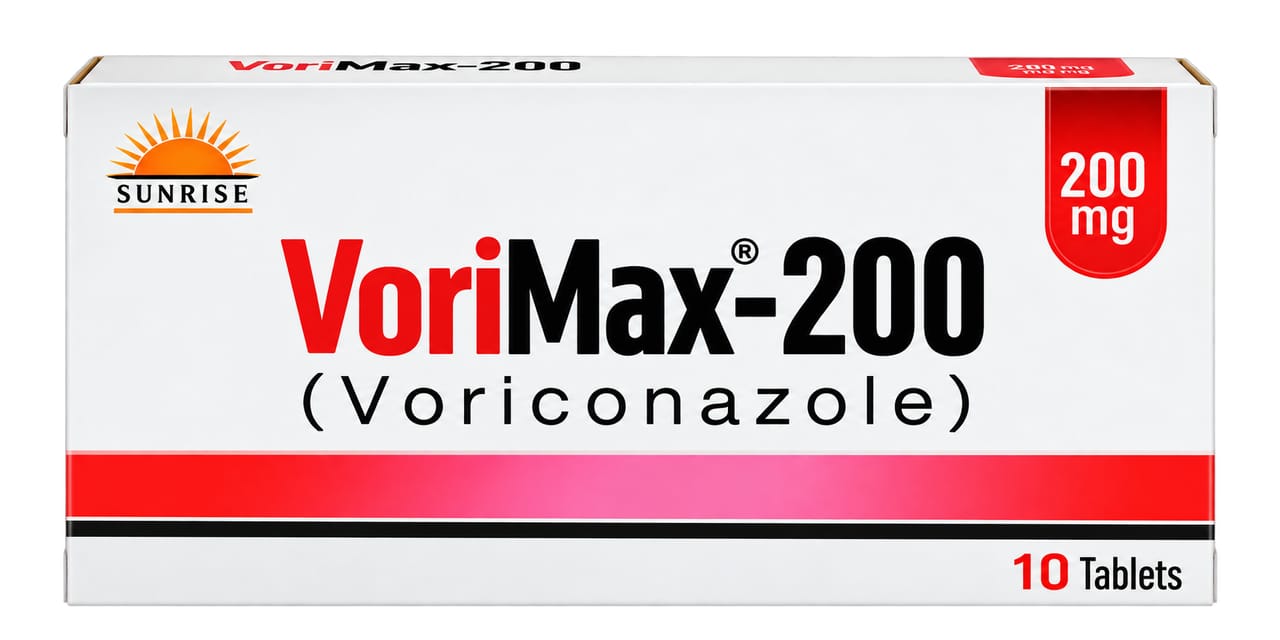
Voriconazole Tablet (generic name voriconazole) is a prescription antifungal medicine belonging to the triazole class. It is used to treat serious fungal infections, including invasive aspergillosis, esophageal candidiasis, candidemia, and infections caused by Scedosporium apiospermum and Fusarium species. It works by stopping fungi from making ergosterol, a substance they need to build their cell walls, which damages the fungus so it cannot survive.
What is Voriconazole Tablet
Voriconazole is a prescription antifungal medicine that treats serious fungal infections. It works by stopping fungi from making a substance called ergosterol, which they need to build their cell walls. Without it, the fungus is damaged and can't survive.
Voriconazole Tablet uses
- Invasive aspergillosis (a fungal infection that starts in the lungs and can spread through the blood to other organs)
- Esophageal candidiasis (a yeast infection of the food pipe)
- Candidemia (a fungal infection in the blood)
- Serious infections caused by Scedosporium apiospermum and Fusarium species
- Other serious fungal infections in patients who do not respond to or cannot tolerate other antifungal medicines
- Preventing invasive fungal infections in patients at high risk, such as transplant recipients
Benefits of Voriconazole Tablet
- Treats serious fungal infections.
- Helps treat invasive aspergillosis.
- Treats certain Candida infections.
- Treats serious Fusarium infections.
- Helps control difficult-to-treat fungal infections.
How Voriconazole Tablet works
Voriconazole blocks an enzyme fungi need to make ergosterol, an essential building block of their cell walls. This leads to abnormal, weakened fungal cell walls, which stops the fungus from growing and can kill it. It affects fungal cells much more than human cells.
Voriconazole Tablet dosage
Take at about the same time every day, roughly 12 hours apart. Take on an empty stomach, at least 1 hour before or 1 hour after a meal. Swallow tablets whole with a full glass of water. If taking the oral suspension, shake the bottle for about 10 seconds before each use and only use the measuring device provided. Do not mix the oral suspension with any other medicine, flavored liquid, or syrup.
Keep taking the full course your doctor prescribes, even if you start feeling better. Do not stop or lower the dose without checking with your doctor first. If a dose is missed, take it as soon as you remember unless it is nearly time for the next dose — do not double up.
| Age group | Dose |
|---|---|
| Under 18 years | Not recommended |
| 18–64 years | 200 mg, twice/day |
| 65+ years | 200 mg, twice/day |
Available forms and strengths
- Tablets
- Oral suspension (liquid)
- Injection (intravenous)
Side effects of Voriconazole Tablet
Common
- Vision changes such as blurred vision, color changes, or sensitivity to light
- Nausea, vomiting, diarrhea, abdominal pain
- Headache
- Rash, itching, sensitivity to sunlight
- Dizziness
- Fever, chills
- Fast heartbeat
- Thinning hair
- Abnormal liver function test results
Serious
- Liver problems such as jaundice, hepatitis, or liver failure (itchy skin, yellowing of eyes/skin, nausea, extreme tiredness)
- Serious heart rhythm problems, including cardiac arrest
- Severe allergic reactions (swelling of face/lips/tongue, difficulty breathing, wheezing)
- Severe skin reactions such as Stevens-Johnson syndrome or toxic epidermal necrolysis (blistering, peeling skin, mouth sores)
- Kidney problems or kidney failure
- Adrenal gland problems (adrenal insufficiency or Cushing's syndrome)
- Pancreatitis (severe abdominal pain)
- Bone problems, including bone pain
- Seizures, confusion, or hallucinations
- Signs of worsening infection such as fever, severe chills, sore throat
Warnings and precautions
- This medicine can cause liver problems, including hepatitis and jaundice. Liver function should be checked before starting treatment and monitored during it.
- It can cause changes in heart rhythm, which may be serious, especially in people with existing heart disease.
- This medicine can make your skin very sensitive to sunlight, increasing the risk of severe sunburn and possibly skin cancer with long-term use.
- It can cause serious skin reactions with blistering or peeling skin, which require immediate medical attention.
- Do not take this medicine together with certain other drugs, including some heart medicines, seizure medicines, and St. John's Wort, as dangerous interactions can occur.
- If treatment continues longer than 28 days, your eyesight should be monitored closely because of the risk of visual problems.
- This medicine should not be used during pregnancy unless your doctor says it is clearly needed, because it can harm an unborn baby. Women who could become pregnant should use effective birth control while taking it.
- It isn't known if this medicine passes into breast milk, so it should not be used while breastfeeding unless your doctor says it is necessary.
- People with moderate to severe kidney problems should generally use the oral tablets or liquid rather than the injection, because the injection form can build up and may harm the kidneys.
- People with liver problems may need a lower dose, and liver function should be checked with blood tests before and during treatment.
- It isn't clear how this medicine interacts with alcohol, so check with your doctor before drinking.
- This medicine can cause vision changes like blurring, color changes, or light sensitivity, so be careful before driving or using machinery, and avoid driving at night.
Storage
- Keep tablets in the pack until it is time to take them, stored below 30°C, away from moisture, heat, or sunlight
- Do not store in the bathroom, near a sink, in the car, or on window sills
- Store unmixed oral suspension in the refrigerator; once mixed, store at room temperature between 59°F to 86°F (15°C to 30°C) and do not refrigerate or freeze
- Throw away any mixed oral suspension after 14 days
- Keep out of reach and sight of children
- Take unused or expired medicine to a pharmacy for safe disposal; do not flush down the toilet
When to see a doctor
- Get medical help right away if you notice yellowing of your skin or eyes, nausea, vomiting, extreme tiredness, or flu-like symptoms, as these can be signs of liver problems.
- Seek emergency care for signs of an allergic reaction such as swelling of the face, lips, or tongue, difficulty breathing, wheezing, or a severe skin rash.
- Call your doctor right away if you develop a new or worsening skin rash or blisters.
- Get help immediately for fainting, seizures, convulsions, or an irregular heartbeat.
- If you think you've taken too much of this medicine, contact your doctor or go to the nearest hospital emergency room right away, even if you feel fine.
- Tell your doctor right away if you become pregnant while taking this medicine.
Alternatives
- Isavuconazole
- Posaconazole
- Fluconazole
Watch the video
FAQs
What is Voriconazole Tablet used for?
It treats serious fungal infections including invasive aspergillosis, esophageal candidiasis, candidemia, and infections caused by Scedosporium apiospermum and Fusarium species. It is also used to prevent invasive fungal infections in high-risk patients, such as transplant recipients.
How should I take Voriconazole Tablet?
Take it at about the same time every day, roughly 12 hours apart, on an empty stomach at least 1 hour before or 1 hour after a meal. Swallow tablets whole with a full glass of water, and keep taking the full prescribed course even if you feel better.
What are the common side effects of Voriconazole Tablet?
Common side effects include vision changes such as blurred vision or light sensitivity, nausea, vomiting, diarrhea, abdominal pain, headache, rash, dizziness, fever, chills, fast heartbeat, thinning hair, and abnormal liver function test results.
Can Voriconazole Tablet affect the liver or heart?
Yes, it can cause liver problems like hepatitis and jaundice, so liver function should be checked before and during treatment. It can also cause serious heart rhythm problems, including cardiac arrest, especially in people with existing heart disease.
Is Voriconazole Tablet safe during pregnancy?
It should not be used during pregnancy unless a doctor says it is clearly needed, as it can harm an unborn baby. Women who could become pregnant should use effective birth control while taking it.
General information, not medical advice
Your prescriber and the leaflet in your pack know your situation. This page does not.
- Follow your prescriber and the leaflet
- Don't start, stop, or change a dose on your own
- Doses and warnings differ by country and product
Sources
Video
Related medicines

Injectafer Injection: Uses, Dosage, Side Effects, Precautions and Alternates
Iron products
Injectafer (ferric carboxymaltose) treats iron deficiency anemia and heart failure-related iron deficiency via IV. Learn uses, dosage, side effects, and

Gliclazide Tablet: Uses, Dosage, Side Effects, Precautions and Alternates
Sulfonylurea (hypoglycemic/antidiabetic agent)
Gliclazide Tablet is a sulfonylurea for type 2 diabetes that boosts insulin release. Learn about dosage, side effects, warnings, and precautions.