
Safety
General information, not medical advice
Your prescriber and the leaflet in your pack know your situation. This page does not.
- Follow your prescriber and the leaflet
- Don't start, stop, or change a dose on your own
- Doses and warnings differ by country and product
Vosevi Tablet: Uses, Dosage, Side Effects, Precautions and Alternates
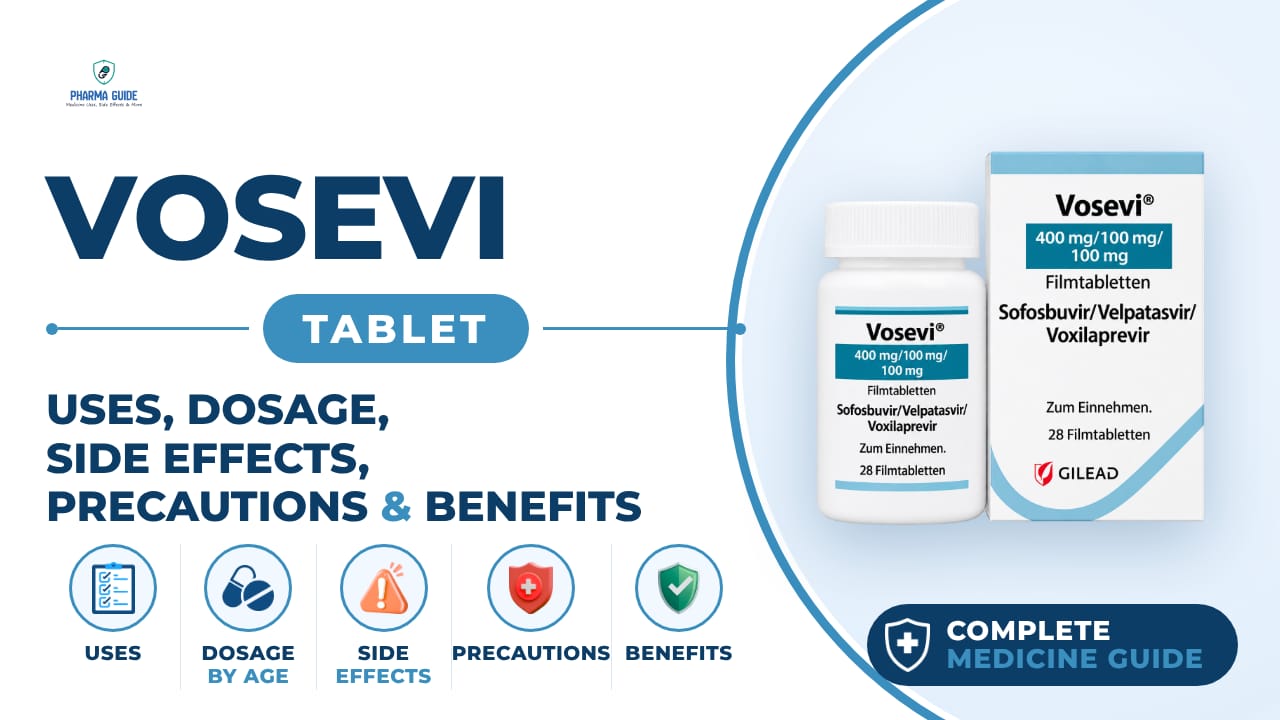
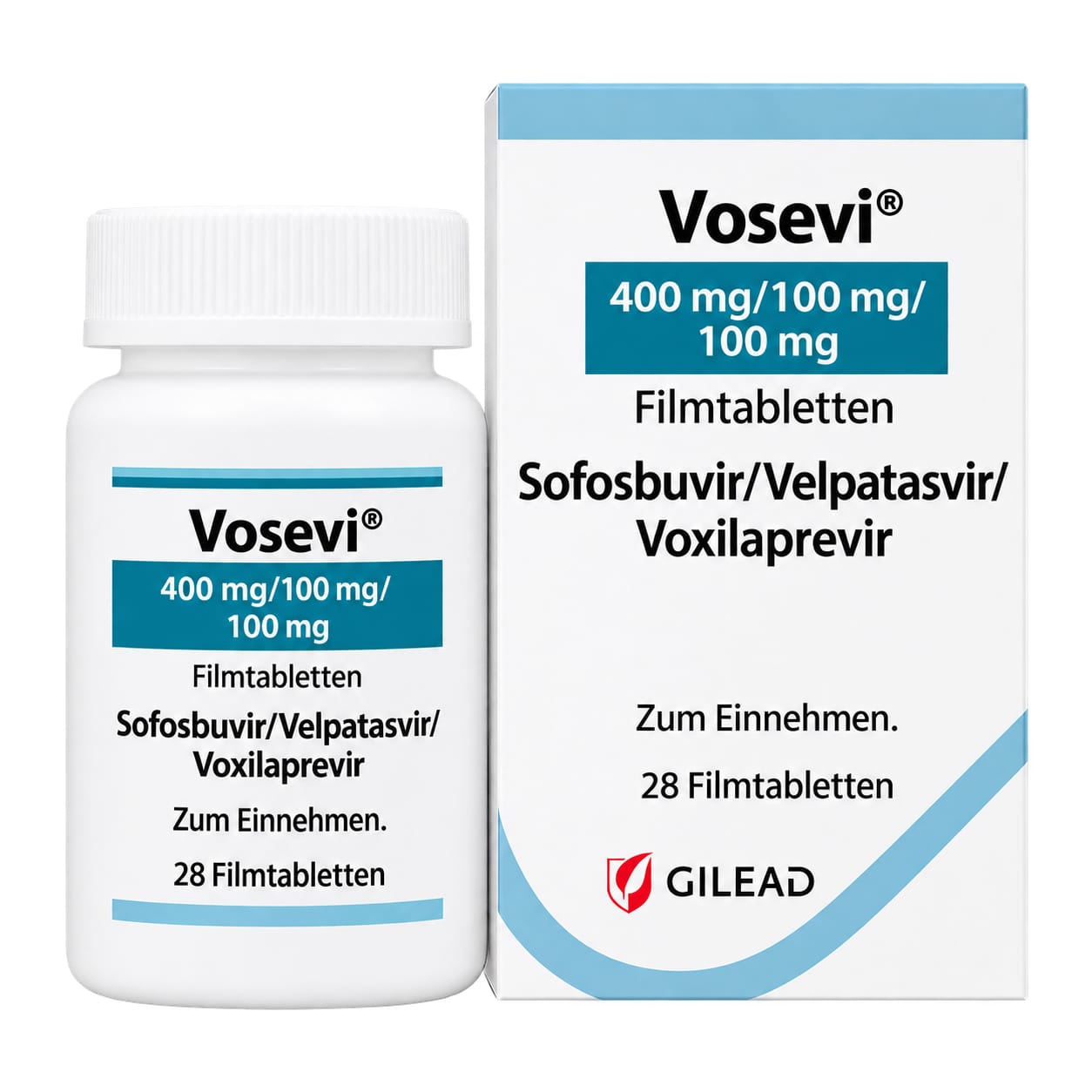
| Generic name | sofosbuvir, velpatasvir, and voxilaprevir |
|---|---|
| Drug class | Antiviral combinations; Direct-acting antivirals |
| Forms | Film-coated tablet |
Quick overview
Vosevi is a combination antiviral medicine containing sofosbuvir, velpatasvir, and voxilaprevir in a single tablet. It is used to treat chronic hepatitis C virus (HCV) infection, usually after previous HCV treatment has failed. Vosevi is taken once daily with food and works by blocking three different proteins the hepatitis C virus needs to multiply.
What is Vosevi Tablet
Vosevi is a combination medicine containing three antiviral substances - sofosbuvir, velpatasvir, and voxilaprevir - in a single tablet. It is used to treat chronic (long-term) hepatitis C virus (HCV) infection and is usually given after other HCV treatments have failed.
Vosevi Tablet uses
- Treats certain chronic hepatitis C infections
- Used mainly after previous hepatitis C treatment has failed
- Treats eligible HCV genotypes 1–6
- Helps achieve sustained viral clearance
Benefits of Vosevi Tablet
- Provides once-daily oral treatment
- Combines three direct-acting antivirals in one tablet
- Targets multiple stages of hepatitis C viral replication
- Provides a retreatment option for certain previously treated patients
How Vosevi Tablet works
Vosevi works by blocking three different proteins that the hepatitis C virus needs in order to multiply, which allows the infection to be cleared from the body.
Vosevi Tablet dosage
Take once daily on a regular schedule with food. Swallow the tablet(s) whole; do not chew, crush, or split the tablet because it has a very bitter taste. If you need to take an antacid, take it at least 4 hours before or 4 hours after your Vosevi dose.
If you vomit within 4 hours of taking a dose, take another dose; if you vomit more than 4 hours after dosing, you do not need to take another dose until your next scheduled dose. It is important not to miss or skip doses during treatment.
Complete the full course of treatment as directed by your doctor; do not stop without medical advice. No dose adjustment is needed for elderly patients. Vosevi is not for use in children under 12 years of age and weighing less than 30 kg.
| Age group | Dose |
|---|---|
| Under 18 years | Safety and effectiveness have not been established |
| 18–64 years | 1 tablet once daily with food for 12 weeks |
| 65–74 years | 1 tablet once daily with food; no age-based adjustment is generally required |
Available forms and strengths
- Film-coated tablet
Side effects of Vosevi Tablet
Common
- Headache
- Diarrhoea
- Nausea
- Abdominal pain
- Decreased appetite
- Vomiting
- Rash
- Myalgia (muscle pain)
- Increased total bilirubin (a liver blood test change)
- Fatigue
Serious
- Swelling of the face, lips, tongue or throat (angioedema)
- Wide-spread severe rash with peeling skin, possibly with fever and blisters in the mouth, eyes, or genitals (Stevens-Johnson syndrome)
- Severe bradycardia (very slow heart rate) and heart block, especially when taken with amiodarone
- Serious liver injury
- Hepatitis B virus reactivation in people with current or past hepatitis B infection
Warnings and precautions
- If you have ever had hepatitis B, it can become active again or get worse during or after treatment with Vosevi, which can lead to serious liver problems including liver failure and death. Your doctor will test and monitor you for this.
- Taking amiodarone (a heart rhythm medicine) together with Vosevi can cause a life-threatening slow heartbeat. Amiodarone should only be used if no other options work, and heart monitoring is needed.
- Several medicines must not be taken with Vosevi, including rifampicin, rifabutin, St. John's wort, carbamazepine, phenobarbital, phenytoin, rosuvastatin, dabigatran etexilate, and ethinylestradiol-containing contraceptives, because they can make Vosevi less effective or increase side effects.
- People with diabetes may have improved blood sugar control after starting treatment, which can lead to low blood sugar; glucose levels should be monitored closely, especially in the first three months.
- Vosevi contains lactose and should not be taken by people with rare hereditary problems such as galactose intolerance or glucose-galactose malabsorption.
- Vosevi is not recommended during pregnancy because its effects on an unborn baby are not known.
- Vosevi should not be used while breastfeeding, as it is not known whether it passes into breast milk and a risk to the infant cannot be ruled out.
- No dose change is needed for mild or moderate kidney problems. There is limited safety information in people with severe kidney impairment or those on dialysis, but Vosevi can still be used if no other treatment option is available.
- No dose change is needed for mild liver impairment, but Vosevi is not recommended for people with moderate or severe liver impairment.
- Alcohol is best avoided because it can worsen liver damage.
- Vosevi is not expected to affect your ability to drive or use machines.
Storage
- This medicine does not require any special temperature storage conditions
- Store in the original package in order to protect from moisture
- Keep the bottle tightly closed
- Keep out of the sight and reach of children
- Do not use after the expiry date stated on the bottle and carton
- Do not throw away any medicines via wastewater or household waste; ask your pharmacist how to dispose of medicines you no longer use
When to see a doctor
Get medical help right away if you notice swelling of the face, lips, tongue, or throat, or have difficulty breathing - this could be a severe allergic reaction.
Call your doctor immediately if you develop signs of liver problems such as upper right stomach pain, nausea, vomiting, loss of appetite, confusion, tiredness, easy bruising or bleeding, dark urine, or yellowing of the skin or eyes.
If you are also taking amiodarone, seek medical help immediately if you experience fainting or near-fainting, very slow or irregular heartbeat, shortness of breath, chest pain, confusion, memory problems, or extreme tiredness, as this can signal a dangerous slowing of the heart.
Seek medical advice urgently if you have recently used or currently use amiodarone and notice symptoms of a slow or abnormal heartbeat.
Stop taking Vosevi and get medical help immediately if you develop a wide-spread severe rash with peeling skin, possibly with fever, flu-like symptoms, or blisters in the mouth, eyes, or genitals.
Alternatives
- Epclusa
- Mavyret
- Harvoni
Watch the video
FAQs
What is Vosevi Tablet used for?
Vosevi treats chronic hepatitis C virus (HCV) infection across genotypes 1–6, usually in patients whose previous HCV treatment has failed, helping achieve sustained viral clearance.
How should Vosevi Tablet be taken?
Take one tablet once daily with food, swallowed whole without chewing, crushing, or splitting due to its very bitter taste. Antacids should be taken at least 4 hours before or after the dose.
What are the common side effects of Vosevi Tablet?
Common side effects include headache, diarrhoea, nausea, abdominal pain, decreased appetite, vomiting, rash, muscle pain, increased bilirubin, and fatigue.
Can Vosevi be taken with amiodarone?
Taking amiodarone with Vosevi can cause a life-threatening slow heartbeat, so amiodarone should only be used if no other options work, with close heart monitoring.
Is Vosevi safe during pregnancy or breastfeeding?
Vosevi is not recommended during pregnancy since its effects on an unborn baby are unknown, and it should not be used while breastfeeding as it is unclear if it passes into breast milk.
General information, not medical advice
Your prescriber and the leaflet in your pack know your situation. This page does not.
- Follow your prescriber and the leaflet
- Don't start, stop, or change a dose on your own
- Doses and warnings differ by country and product
Sources
Video
Related medicines

Injectafer Injection: Uses, Dosage, Side Effects, Precautions and Alternates
Iron products
Injectafer (ferric carboxymaltose) treats iron deficiency anemia and heart failure-related iron deficiency via IV. Learn uses, dosage, side effects, and

Gliclazide Tablet: Uses, Dosage, Side Effects, Precautions and Alternates
Sulfonylurea (hypoglycemic/antidiabetic agent)
Gliclazide Tablet is a sulfonylurea for type 2 diabetes that boosts insulin release. Learn about dosage, side effects, warnings, and precautions.