
Safety
General information, not medical advice
Your prescriber and the leaflet in your pack know your situation. This page does not.
- Follow your prescriber and the leaflet
- Don't start, stop, or change a dose on your own
- Doses and warnings differ by country and product
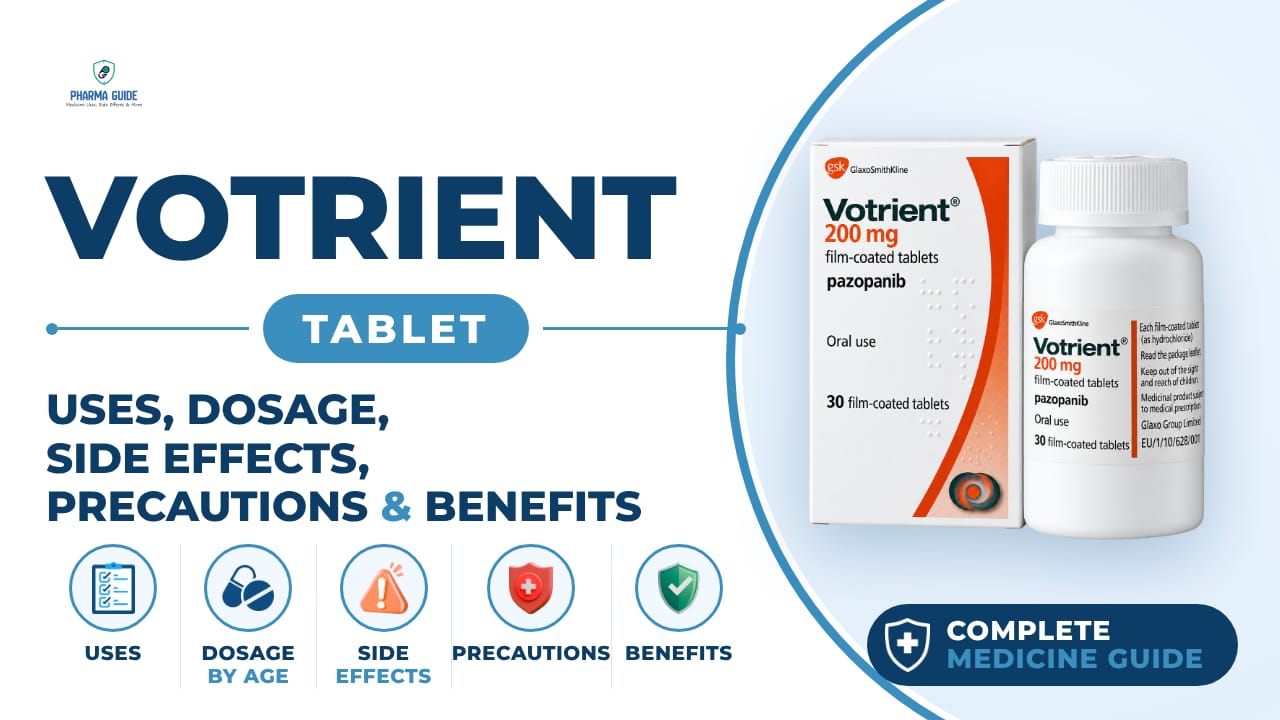
Votrient Tablet: Uses, Dosage, Side Effects, Precautions and Alternates
| Generic name | pazopanib |
|---|---|
| Drug class | VEGF/VEGFR inhibitor (kinase inhibitor) |
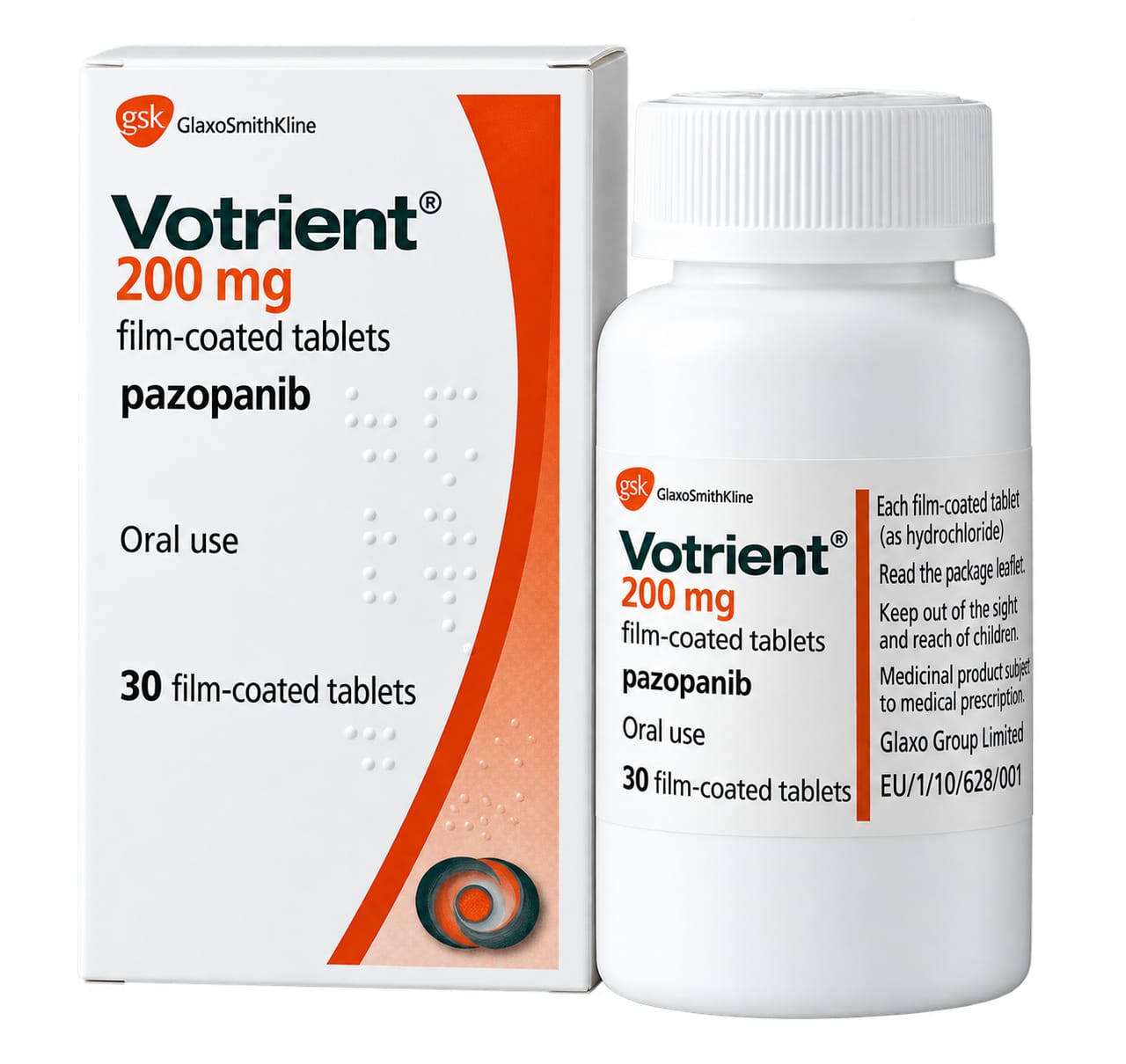
| Forms | Oral tablet (200 mg and 400 mg strengths) |
Quick overview
Votrient Tablet contains pazopanib, a VEGF/VEGFR kinase inhibitor used to treat advanced kidney cancer and certain soft tissue sarcomas. It works by blocking proteins that tumors use to grow new blood vessels, cutting off their blood supply and slowing or stopping their growth. It is taken by mouth on an empty stomach and requires regular monitoring for side effects such as liver damage, bleeding, and high blood pressure.
What is Votrient Tablet
Votrient is a prescription cancer medicine taken as a tablet by mouth. It is a targeted drug that blocks specific proteins inside cells to stop them from multiplying, which helps control certain cancers.
Votrient Tablet uses
- Advanced kidney cancer (advanced renal cell carcinoma)
- Soft tissue sarcoma (a tumor that can develop in or around muscles, tendons, joints, organs, or blood vessels), usually after other cancer treatments have been tried
Benefits of Votrient Tablet
- Helps slow or stop the growth and spread of cancer cells
- Blocks the growth of new blood vessels that feed tumors, cutting off their blood supply
- Treats certain advanced renal cell carcinomas
- Treats certain advanced soft-tissue sarcomas
- Blocks several tyrosine kinases involved in tumor growth and blood-vessel formation
- Can help slow cancer progression
- Provides an oral targeted-therapy option
How Votrient Tablet works
Cancer cells release proteins that signal the body to grow new blood vessels to feed the tumor. Votrient blocks these proteins, which stops new blood vessels from forming, reduces the tumor's supply of oxygen and nutrients, and slows or stops the tumor's growth and spread.
Votrient Tablet dosage
Take it on an empty stomach, at least 1 hour before or 2 hours after eating. Swallow the tablet whole with water; do not crush, chew, split, or break it. Avoid grapefruit and grapefruit juice completely during treatment, as it can raise the amount of the medicine in your body. Ask your doctor before using an antacid, and avoid taking stomach acid reducers while on this medicine. If you miss a dose, take it as soon as you remember, but skip it if your next dose is due soon. Tell your surgeon ahead of time if you are using this medicine before any surgery, since it may need to be stopped beforehand.
| Age group | Dose |
|---|---|
| Under 18 years | Safety and effectiveness have not been established |
| 18–64 years | 800 mg once daily |
| 65 years and older | 800 mg once daily, with individualized oncology monitoring |
Available forms and strengths
- Oral tablet (200 mg and 400 mg strengths)
Side effects of Votrient Tablet
Common
- Diarrhea
- Nausea and vomiting
- High blood pressure
- Fatigue (feeling very tired or weak)
- Loss of appetite and weight loss
- Changes in hair or skin color (such as hair turning lighter)
- Taste changes
- Headache
- Stomach pain
- Tumor, bone, or muscle pain
- Shortness of breath
Serious
- Severe or life-threatening liver damage
- Severe bleeding
- Dangerous blood clots
- Irregular heartbeat or heart failure
- Heart attack or stroke
- Severely high blood pressure
- Serious infections
- Lung problems (inflammation)
- A serious brain condition (posterior reversible encephalopathy syndrome)
- Low thyroid hormone levels
- Protein in the urine (possible kidney damage)
- Tumor lysis syndrome (rapid breakdown of cancer cells)
- Severe allergic reaction
- Wound healing problems
Warnings and precautions
- This medicine carries a serious boxed warning for liver damage, which can be severe or life-threatening. Regular blood tests are needed to monitor liver function during treatment.
- This medicine can cause serious or even fatal bleeding, and some people may need a blood transfusion or surgery because of it.
- This medicine can increase the risk of a heart attack or stroke that can be fatal, especially in people who already have heart disease.
- This medicine can cause dangerous blood clots in the arteries or veins, which may lead to a stroke, heart attack, or a clot in the lungs or legs.
- This medicine can cause a rare but serious brain condition involving swelling and narrowing of blood vessels in the brain, which can lead to a stroke if untreated.
- Avoid grapefruit and grapefruit juice completely during treatment, as this can raise the level of the medicine in your body and increase the risk of side effects.
- Do not use this medicine if you are pregnant because it could harm the unborn baby. A pregnancy test may be required before starting treatment, and effective birth control should be used during treatment and for at least two weeks after the last dose. Men whose partners are or could become pregnant should use condoms during treatment and for two weeks after, even after a vasectomy.
- You should not breastfeed while taking this medicine and for at least two weeks after your last dose.
- This medicine can cause a high amount of protein in the urine, which can be a sign of kidney damage. Tell your doctor if you have swelling, foamy urine, or other symptoms.
- This medicine can cause severe or life-threatening liver damage. You should not use it if you have severe liver disease, and you will need regular blood tests to check your liver function during treatment.
- It isn't known for certain if alcohol affects this medicine, but drinking heavily can weaken your immune system and make it harder for your body to fight cancer.
- Kidney function should be monitored; treatment may need adjustment if significant renal problems occur.
Storage
- Store Votrient at room temperature away from moisture and heat. Pazopanib should be stored at room temperature, between 68 F and 77 F (20 C and 25 C).
- It can be exposed to temperatures between 59 F and 86 F (15 C and 30 C) for shorter periods of time, such as when you're transporting it. Store it in a cool, dry place.
When to see a doctor
- Get emergency help right away for signs of a severe allergic reaction, such as hives, trouble breathing, or swelling of the face, lips, tongue, or throat.
- Call your doctor right away if you notice signs of liver problems, such as nausea, vomiting, upper stomach pain, loss of appetite, extreme tiredness, dark urine, or yellowing of the skin or eyes.
- Get medical help right away for signs of a heart attack or stroke, including chest pain or pressure, pain spreading to the jaw or shoulder, sudden weakness on one side of the body, slurred speech, or a severe headache.
- Call your doctor or get emergency help if you have signs of dangerously high blood pressure, such as severe chest pain, severe headache, blurred vision, pounding in the neck or ears, anxiety, shortness of breath, or feeling like you might pass out.
- Call your doctor right away if you have unusual bleeding or bruising, or signs of infection such as fever, chills, or body aches.
- Get help right away if you have signs of stomach bleeding, such as stomach pain or swelling, bloody or tarry stools, or coughing up blood or vomit that looks like coffee grounds.
- Seek emergency medical attention if you think you have taken too much of this medicine.
Alternatives
- Sorafenib
- Cabozantinib
- Axitinib
- Sunitinib
Watch the video
FAQs
What is Votrient Tablet used for?
Votrient Tablet is used to treat advanced kidney cancer (advanced renal cell carcinoma) and soft tissue sarcoma, usually after other cancer treatments have been tried.
How should Votrient Tablet be taken?
Votrient should be taken on an empty stomach, at least 1 hour before or 2 hours after eating. Swallow the tablet whole with water; do not crush, chew, split, or break it.
Can I drink grapefruit juice while taking Votrient Tablet?
No, you should avoid grapefruit and grapefruit juice completely during treatment, as it can raise the amount of the medicine in your body and increase the risk of side effects.
What are the serious side effects of Votrient Tablet?
Serious side effects include severe or life-threatening liver damage, severe bleeding, dangerous blood clots, irregular heartbeat or heart failure, heart attack or stroke, severely high blood pressure, serious infections, lung problems, a serious brain condition, and protein in the urine.
What is the dosage of Votrient Tablet for adults?
The typical dose for adults aged 18 to 64 is 800 mg once daily, and for those 65 and older it is also 800 mg once daily with individualized oncology monitoring.
General information, not medical advice
Your prescriber and the leaflet in your pack know your situation. This page does not.
- Follow your prescriber and the leaflet
- Don't start, stop, or change a dose on your own
- Doses and warnings differ by country and product
Sources
Video
Related medicines

Injectafer Injection: Uses, Dosage, Side Effects, Precautions and Alternates
Iron products
Injectafer (ferric carboxymaltose) treats iron deficiency anemia and heart failure-related iron deficiency via IV. Learn uses, dosage, side effects, and

Gliclazide Tablet: Uses, Dosage, Side Effects, Precautions and Alternates
Sulfonylurea (hypoglycemic/antidiabetic agent)
Gliclazide Tablet is a sulfonylurea for type 2 diabetes that boosts insulin release. Learn about dosage, side effects, warnings, and precautions.