
Safety
General information, not medical advice
Your prescriber and the leaflet in your pack know your situation. This page does not.
- Follow your prescriber and the leaflet
- Don't start, stop, or change a dose on your own
- Doses and warnings differ by country and product
Voveran Injection: Uses, Dosage, Side Effects, Precautions and Alternates
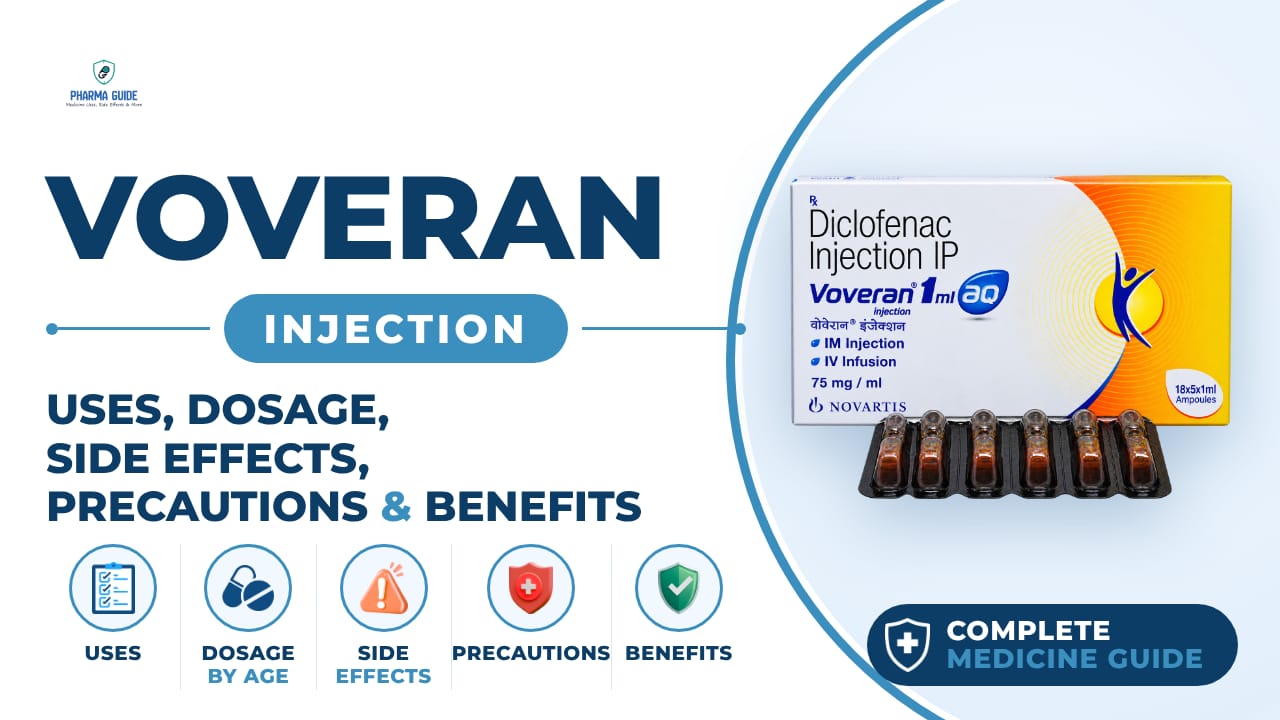
| Generic name | Diclofenac |
|---|---|
| Drug class | Nonsteroidal anti-inflammatory drug (NSAID) |
| Forms | Injection |
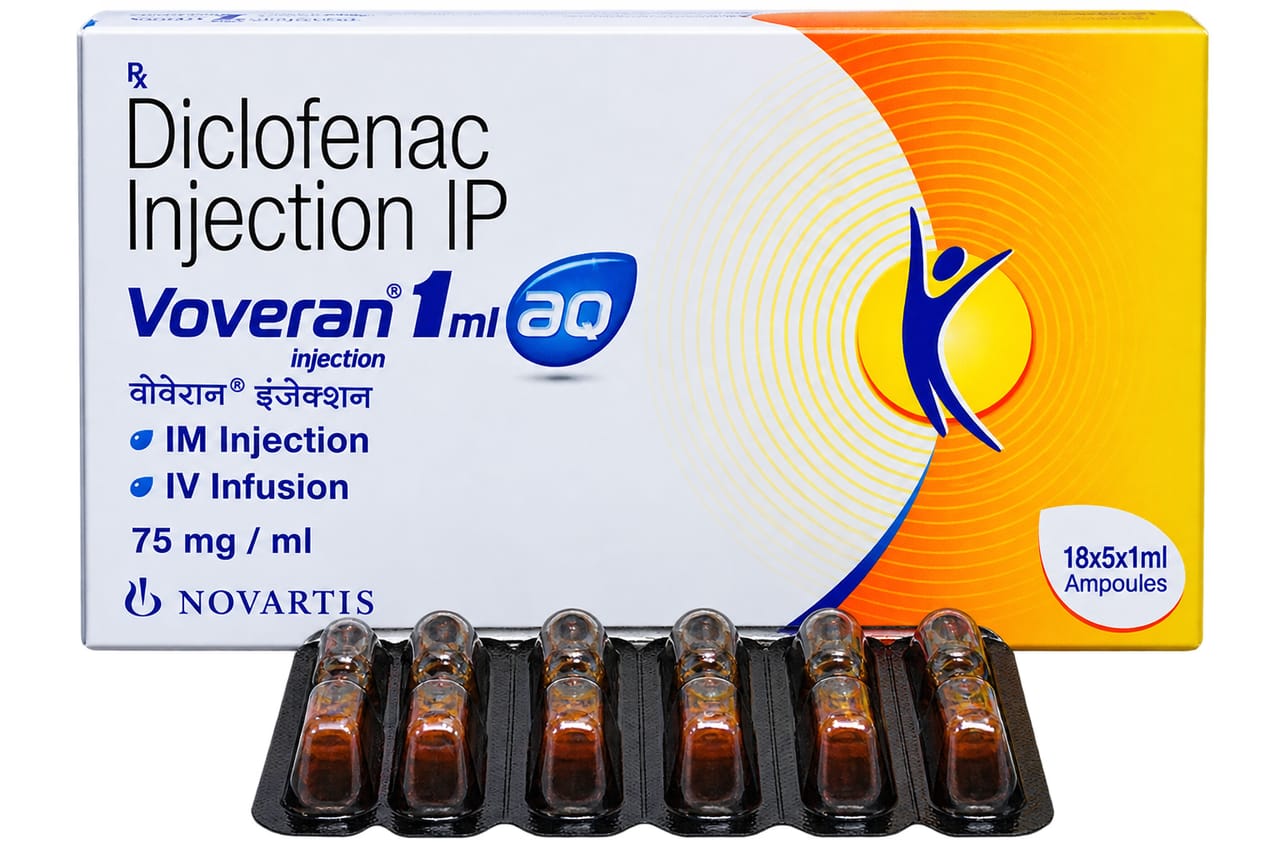
Quick overview
Voveran Injection contains diclofenac, a nonsteroidal anti-inflammatory drug (NSAID). It is given as an injection by a healthcare professional to relieve pain, swelling, and inflammation, usually when taking medicine by mouth is not possible or when faster relief is needed. It is used for conditions such as arthritis, back and neck pain, and post-surgical pain, and works by reducing chemicals in the body that cause pain and swelling.
What is Voveran Injection
Voveran Injection is a painkiller that contains diclofenac. It is given as an injection by a healthcare professional to relieve pain, swelling, and inflammation, usually when taking medicine by mouth is not possible or when faster relief is needed.
Voveran Injection uses
- Rheumatoid arthritis
- Osteoarthritis
- Ankylosing spondylitis
- Low back pain and neck pain
- Pain and swelling after surgery
- Pain from sprains, strains, and muscle injuries
Benefits of Voveran Injection
- Helps relieve pain, swelling, and stiffness caused by joint and muscle conditions
- Can help you move more easily and go about daily activities when pain is under control
How Voveran Injection works
This medicine blocks an enzyme in the body called cyclooxygenase (COX), which is involved in making chemicals that cause pain, swelling, and fever. By lowering the levels of these chemicals, it reduces pain and inflammation.
Voveran Injection dosage
This injection is given by a doctor or nurse in a hospital or clinic setting; do not try to give it to yourself. It is generally used when pain is severe, or when taking medicine by mouth is not possible. It works quickly and may start to act soon after it is given. Drink enough fluids before and after each dose. Follow your doctor's instructions exactly, including how long you need the treatment. It is not recommended for use in children. Older adults may need lower doses and closer monitoring because they are more sensitive to side effects.
| Age group | Dose |
|---|---|
| Under 18 years | Not recommended |
| 18–60 years | 75 mg, once daily |
| 60+ years | 75 mg, once daily |
Available forms and strengths
Injection
Side effects of Voveran Injection
Common
- Nausea and vomiting
- Diarrhoea
- Constipation
- Pain, swelling, or redness at the injection site
- Headache
- Dizziness
- Flatulence
- Swelling (edema)
- Skin rash
- Tinnitus (ringing in the ears)
Serious
- Stomach bleeding
- Kidney disease or worsening kidney problems
- Liver problems
- Heart attack or heart failure
- Severe allergic reactions such as skin rash, hives, swelling of the face/lips/tongue, or breathing difficulty
Warnings and precautions
- This medicine is not recommended during pregnancy because it may cause miscarriage or affect the baby's heart development.
- It is considered unsafe unless the doctor decides the benefits outweigh the risks in a serious situation. Talk to your doctor before using it if you are pregnant or planning to become pregnant.
- This medicine may pass into breast milk in small amounts and could affect a nursing baby. Tell your doctor if you are breastfeeding before receiving this medicine.
- Use with caution if you have kidney disease, as long-term use can worsen kidney problems. Your doctor may need to monitor your kidney function regularly.
- Use with caution if you have liver problems. This medicine may raise liver enzyme levels, so your doctor may order liver function tests to check for any effects.
- Avoid alcohol while receiving this medicine, as it can increase the risk of serious side effects such as stomach and intestinal bleeding, dizziness, fatigue, weakness, rash, nausea, joint pain, fever, and jaundice.
- This medicine may cause dizziness or drowsiness. Do not drive or operate machinery if you feel this way after receiving the injection.
- Long-term use of this medicine can lead to serious problems such as stomach bleeding and kidney disease.
- This medicine should not be used before, during, or after coronary artery bypass graft (CABG) surgery, because it may cause heart failure.
- This medicine is not recommended for people with NSAID-induced asthma, a condition where these drugs can narrow the airway and cause severe breathing trouble.
- This medicine may cause damage to the stomach and intestines, especially with long-term use, and the risk is higher if you have a history of stomach or intestinal problems.
- This medicine can cause fluid retention, especially in the lower legs, and your doctor may check your blood pressure, electrolytes, and heart function.
- Elderly patients should use this medicine with caution because of a higher risk of kidney and liver problems; doctors often start with lower doses and monitor closely.
- People with a history of heart disease or stroke should avoid this medicine, as it can worsen these conditions.
- People with stomach ulcers should avoid this medicine as it can further damage the affected area.
Storage
- Store below 30°C
- Keep away from sunlight and moisture
- Keep out of reach of children
- Use before the expiry date on the packaging
When to see a doctor
- Get medical help right away if you notice signs of an allergic reaction, such as skin rash, hives, swelling of the face, lips, or tongue, or difficulty breathing.
- Seek medical help immediately if you notice signs of an overdose, such as severe dizziness, stomach pain, or confusion.
- Contact your doctor if you notice unusual bleeding, bruising, black or bloody stools, vomiting blood, or yellowing of the skin or eyes, as these can be signs of serious stomach, liver, or blood problems.
Alternatives
- Voren Injection
- Dicloran Injection
- Dynapar AQ Injection
Watch the video
FAQs
What is Voveran Injection used for?
It is used to relieve pain, swelling, and inflammation in conditions such as rheumatoid arthritis, osteoarthritis, ankylosing spondylitis, back and neck pain, post-surgical pain, and sprains or muscle injuries.
How does Voveran Injection work?
It blocks an enzyme called cyclooxygenase (COX), which is involved in making chemicals that cause pain, swelling, and fever, thereby reducing pain and inflammation.
Can Voveran Injection be given to children?
No, it is not recommended for use in children.
Is it safe to drink alcohol while receiving Voveran Injection?
No, alcohol should be avoided as it can increase the risk of serious side effects such as stomach and intestinal bleeding, dizziness, fatigue, weakness, rash, nausea, joint pain, fever, and jaundice.
What are the common side effects of Voveran Injection?
Common side effects include nausea, vomiting, diarrhoea, constipation, pain or redness at the injection site, headache, dizziness, flatulence, swelling, skin rash, and tinnitus.
General information, not medical advice
Your prescriber and the leaflet in your pack know your situation. This page does not.
- Follow your prescriber and the leaflet
- Don't start, stop, or change a dose on your own
- Doses and warnings differ by country and product
Sources
Video
Related medicines
Relaxyl Capsule: Uses, Dosage, Side Effects, Precautions and Alternates
Nonsteroidal Anti-Inflammatory Drug (NSAID)
Relaxyl Capsule contains diclofenac, an NSAID used to relieve joint and muscle pain, swelling, and inflammation. Learn uses, dosage, and side effects.
Nabumetone Tablet: Uses, Dosage, Side Effects, Precautions and Alternates
Nonsteroidal anti-inflammatory drug (NSAID)
Nabumetone Tablet is an NSAID for osteoarthritis and rheumatoid arthritis pain relief. Learn its dosage, uses, side effects, and safety warnings.