
Safety
General information, not medical advice
Your prescriber and the leaflet in your pack know your situation. This page does not.
- Follow your prescriber and the leaflet
- Don't start, stop, or change a dose on your own
- Doses and warnings differ by country and product
Vtama Cream: Uses, Dosage, Side Effects, Precautions and Alternates
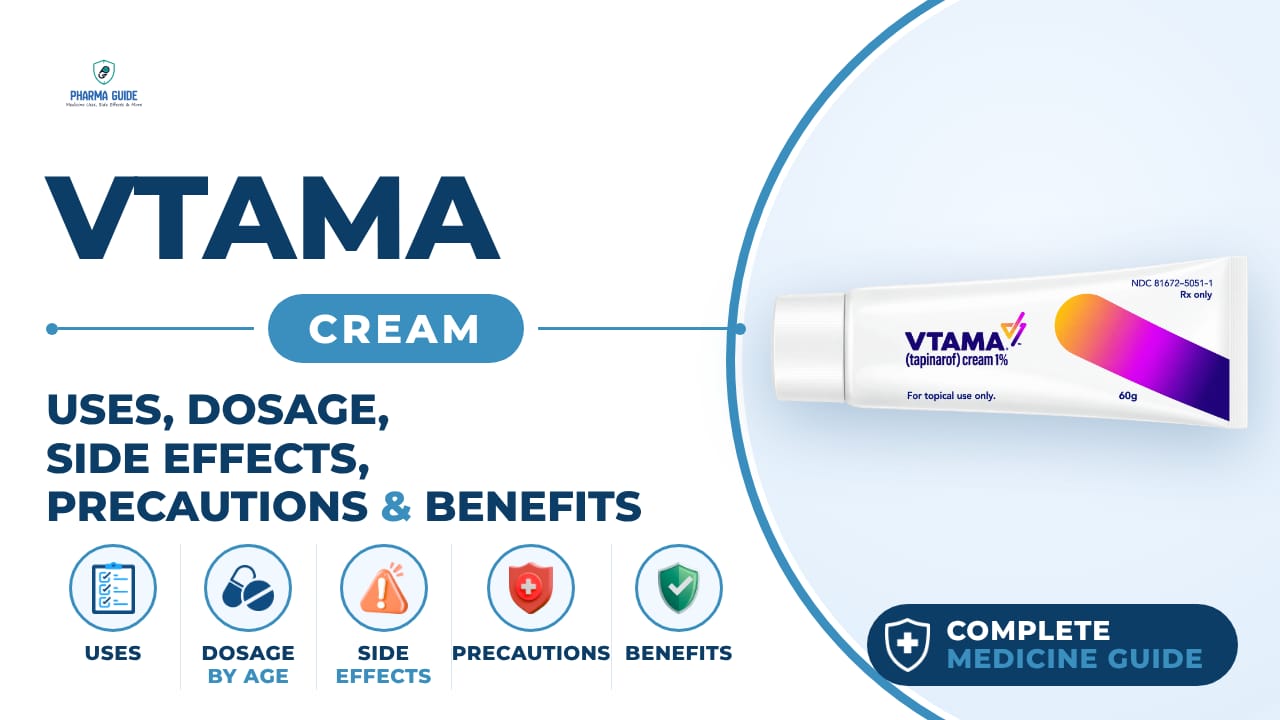
| Generic name | tapinarof |
|---|---|
| Drug class | aryl hydrocarbon receptor (AhR) agonist |
| Forms | 1% topical cream |
Quick overview
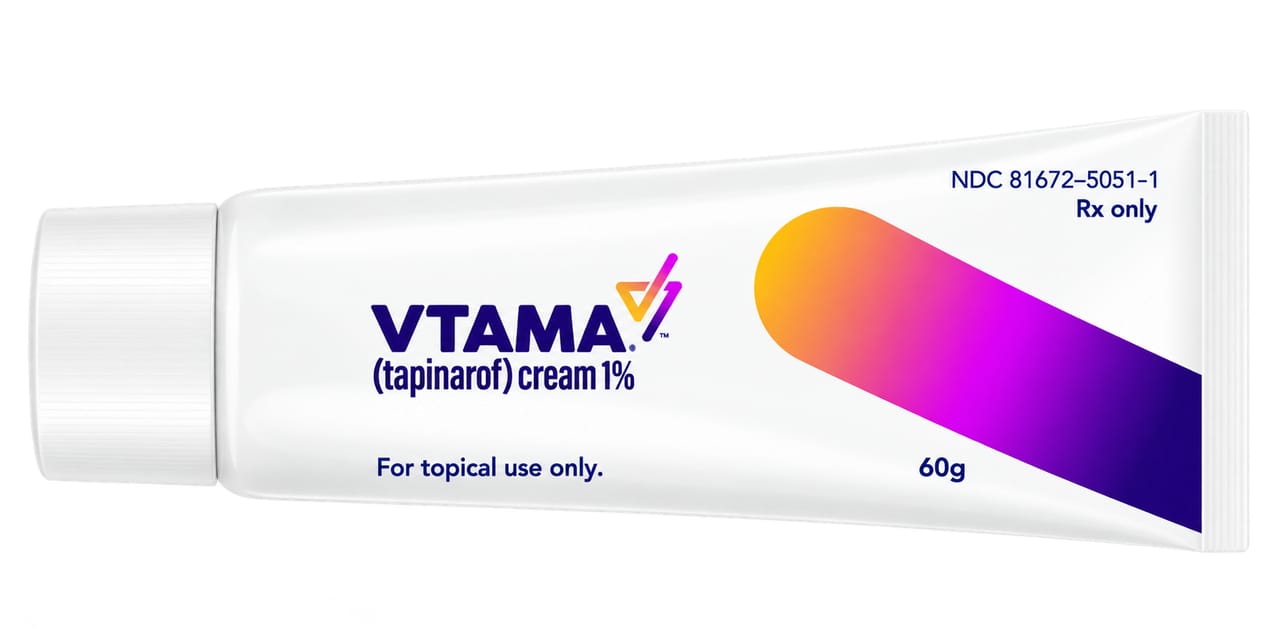
Vtama Cream (tapinarof) is a steroid-free, topical prescription medication belonging to the aryl hydrocarbon receptor (AhR) agonist class. It is used to treat plaque psoriasis in adults and atopic dermatitis (eczema) in adults and children aged 2 years and older. It works by calming the skin's immune response and reducing inflammation. It is applied as a 1% cream, typically once daily, as directed by a doctor.
What is Vtama Cream
Vtama (tapinarof) 1% cream is a steroid-free, topical prescription medication used to treat certain skin conditions.
Vtama Cream uses
- Treatment of plaque psoriasis in adults
- Treatment of atopic dermatitis (eczema) in adults and children aged 2 years and older
- Helps reduce inflammatory activity in affected skin
- Helps relieve itching associated with psoriasis and eczema
- Reduces redness and skin irritation
- May improve thickened and scaly psoriasis plaques
Benefits of Vtama Cream
- Can be used on sensitive areas like the face, neck, and skin folds, unlike traditional steroid creams
- May help lessen redness and itching from these skin conditions
- May have fewer side effects than other topical treatments like corticosteroids
How Vtama Cream works
Vtama works by attaching to and turning on a receptor in the skin called the aryl hydrocarbon receptor. This helps calm the skin's immune response, reduce inflammation, and help the skin barrier work normally.
Vtama Cream dosage
Wash and dry your hands before applying the medication, then clean and dry the affected area. Apply a thin layer only to the affected skin, not to normal, healthy skin. Rub the cream in gently as directed by your doctor, usually once a day. Wash your hands after applying the cream unless your hands are the area being treated. If your doctor recommends a moisturizer, apply it after this medication.
Avoid getting the cream in your eyes, mouth, or vagina; rinse with water if this happens. Use the medication regularly and at the same time each day to get the most benefit. Do not use more often or for longer than your doctor tells you to.
If you miss a dose, use it as soon as you remember, but skip it if it is almost time for your next dose; do not double up.
| Age group | Dose |
|---|---|
| Under 2 years | Safety and effectiveness not established; no approved dosage |
| 2–64 years | Atopic dermatitis: 1% cream once daily; plaque psoriasis treatment not approved |
| 65–74 years | 1% cream once daily for either approved condition, with routine clinical monitoring |
| 75 years and older | 1% cream once daily for either approved condition, with individualized monitoring of skin tolerance |
Available forms and strengths
- 1% topical cream
Side effects of Vtama Cream
Common
- Folliculitis (inflamed or discolored hair follicles)
- Cold symptoms, sore throat, or infection of the nose, ear, or throat
- Contact dermatitis
- Headache
- Itching
- Flu or flu-like symptoms
- Skin rash, including peeling, burning, or stinging where the cream is applied
- Asthma or wheezing
- Vomiting
- Pain in the arms or legs
- Stomach area pain
Serious
- Severe allergic reaction (hives, swelling of face/lips/mouth/tongue/throat, trouble breathing or swallowing, wheezing, racing heart, fever, dizziness, fainting)
- Lower respiratory tract infection
- Severe stomach pain
Warnings and precautions
- Do not use Vtama if you are allergic to tapinarof or to any of the ingredients in the cream.
- Vtama is for use on the skin only. Only apply it to the affected areas, and avoid getting it in your eyes, mouth, or vagina.
- Do not use Vtama unless a healthcare provider has prescribed it to you, and do not share it with other people even if they have the same condition.
- Keep Vtama out of the reach of children.
- Safety and effectiveness have not been established in children under 2 years old, and the cream is not approved for plaque psoriasis in children.
- It is not known if or how Vtama could affect pregnancy or harm an unborn baby.
- There isn't enough information to know the risk, since it's unclear how much of the drug gets into the body through the skin. Tell your healthcare provider if you are or plan to become pregnant.
- It is not known if Vtama passes into breast milk. Tell your healthcare provider if you are breastfeeding or plan to breastfeed; they will advise you on whether you should use it.
- No specific renal dose adjustment is established. Patients with significant kidney disease should have treatment reviewed by a healthcare professional.
- No specific hepatic dose adjustment is established. Patients with significant liver disease require individualized clinical assessment.
- Tell your doctor if you drink alcohol, as this is one of the things they will want to know about before you use Vtama.
- Vtama Cream is not generally associated with sedation or reduced alertness. Avoid driving if any adverse effect impairs concentration.
Storage
- Store at room temperature, between 68 F to 77 F (20 C to 25 C)
- It can be exposed to temperatures between 59 F to 86 F (15 C to 30 C) for shorter periods of time, such as when transporting it
- Store in a cool, dry place
- Do not freeze
- Keep all medications away from children and pets
- Do not flush medications down the toilet or pour them into a drain unless instructed to do so
- Properly discard this product when it is expired or no longer needed; consult your pharmacist or local waste disposal company
When to see a doctor
- Stop using Vtama and get help right away if you have signs of a serious allergic reaction, such as trouble breathing or wheezing, a racing heart, fever, swelling of the face, lips, mouth, tongue or throat, trouble swallowing, hives, nausea or vomiting, dizziness, fainting, stomach cramps, or joint pain.
- If you think you have used too much Vtama, get medical help right away or contact a poison control center.
- If you develop signs of a skin infection where you applied the cream, such as fever, pus-filled follicles, discolored streaks, or the area feeling warm, talk with your doctor right away for an urgent evaluation.
Alternatives
- Vectical
- Dovonex
- Calcipotriene
- Zoryve
Watch the video
FAQs
What is Vtama Cream used for?
Vtama Cream is used to treat plaque psoriasis in adults and atopic dermatitis (eczema) in adults and children aged 2 years and older. It helps reduce inflammation, redness, itching, and thickened, scaly plaques.
How does Vtama Cream work?
Vtama works by attaching to and activating the aryl hydrocarbon receptor in the skin, which helps calm the skin's immune response, reduce inflammation, and support normal skin barrier function.
How often should Vtama Cream be applied?
Vtama is typically applied as a thin layer to affected skin once daily, as directed by a doctor. It should be used regularly at the same time each day, and not more often or longer than prescribed.
Can Vtama Cream be used on the face?
Yes, unlike traditional steroid creams, Vtama can be used on sensitive areas like the face, neck, and skin folds.
What are the common side effects of Vtama Cream?
Common side effects include folliculitis, cold or flu-like symptoms, contact dermatitis, headache, itching, skin rash or irritation at the application site, and stomach pain.
General information, not medical advice
Your prescriber and the leaflet in your pack know your situation. This page does not.
- Follow your prescriber and the leaflet
- Don't start, stop, or change a dose on your own
- Doses and warnings differ by country and product
Sources
Video
Related medicines

Injectafer Injection: Uses, Dosage, Side Effects, Precautions and Alternates
Iron products
Injectafer (ferric carboxymaltose) treats iron deficiency anemia and heart failure-related iron deficiency via IV. Learn uses, dosage, side effects, and

Gliclazide Tablet: Uses, Dosage, Side Effects, Precautions and Alternates
Sulfonylurea (hypoglycemic/antidiabetic agent)
Gliclazide Tablet is a sulfonylurea for type 2 diabetes that boosts insulin release. Learn about dosage, side effects, warnings, and precautions.