
Safety
General information, not medical advice
Your prescriber and the leaflet in your pack know your situation. This page does not.
- Follow your prescriber and the leaflet
- Don't start, stop, or change a dose on your own
- Doses and warnings differ by country and product
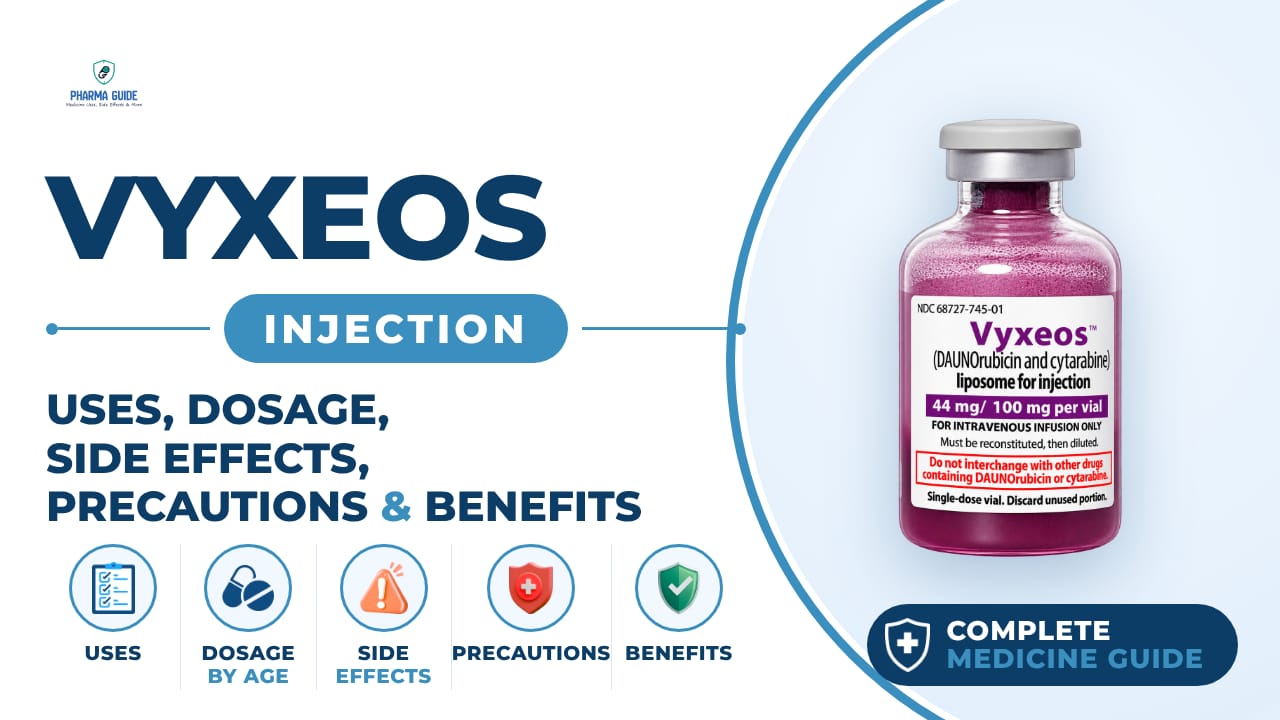
Vyxeos Injection: Uses, Dosage, Side Effects, Precautions and Alternates
| Generic name | daunorubicin/cytarabine liposomal |
|---|---|
| Drug class | anthracycline topoisomerase inhibitor/nucleoside metabolic inhibitor |
| Forms | Injectable liquid (given into a vein), Powder for injection in a vial |
Quick overview
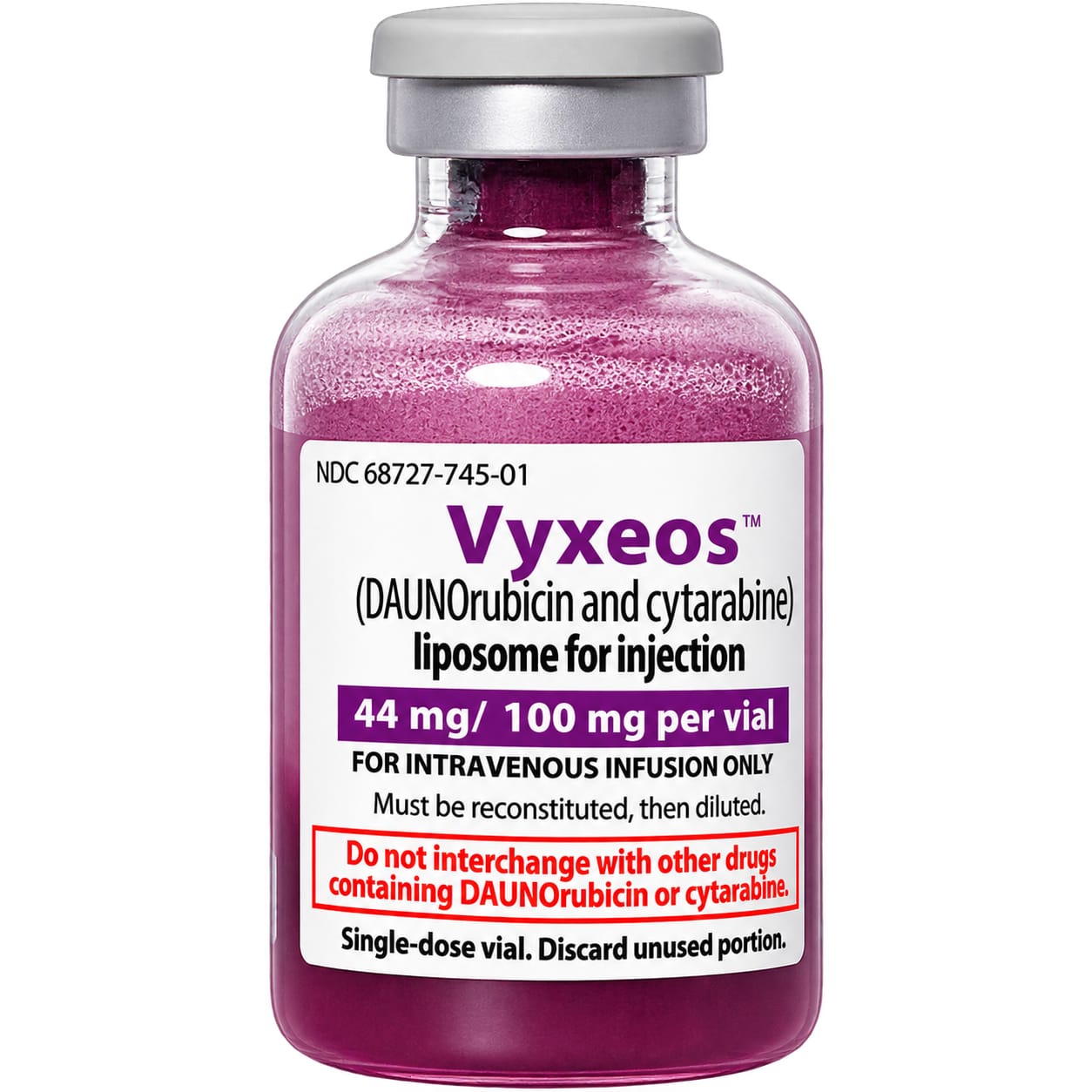
Vyxeos Injection is a liposomal chemotherapy medicine that combines daunorubicin and cytarabine, packaged inside tiny fat droplets called liposomes. It is used to treat certain high-risk types of acute myeloid leukemia (AML) in adults and children aged 1 year and older. It is given as an intravenous infusion by a health care provider in a hospital or clinic. It belongs to the anthracycline topoisomerase inhibitor and nucleoside metabolic inhibitor drug classes.
What is Vyxeos Injection
Vyxeos is a liposomal injection chemotherapy medicine that combines two drugs, daunorubicin and cytarabine, packaged inside tiny fat droplets called liposomes. It is used to treat certain high-risk types of acute myeloid leukemia (AML) in adults and children aged 1 year and older.
Vyxeos Injection uses
- Newly-diagnosed therapy-related acute myeloid leukemia (t-AML), a leukemia that develops after previous treatment for other cancers, in people 1 year or older
- Acute myeloid leukemia with myelodysplasia-related changes (AML-MRC), leukemia associated with bone marrow changes, in people 1 year or older
Benefits of Vyxeos Injection
- Combines daunorubicin and cytarabine inside tiny fat droplets (liposomes) that protect the medicine and release it directly inside the bone marrow
- Patients treated with Vyxeos lived longer on average (about 9.6 months vs. 6 months) compared to standard separate daunorubicin and cytarabine treatments
- More patients achieve complete remission and successfully move on to a stem cell transplant
How Vyxeos Injection works
Vyxeos contains two chemotherapy medicines that work in different ways to stop cancer cells from growing and spreading. Daunorubicin blocks a protein that cancer cells need to copy their DNA, which kills the cancer cell. Cytarabine looks like a normal DNA building block, so it gets mixed into the cancer cell's DNA and stops the cell from copying its DNA, causing it to die.
Vyxeos Injection dosage
Vyxeos is given as an infusion into a vein by a health care provider in a hospital or clinic, usually over about 90 minutes. It is given on specific days of your treatment cycle, with breaks in between cycles. It is important to attend all scheduled blood tests and heart checkups so your health care provider can check your response and safety. If you miss an appointment for your infusion, call your care team to reschedule as soon as possible. Drink plenty of fluids while using this medication unless otherwise directed by your doctor, to help lower the risk of certain side effects.
| Age group | Dose |
|---|---|
| Under 1 year | Safety and effectiveness have not been established |
| 1–17 years | Daunorubicin 44 mg/m² + cytarabine 100 mg/m² IV on Days 1, 3, and 5 for first induction |
| 18–64 years | Daunorubicin 44 mg/m² + cytarabine 100 mg/m² IV on Days 1, 3, and 5 for first induction |
Available forms and strengths
- Injectable liquid (given into a vein)
- Powder for injection in a vial
Side effects of Vyxeos Injection
Common
- Fever with low white blood cell count (febrile neutropenia)
- Bleeding problems like bruising or nosebleeds
- Nausea, diarrhea, or constipation
- Rash and allergic reactions
- Tiredness and weakness
- Sores in the mouth or throat
- Swelling (edema) and muscle or joint pain
- Stomach pain
- Shortness of breath
- Headache
- Cough
- Reduced appetite
- Abnormal heart rhythm
- Infections
- Chills
- Sleep problems or strange dreams
- Vomiting
- Dizziness
- Chest pain
- Itchiness
- Low blood pressure or high blood pressure
- Fungal infection
- Upper respiratory infections
- Low white blood cell count, low platelets, anemia
Serious
- Severe myelosuppression (severely lowered blood cell counts) that can cause fatal infections or bleeding
- Severe allergic reactions with breathing problems, swelling of face/lips/mouth/tongue/throat, hives, dizziness, or fainting
- Severe bleeding, including pink/red/brown urine, blood in vomit that looks like coffee grounds, red or black tarry stools, coughing up blood, or new bruising/bleeding
- Heart failure, with shortness of breath, swelling in feet/ankles/legs, fast weight gain, or unusual tiredness
- Irregular heart rhythm
- Tissue damage if the medicine leaks outside the vein during injection, causing pain, swelling, warmth, or skin color changes
- Copper overload in people with Wilson's disease or similar conditions, causing stomach pain, yellow skin or eyes, severe thirst, tarry stools, or blue-green vomit or stool
Warnings and precautions
- Vyxeos is not interchangeable with daunorubicin or cytarabine given on their own, since it is made differently and dosed differently.
- Vyxeos can cause serious heart damage, especially in people with heart problems, prior anthracycline chemotherapy, previous chest radiation, or those taking other medicines that can harm the heart. Your heart will be checked before and during treatment.
- People with Wilson's disease or other conditions that cause copper buildup in the body should tell their doctor before starting Vyxeos, because it contains copper.
- People aged 65 and older may be at greater risk of some side effects from Vyxeos.
- Do not use Vyxeos if you are allergic to daunorubicin, cytarabine, or any of its ingredients.
- No dose adjustment is required for mild, moderate, or severe renal impairment under current labeling.
- Vyxeos can harm an unborn baby. Your health care provider will likely test to make sure you are not pregnant before starting treatment.
- If you or your partner can become pregnant, use effective birth control during treatment and for six months after the last dose. Tell your health care provider right away if you are or might be pregnant.
- It is not known if Vyxeos passes into breast milk. Breastfeeding is not recommended while using Vyxeos and for two weeks after the last dose, due to potential risk to the infant.
- Tell your health care provider if you have kidney problems before using Vyxeos, as this is something they need to know to determine if the medicine is right for you.
- Tell your health care provider if you have liver problems before using Vyxeos. Medicines that can harm the liver may also raise the risk of side effects from Vyxeos.
- It is not known for sure if alcohol affects Vyxeos, but heavy drinking can weaken your immune response and make it harder for your body to fight cancer. Both Vyxeos and alcohol can increase bleeding risk, so it is best to limit how much alcohol you drink.
Storage
- Vyxeos is usually given by a health care provider in a hospital or clinic. You will not store it at home.
- Keep in refrigerator. Do not freeze. Do Not Shake. Swirl gently. Protect from light. Discard unused portion after the time specified by your health care provider.
When to see a doctor
- Get help right away if you have signs of a serious allergic reaction, such as breathing problems or wheezing, racing heart, swelling of the face/lips/mouth/tongue/throat, trouble swallowing, hives, dizziness, or fainting.
- Call your health care provider right away if you notice signs of severe bleeding, such as pink, red, or brown urine; vomit that looks like coffee grounds; red or black tarry stools; coughing up blood or blood clots; or new bruising or bleeding.
- Tell your health care provider right away if you have signs of heart failure, such as shortness of breath, swelling in your feet/ankles/legs, fast weight gain, or unusual tiredness.
- Tell your health care provider right away if you have pain, swelling, warmth, or skin color changes where the medicine is being given or was given, as this could mean the medicine leaked outside the vein.
- If you think you've received too much Vyxeos, get medical help right away or contact a poison control center.
Alternatives
- Standard daunorubicin/cytarabine chemotherapy
- Venetoclax-based regimens
- Decitabine
- Azacitidine
Watch the video
FAQs
What is Vyxeos Injection used for?
Vyxeos is used to treat newly-diagnosed therapy-related acute myeloid leukemia (t-AML) and AML with myelodysplasia-related changes (AML-MRC) in people 1 year of age and older.
How is Vyxeos Injection given?
Vyxeos is given as an intravenous infusion by a health care provider in a hospital or clinic, usually over about 90 minutes, on specific days of a treatment cycle with breaks in between cycles.
What are the serious side effects of Vyxeos Injection?
Serious side effects include severe myelosuppression that can cause fatal infections or bleeding, severe allergic reactions, severe bleeding, heart failure, irregular heart rhythm, tissue damage if the medicine leaks outside the vein, and copper overload in people with Wilson's disease.
Can Vyxeos Injection be used during pregnancy or breastfeeding?
Vyxeos can harm an unborn baby, so effective birth control should be used during treatment and for six months after the last dose. Breastfeeding is not recommended during treatment and for two weeks after the last dose.
Is Vyxeos the same as regular daunorubicin and cytarabine?
No, Vyxeos is not interchangeable with daunorubicin or cytarabine given separately because it is made and dosed differently.
General information, not medical advice
Your prescriber and the leaflet in your pack know your situation. This page does not.
- Follow your prescriber and the leaflet
- Don't start, stop, or change a dose on your own
- Doses and warnings differ by country and product
Sources
Video
Related medicines

Injectafer Injection: Uses, Dosage, Side Effects, Precautions and Alternates
Iron products
Injectafer (ferric carboxymaltose) treats iron deficiency anemia and heart failure-related iron deficiency via IV. Learn uses, dosage, side effects, and

Gliclazide Tablet: Uses, Dosage, Side Effects, Precautions and Alternates
Sulfonylurea (hypoglycemic/antidiabetic agent)
Gliclazide Tablet is a sulfonylurea for type 2 diabetes that boosts insulin release. Learn about dosage, side effects, warnings, and precautions.