
Safety
General information, not medical advice
Your prescriber and the leaflet in your pack know your situation. This page does not.
- Follow your prescriber and the leaflet
- Don't start, stop, or change a dose on your own
- Doses and warnings differ by country and product
Wikoryl Tablet: Uses, Dosage, Side Effects, Precautions and Alternates
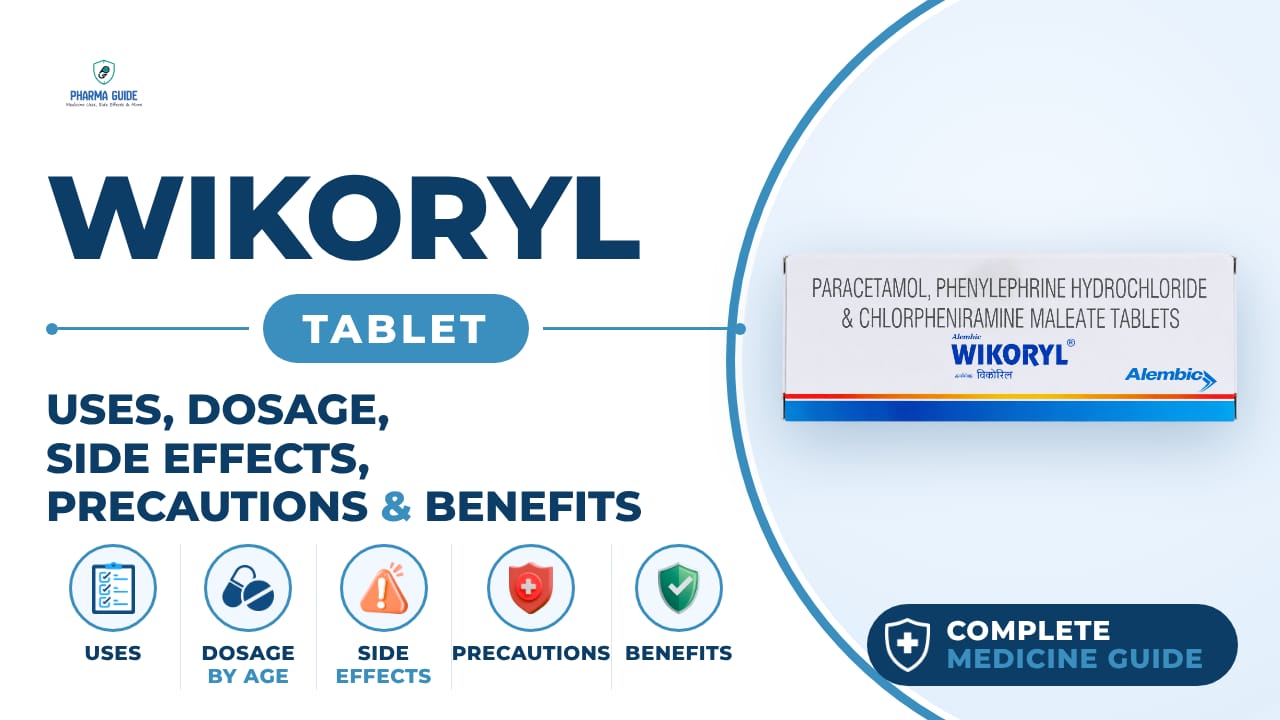
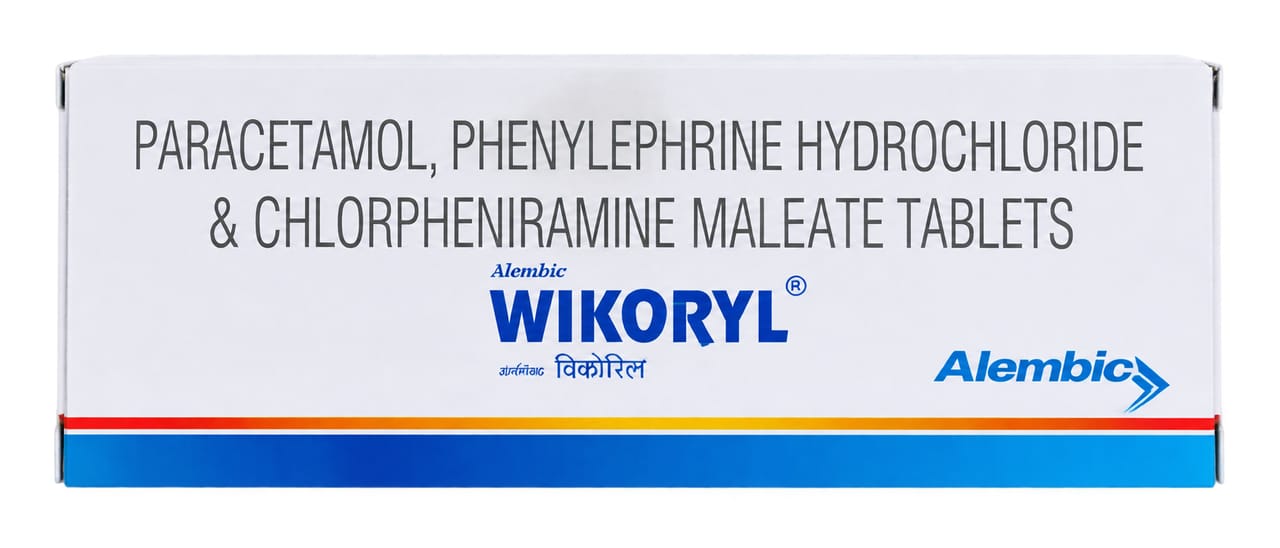
| Generic name | Chlorpheniramine Maleate + Paracetamol + Phenylephrine |
|---|---|
| Drug class | Antihistamines, antipyretics, analgesics, and nasal decongestants |
| Forms | Tablet |
Quick overview
Wikoryl Tablet is a combination medicine containing chlorpheniramine maleate, paracetamol, and phenylephrine, belonging to the antihistamine, antipyretic, analgesic, and nasal decongestant drug classes. It is used for short-term relief of common cold and allergy symptoms such as runny or blocked nose, sneezing, headache, and mild fever. It is not intended for children under 12 years of age.
What is Wikoryl Tablet
Wikoryl Tablet is a combination medicine that contains chlorpheniramine, paracetamol, and phenylephrine. It is used for short-term relief of common cold and allergy symptoms.
Wikoryl Tablet uses
- Relieves a runny or blocked nose and sneezing
- Eases itchy or watery eyes and sinus discomfort
- Relieves headache and mild fever
- Allergic Rhinitis
- Common Cold
- Blocked Nose
- Common Cold and Cough associated with Fever
Benefits of Wikoryl Tablet
- Cold Relief: Helps reduce common cold symptoms.
- Fever Reduction: Paracetamol helps lower fever.
- Pain Relief: Helps relieve headache and body aches.
- Runny Nose Relief: Chlorpheniramine helps reduce sneezing and nasal discharge.
- Nasal Congestion Relief: Phenylephrine helps reduce blocked nose.
How Wikoryl Tablet works
This medicine combines three ingredients that work together: one blocks the body's allergic reaction chemicals to ease sneezing and runny nose, one reduces swelling in the nasal blood vessels to clear a blocked nose, and one blocks chemical messengers in the brain that cause pain and fever.
Wikoryl Tablet dosage
Take the tablet with a glass of water. Swallow the tablet as a whole, do not crush or chew the tablet. Take it in the dosage suggested by your doctor. It can be taken with or without food, however it should be taken with food to avoid side effects such as nausea and vomiting. Take this medicine at the same time daily for ease of remembering. Complete the entire treatment course as prescribed by your doctor even if symptoms subside after taking a few doses. This medication is not intended for children under 12 years of age. The effect of this medicine in older patients may vary based on their disease and general health condition; it should be used with caution and only on your doctor's advice.
| Age group | Dose |
|---|---|
| Under 12 Years | Use only if prescribed by a healthcare professional |
| 12–17 Years | 1 tablet every 8–12 hours as directed |
| Adults (18–64 Years) | 1 tablet every 8–12 hours as needed |
| Older Adults (65+ Years) | 1 tablet every 12 hours; use with caution |
Available forms and strengths
- Tablet
Side effects of Wikoryl Tablet
Common
- Mild drowsiness
- Stomach upset
- Dizziness
- Anxiety
- Insomnia
- Difficulty sleeping
- Mild headache
- Nausea
- Vomiting
- Dry mouth
- Constipation
- Nasal irritation
Serious
- Thickening of bronchial secretions
- Hypotension
- Respiratory depression or breathing difficulty
- Heart palpitations
- Anticholinergic effects (dry mouth, blurry vision, dilated pupils, increased heart rate, decreased sweating, constipation and difficulty urinating)
- Bloody and cloudy urine
- Gastric / Mouth Ulcer
- Increase in the blood pressure
Warnings and precautions
- Sources disagree on whether this medicine is safe in pregnancy: one says this medicine is safe in pregnancy, while others say it is not recommended or should be used with caution. Always check with your doctor before use if pregnant.
- Sources disagree on whether this medicine is safe while breastfeeding: one says this medicine is safe while breastfeeding, while others say it is not recommended or should be used with caution. Always check with your doctor before use while breastfeeding.
- This medicine should be used with caution in people with kidney disease.
- This medicine should be used with extreme caution in people with liver problems, and your doctor may need to monitor your liver function and adjust your dose.
- Avoid alcohol while taking this medicine, as it can increase drowsiness, dizziness, and difficulty concentrating, and may raise the risk of liver damage.
- This medicine can cause drowsiness or blurred vision, so avoid driving or operating machinery if you feel affected.
- Do not use this medicine if you have glaucoma, asthma, heart disease, kidney disease, liver disease, COPD, or certain other conditions unless your doctor tells you to.
- Avoid this medicine if you have taken medicines for depression called MAOIs in the last two weeks, due to a higher risk of serious side effects.
- This medicine is not recommended if you have an enlarged prostate, as it may make urination more difficult.
- This medicine is not recommended if you have a fast heart rhythm problem called ventricular tachycardia.
- Never take more than the dose your doctor has prescribed.
Storage
- Store Wikoryl Tablet at room temperature below 30°C.
- Protect the medicine from heat and light.
- Keep the tablet away from the reach of children.
- Do not use the tablet after the expiry date has passed.
When to see a doctor
- Get medical help right away if you notice signs of a serious allergic reaction, such as rash, itching or swelling of the face, tongue, or throat, severe dizziness, or trouble breathing.
- If you or someone else takes too much of this medicine by accident, get medical help right away. Signs of overdose include confusion, nausea, stomach ache, vomiting, and loss of appetite.
- Talk to your doctor if you do not feel better even after two weeks of taking this medicine.
- Tell your doctor right away if you notice symptoms like nausea, fever, rash, or dark urine, which could be signs of liver problems.
Alternatives
- Sinarest Tablet
- Cetzine Cold Tablet
- Vicks Action 500
Watch the video
FAQs
What is Wikoryl Tablet used for?
Wikoryl Tablet is used for short-term relief of common cold and allergy symptoms such as runny or blocked nose, sneezing, headache, mild fever, itchy or watery eyes, and sinus discomfort.
What are the ingredients in Wikoryl Tablet?
Wikoryl Tablet contains chlorpheniramine maleate, paracetamol, and phenylephrine, which work together as an antihistamine, antipyretic/analgesic, and nasal decongestant.
What is the dosage of Wikoryl Tablet for adults?
Adults aged 18-64 years can take 1 tablet every 8-12 hours as needed, while older adults (65+) should take 1 tablet every 12 hours with caution. It should be swallowed whole with water and not crushed or chewed.
Can Wikoryl Tablet be given to children?
Wikoryl Tablet is not intended for children under 12 years of age. For ages 12-17, 1 tablet every 8-12 hours may be taken as directed by a doctor.
What are the common side effects of Wikoryl Tablet?
Common side effects include mild drowsiness, stomach upset, dizziness, anxiety, insomnia, difficulty sleeping, mild headache, nausea, vomiting, dry mouth, constipation, and nasal irritation.
General information, not medical advice
Your prescriber and the leaflet in your pack know your situation. This page does not.
- Follow your prescriber and the leaflet
- Don't start, stop, or change a dose on your own
- Doses and warnings differ by country and product
Sources
Video
Related medicines

Injectafer Injection: Uses, Dosage, Side Effects, Precautions and Alternates
Iron products
Injectafer (ferric carboxymaltose) treats iron deficiency anemia and heart failure-related iron deficiency via IV. Learn uses, dosage, side effects, and

Gliclazide Tablet: Uses, Dosage, Side Effects, Precautions and Alternates
Sulfonylurea (hypoglycemic/antidiabetic agent)
Gliclazide Tablet is a sulfonylurea for type 2 diabetes that boosts insulin release. Learn about dosage, side effects, warnings, and precautions.