
Safety
General information, not medical advice
Your prescriber and the leaflet in your pack know your situation. This page does not.
- Follow your prescriber and the leaflet
- Don't start, stop, or change a dose on your own
- Doses and warnings differ by country and product
Xeljanz Tablet: Uses, Dosage, Side Effects, Precautions and Alternates
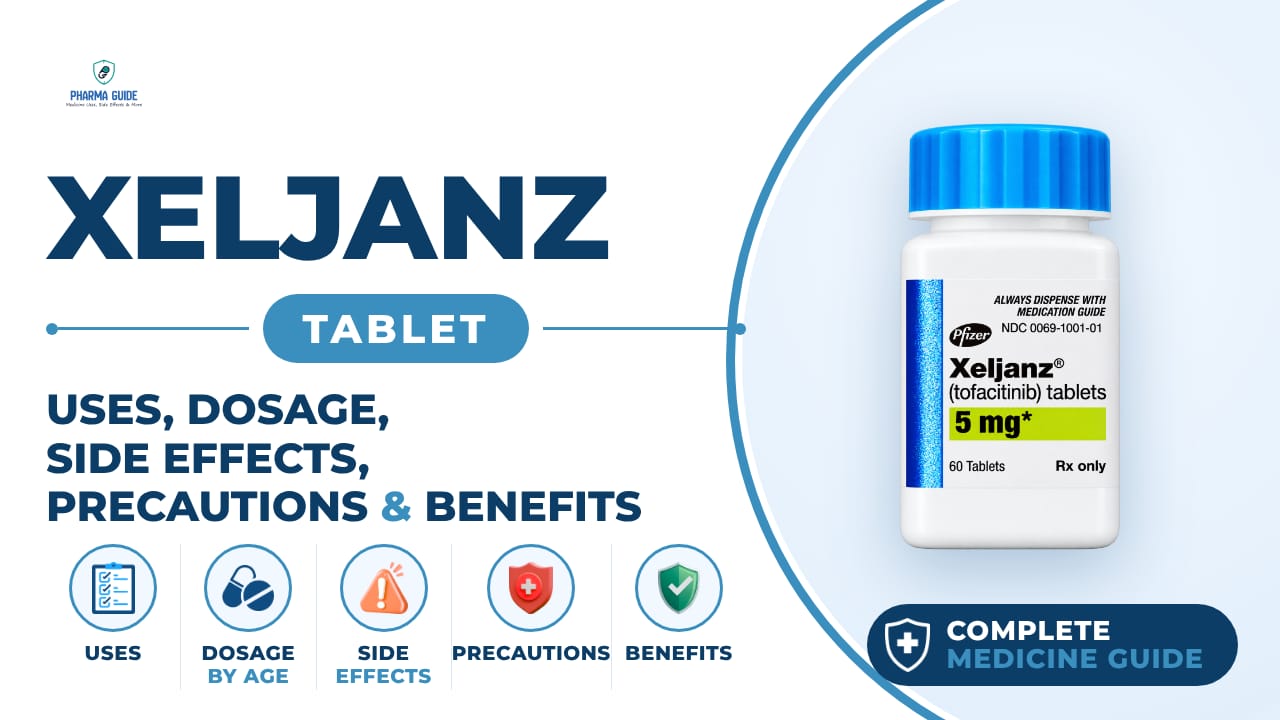
| Generic name | tofacitinib |
|---|---|
| Drug class | Janus kinase (JAK) inhibitor |
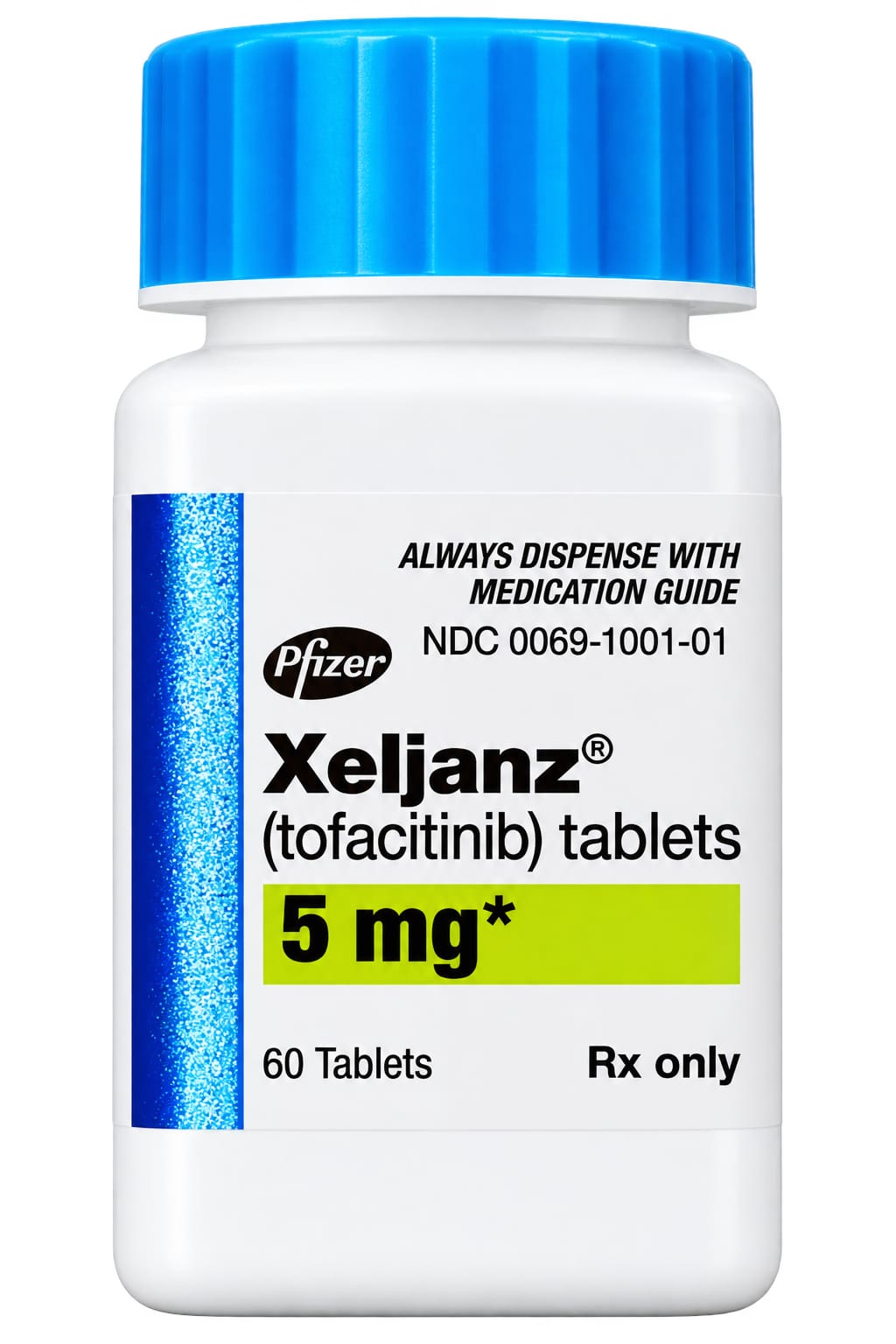
| Forms | Oral tablet (5 mg, 10 mg), Extended-release oral tablet (Xeljanz XR, 11 mg, 22 mg), Oral solution (1 mg/mL) |
Quick overview
Xeljanz Tablet contains tofacitinib, a Janus kinase (JAK) inhibitor used to treat conditions such as rheumatoid arthritis, psoriatic arthritis, ankylosing spondylitis, and ulcerative colitis. It works by calming an overactive immune system to reduce inflammation. It comes as a tablet, an extended-release tablet (Xeljanz XR), and an oral solution, and should be used exactly as prescribed due to important warnings around infections and other serious risks.
What is Xeljanz Tablet
Xeljanz is a prescription medicine that contains the active ingredient tofacitinib. It belongs to a group of medicines called Janus Kinase (JAK) inhibitors and comes as a tablet, an extended-release tablet (Xeljanz XR), and an oral solution.
Xeljanz Tablet uses
- Moderately to severely active rheumatoid arthritis in adults, usually after other medicines (such as TNF blockers) have not worked well enough or caused bothersome side effects
- Active psoriatic arthritis in adults and in certain children
- Active ankylosing spondylitis in adults
- Moderately to severely active ulcerative colitis in adults
- Active polyarticular course juvenile idiopathic arthritis and juvenile psoriatic arthritis in children 2 years and older
Benefits of Xeljanz Tablet
- Inflammation Control: Helps reduce excessive immune-system activity.
- Rheumatoid Arthritis Support: Helps reduce joint swelling, pain, and stiffness.
- Psoriatic Arthritis Support: Helps control inflammation and joint symptoms.
- Ulcerative Colitis Support: Can help induce and maintain remission in eligible patients.
- Juvenile Arthritis Support: Certain formulations may be used for selected children and adolescents.
How Xeljanz Tablet works
Xeljanz works by blocking enzymes called Janus kinases inside cells. These enzymes normally send signals that cause inflammation, so blocking them helps calm down an overactive immune system and reduce inflammation.
Xeljanz Tablet dosage
Take the tablets or oral solution at about the same time each morning and evening so you remember your doses. Immediate-release tablets and oral solution are usually taken twice a day; the extended-release (XR) tablet is taken once a day. It can be taken with or without food.
Swallow the extended-release (XR) tablets whole; do not crush, split, or chew them. Immediate-release tablets may be crushed, split, or chewed if needed for swallowing difficulty, but check with your doctor or pharmacist first.
If you miss a dose, skip it and take your next dose at the regular time; do not take a double dose to make up for a missed one. Keep taking this medicine even if you feel well, since it controls the condition but does not cure it. Continue taking it for as long as your doctor tells you to.
| Age group | Dose |
|---|---|
| 2–17 Years | Dose is weight-based and indication-specific; specialist supervision is required |
| Adults (18–64 Years) | Usually 5 mg twice daily or 11 mg extended-release once daily, depending on the condition |
| Older Adults (65+ Years) | Usually 5 mg twice daily or 11 mg extended-release once daily; individualized according to health status |
Available forms and strengths
- Oral tablet (5 mg, 10 mg)
- Extended-release oral tablet (Xeljanz XR, 11 mg, 22 mg)
- Oral solution (1 mg/mL)
Side effects of Xeljanz Tablet
Common
- Diarrhea
- Headache
- Upper respiratory infections such as the common cold or sinus infections
- Nasal congestion, sore throat, or runny nose
- Skin rash
- Increased cholesterol levels
- High blood pressure
- Stomach pain, indigestion, or heartburn
- Nausea, vomiting, constipation
- Joint or back pain
- Swollen feet or hands
- Weight gain
- Acne
- Dizziness
Serious
- Gastrointestinal perforations (tears in the digestive tract)
- Blood disorders, including low red and white blood cell counts
- Cardiovascular problems such as heart attack or stroke
- Serious infections, including tuberculosis, hepatitis B or C reactivation, and shingles
- Blood clots in the legs, arms, or lungs
- Increased risk of certain cancers, including skin cancer and lymphoma
- Increased risk of death in certain people
- Severe allergic reaction
- Liver problems, including fatigue, yellowing of skin or eyes, dark urine, loss of appetite
- A rare, serious brain infection called progressive multifocal leukoencephalopathy (PML)
- Fractures (broken bones)
Warnings and precautions
- This medicine can seriously lower your body's ability to fight infections, increasing the risk of serious infections such as tuberculosis, shingles, or infections that spread through the body, some of which have been fatal.
- People 50 years and older with at least one heart disease risk factor have a higher chance of serious heart problems, blood clots, and death while taking this medicine, especially at higher doses.
- This medicine may increase the risk of certain cancers, including lymphoma and skin cancers, by changing how the immune system works.
- Blood clots can form in the lungs, legs, arms, or arteries, and some people have died from these clots.
- Tears can occur in the stomach or intestines, especially in people also taking NSAIDs, corticosteroids, or methotrexate.
- You should not take this medicine together with biologic drugs or strong immune-suppressing medicines, as this can raise the risk of serious infection.
- Avoid live vaccines while taking this medicine, since your immune system will be less able to respond safely to them.
- Tell your doctor if you are pregnant or planning to become pregnant. This medicine is not recommended during pregnancy, and effective birth control should be used while taking it.
- Talk to your doctor if you are breastfeeding or planning to breastfeed. You should not breastfeed while taking this medicine.
- Tell your doctor if you have kidney problems, as your dose may need to be adjusted.
- This medicine should not be used if you have severe liver problems, and your doctor will check your liver function with blood tests before and during treatment.
- There is no specific known interaction between this medicine and alcohol, but drinking alcohol may add to the risk of liver problems, so ask your doctor if it is safe for you to drink while taking it.
- Be careful before driving or using machines or tools until you know how this medicine affects you.
Storage
- Keep tablets in the pack until it is time to take them
- Store tablets below 30°C
- Store oral solution below 25°C and protect it from light by keeping it in its carton
- Discard any remaining oral solution 60 days after first opening the bottle
- Store in a cool, dry place away from moisture, heat, or sunlight; do not store in the bathroom, near a sink, or in a car
- Keep out of reach of children
- Do not use after the expiry date
- If you no longer need the medicine or it is out of date, take it to a pharmacy for safe disposal
When to see a doctor
- Get emergency help right away if you notice signs of a heart attack or stroke, such as chest pain or tightness spreading to the arm, jaw, neck, or back, shortness of breath, cold sweat, dizziness, or weakness on one side of the body.
- Stop taking this medicine and call your doctor right away if you notice signs of a blood clot, such as sudden shortness of breath, chest pain, or swelling, pain, or discoloration in an arm or leg.
- Call your doctor right away if you have signs of an infection, such as fever, chills, cough, shortness of breath, weight loss, or warm, red, painful skin or sores.
- Tell your doctor right away if you have a fever with stomach pain that doesn't go away along with a change in bowel habits, as this could be a sign of a tear in the stomach or intestines.
- Seek medical help right away if you have signs of a severe allergic reaction, such as swelling of the lips, tongue, or throat, difficulty breathing, or hives.
- Call your doctor right away if you or a caregiver notice new or worsening muscle weakness, vision changes, or confusion, as these could be signs of a rare but serious brain infection.
Alternatives
- Upadacitinib (Rinvoq)
- Baricitinib
- Filgotinib
Watch the video
FAQs
What is Xeljanz Tablet used for?
Xeljanz is used to treat moderately to severely active rheumatoid arthritis, active psoriatic arthritis, active ankylosing spondylitis, and moderately to severely active ulcerative colitis in adults. It is also used for active polyarticular course juvenile idiopathic arthritis and juvenile psoriatic arthritis in children 2 years and older.
How is Xeljanz Tablet taken?
Immediate-release tablets and oral solution are usually taken twice a day, while the extended-release (XR) tablet is taken once a day, with or without food. XR tablets must be swallowed whole without crushing, splitting, or chewing, while immediate-release tablets may be crushed, split, or chewed if needed after checking with a doctor or pharmacist.
What should I do if I miss a dose of Xeljanz?
If you miss a dose, skip it and take your next dose at the regular time. Do not take a double dose to make up for the missed one.
What are the serious side effects of Xeljanz Tablet?
Serious side effects include gastrointestinal perforations, blood disorders, cardiovascular problems such as heart attack or stroke, serious infections including tuberculosis and shingles, blood clots, increased risk of certain cancers, liver problems, a rare brain infection called PML, and fractures.
Can I take Xeljanz if I am pregnant or breastfeeding?
Xeljanz is not recommended during pregnancy, and effective birth control should be used while taking it. You should not breastfeed while taking this medicine, so talk to your doctor if you are pregnant, planning to become pregnant, or breastfeeding.
General information, not medical advice
Your prescriber and the leaflet in your pack know your situation. This page does not.
- Follow your prescriber and the leaflet
- Don't start, stop, or change a dose on your own
- Doses and warnings differ by country and product
Sources
Video
Related medicines
Rinvoq Tablet: Uses, Dosage, Side Effects, Precautions and Alternates
Janus kinase (JAK) inhibitor
Rinvoq Tablet (upadacitinib) treats rheumatoid arthritis, psoriatic arthritis, atopic dermatitis, and more by reducing inflammation. Learn dosage, side
Anzupgo Cream: Uses, Dosage, Side Effects, Precautions and Alternates
Janus kinase (JAK) inhibitor
Anzupgo Cream (delgocitinib) treats moderate to severe chronic hand eczema in adults. Learn how it works, dosage, side effects, and warnings.