
Safety
General information, not medical advice
Your prescriber and the leaflet in your pack know your situation. This page does not.
- Follow your prescriber and the leaflet
- Don't start, stop, or change a dose on your own
- Doses and warnings differ by country and product
Xerese Cream: Uses, Dosage, Side Effects, Precautions and Alternates
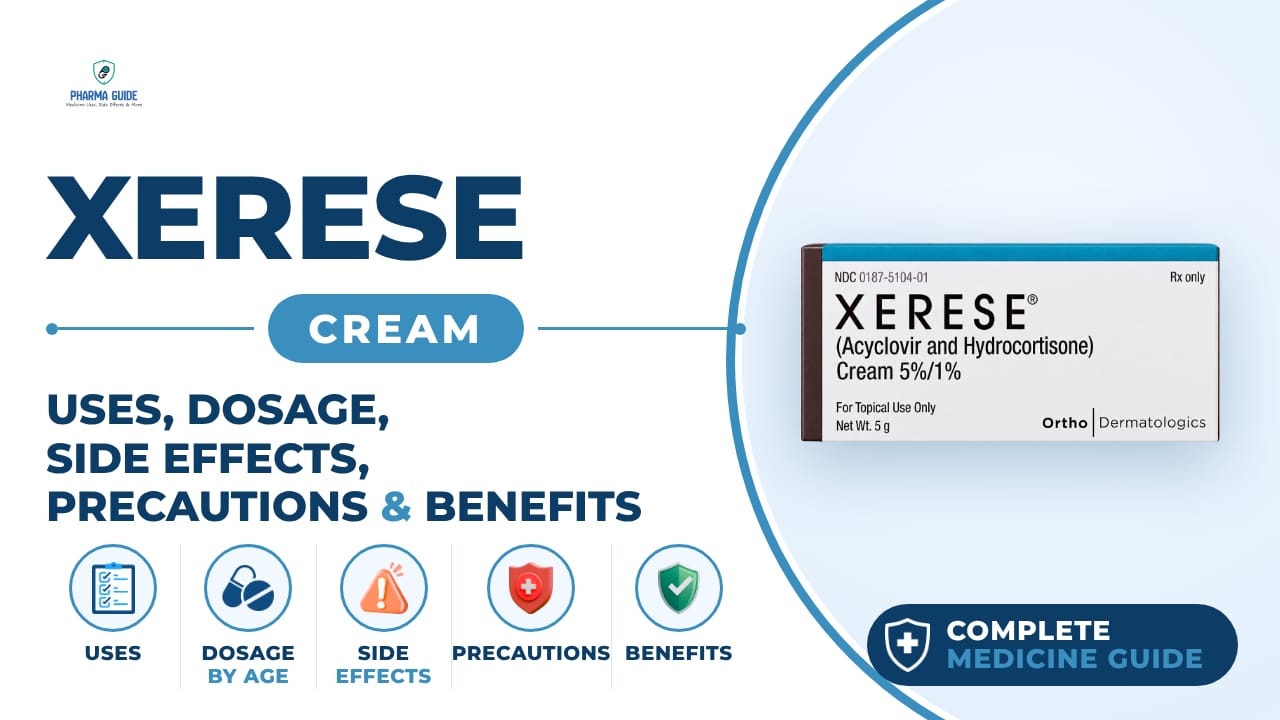
| Generic name | acyclovir and hydrocortisone |
|---|---|
| Drug class | topical antiviral, topical corticosteroid |
| Forms | topical cream |
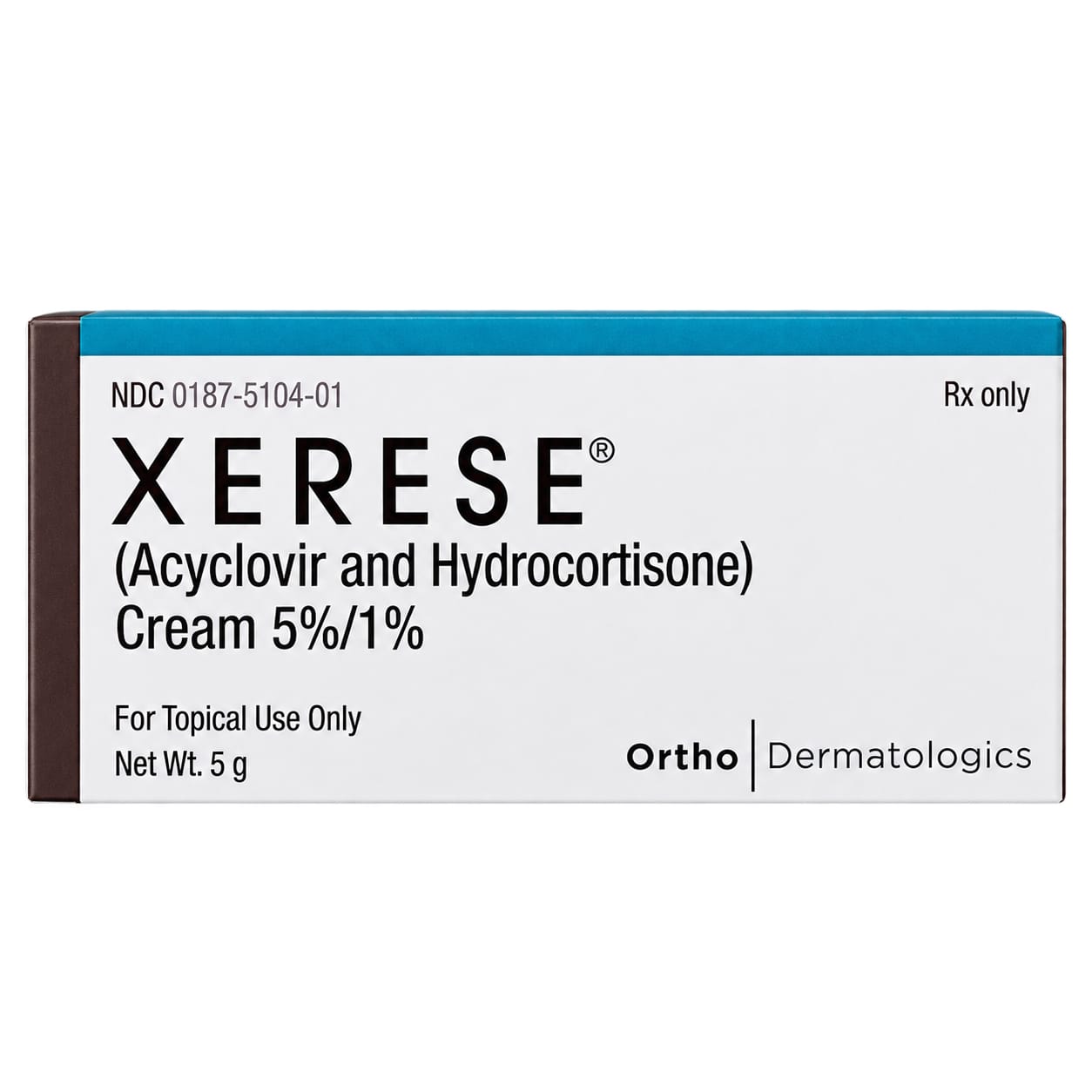
Quick overview
Xerese Cream combines acyclovir, a topical antiviral, with hydrocortisone, a topical corticosteroid. It is a prescription cream applied to the skin to treat cold sores caused by the herpes simplex virus. Xerese is used for the early treatment of recurrent cold sores on the lips and around the mouth in adults and children aged 6 and older. It does not cure the herpes virus or prevent future outbreaks.
What is Xerese Cream
Xerese is a prescription topical cream that combines an antiviral medicine (acyclovir) and a corticosteroid (hydrocortisone). It is used on the skin to treat cold sores.
Xerese Cream uses
- Early treatment of recurrent cold sores (herpes labialis) on the lips and around the mouth in adults and children aged 6 and older
- Treating cold sores/fever blisters caused by the herpes simplex virus
Benefits of Xerese Cream
- Helps shorten healing time of cold sores when applied early
- Lowers the risk of the cold sore turning into an open ulcer if applied at the first sign of symptoms
- Reduces swelling, redness, pain, itching, and burning associated with cold sores
How Xerese Cream works
Xerese contains two medicines that work together. Acyclovir is an antiviral that stops the herpes virus from growing and spreading so the body can fight the infection. Hydrocortisone is a steroid that reduces inflammation and eases symptoms like pain, itching, and burning.
Xerese Cream dosage
Start using this medicine as soon as possible after the first signs of a cold sore, such as tingling, burning, itching, or redness. Wash your hands before and after applying the medicine, and wash the skin area to be treated first. Apply a thin layer of cream to cover the cold sore or tingly area, including the outer edge. Do not rub the cold sore, to avoid making it worse or spreading the virus. Do not cover the treated area with a bandage. Do not apply sunscreen, lip balm, or makeup on the treated area. Avoid getting this medicine in your eyes, nose, mouth, or genital area.
Use for the full length of time prescribed, even if symptoms improve quickly. Tell your doctor if the cold sore does not heal within two weeks. If a dose is missed, apply it as soon as remembered, but skip it if it is almost time for the next dose; do not double up doses.
| Age group | Dose |
|---|---|
| Under 6 years | Safety and effectiveness are not established |
| 6–17 years | Apply to the affected area 5 times daily for 5 days |
| 18–64 years | Apply 5 times daily for 5 days |
Available forms and strengths
- Topical cream
Side effects of Xerese Cream
Common
- Dry or flaky skin, chapped lips
- Burning or stinging or tingling sensation
- Skin redness, swelling, or irritation at the application site
- Changes in skin color
Serious
- Severe allergic reactions: rash, hives, itching, severe swelling of the face, lips, tongue, mouth, or throat, or trouble breathing or swallowing
- Breathing problems or wheezing
- Racing heart
- Fever or general ill feeling
- Swollen lymph nodes
- Nausea or vomiting
- Dizziness, feeling lightheaded, or fainting
- Stomach cramps
- Joint pain
- Signs of excessive hydrocortisone absorption into the body, such as unusual skin thinning, acne, or other systemic effects with long-term or improper use
Warnings and precautions
- Xerese will not cure or prevent herpes, but it can lessen the symptoms of the infection. Herpes infections are contagious, and you can still infect other people even while using Xerese.
- This medication does not prevent the spread of genital herpes. Avoid sexual intercourse or use a latex condom to prevent spreading the virus to others.
- Xerese is only for cold sores on the lips and around the mouth. It will not treat herpes lesions on the genitals or eyes.
- Tell your doctor if you have a weak immune system before using Xerese.
- People allergic to Xerese, acyclovir, hydrocortisone, or any ingredient in the product should not use it.
- Do not share this medicine with other people, even if they have the same condition, as it may harm them.
- It is not known if or how Xerese could affect pregnancy or harm an unborn baby. Tell your healthcare provider if you are or plan to become pregnant.
- It is not known if Xerese passes into breast milk. Tell your healthcare provider if you are breastfeeding or plan to breastfeed.
- Kidney: No routine adjustment is generally required for topical use.
- Liver: No routine adjustment is generally required.
- There are no known interactions between Xerese and alcohol, but heavy drinking can slow your immune response and make it harder for your body to fight infection.
- Driving: Does not normally affect driving.
Storage
- Store at room temperature, between 68 F to 77 F (20 C to 25 C)
- It can be exposed to temperatures between 59 F to 86 F (15 C to 30 C) for shorter periods of time, such as when transporting it
- Store in a cool, dry place
- Do not freeze
- Keep out of the reach of children and pets
- Properly discard this product when it is expired or no longer needed; consult your pharmacist or local waste disposal company
When to see a doctor
- Stop using Xerese and get medical help right away if you have signs of a serious allergic reaction, such as trouble breathing, swelling of the face, lips, tongue or throat, or hives.
- Stop using Xerese and call your doctor right away if you have severe burning, stinging, or irritation of the treated skin.
- Call your doctor if your cold sore does not improve after two weeks of treatment.
- If you or someone else has used too much Xerese, get medical help right away or contact a poison control center.
Alternatives
- Valacyclovir
- Docosanol cream
- Penciclovir cream
- Acyclovir cream
Watch the video
FAQs
What is Xerese Cream used for?
Xerese is used for the early treatment of recurrent cold sores (herpes labialis) on the lips and around the mouth in adults and children aged 6 and older.
How do you use Xerese Cream?
Start using it as soon as possible after the first signs of a cold sore, such as tingling, burning, itching, or redness. Wash your hands and the skin area first, then apply a thin layer of cream to cover the cold sore or tingly area, including the outer edge. Do not rub the area, cover it with a bandage, or apply sunscreen, lip balm, or makeup on it.
What is the dosage for Xerese Cream?
For ages 6 and older, apply the cream to the affected area 5 times daily for 5 days. Safety and effectiveness have not been established for children under 6.
What are the common side effects of Xerese Cream?
Common side effects include dry or flaky skin, chapped lips, burning or stinging or tingling sensation, skin redness, swelling, or irritation at the application site, and changes in skin color.
Does Xerese Cream cure herpes or prevent future outbreaks?
No, Xerese does not cure the herpes virus or prevent future outbreaks. It can lessen symptoms, but you can still infect other people even while using it.
General information, not medical advice
Your prescriber and the leaflet in your pack know your situation. This page does not.
- Follow your prescriber and the leaflet
- Don't start, stop, or change a dose on your own
- Doses and warnings differ by country and product
Sources
Video
Related medicines

Injectafer Injection: Uses, Dosage, Side Effects, Precautions and Alternates
Iron products
Injectafer (ferric carboxymaltose) treats iron deficiency anemia and heart failure-related iron deficiency via IV. Learn uses, dosage, side effects, and

Gliclazide Tablet: Uses, Dosage, Side Effects, Precautions and Alternates
Sulfonylurea (hypoglycemic/antidiabetic agent)
Gliclazide Tablet is a sulfonylurea for type 2 diabetes that boosts insulin release. Learn about dosage, side effects, warnings, and precautions.