
Safety
General information, not medical advice
Your prescriber and the leaflet in your pack know your situation. This page does not.
- Follow your prescriber and the leaflet
- Don't start, stop, or change a dose on your own
- Doses and warnings differ by country and product
Xifaxan Tablet: Uses, Dosage, Side Effects, Precautions and Alternates
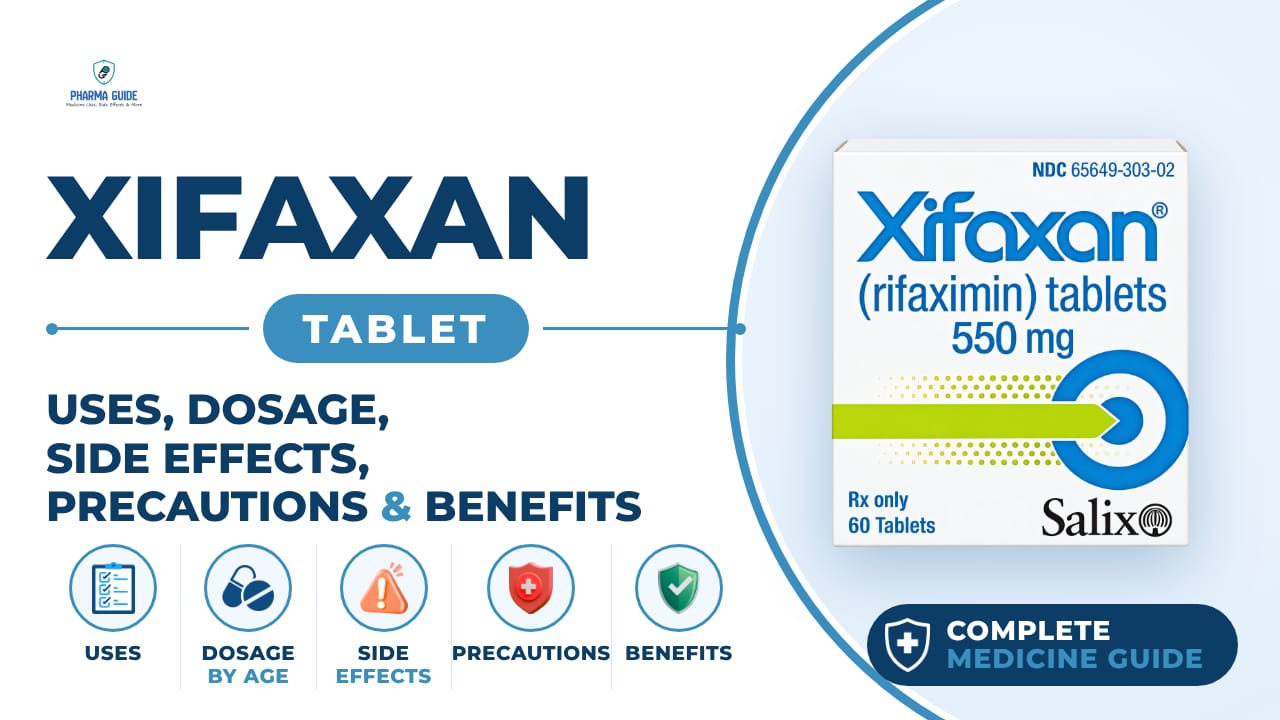
| Generic name | rifaximin |
|---|---|
| Drug class | Rifamycin antibacterial (miscellaneous antibiotic) |
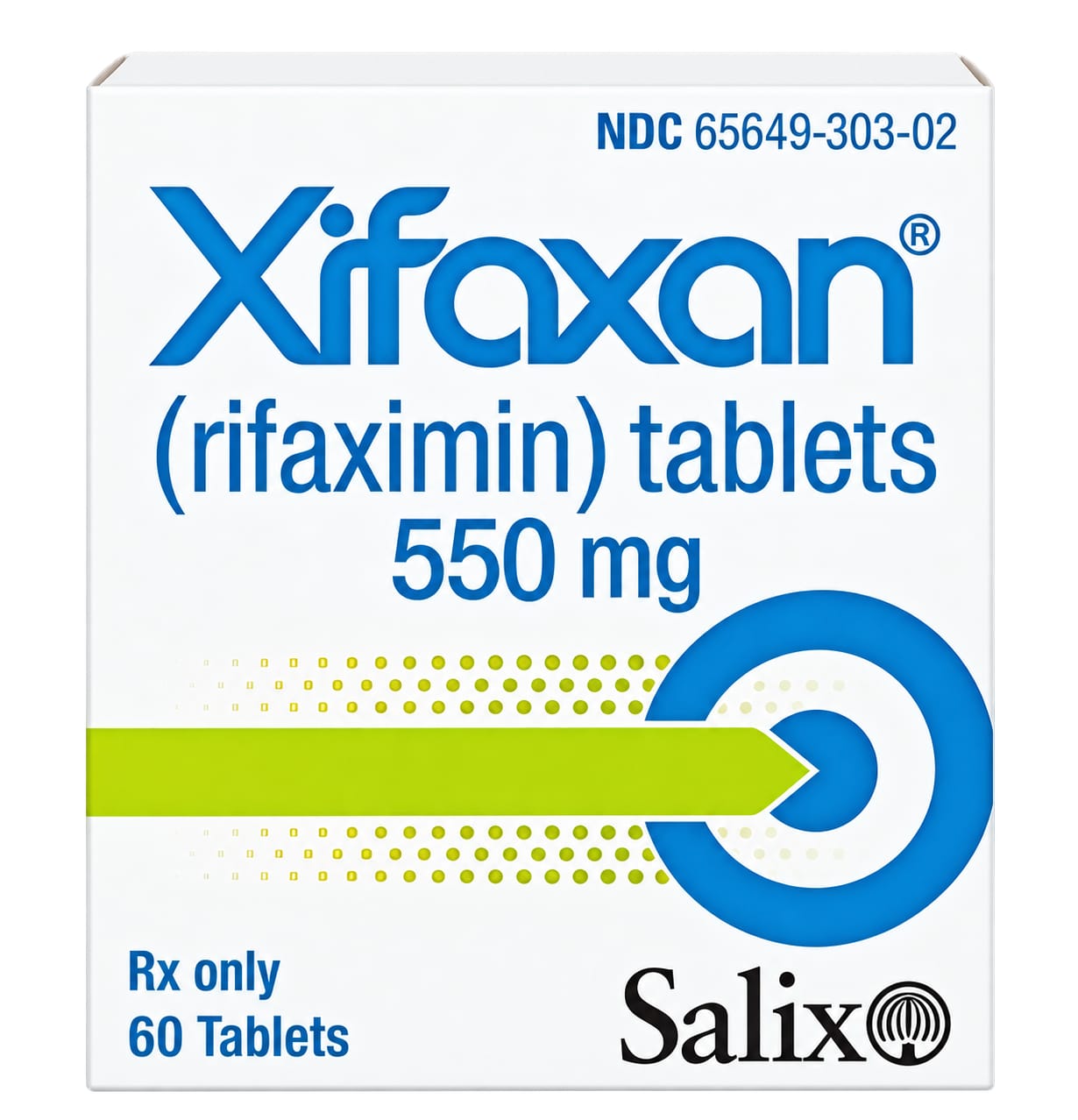
| Forms | 200 mg tablet, 550 mg tablet |
Quick overview
Xifaxan Tablet (rifaximin) is an antibiotic from the rifamycin class that works mainly inside the intestines rather than in the bloodstream. It is used to treat travelers' diarrhea caused by certain E. coli strains, to help prevent hepatic encephalopathy from returning in adults, and to treat irritable bowel syndrome with diarrhea (IBS-D). It is available as 200 mg and 550 mg tablets and should be taken exactly as directed by a doctor.
What is Xifaxan Tablet
Xifaxan is an antibiotic tablet that fights bacteria only inside the intestines. It passes through the stomach into the gut without being absorbed much into the bloodstream, so it does not treat infections outside the intestines. Its generic name is rifaximin, and it belongs to the rifamycin antibacterial class, sometimes described as a miscellaneous antibiotic.
Xifaxan Tablet uses
- Treats travelers' diarrhea caused by certain strains of E. coli bacteria in adults and children 12 years and older
- Helps lower the risk of hepatic encephalopathy (a brain problem caused by liver failure) coming back in adults
- Treats irritable bowel syndrome with diarrhea (IBS-D) in adults
Benefits of Xifaxan Tablet
- Shortens the length of diarrhea episodes compared with placebo in travelers' diarrhea studies
- Reduces the risk of a hepatic encephalopathy episode returning
- Helps relieve IBS-D symptoms such as abdominal pain and loose stools in some patients
How Xifaxan Tablet works
Xifaxan is an antibiotic that stays mainly in the gut rather than being absorbed into the blood. It blocks a step bacteria need to make proteins, which stops the bacteria from growing. For hepatic encephalopathy, it works by killing gut bacteria that produce ammonia, so less ammonia reaches the blood and brain.
Xifaxan Tablet dosage
Xifaxan can be taken with or without food. Swallow the tablet whole with a glass of water, and take it at the same time each day as instructed by your doctor. For travelers' diarrhea, it is usually taken for a short course of a few days. For IBS-D, it is usually taken for a longer course, and some people may be retreated if symptoms come back. Finish the full course even if you start feeling better, because stopping early can let resistant bacteria grow. Do not share this medicine with anyone else. If you miss a dose, take it as soon as you remember, but skip it if it is almost time for the next dose—never double up. Call your doctor if diarrhea symptoms do not improve within 24 to 48 hours or if they get worse.
| Age group | Dose |
|---|---|
| Under 12 years | Not established |
| 12–17 years | 200 mg 3 times daily for 3 days (traveler's diarrhea only) |
| 18–64 years | 200 mg 3 times daily for 3 days (traveler's diarrhea) |
| 65+ years | 200 mg 3 times daily for 3 days (traveler's diarrhea) |
Available forms and strengths
- 200 mg tablet
- 550 mg tablet
Side effects of Xifaxan Tablet
Common
- Headache
- Swelling of the hands, feet, ankles, or legs from fluid buildup
- Nausea
- Dizziness
- Fatigue
- Abnormal liver function tests
- Itching
- Muscle pain or spasms
- Abdominal pain or swelling
- Loss of appetite or taste
- Joint pain
- Fever
- Nose or throat inflammation
Serious
- Severe stomach pain or watery/bloody diarrhea, even months after the last dose (possible C. difficile infection)
- Signs of an allergic reaction: hives, trouble breathing, swelling of face, lips, tongue, or throat
- Fluid build-up around the stomach: rapid weight gain, stomach pain and bloating, trouble breathing while lying down
- Depression: low mood, hopelessness, changes in sleep or appetite
- Anemia: pale skin, shortness of breath, fatigue, dizziness
- In people with cirrhosis: severe skin reactions with painful rash or blistering of skin, mouth, eyes, and genitals, with flu-like symptoms
Warnings and precautions
- This medicine does not work for travelers' diarrhea caused by fever, blood in the stool, or germs other than E. coli. Stop taking it and tell your doctor if diarrhea gets worse or lasts more than 24 to 48 hours.
- Antibiotics, including this one, can cause a serious bowel infection called C. difficile colitis, which can range from mild diarrhea to a life-threatening condition. This can happen during treatment or even more than two months after stopping it.
- Using antibiotics when they are not needed increases the chance that bacteria become resistant to them in the future.
- Taking a drug called cyclosporine, or similar medicines, at the same time can greatly increase the amount of this medicine in your blood, so caution is needed.
- If you also take the blood thinner warfarin, your doctor will need to monitor your blood clotting tests more closely because this medicine can change how warfarin works.
- Do not take this medicine if you have a blocked bowel.
- This medicine may harm an unborn baby, so tell your doctor if you are pregnant or planning to become pregnant so they can discuss the risks and benefits.
- It isn't known if this medicine passes into breast milk or affects a nursing baby, so tell your doctor if you are breastfeeding. Use with caution if you have severe liver problems, since the drug builds up more in the body and may raise the risk of side effects.
- Drinking alcohol while taking this medicine is not recommended, and alcohol may worsen the conditions it treats or add to side effects like headache, nausea, and dizziness.
- Be careful driving or using machines until you know how this medicine affects you.
Storage
- Store XIFAXAN Tablets at 20° to 25°C (68° to 77°F); excursions permitted to 15° to 30°C (59° to 86°F)
- Store at room temperature away from moisture and heat
- Keep tablets in the blister packaging until it is time to take them
- Keep in a cool dry place where the temperature stays below 25°C
- Keep it where young children cannot reach it
- Do not take this medicine after the expiry date
- If no longer needed or expired, take it to any pharmacy for safe disposal
When to see a doctor
- Get emergency help right away if you have signs of an allergic reaction such as hives, difficulty breathing, or swelling of your face, lips, tongue, or throat.
- Call your doctor right away if you have severe stomach pain, watery or bloody diarrhea (even months after your last dose), fever, or rapid weight gain with stomach pain and bloating or trouble breathing while lying down.
- If you have cirrhosis and notice flu-like symptoms with a painful rash or blistering of the skin, mouth, eyes, or genitals, stop the medicine and get urgent medical help.
- Seek urgent medical attention if you think you have taken too much of this medicine, even if you feel fine.
Alternatives
- Metronidazole
- Azithromycin
- Vancomycin
Watch the video
FAQs
What is Xifaxan Tablet used for?
Xifaxan treats travelers' diarrhea caused by certain E. coli strains, helps prevent hepatic encephalopathy from returning in adults, and treats irritable bowel syndrome with diarrhea (IBS-D).
How does Xifaxan Tablet work?
Xifaxan is an antibiotic that stays mainly in the gut rather than being absorbed into the blood. It blocks a step bacteria need to make proteins, stopping their growth. For hepatic encephalopathy, it kills gut bacteria that produce ammonia, so less ammonia reaches the blood and brain.
What is the dosage of Xifaxan for travelers' diarrhea?
For travelers' diarrhea, the usual dose for ages 12 and older is 200 mg taken 3 times daily for 3 days, as a short course.
What are the serious side effects of Xifaxan Tablet?
Serious side effects include severe stomach pain or watery/bloody diarrhea (even months after the last dose) suggesting C. difficile infection, allergic reactions, fluid build-up around the stomach, depression, anemia, and in people with cirrhosis, severe skin reactions with painful rash or blistering.
Can I drink alcohol while taking Xifaxan Tablet?
Drinking alcohol while taking Xifaxan is not recommended, as alcohol may worsen the conditions it treats or add to side effects like headache, nausea, and dizziness.
General information, not medical advice
Your prescriber and the leaflet in your pack know your situation. This page does not.
- Follow your prescriber and the leaflet
- Don't start, stop, or change a dose on your own
- Doses and warnings differ by country and product
Sources
Video
Related medicines

Injectafer Injection: Uses, Dosage, Side Effects, Precautions and Alternates
Iron products
Injectafer (ferric carboxymaltose) treats iron deficiency anemia and heart failure-related iron deficiency via IV. Learn uses, dosage, side effects, and

Gliclazide Tablet: Uses, Dosage, Side Effects, Precautions and Alternates
Sulfonylurea (hypoglycemic/antidiabetic agent)
Gliclazide Tablet is a sulfonylurea for type 2 diabetes that boosts insulin release. Learn about dosage, side effects, warnings, and precautions.