
Safety
General information, not medical advice
Your prescriber and the leaflet in your pack know your situation. This page does not.
- Follow your prescriber and the leaflet
- Don't start, stop, or change a dose on your own
- Doses and warnings differ by country and product
Xolair Injection: Uses, Dosage, Side Effects, Precautions and Alternates
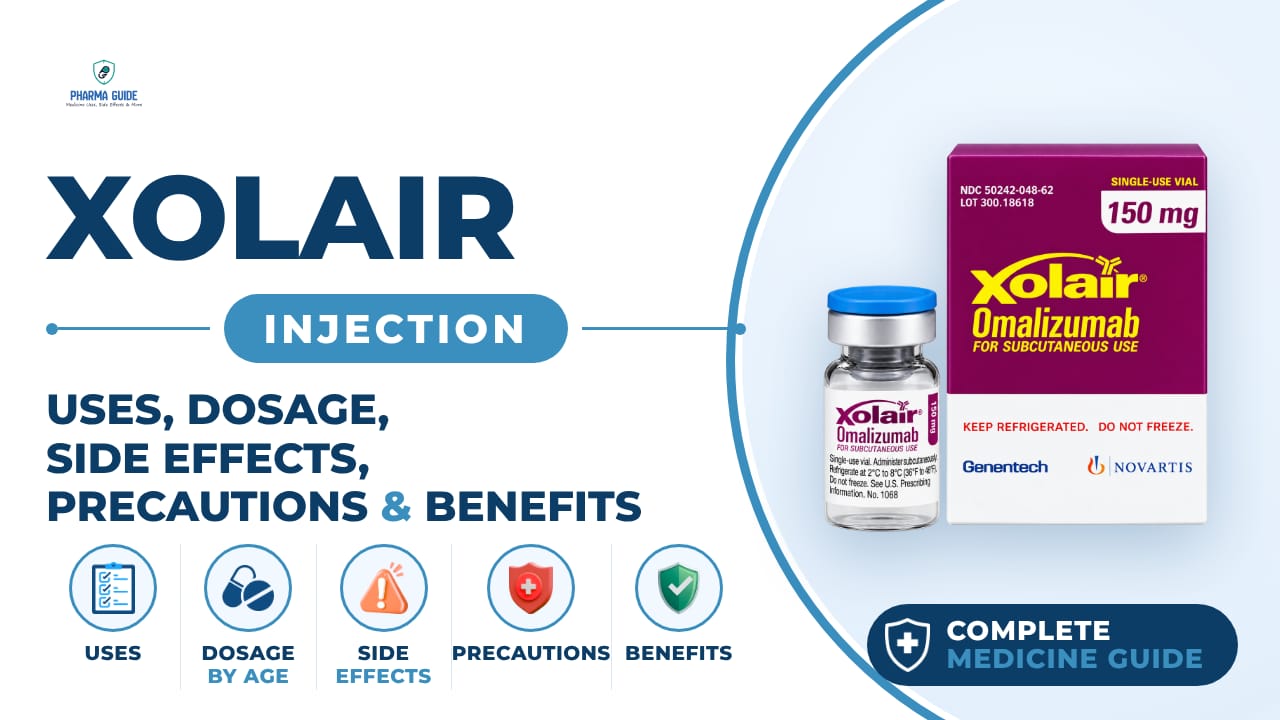
| Generic name | omalizumab |
|---|---|
| Drug class | Monoclonal antibody (anti-IgE therapy) |
| Forms | Pre-filled syringe, Pre-filled pen (autoinjector), Solution for subcutaneous injection |
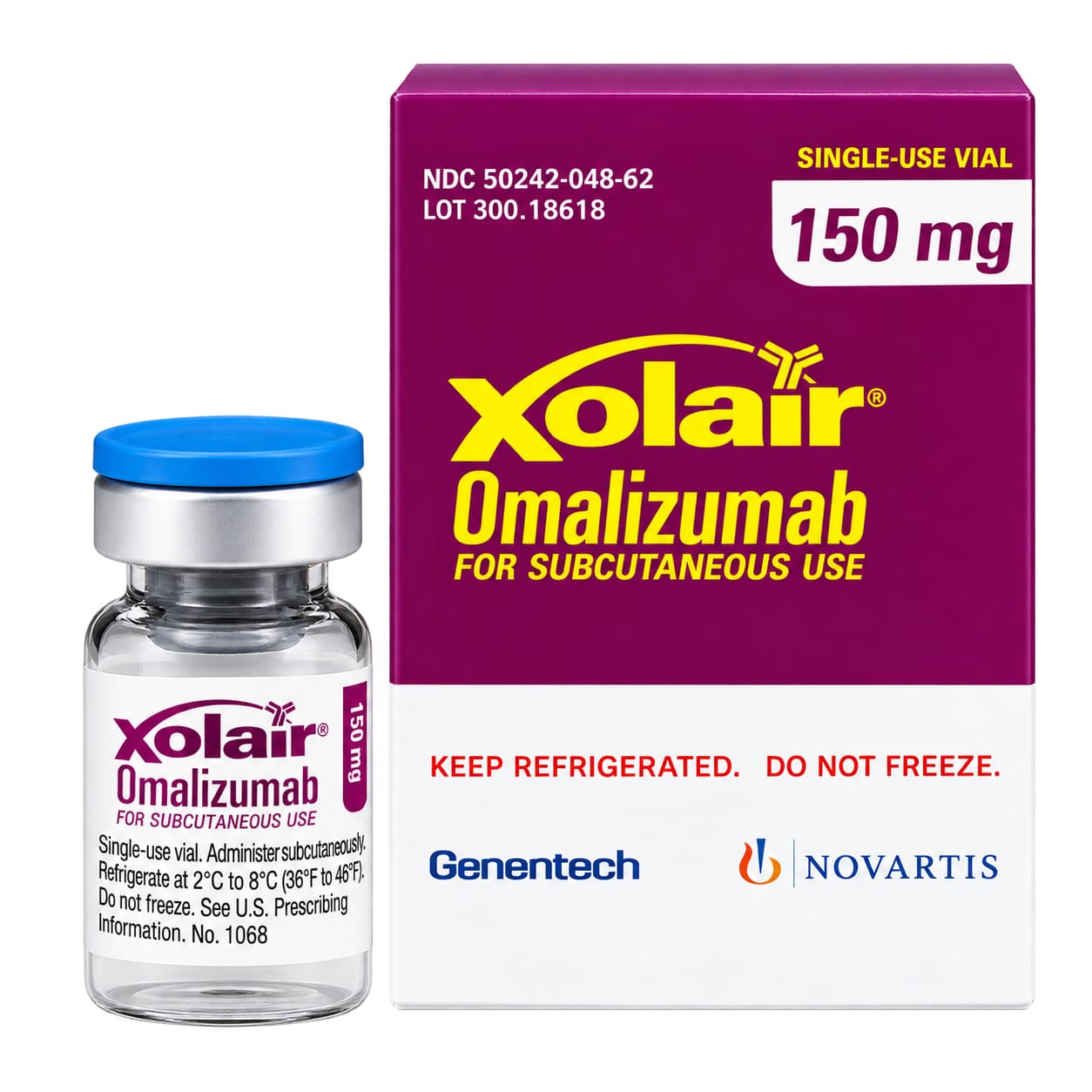
Quick overview
Xolair Injection (omalizumab) is a monoclonal antibody given as an injection under the skin. It is used to treat chronic spontaneous urticaria, moderate to severe persistent allergic asthma, and chronic rhinosinusitis with nasal polyps in people whose symptoms are not well controlled with other treatments. It works by blocking a substance in the body called immunoglobulin E (IgE). Xolair is available as a pre-filled syringe, pre-filled pen, or solution for injection.
What is Xolair Injection
Xolair is an injectable prescription medicine given under the skin. It is used for chronic hives with no known trigger, allergic asthma, and nasal polyps that are not well controlled with other treatments. Its generic name is omalizumab, and it belongs to the monoclonal antibody (anti-IgE therapy) drug class.
Xolair Injection uses
- Chronic spontaneous urticaria (long-lasting hives with no known trigger) in people 12 years and older whose hives are not controlled with antihistamines
- Moderate to severe persistent allergic asthma in people 6 years and older whose symptoms are not well controlled with inhaled corticosteroids
- Chronic rhinosinusitis with nasal polyps in adults 18 years and older whose symptoms are not well controlled with current nasal polyp medicines
Benefits of Xolair Injection
- Helps control moderate-to-severe allergic asthma
- Treats chronic spontaneous urticaria
- Reduces allergic reactions from accidental exposure in IgE-mediated food allergy
- Helps treat chronic rhinosinusitis with nasal polyps
- Can reduce asthma exacerbations in appropriate patients
How Xolair Injection works
Xolair blocks a substance in the body called immunoglobulin E (IgE), which plays a role in causing inflammation and symptoms like hives, asthma, and nasal polyps.
Xolair Injection dosage
Your first few doses should be given by a healthcare provider in a clinic or office setting. Do not try to inject yourself until a healthcare provider has shown you the right way to do it. Injections are given under the skin, usually in the thigh or stomach area, and in the upper arm if someone else gives the injection.
Keep taking your other hives, asthma, or nasal polyp medicines unless your doctor tells you to stop. You may not notice improvement right away after starting treatment. If you miss an appointment or a dose, contact your doctor and get the injection as soon as you remember, then ask when to take the next one. Be careful with driving or operating machinery until you know how this medicine affects you.
| Age group | Dose |
|---|---|
| 1–5 years | For IgE-mediated food allergy: 75–600 mg SC every 2 or 4 weeks, based on body weight and pretreatment IgE level |
| 6–11 years | For asthma: 75–375 mg SC every 2 or 4 weeks; for food allergy: 75–600 mg every 2 or 4 weeks |
| 12–17 years | Asthma: 75–375 mg every 2 or 4 weeks; chronic spontaneous urticaria: 150 or 300 mg every 4 weeks |
Available forms and strengths
- Pre-filled syringe
- Pre-filled pen (autoinjector)
- Solution for subcutaneous injection
Side effects of Xolair Injection
Common
- Nausea
- Headaches
- Swelling of the inside of your nose, throat or sinuses
- Cough
- Joint pain
- Upper respiratory tract infection
- Bruising, redness or pain at the injection site
- Mild skin rash
- Tiredness
- Hair loss
- Joint swelling
- Fever (very common in children)
- Sore throat and blocked nose
- Dizziness
- Itching
- Bone fractures
- Pain or discomfort of your ears
Serious
- Severe allergic reaction (anaphylaxis)
- Cancer
- Fever, muscle aches, and rash occurring 1 to 5 days after an injection
- Parasitic infection
- Heart and circulation problems including chest pain, heart attack, blood clots, or stroke-like symptoms
- Inflammation of blood vessels
- Abnormal bleeding or bruising
- Serum sickness (joint pain, stiffness, rash, fever, swollen lymph nodes)
Warnings and precautions
- A severe, life-threatening allergic reaction called anaphylaxis can happen after any dose, right after the injection or even days later.
- Do not use this medicine if you are allergic to omalizumab or any of its ingredients.
- Cases of cancer have been seen in some people who received this medicine.
- People at high risk of parasite infections may develop a parasite infection after receiving this medicine.
- Some people have had heart and circulation problems such as chest pain, heart attack, blood clots, or stroke-like symptoms, though it is not known if the medicine caused these.
- Do not use this medicine to treat a sudden asthma attack or other sudden allergic reactions; it is not for emergency use.
- The needle cap of the pre-filled syringe may contain dry rubber (latex), which should not be handled by people sensitive to latex.
- It is not known if Xolair may harm an unborn baby. Tell your doctor if you are pregnant or plan to become pregnant.
- It is not known if Xolair passes into breast milk. Talk with your healthcare provider about the best way to feed your baby while using this medicine.
- Tell your doctor if you have kidney problems before using this medicine.
- Tell your doctor if you have liver problems before using this medicine.
- Be careful driving, operating machinery, or doing tasks that require alertness until you know how this medicine affects you.
Storage
- Keep the pre-filled syringe or pen in the original container until it is time to use
- Keep them in the refrigerator. Do not freeze them
- Do not store Xolair or any other medicine in the bathroom or near a sink
- Do not leave them in the car or on window sills
- Do not use Xolair beyond the expiry date on the label
- Do not use the product if there are signs of deterioration
- Do not use Xolair if the pack is damaged or shows signs of tampering
- Keep the medicine where children cannot reach it
- If your doctor stops your treatment with Xolair or you find that it has passed the expiry date, ask your pharmacist how to dispose of medicines you no longer use
When to see a doctor
- Go to the nearest emergency room right away if you have wheezing, shortness of breath, cough, chest tightness, or trouble breathing; low blood pressure, dizziness, fainting, rapid or weak heartbeat, anxiety, or a feeling of impending doom; flushing, itching, hives, or feeling warm; or swelling of the throat or tongue, throat tightness, hoarse voice, or trouble swallowing.
- Tell your doctor right away or go to the emergency department if you notice any signs of a severe allergic reaction, including swelling of the throat and mouth, difficulty breathing, light-headedness, confusion, blue skin or lips, or collapsing.
- Call your healthcare provider right away if you accidentally inject more than your prescribed dose.
- Tell your doctor immediately if you notice abnormal bleeding or bruising, or pain, numbness or tingling in the arms and legs, lumps or raised patches in the skin, weakness and fatigue, loss of appetite, and weight loss.
Alternatives
- Dupilumab
- Mepolizumab
- Benralizumab
Watch the video
FAQs
What is Xolair Injection used for?
Xolair is used to treat chronic spontaneous urticaria (hives with no known trigger), moderate to severe persistent allergic asthma, and chronic rhinosinusitis with nasal polyps in people whose symptoms are not well controlled with other treatments.
How does Xolair Injection work?
Xolair blocks a substance in the body called immunoglobulin E (IgE), which plays a role in causing inflammation and symptoms like hives, asthma, and nasal polyps.
How is Xolair Injection given?
Xolair is given as an injection under the skin, usually in the thigh or stomach area, or in the upper arm if someone else gives the injection. The first few doses should be given by a healthcare provider before self-injecting.
What are the common side effects of Xolair Injection?
Common side effects include nausea, headaches, swelling inside the nose, throat or sinuses, cough, joint pain, upper respiratory tract infection, injection site reactions, tiredness, hair loss, and dizziness.
What are the serious risks of Xolair Injection?
Serious risks include severe allergic reaction (anaphylaxis), cancer, parasitic infection, heart and circulation problems, inflammation of blood vessels, abnormal bleeding or bruising, and serum sickness.
General information, not medical advice
Your prescriber and the leaflet in your pack know your situation. This page does not.
- Follow your prescriber and the leaflet
- Don't start, stop, or change a dose on your own
- Doses and warnings differ by country and product
Sources
Video
Related medicines

Injectafer Injection: Uses, Dosage, Side Effects, Precautions and Alternates
Iron products
Injectafer (ferric carboxymaltose) treats iron deficiency anemia and heart failure-related iron deficiency via IV. Learn uses, dosage, side effects, and

Gliclazide Tablet: Uses, Dosage, Side Effects, Precautions and Alternates
Sulfonylurea (hypoglycemic/antidiabetic agent)
Gliclazide Tablet is a sulfonylurea for type 2 diabetes that boosts insulin release. Learn about dosage, side effects, warnings, and precautions.