
Safety
General information, not medical advice
Your prescriber and the leaflet in your pack know your situation. This page does not.
- Follow your prescriber and the leaflet
- Don't start, stop, or change a dose on your own
- Doses and warnings differ by country and product
Xospata Tablet: Uses, Dosage, Side Effects, Precautions and Alternates
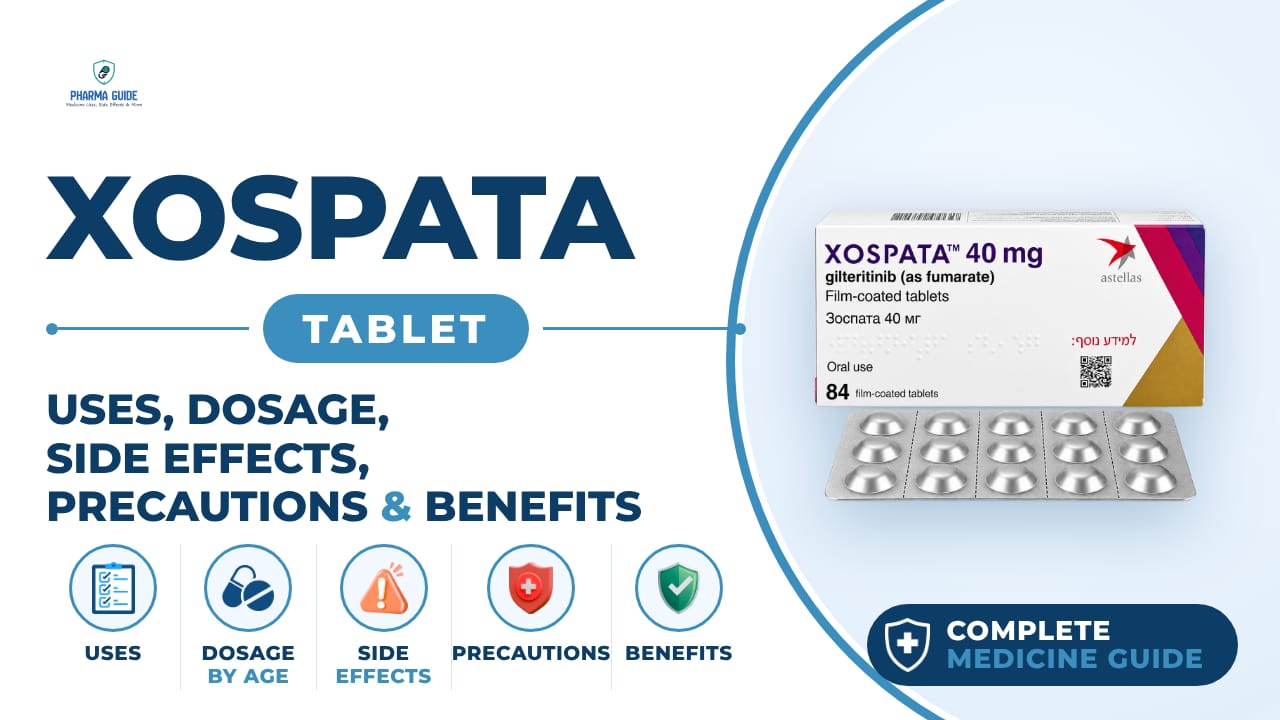
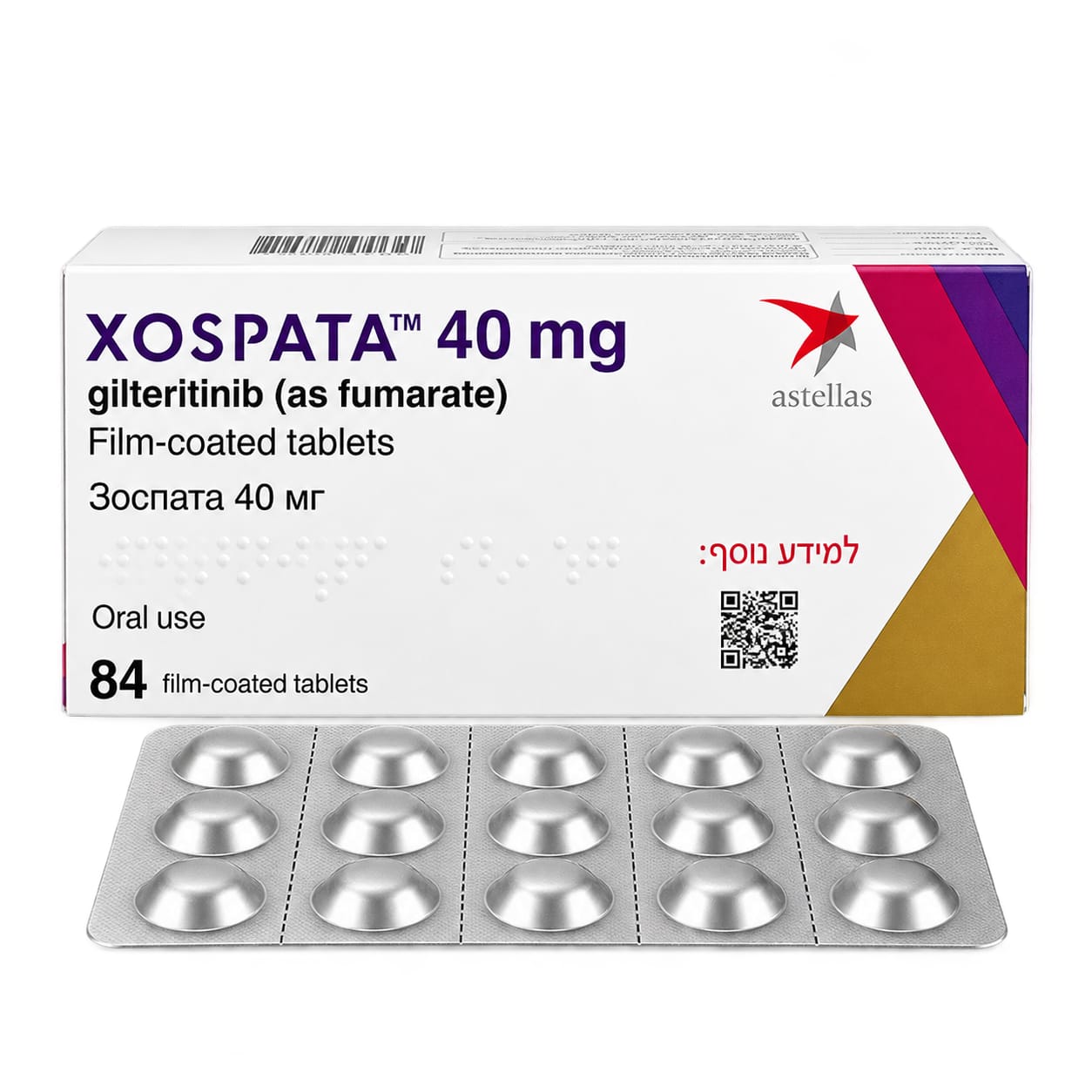
| Generic name | gilteritinib |
|---|---|
| Drug class | Kinase inhibitor (multikinase inhibitor) |
| Forms | Tablet (40 mg film-coated tablets) |
Quick overview
Xospata Tablet (gilteritinib) is a prescription kinase inhibitor used to treat adults with acute myeloid leukemia (AML) that has a FLT3 gene mutation and has relapsed or not responded to earlier treatment. In clinical studies, it was linked to longer survival, higher rates of complete remission, and a lower risk of death compared with chemotherapy. It works by blocking overactive kinase proteins, including FLT3, in leukemia cells. It is taken once daily as a tablet, and treatment involves monitoring for several possible side effects.
What is Xospata Tablet
Xospata is a prescription medicine for adults with acute myeloid leukemia (AML) that has a FLT3 gene mutation. It is used when the disease has come back or has not improved after earlier treatment. Its generic name is gilteritinib, and it belongs to a class of medicines called kinase inhibitors (multikinase inhibitors).
Xospata Tablet uses
- Treatment of adult patients with relapsed or refractory acute myeloid leukemia (AML) with a FLT3 mutation as detected by an FDA-approved test
Benefits of Xospata Tablet
- In a clinical study, more people taking Xospata were alive at 1 and 2 years compared with chemotherapy
- People taking Xospata had a 36% lower risk of death during the study compared with chemotherapy
- More people achieved complete remission with Xospata than with chemotherapy, and remissions lasted longer
- Some people who needed blood or platelet transfusions became independent of transfusions during treatment
How Xospata Tablet works
Xospata blocks proteins called kinases, including the FLT3 protein, that are overactive in leukemia cells with a FLT3 mutation. By blocking these kinases, it stops the cancer cells from growing and dividing, which may let healthy blood cells grow again in the bone marrow.
Xospata Tablet dosage
Take this medicine once a day at about the same time each day. It can be taken with or without food. Swallow tablets whole with a full glass or cup of water; do not break, crush, or chew them.
If you miss a dose, take it as soon as possible the same day, but only if it is at least 12 hours before your next scheduled dose; then return to your normal schedule the next day. Do not take two doses within 12 hours of each other.
Treatment is often continued for a minimum of 6 months to give the medicine time to work, unless the disease gets worse or side effects are too severe. Safety and effectiveness have not been established in children.
| Age group | Dose |
|---|---|
| Under 18 years | Safety and effectiveness have not been established |
| 18–64 years | 120 mg once daily |
| 65–74 years | 120 mg once daily, with individualized hematology/oncology monitoring |
Available forms and strengths
- Tablet (40 mg film-coated tablets)
Side effects of Xospata Tablet
Common
- Joint or muscle pain
- Changes in liver function tests
- Fatigue/tiredness
- Fever
- Swelling due to fluid retention (edema)
- Rash
- Nausea
- Mouth sores
- Diarrhea
- Shortness of breath
- Pneumonia
- Cough
- Headache
- Low blood pressure
- Dizziness
- Vomiting
- Constipation
- Eye problems
- Decreased urination
Serious
- Differentiation syndrome (fever, cough, dizziness or lightheadedness, rapid weight gain, trouble breathing, swelling of arms or legs, rash, decreased urination)
- Posterior Reversible Encephalopathy Syndrome (PRES) – seizure, headache, decreased alertness, confusion, reduced eyesight, blurred vision or other visual problems
- QT prolongation (heart rhythm problems) – change in heartbeat, dizziness, lightheadedness, or fainting
- Pancreatitis – severe, persistent stomach pain, with or without nausea and vomiting
- Serious infections such as pneumonia and sepsis
- Anaphylactic/allergic reaction – hives, difficulty breathing, swelling of face, lips, tongue, or throat
- Pericardial effusion, pericarditis, and heart failure
Warnings and precautions
- Xospata can cause differentiation syndrome, a condition affecting blood cells that can be life-threatening or fatal if not treated. It can occur as early as 1 day after starting treatment and during the first 3 months.
- Xospata can cause PRES, a rare brain condition. Treatment must be stopped if this develops.
- Xospata can prolong the QT interval of the heart's electrical activity, which can cause dangerous irregular heartbeats. Doctors will check heart activity with ECGs and blood levels of potassium and magnesium before and during treatment.
- Xospata can cause pancreatitis (inflammation of the pancreas), which may require stopping or lowering the dose.
- Xospata can cause harm to an unborn baby. Effective contraception is needed during and after treatment for both men and women.
- Do not take Xospata if you are allergic to gilteritinib or any of its ingredients; anaphylactic (severe allergic) reactions have occurred.
- Xospata can harm an unborn baby and should not be used during pregnancy. Women who can become pregnant should use effective birth control during treatment and for 6 months after the last dose. Men with partners who can become pregnant should use effective birth control during treatment and for 4 months after the last dose.
- Do not breastfeed during treatment with Xospata and for at least 2 months after the last dose, because the medicine could harm a breastfeeding child.
- Mild to moderate kidney problems do not appear to meaningfully change how the drug works in the body, but the effect of severe kidney impairment is unknown.
- Mild to moderate liver problems do not appear to meaningfully change how the drug works in the body, but the effect of severe liver impairment is unknown.
- Tell your doctor if you drink alcohol while taking this medicine.
- Do not drive or operate machinery until you know how this medicine affects you, since it may have a moderate effect on these abilities.
Storage
- Store tablets at room temperature between 68°F to 77°F (20°C to 25°C)
- Keep in the original container
- Keep out of the reach of children
- Keep tablets in the pack until it is time to take them, in a cool dry place where the temperature stays below 25°C
- Do not store in the bathroom or near a sink, or leave on a window sill or in a car
- If the medicine is out of date or no longer needed, take it to a pharmacy for safe disposal; do not throw it away via wastewater or household waste
When to see a doctor
- Call your healthcare provider or go to the nearest emergency room right away if you have symptoms of differentiation syndrome, such as fever, cough, dizziness or lightheadedness, rapid weight gain, trouble breathing, swelling of your arms or legs, rash, or decreased urination.
- Tell your healthcare provider right away if you have a seizure or symptoms that quickly get worse, such as headache, confusion, decreased alertness, or vision problems, since these can be signs of PRES.
- Tell your healthcare provider right away if you have a change in your heartbeat or feel dizzy, lightheaded, or faint, as these can be signs of a heart rhythm problem.
- Tell your healthcare provider right away if you have severe stomach pain that does not go away, with or without nausea and vomiting, since this could be pancreatitis.
- Get emergency medical help if you have signs of a severe allergic reaction, such as hives, difficulty breathing, or swelling of the face, lips, tongue, or throat.
- Tell your doctor right away if you or your partner becomes pregnant while taking this medicine.
Alternatives
- Rydapt (midostaurin)
- Quizartinib
- Azacitidine
Watch the video
FAQs
What is Xospata Tablet used for?
Xospata is used to treat adult patients with acute myeloid leukemia (AML) that has a FLT3 gene mutation and has relapsed or not responded to earlier treatment.
How does Xospata Tablet work?
Xospata blocks overactive kinase proteins, including FLT3, in leukemia cells, stopping the cancer cells from growing and dividing so healthy blood cells may grow again in the bone marrow.
How should Xospata Tablet be taken?
Xospata is taken once a day at about the same time, with or without food. Tablets should be swallowed whole with a full glass of water and not broken, crushed, or chewed.
What are the serious side effects of Xospata Tablet?
Serious side effects include differentiation syndrome, Posterior Reversible Encephalopathy Syndrome (PRES), QT prolongation, pancreatitis, serious infections, allergic reactions, and pericardial effusion or heart failure.
Can Xospata Tablet be used during pregnancy?
No, Xospata can harm an unborn baby and should not be used during pregnancy. Effective contraception is needed during treatment and for a period after the last dose for both men and women.
General information, not medical advice
Your prescriber and the leaflet in your pack know your situation. This page does not.
- Follow your prescriber and the leaflet
- Don't start, stop, or change a dose on your own
- Doses and warnings differ by country and product
Sources
Video
Related medicines
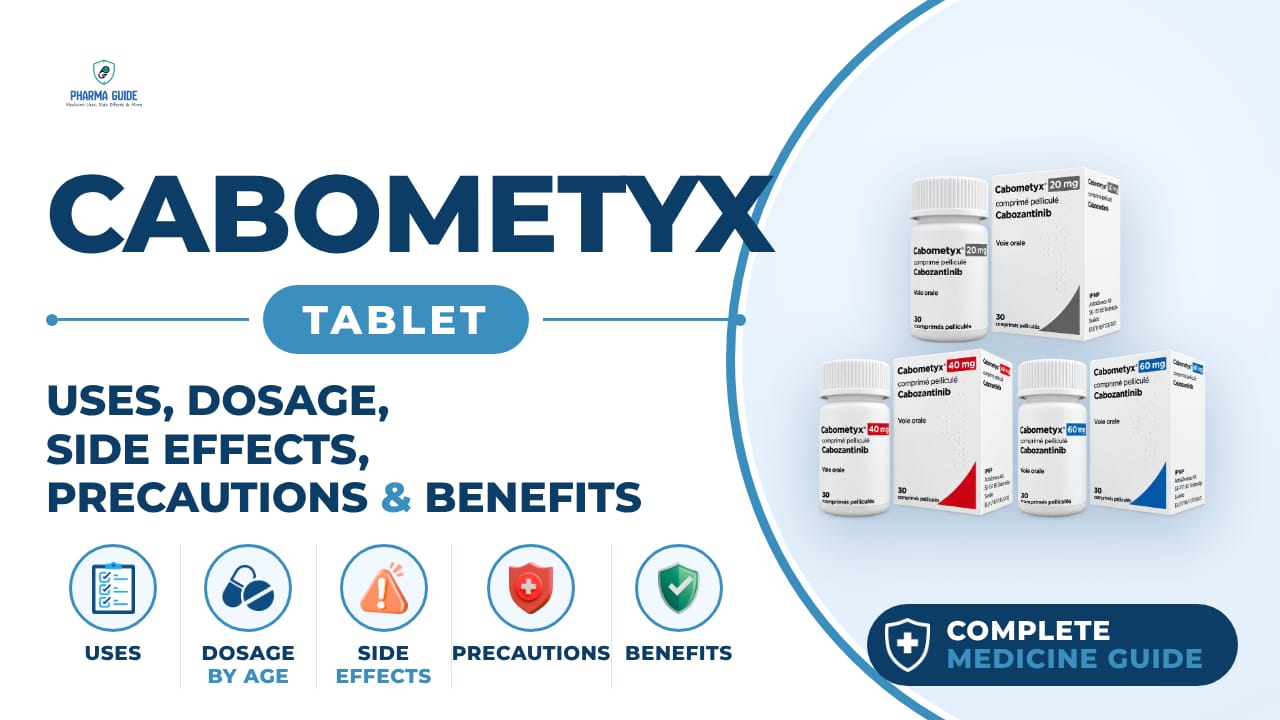
Cabometyx Tablet: Uses, Dosage, Side Effects, Precautions and Alternates
kinase inhibitor (multikinase inhibitor)
Cabometyx Tablet (cabozantinib) treats advanced kidney, liver, thyroid cancers and neuroendocrine tumors by blocking proteins that help tumors grow and spread.
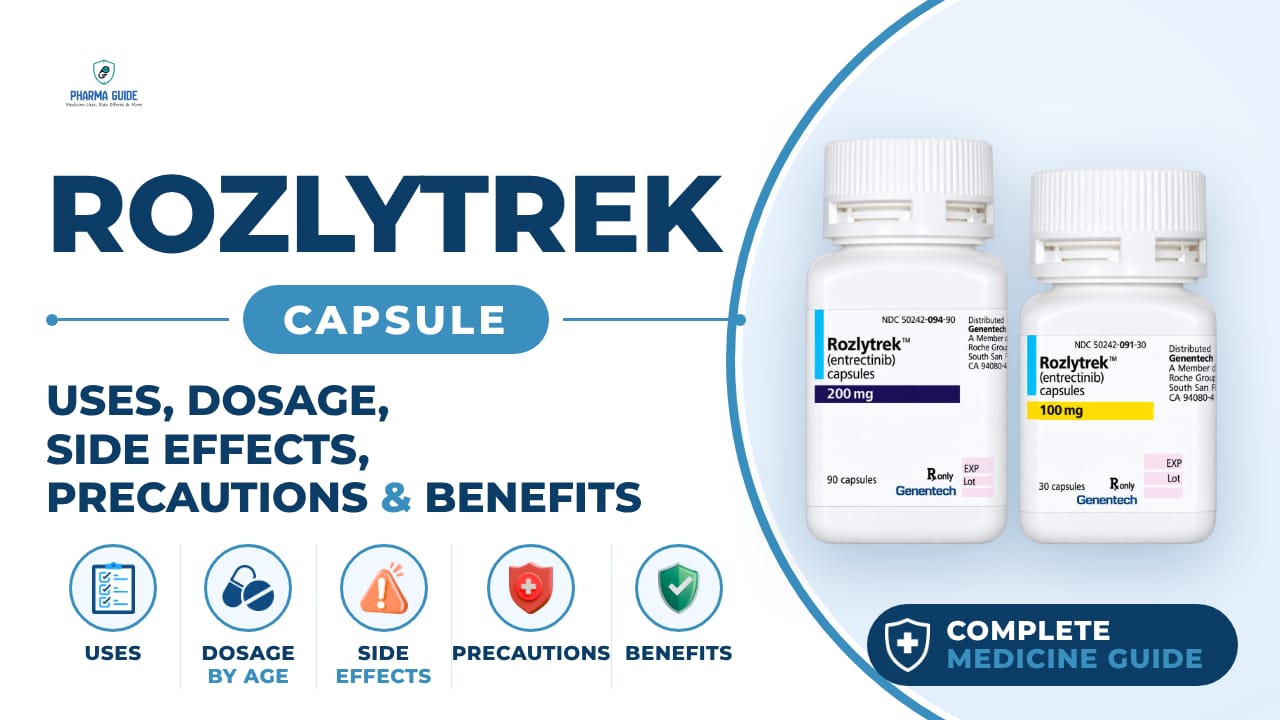
Rozlytrek Capsule: Uses, Dosage, Side Effects, Precautions and Alternates
Kinase inhibitor (multikinase inhibitor)
Rozlytrek Capsule (entrectinib) treats ROS1-positive lung cancer and NTRK fusion-positive solid tumors. Learn about uses, dosage, side effects, and warnings.