
Safety
General information, not medical advice
Your prescriber and the leaflet in your pack know your situation. This page does not.
- Follow your prescriber and the leaflet
- Don't start, stop, or change a dose on your own
- Doses and warnings differ by country and product
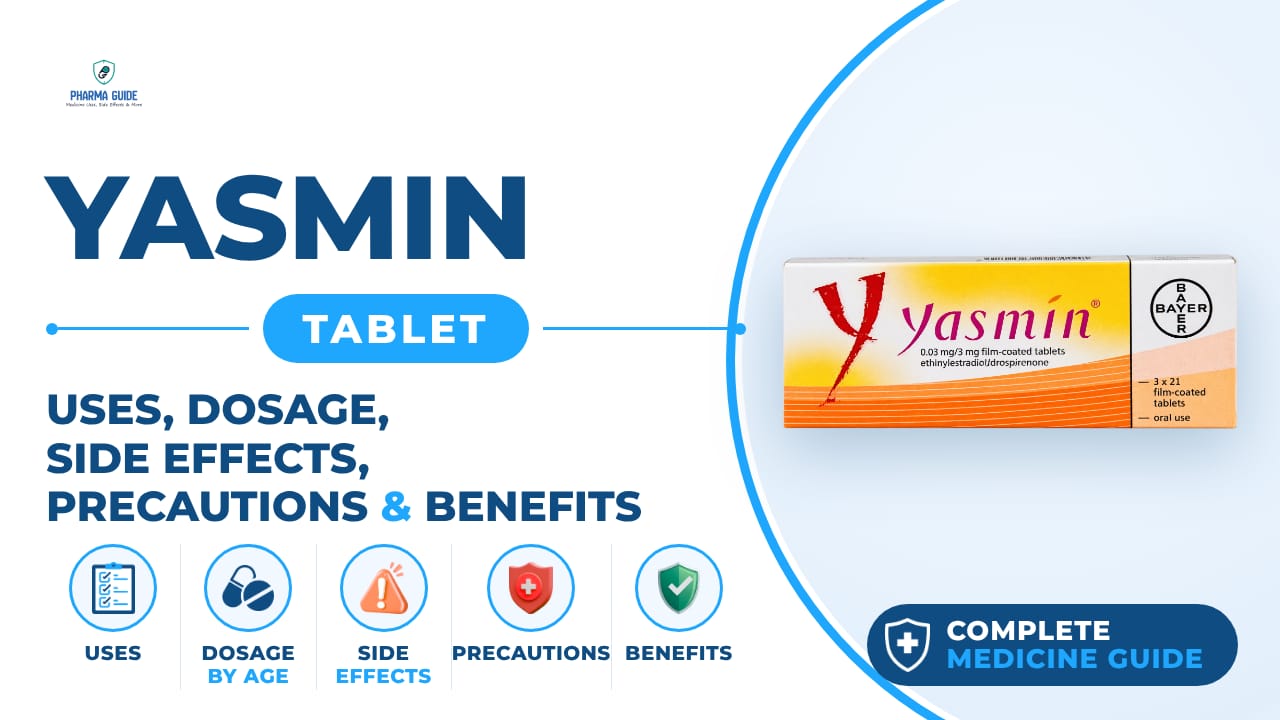
Yasmin Tablet: Uses, Dosage, Side Effects, Precautions and Alternates
| Generic name | Drospirenone and Ethinyl Estradiol |
|---|---|
| Drug class | Estrogen/Progestin combined oral contraceptive |
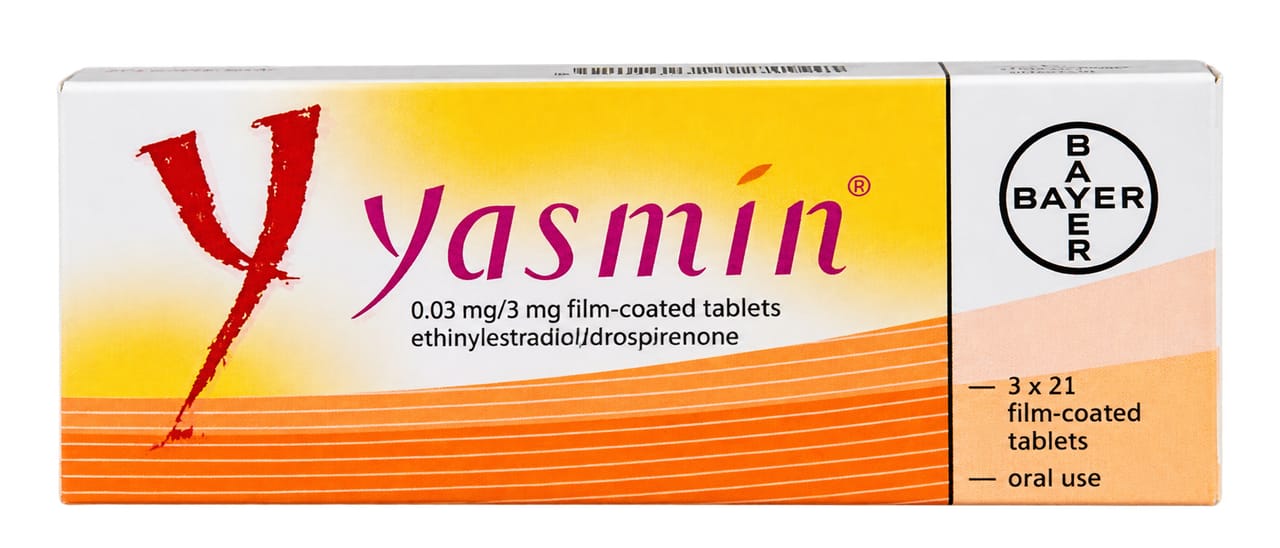
| Forms | Film-coated tablet (yellow, hormone-containing) |
Quick overview
Yasmin Tablet contains drospirenone and ethinyl estradiol, an estrogen-progestin combined oral contraceptive. It is a monophasic pill used to prevent pregnancy and to treat moderate acne in some women. It is taken once daily and works by stopping ovulation, thickening cervical mucus, and thinning the womb lining. As with other hormonal contraceptives, it carries certain risks and precautions that should be discussed with a doctor.
What is Yasmin Tablet
Yasmin is a combination birth control pill (oral contraceptive) that contains two hormones: drospirenone (a progestin) and ethinyl estradiol (an estrogen). It is a monophasic pill, meaning every active tablet has the same dose of hormones. It is used to prevent pregnancy and can also help treat moderate acne in some women.
Yasmin Tablet uses
- Prevention of pregnancy
- Treatment of moderate acne vulgaris in women 16 years of age and older who need contraception and have started their periods
Benefits of Yasmin Tablet
- Once-daily dosing
- Works better to prevent pregnancy compared to some other birth control methods
- Available as a lower-cost generic
- Can be taken with or without meals
How Yasmin Tablet works
Yasmin contains two hormones that work together to stop the ovaries from releasing an egg each month, thicken the mucus at the cervix so sperm have a harder time getting through, and thin the lining of the womb so a fertilized egg is less likely to implant.
Yasmin Tablet dosage
Take one tablet at about the same time every day, in the order shown on the pack. It can be taken with or without food. Swallow the tablet whole with water; do not crush, split, or chew it. After finishing the active tablets, follow the pack instructions for the tablet-free or placebo-tablet days before starting a new pack. Once you finish a pack, continue directly to a new pack the next day without skipping days, since the pills are meant to be taken continuously.
If you vomit within 3 to 4 hours of taking a tablet, or have severe diarrhea, treat it as a missed dose and follow the missed-dose instructions. Use a back-up birth control method (such as condoms) for the first 7 days when starting the pill partway through your cycle, and after missing doses. Yasmin is not intended for use in women who have not yet had their first period or in women after menopause.
| Age group | Dose |
|---|---|
| Under 18 Years | Use only if prescribed and medically appropriate |
| Adults (18–40 Years) | 1 tablet once daily for 21 days, followed by a 7-day break (as directed) |
| Adults (40+ Years) | Use based on individual health risks and doctor’s advice |
| Older Adults (65+ years) | Not routinely recommended |
Available forms and strengths
Film-coated tablet (yellow, hormone-containing)
Side effects of Yasmin Tablet
Common
- Premenstrual syndrome (PMS)
- Headache/migraine
- Breast pain, tenderness, or discomfort
- Nausea/vomiting
- Mood changes, feeling tired or irritable
- Weight gain
- Changes in menstrual periods, decreased sex drive
- Vaginal yeast infection
- Stomach pain or discomfort
- Depression
Serious
- Signs of a blood clot: leg swelling, pain, warmth or redness in the leg
- Chest pain, trouble breathing, or coughing up blood (possible lung blood clot)
- Sudden numbness or weakness in the face, arm, or leg, trouble speaking or seeing, severe headache (possible stroke)
- Chest pain, sweating, nausea, dizziness (possible heart attack)
- Yellowing of skin or eyes, dark urine, severe stomach pain, tiredness (possible liver problems)
- High blood pressure symptoms: severe headache, blurred vision, pounding in neck or ears
- Signs of high potassium: nausea, irregular heartbeat, muscle weakness
- Severe allergic reaction: hives, difficulty breathing, swelling of face, lips, tongue, or throat
- Signs of breast cancer: new lumps, skin dimpling, nipple changes
- Signs of cervical cancer: abnormal vaginal bleeding, unusual discharge, pain during sex
Warnings and precautions
- Do not take Yasmin if you are pregnant. If you become pregnant while taking it, stop taking it right away and contact your doctor.
- Yasmin is generally not recommended while breastfeeding, as it can reduce the amount and quality of breast milk and its hormones can pass into breast milk.
- Yasmin should not be used by people with kidney problems, including kidney failure, because of the risk of high potassium levels and other complications.
- Yasmin should not be used by people with liver disease, liver tumors, or liver function problems.
- Taking Yasmin with alcohol may possibly increase levels of alcohol or its breakdown products in the body, so it should be used with caution.
- No studies have looked at whether Yasmin affects the ability to drive or use machines, and there is no evidence it does.
- Smoking while taking Yasmin increases the risk of serious heart and blood vessel problems, including heart attack, stroke, and blood clots. This risk is higher in women over 35 who smoke, so they should not use Yasmin.
- Yasmin does not protect against sexually transmitted infections, including HIV/AIDS. Condoms should be used in addition for STI protection.
- Yasmin increases the risk of blood clots in the legs, lungs, brain, or heart, which can be life-threatening.
- There may be a higher risk of breast and cervical cancer with long-term use, though study results are mixed.
- Yasmin can rarely cause liver problems such as liver damage and liver tumors.
- Yasmin can raise blood pressure, so it should be monitored regularly during use.
- Yasmin contains drospirenone, which can raise potassium levels in the blood, especially in people with kidney, liver, or adrenal problems or those taking certain medicines.
- If you need surgery, tell your provider you are taking Yasmin, as you may need to stop it several weeks before and after the procedure to lower blood clot risk.
- Do not use Yasmin together with certain hepatitis C medicines, as this combination can cause liver problems.
Storage
- Store in original packaging between 15°C and 30°C (some product versions say do not store above 25°C or 30°C).
- Keep out of the reach and sight of children and pets.
- Do not throw away medicines via wastewater or household waste; ask your pharmacist how to dispose of medicines no longer needed.
When to see a doctor
- Get emergency help right away if you notice signs of a blood clot, such as leg swelling or pain, sudden shortness of breath, chest pain, coughing up blood, sudden vision changes, or sudden weakness or numbness on one side of the body.
- Seek immediate medical care for symptoms of a heart attack, such as chest pain, sweating, nausea, or dizziness.
- Seek immediate medical care for symptoms of a stroke, including sudden numbness or weakness, confusion, trouble seeing, or difficulty walking.
- Call your healthcare provider right away if you notice yellowing of the skin or eyes, tiredness, or stomach pain, which could signal liver problems.
- Get medical help right away if you have abnormal vaginal bleeding, discharge, or pain during sex, since these could be signs of cervical cancer.
- Contact your provider if you notice signs of high potassium, such as nausea, irregular heartbeat, or muscle weakness.
- Stop using Yasmin and get medical help immediately if you have signs of a severe allergic reaction, such as swelling of the face, lips, tongue, or throat, or difficulty breathing.
- If you miss two periods in a row, contact your healthcare professional or clinic to rule out pregnancy.
Alternatives
- Microgynon
- Ortho Tri-Cyclen
- Marvelon
Watch the video
FAQs
What is Yasmin Tablet used for?
Yasmin Tablet is used for the prevention of pregnancy and to treat moderate acne vulgaris in women 16 years and older who need contraception and have started their periods.
How does Yasmin Tablet work?
Yasmin contains drospirenone and ethinyl estradiol, which work together to stop ovulation, thicken cervical mucus so sperm cannot pass through easily, and thin the womb lining to prevent implantation.
How should I take Yasmin Tablet?
Take one tablet at about the same time every day in the order shown on the pack, with or without food. Swallow it whole with water; do not crush, split, or chew it. Continue directly into a new pack after finishing active tablets as instructed.
What are the serious side effects of Yasmin Tablet?
Serious side effects include signs of blood clots (leg swelling, pain, chest pain, trouble breathing), stroke symptoms (numbness, weakness, trouble speaking), heart attack symptoms, liver problems, high blood pressure, high potassium levels, and severe allergic reactions.
Who should not take Yasmin Tablet?
Yasmin should not be used by pregnant women, those with kidney problems, liver disease or liver tumors, women over 35 who smoke, or women taking certain hepatitis C medicines.
General information, not medical advice
Your prescriber and the leaflet in your pack know your situation. This page does not.
- Follow your prescriber and the leaflet
- Don't start, stop, or change a dose on your own
- Doses and warnings differ by country and product
Sources
- GoodRx: https://www.goodrx.com/yasmin/what-is
- Bayer Yasmin Product Monograph (Health Canada), 2025-07-07
- Boots Online Doctor: https://onlinedoctor.boots.com/treatments/yasmin
- Drugs.com: https://www.drugs.com/yasmin.html
- Yasmin Patient Information Leaflet, Bayer plc / Bayer Israel
Video
Related medicines

Injectafer Injection: Uses, Dosage, Side Effects, Precautions and Alternates
Iron products
Injectafer (ferric carboxymaltose) treats iron deficiency anemia and heart failure-related iron deficiency via IV. Learn uses, dosage, side effects, and

Gliclazide Tablet: Uses, Dosage, Side Effects, Precautions and Alternates
Sulfonylurea (hypoglycemic/antidiabetic agent)
Gliclazide Tablet is a sulfonylurea for type 2 diabetes that boosts insulin release. Learn about dosage, side effects, warnings, and precautions.