
Safety
General information, not medical advice
Your prescriber and the leaflet in your pack know your situation. This page does not.
- Follow your prescriber and the leaflet
- Don't start, stop, or change a dose on your own
- Doses and warnings differ by country and product
Yervoy Injection: Uses, Dosage, Side Effects, Precautions and Alternates
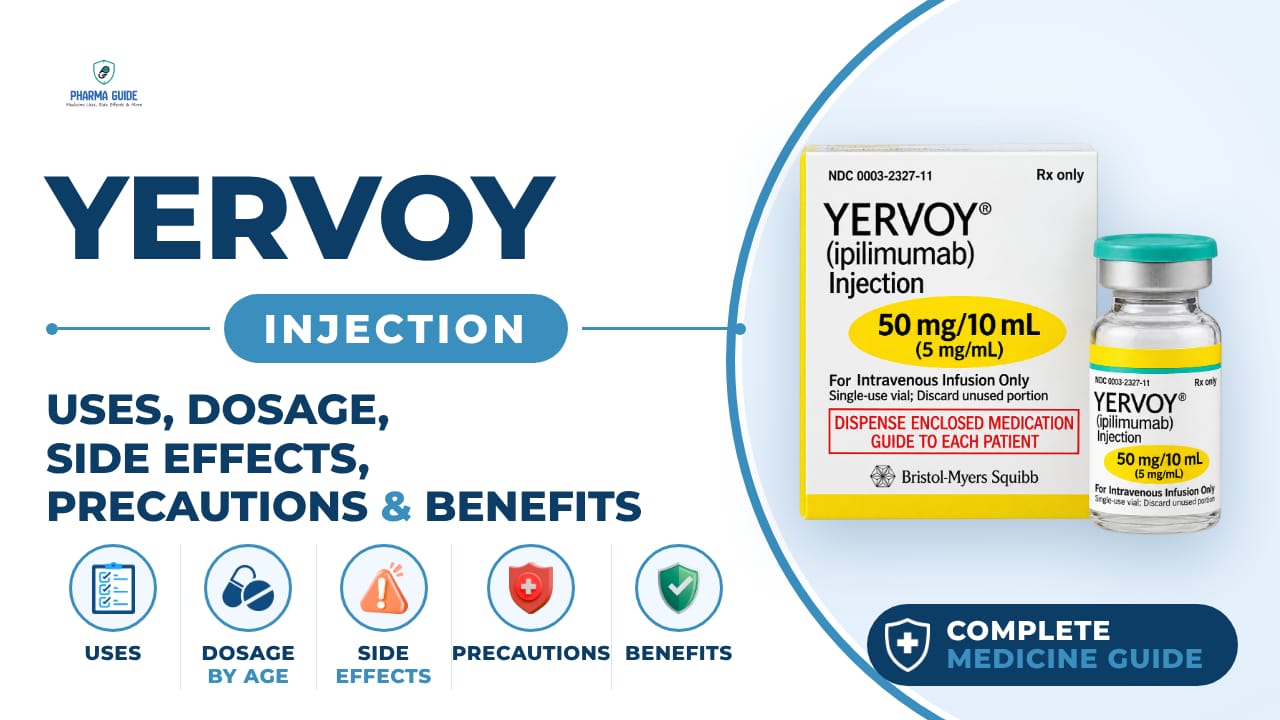
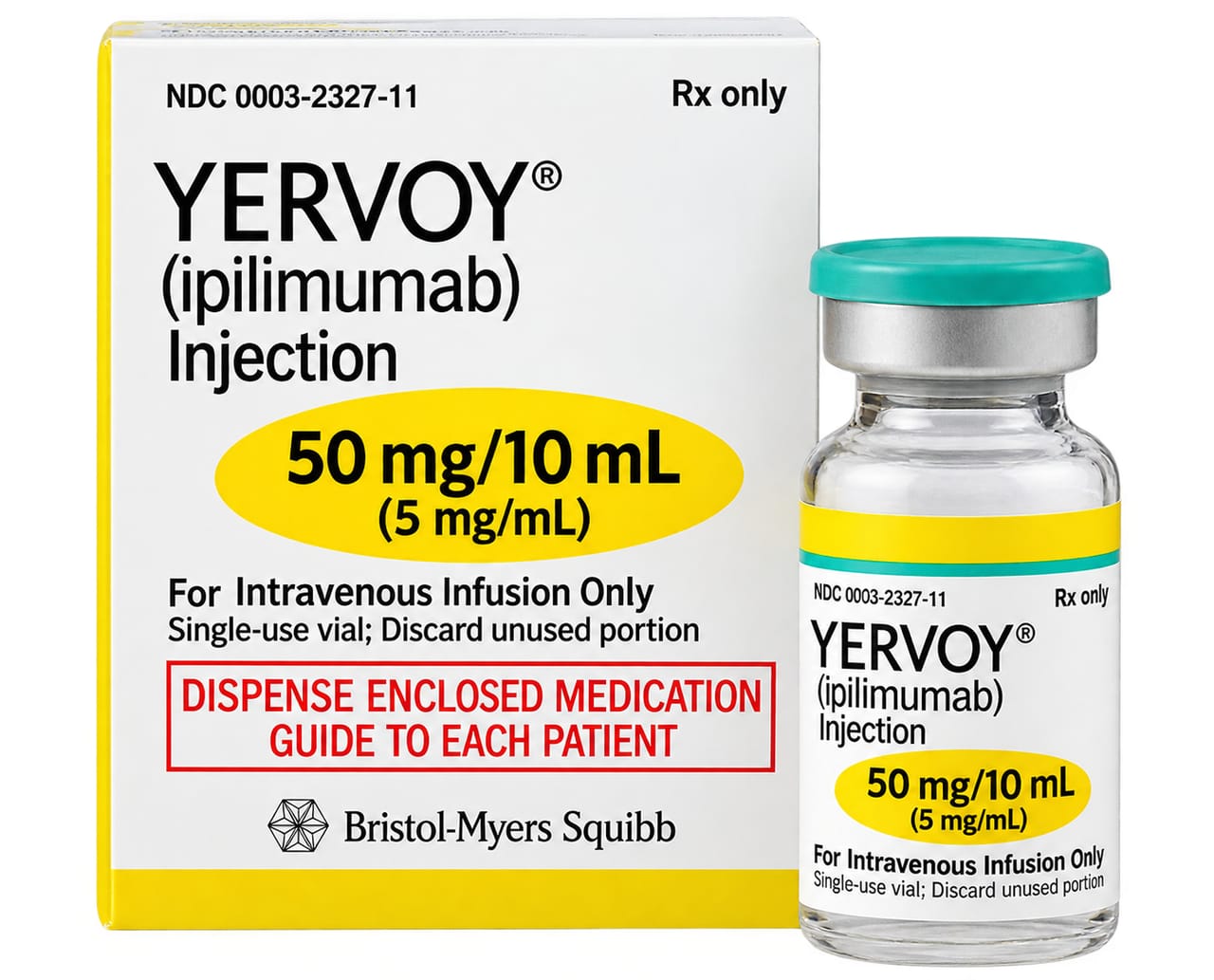
| Generic name | ipilimumab |
|---|---|
| Drug class | CTLA-4 blocking antibody, monoclonal antibody (antineoplastic) |
| Forms | Injection |
Quick overview
Yervoy Injection (ipilimumab) is a prescription cancer medicine given by IV infusion. It is a CTLA-4 blocking monoclonal antibody that helps the immune system recognize and attack cancer cells. It is used alone or with nivolumab to treat melanoma and advanced kidney cancer, among other cancers. Yervoy can cause serious immune-related side effects and requires close monitoring by a healthcare provider.
What is Yervoy Injection
Yervoy is a prescription cancer medicine given as an IV infusion. It is a type of immunotherapy that helps your own immune system recognize and attack cancer cells. It's used alone or together with another medicine called nivolumab to treat several types of cancer, including melanoma (skin cancer), kidney cancer, colorectal cancer, liver cancer, lung cancer, mesothelioma, and esophageal cancer. Its generic name is ipilimumab, and it belongs to the CTLA-4 blocking antibody class of monoclonal antibodies (antineoplastics).
Yervoy Injection uses
- Treatment of melanoma (a type of skin cancer) that has spread or cannot be removed by surgery, used alone or with nivolumab, in adults and children 12 years and older
- Adjuvant treatment (after surgery) of melanoma that has spread to nearby lymph nodes, to help prevent it from coming back
- Advanced kidney cancer (renal cell carcinoma), in combination with nivolumab, as a first treatment
Benefits of Yervoy Injection
- Helps the immune system attack cancer cells
- Treats advanced melanoma
- May reduce the risk of melanoma returning
- Helps treat certain kidney cancers
- May help control selected advanced cancers
How Yervoy Injection works
Yervoy blocks a protein called CTLA-4 on immune cells called T-cells. CTLA-4 normally acts as a brake on T-cell activity. By blocking it, Yervoy releases this brake, allowing T-cells to become more active and multiply so they can better recognize and attack cancer cells.
Yervoy Injection dosage
Yervoy is given into a vein (IV infusion) by a healthcare provider in a hospital, clinic, or infusion center; you will not take it at home. Each infusion usually takes about 30 minutes to complete. When used alone for melanoma that has been removed by surgery, it is given over 30 minutes. When used in combination with nivolumab, Yervoy is usually given for an initial set of doses, after which nivolumab is typically continued alone on its own schedule. Your healthcare provider will decide how many treatments you need and will do blood tests before starting and before each dose to check for side effects. If you miss an appointment, call your healthcare provider as soon as possible to reschedule.
| Age group | Dose |
|---|---|
| Under 18 years | Not recommended |
| 18–64 years | 240 mg, once every 3 weeks |
| 65+ years | 240 mg, once every 3 weeks |
Available forms and strengths
Yervoy is available as an injection.
Side effects of Yervoy Injection
Common
- Fatigue (tiredness)
- Diarrhea
- Nausea and vomiting
- Decreased appetite
- Weight loss
- Fever
- Itching
- Rash
- Headache
- Trouble sleeping (insomnia)
- Pain in muscles, bones, and joints
- Constipation
- Cough
- Dizziness
- Low thyroid hormone levels (hypothyroidism)
Serious
- Severe or ongoing diarrhea, severe stomach pain, bloody or tarry stools (signs of colitis)
- Yellowing of skin or eyes, dark urine, severe nausea/vomiting, right-sided stomach pain, easy bruising or bleeding (signs of hepatitis/liver problems)
- Severe skin rash, blistering, peeling, painful sores in mouth, nose, throat, or genital area
- Hormone gland problems: persistent headache, vision changes, rapid heartbeat, increased sweating, extreme tiredness, weight gain or loss, increased thirst or urination, feeling cold, hair loss, mood changes, dizziness or fainting
- New or worsening cough, shortness of breath, chest pain (signs of lung inflammation/pneumonitis)
- Decreased urination, swelling of ankles, blood in urine, loss of appetite (signs of kidney problems/nephritis)
- Blurry or double vision, eye pain or redness, sensitivity to light
- Severe infusion-related reactions: chills, shaking, dizziness, itching, rash, flushing, fever, trouble breathing, back or neck pain
- Graft-versus-host disease in people who have had a stem cell transplant
- Confusion, memory problems, hallucinations, neck stiffness, drowsiness, seizures
- Persistent or severe muscle pain or weakness, muscle cramps
- Chest pain, irregular heartbeat, swelling of ankles
Warnings and precautions
Yervoy can cause severe and sometimes fatal immune-mediated side effects that can affect almost any organ in the body, including the intestines, liver, skin, nerves, and hormone glands. These problems can happen at any time during treatment or even months after treatment ends.
Severe infusion-related reactions can occur during or shortly after the infusion, and treatment may need to be slowed, interrupted, or stopped depending on severity.
Serious and sometimes fatal complications, including graft-versus-host disease, can occur in people who have had or will have a donor stem cell transplant and are treated with Yervoy either before or after the transplant.
Yervoy can cause harm to an unborn baby (embryo-fetal toxicity) based on animal studies and how the drug works.
Yervoy can harm an unborn baby and should not be used during pregnancy. A pregnancy test is usually done before starting treatment, and effective birth control should be used during treatment and for 3 months after the last dose.
Breastfeeding is not recommended during treatment with Yervoy and for 3 months after the last dose, since it is not known if the drug passes into breast milk or could harm a nursing baby.
Yervoy can cause immune-mediated kidney inflammation (nephritis) with reduced kidney function; your doctor will monitor your kidney function and may need to pause or stop treatment if this occurs.
Yervoy can cause immune-mediated hepatitis (liver inflammation), which can be serious. Your doctor will check your liver function tests before starting and before each dose.
It is not known for certain how alcohol affects Yervoy, but drinking alcohol could make certain side effects, such as nausea, headache, diarrhea, or liver problems, worse. Ask your doctor how much alcohol, if any, is safe for you during treatment.
Storage
- Store YERVOY under refrigeration at 2°C to 8°C (36°F to 46°F)
- Protect YERVOY from light by storing in the original carton until time of use
- Do not freeze or shake
- After dilution, store the prepared solution refrigerated at 2°C to 8°C (36°F to 46°F) or at room temperature of 20°C to 25°C (68°F to 77°F) for no more than 24 hours from preparation to infusion
- Discard partially used or empty vials of YERVOY
When to see a doctor
- Get medical help right away for signs of a severe allergic reaction, such as hives, trouble breathing, or swelling of the face, lips, tongue, or throat
- Call or see your healthcare provider right away for signs of intestinal problems such as diarrhea, black or bloody stools, or severe stomach pain
- Call your healthcare provider right away for signs of liver problems such as yellowing of the skin or eyes, dark urine, severe nausea or vomiting, or unusual bruising or bleeding
- Contact your healthcare provider immediately if you develop a new or worsening skin rash, blistering, peeling, or painful sores in the mouth, nose, throat, or genital area
- Seek medical care right away for new or worsening cough, shortness of breath, or chest pain, which could signal lung problems
- Tell your healthcare provider or nurse right away if you get symptoms such as chills, dizziness, itching, flushing, fever, shortness of breath, or back/neck pain during an infusion
Alternatives
- Imfinzi
- Keytruda
- Opdivo
Watch the video
FAQs
What is Yervoy Injection used for?
Yervoy is used alone or with nivolumab to treat melanoma that has spread or cannot be removed by surgery, as adjuvant treatment after surgery for melanoma spread to lymph nodes, and in combination with nivolumab as a first treatment for advanced kidney cancer.
How does Yervoy work?
Yervoy blocks a protein called CTLA-4 on T-cells, which normally acts as a brake on T-cell activity. By blocking it, Yervoy allows T-cells to become more active and multiply so they can better recognize and attack cancer cells.
What is the dosage of Yervoy for adults?
For adults aged 18 to 64 and those 65 and older, the dose is 240 mg given once every 3 weeks as an IV infusion by a healthcare provider.
What are the serious side effects of Yervoy?
Serious side effects include signs of colitis, hepatitis or liver problems, severe skin reactions, hormone gland problems, lung inflammation, kidney problems, eye problems, severe infusion reactions, and graft-versus-host disease in stem cell transplant recipients.
Can Yervoy be used during pregnancy?
No, Yervoy can harm an unborn baby and should not be used during pregnancy. A pregnancy test is usually done before starting treatment, and effective birth control should be used during treatment and for 3 months after the last dose.
General information, not medical advice
Your prescriber and the leaflet in your pack know your situation. This page does not.
- Follow your prescriber and the leaflet
- Don't start, stop, or change a dose on your own
- Doses and warnings differ by country and product
Sources
Video
Related medicines

Injectafer Injection: Uses, Dosage, Side Effects, Precautions and Alternates
Iron products
Injectafer (ferric carboxymaltose) treats iron deficiency anemia and heart failure-related iron deficiency via IV. Learn uses, dosage, side effects, and

Gliclazide Tablet: Uses, Dosage, Side Effects, Precautions and Alternates
Sulfonylurea (hypoglycemic/antidiabetic agent)
Gliclazide Tablet is a sulfonylurea for type 2 diabetes that boosts insulin release. Learn about dosage, side effects, warnings, and precautions.