
Safety
General information, not medical advice
Your prescriber and the leaflet in your pack know your situation. This page does not.
- Follow your prescriber and the leaflet
- Don't start, stop, or change a dose on your own
- Doses and warnings differ by country and product
Yescarta Injection: Uses, Dosage, Side Effects, Precautions and Alternates
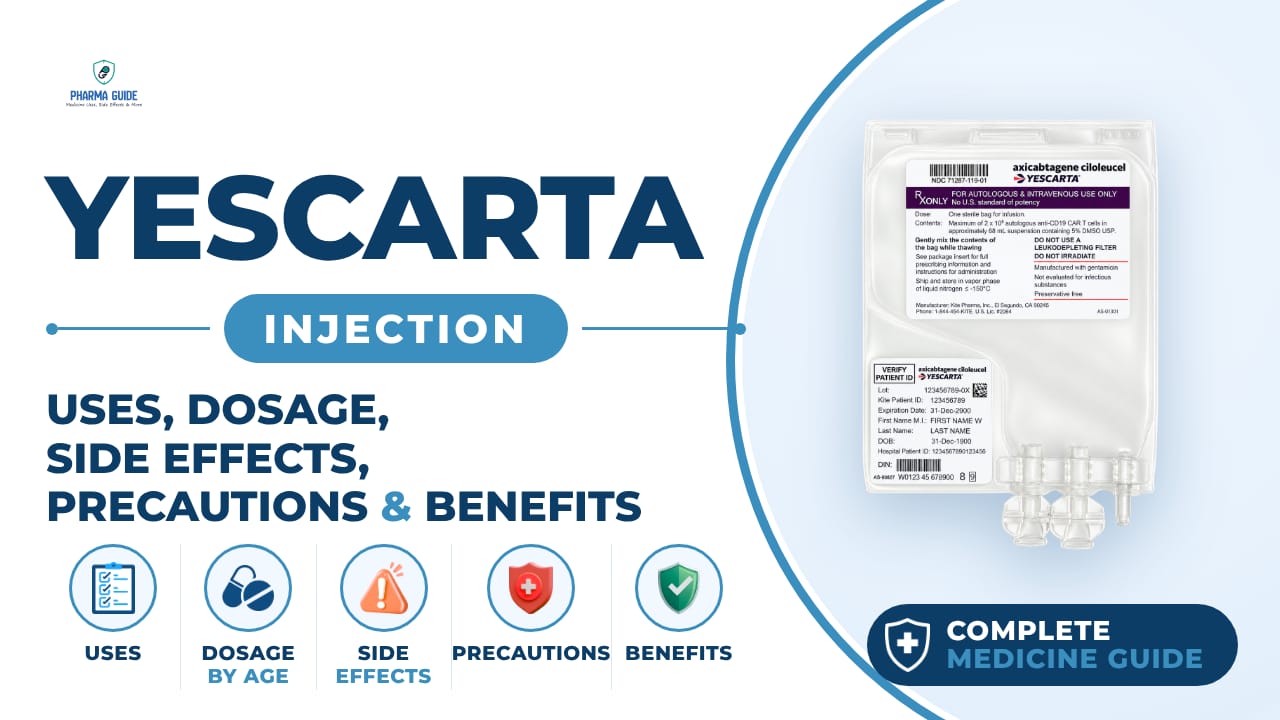
| Generic name | axicabtagene ciloleucel |
|---|---|
| Drug class | Other antineoplastic agent (CD19-directed genetically modified autologous T cell immunotherapy) |
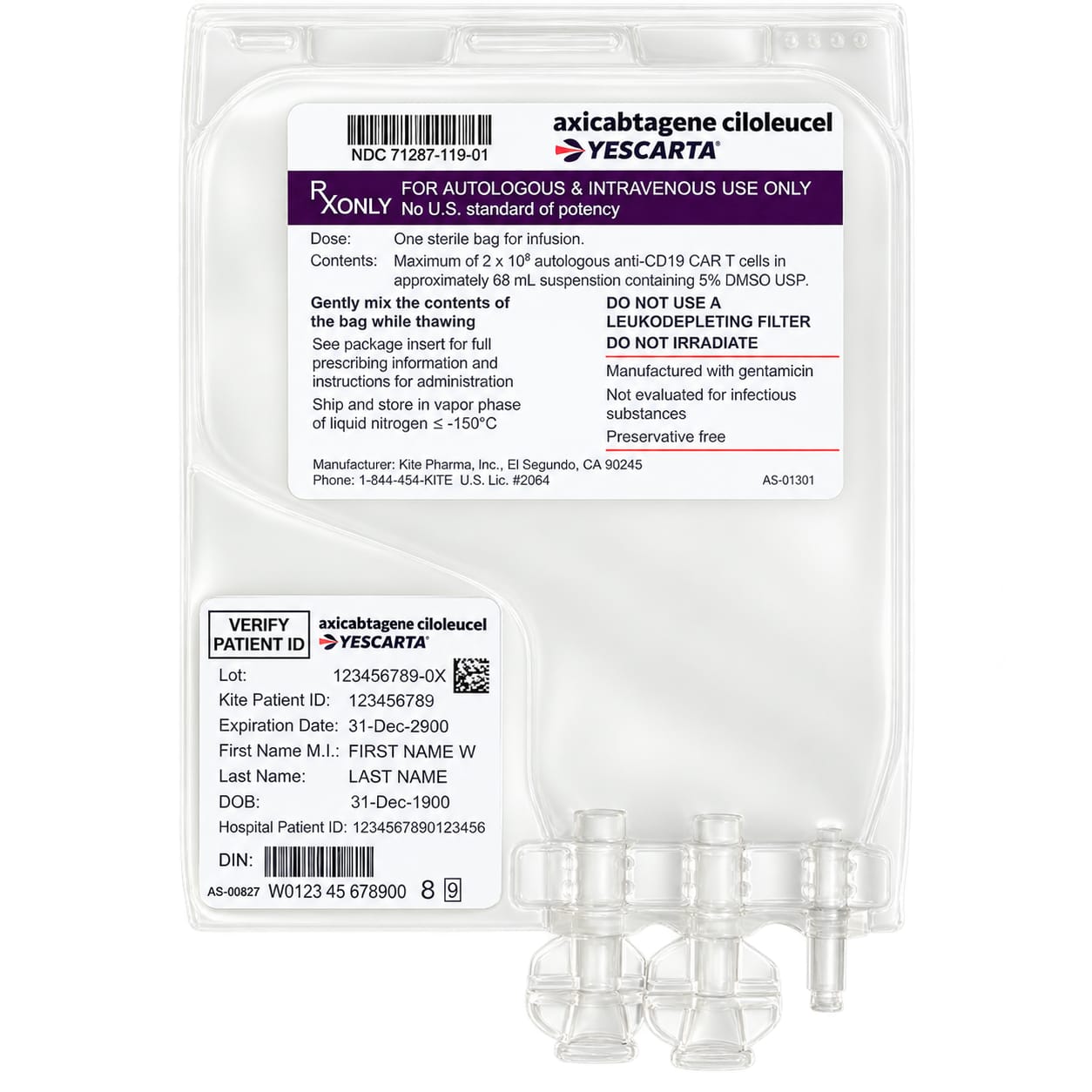
| Forms | Cell suspension (dispersion) for intravenous infusion, supplied in a single patient-specific infusion bag |
Quick overview
Yescarta Injection (axicabtagene ciloleucel) is a CD19-directed, genetically modified autologous T cell immunotherapy. It is a one-time cell therapy made from a patient's own white blood cells, which are collected, modified in a lab to recognize cancer cells, and infused back into the body as a single treatment. It is used for certain types of large B-cell lymphoma and relapsed or refractory follicular lymphoma. It is given only once, as an IV infusion, following a short course of preparatory chemotherapy.
What is Yescarta Injection
Yescarta is a one-time cell therapy made from your own white blood cells. Some of your T cells are collected, genetically modified in a lab to recognize your cancer cells, and then infused back into your body as a single treatment.
Yescarta Injection uses
- Treatment of adults with diffuse large B-cell lymphoma (DLBCL) or high-grade B-cell lymphoma (HGBL) that did not respond to first-line chemoimmunotherapy or that relapsed within 12 months of first-line chemoimmunotherapy
- Treatment of adults with relapsed or refractory large B-cell lymphoma (LBCL) after two or more prior lines of systemic therapy, including DLBCL not otherwise specified, primary mediastinal large B-cell lymphoma (PMBCL), HGBL, and DLBCL arising from follicular lymphoma
- Treatment of adults with relapsed or refractory grade 1, 2, or 3a follicular lymphoma (FL) after two or more lines of systemic therapy
Benefits of Yescarta Injection
- Treats certain large B-cell lymphomas
- Treats certain relapsed or refractory follicular lymphomas
- Uses the patient's genetically modified T cells to target CD19-positive cancer cells
- Provides a single-infusion CAR T-cell treatment
- Can produce durable responses in eligible patients
How Yescarta Injection works
Yescarta is made from your own T cells, which are a part of your immune system. The cells are modified in a lab to carry a special receptor that lets them recognize a protein called CD19 on lymphoma cells. Once infused back into your body, these modified T cells multiply, attack, and destroy the cancer cells carrying CD19.
Yescarta Injection dosage
Yescarta is given only once, as a single infusion into a vein, usually taking about 30 minutes. Before your infusion, you will receive a short course of chemotherapy over three days to prepare your body to receive the cells. About one hour before the infusion, you may be given a pain/fever reliever and an antihistamine to help prevent reactions.
Your healthcare team will not give you Yescarta if the identifying labels on the bag do not match your identity exactly. You should not drive, operate heavy machinery, or do other hazardous activities for 8 weeks after your infusion because the treatment can cause sleepiness, confusion, weakness, or coordination problems. You will need to stay close to the treatment center for several weeks after the infusion so your care team can monitor you for side effects.
Do not donate blood, organs, tissue, or cells after receiving Yescarta. Tell your healthcare professional right away if you have fever, chills, difficulty breathing, confusion, or other new symptoms after your infusion.
| Age group | Dose |
|---|---|
| 18–64 years | Not dosed in mg; 2 × 10⁶ CAR-positive viable T cells/kg as a single IV infusion, maximum 2 × 10⁸ cells |
Available forms and strengths
- Cell suspension (dispersion) for intravenous infusion, supplied in a single patient-specific infusion bag
Side effects of Yescarta Injection
Common
- Fever
- Chills
- Low blood pressure (feeling dizzy or lightheaded)
- Fast or irregular heartbeat
- Headache
- Confusion or memory problems
- Tremor (shaking)
- Fatigue/tiredness
- Nausea, vomiting, diarrhea, constipation, stomach pain
- Decreased appetite
- Cough, shortness of breath
- Low levels of antibodies (immunoglobulins), which may lead to infections
- Muscle or joint pain, back pain
- Low blood counts (low white blood cells, red blood cells, or platelets)
- Swelling (edema)
- Difficulty sleeping
- Increased liver enzymes seen on blood tests
- Rash or itching
Serious
- Cytokine release syndrome (CRS), which can be life-threatening or fatal
- Serious neurologic problems, including seizures, confusion, difficulty speaking, loss of consciousness, or brain swelling
- Serious or life-threatening infections
- Prolonged low blood cell counts (cytopenias)
- Severe allergic reactions (hypersensitivity), including anaphylaxis
- Secondary cancers, including T-cell cancers, which can occur weeks to months after treatment and have been fatal in some cases
- Progressive multifocal leukoencephalopathy (PML), a rare, serious brain infection
- Severe or fatal bleeding (hemorrhage)
- Heart problems, including heart failure or cardiac arrest
- Spinal cord swelling, inflammation, or paralysis (myelitis, spinal cord edema, quadriplegia)
- Tumor lysis syndrome
- Kidney problems, including acute kidney injury
Warnings and precautions
- Yescarta can cause cytokine release syndrome (CRS), a serious immune reaction that can be life-threatening or fatal. Symptoms include fever, low blood pressure, fast heartbeat, chills, and trouble breathing.
- Serious nervous system side effects can occur, sometimes along with CRS or on their own, and can be life-threatening or fatal. These include confusion, seizures, difficulty speaking, and loss of consciousness.
- This treatment must only be given by trained healthcare professionals at specialized treatment centers that have emergency equipment and medicine on hand to manage severe reactions.
- People treated with Yescarta may develop new, serious blood cancers (secondary malignancies), including T-cell cancers, sometimes within weeks of treatment, and some cases have been fatal. Lifelong monitoring is recommended.
- Do not donate blood, organs, tissues, or cells after receiving this treatment.
- Serious, sometimes fatal infections can occur after treatment, including reactivation of hepatitis B or other viruses.
- Severe allergic reactions, including anaphylaxis, can occur during the infusion, possibly due to other ingredients in the product.
- Serious and sometimes fatal bleeding (hemorrhage) has been reported after treatment, including in the brain, lungs, and digestive tract.
- A rare, serious brain infection called progressive multifocal leukoencephalopathy (PML) has been reported after treatment and can be fatal.
- Live vaccines should not be given for at least 6 weeks before starting the chemotherapy that prepares you for Yescarta, during treatment, or until your immune system has recovered afterward.
- Yescarta is not recommended for women who are pregnant. There is no information on whether it can harm an unborn baby, but based on how the treatment works, it could cause harm. A pregnancy test will be done before treatment, and you should discuss any future pregnancy plans with your doctor.
- It is not known if Yescarta passes into breast milk or could affect a nursing baby. Talk with your doctor about the risks and benefits before breastfeeding after treatment.
- No specific studies have looked at how kidney problems affect this treatment. Tell your doctor if you have kidney disease, since treatment may need to be delayed in some cases.
- No specific studies have looked at how liver problems affect this treatment. Tell your doctor about any liver conditions you have.
- There is no known direct interaction between Yescarta and alcohol, but drinking alcohol may worsen certain side effects like headache, nausea, diarrhea, or vomiting. Ask your doctor what is safe for you.
- Do not drive, use heavy machinery, or do other hazardous activities for at least 8 weeks after your infusion, since the treatment can cause sleepiness, confusion, dizziness, seizures, or loss of coordination.
Storage
- Yescarta must be stored frozen at or below -120°C (or in the vapor phase of liquid nitrogen at or below -150°C, per EU labeling) until the patient is ready for treatment
- Product may be stored for a single time at -80°C (±10°C) for up to 90 days; after this storage it must be used or discarded within 90 days or by the labeled expiration date, whichever comes first
- Thawed product should not be refrozen
- Once thawed, the product may be stored at room temperature (20°C to 25°C) for up to 3 hours before infusion
- Unused medicine must be disposed of according to local guidelines for handling of waste containing blood-borne pathogens and genetically modified cells
When to see a doctor
- Get medical help right away if you have symptoms of cytokine release syndrome, such as high fever, chills, feeling very weak or tired, nausea, vomiting, diarrhea, muscle or joint pain, dizziness, headache, cough, shortness of breath, or a fast or irregular heartbeat.
- Get medical help right away if you have symptoms of a serious nervous system problem, such as seizures or fits, shaking, difficulty speaking or swallowing, dizziness, confusion, delirium, memory loss, loss of balance, or decreased or loss of consciousness.
- Seek urgent care if you have a seizure that lasts 5 minutes or longer, or repeated seizures without recovering in between.
- Call your healthcare provider right away if you notice signs of a possible brain infection, such as weakness on one side of the body, clumsiness, vision changes, confusion, or personality changes.
- Contact your doctor immediately if you have signs of infection, such as fever, chills, sore throat, cough, chest pain, stomach pain, vomiting, or diarrhea.
- Tell your healthcare provider right away if you notice easy bleeding or bruising, which could be a sign of low platelet levels.
Alternatives
- Breyanzi (lisocabtagene maraleucel)
- Kymriah (tisagenlecleucel)
- Tecartus (brexucabtagene autoleucel)
Watch the video
FAQs
What is Yescarta Injection used for?
Yescarta is used to treat adults with certain types of diffuse large B-cell lymphoma, high-grade B-cell lymphoma, relapsed or refractory large B-cell lymphoma after two or more prior therapies, and relapsed or refractory grade 1, 2, or 3a follicular lymphoma after two or more lines of therapy.
How is Yescarta Injection given?
Yescarta is given only once as a single IV infusion, usually taking about 30 minutes, after a short course of preparatory chemotherapy over three days.
What are the serious side effects of Yescarta Injection?
Serious side effects include cytokine release syndrome, serious neurologic problems like seizures or confusion, severe infections, prolonged low blood cell counts, severe allergic reactions, secondary cancers, PML, severe bleeding, heart problems, spinal cord issues, tumor lysis syndrome, and kidney problems.
Can I drive after receiving Yescarta Injection?
No, you should not drive, operate heavy machinery, or do other hazardous activities for at least 8 weeks after your infusion because Yescarta can cause sleepiness, confusion, dizziness, seizures, or loss of coordination.
Can I donate blood after getting Yescarta Injection?
No, you should not donate blood, organs, tissue, or cells after receiving Yescarta.
General information, not medical advice
Your prescriber and the leaflet in your pack know your situation. This page does not.
- Follow your prescriber and the leaflet
- Don't start, stop, or change a dose on your own
- Doses and warnings differ by country and product
Sources
Video
Related medicines

Injectafer Injection: Uses, Dosage, Side Effects, Precautions and Alternates
Iron products
Injectafer (ferric carboxymaltose) treats iron deficiency anemia and heart failure-related iron deficiency via IV. Learn uses, dosage, side effects, and

Gliclazide Tablet: Uses, Dosage, Side Effects, Precautions and Alternates
Sulfonylurea (hypoglycemic/antidiabetic agent)
Gliclazide Tablet is a sulfonylurea for type 2 diabetes that boosts insulin release. Learn about dosage, side effects, warnings, and precautions.