
Safety
General information, not medical advice
Your prescriber and the leaflet in your pack know your situation. This page does not.
- Follow your prescriber and the leaflet
- Don't start, stop, or change a dose on your own
- Doses and warnings differ by country and product
Yuvafem Vaginal Tablet: Uses, Dosage, Side Effects, Precautions and Alternates
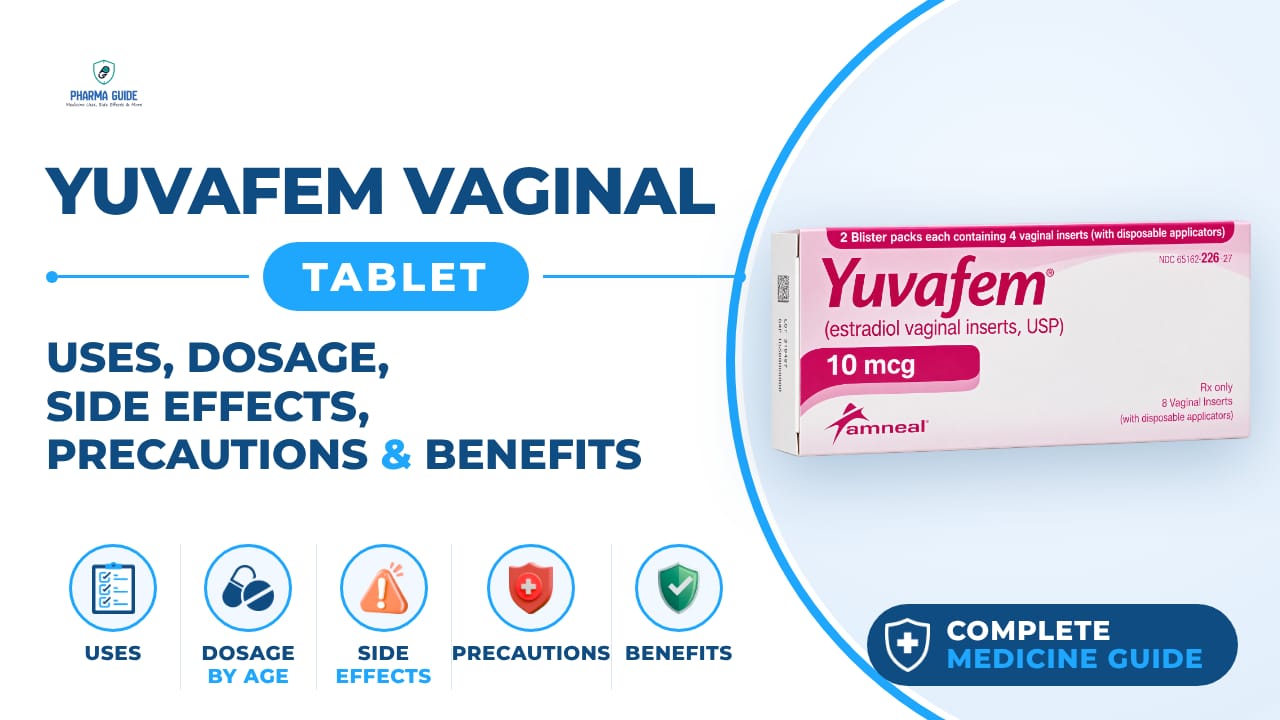
| Generic name | Estradiol vaginal |
|---|---|
| Drug class | Estrogens, Miscellaneous vaginal agents |
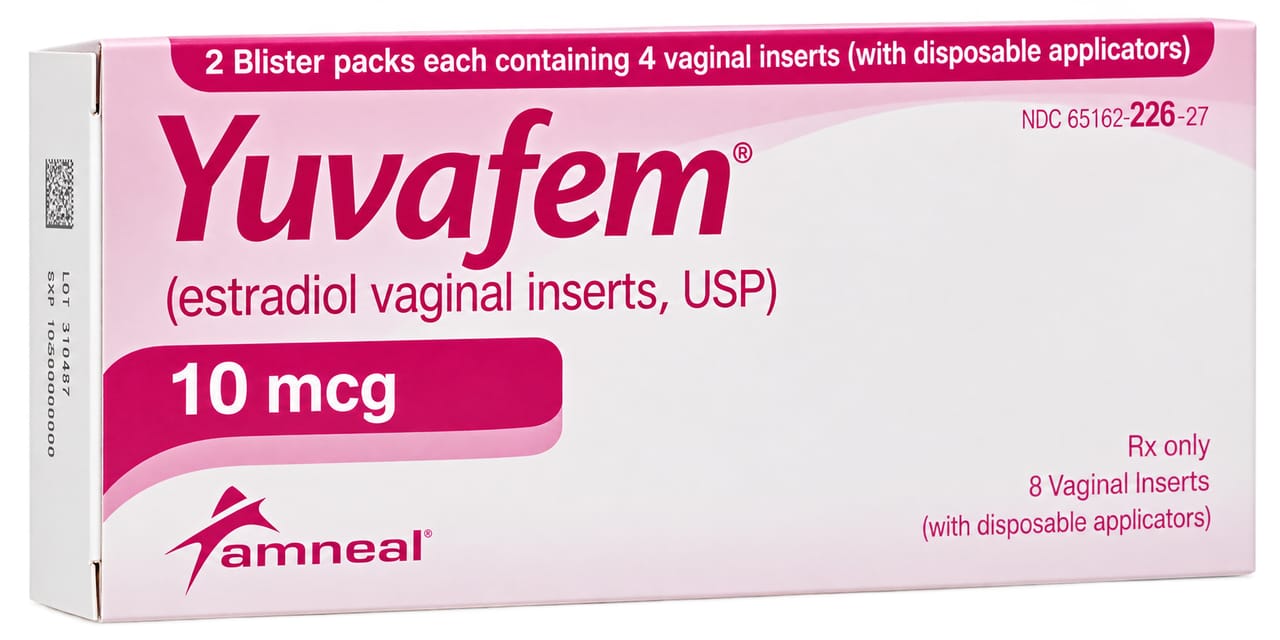
| Forms | Vaginal tablet (insert) |
Quick overview
Yuvafem Vaginal Tablet (estradiol vaginal) is an estrogen medicine used by women to treat vaginal dryness, burning, and itching caused by menopause, as well as irritation and pain during intercourse related to these changes. It is a small white tablet inserted into the vagina with an applicator. Yuvafem works by raising local estrogen levels to restore vaginal tissue health, and it carries certain risks and precautions that should be discussed with a doctor.
What is Yuvafem Vaginal Tablet
Yuvafem is a vaginal estrogen tablet used by women to treat vaginal symptoms of menopause, such as dryness, burning, and itching. It comes as a small white tablet that is inserted into the vagina using an applicator.
Yuvafem Vaginal Tablet uses
- Treats vaginal dryness, burning, and itching caused by menopause
- Treats irritation and pain during sexual intercourse related to menopause
Benefits of Yuvafem Vaginal Tablet
- Helps relieve vaginal dryness caused by menopause
- Reduces vaginal burning, irritation, and discomfort
- Helps improve pain during sexual intercourse related to vaginal atrophy
- Helps restore thickness, moisture, and elasticity of vaginal tissues
- Provides local estrogen therapy for symptoms of menopausal vaginal atrophy
How Yuvafem Vaginal Tablet works
Yuvafem replaces the estrogen your body loses during menopause. It works by raising estrogen levels in the vagina, which helps reduce dryness, burning, and irritation.
Yuvafem Vaginal Tablet dosage
Do not take this medicine by mouth; it is for use only inside the vagina. Wash your hands with warm water and soap before and after inserting the tablet. While lying back or standing, gently place the applicator as far into the vagina as is comfortable, then press the plunger to release the tablet. If the tablet falls out of the applicator before you insert it, throw away both the tablet and applicator and use a new one. You can insert it at any time of day, but try to use it around the same time each day to keep a consistent routine. Each applicator holds one tablet for a single use. Use the medicine regularly and do not use more than prescribed or for longer than prescribed.
If you miss a dose, use it as soon as you remember, but skip it if it is almost time for your next dose — do not use two doses at once.
| Age group | Dose |
|---|---|
| Under 18 years | Not indicated; safety and effectiveness not established |
| 18+ years – Premenopausal | Not routinely indicated for the usual menopausal indication |
| Postmenopausal adults – Initial | 10 mcg vaginally once daily for 2 weeks |
| Postmenopausal adults – Maintenance | 10 mcg vaginally twice weekly |
| 65+ years | Generally same postmenopausal regimen, individualized as clinically appropriate |
Available forms and strengths
- Vaginal tablet (insert), 10 mcg
Side effects of Yuvafem Vaginal Tablet
Common
- Nausea or vomiting
- Bloating
- Diarrhea
- Breast tenderness or pain
- Headaches
- Weight changes or weight gain
- Back pain
- Vaginal yeast infections
- Vaginal itching or discharge
- Vaginal burning or irritation where the medicine is applied
- Hair loss
- Stomach pain or cramps
- Irregular vaginal bleeding or spotting
Serious
- Changes in mental state such as depression, memory loss, or confusion
- A lump in the breast
- Abnormal vaginal bleeding (spotting, sudden bleeding, or recurring prolonged bleeding)
- New or worsening vaginal irritation, itching, odor, or discharge
- Stomach pain, persistent nausea, yellowing of the eyes or skin, dark urine
- Swelling of the hands, feet, or ankles, or rapid weight gain
- Increased urination
- Signs of a blood clot: swelling, pain, or tenderness in an arm or leg; skin warm to the touch
- Signs of a blood clot in the lung: trouble breathing, chest pain
- Signs of a heart attack: chest pain, arm pain, shortness of breath, cold sweat, lightheadedness
- Signs of a stroke: sudden weakness on one side of the body, drooping face, changes in speech or vision, confusion, severe headache
- Vision changes
- Signs of an allergic reaction: hives, difficulty breathing, swelling of the face, lips, tongue, or throat
- Signs of toxic shock syndrome: fever with nausea, vomiting, diarrhea, muscle pain, dizziness, fainting, sunburn-like rash
- Signs of gallbladder, liver, or pancreas problems: chalky stools, stomach pain after eating, nausea, heartburn, bloating, loss of appetite, upper stomach pain, vomiting, fast heart rate, dark urine, jaundice
- Signs of fluid retention: shortness of breath, swelling, rapid weight gain
- Signs of high blood pressure: severe headache, pounding in the neck or ears
- Signs of abnormal blood calcium levels: constipation, increased thirst or urination, muscle spasms, weight loss, tingling around the mouth or in fingers and toes
Warnings and precautions
- Do not use Yuvafem if you are pregnant. Tell your doctor right away if you become pregnant while using it.
- Ask your doctor if it is safe to breastfeed while using Yuvafem, since it may affect breast milk.
- Tell your doctor if you have kidney disease, since fluid retention from this medicine can be worse in people with kidney problems.
- Do not use Yuvafem if you have liver disease. Tell your doctor if you have ever had liver problems or jaundice, and report any new signs of liver trouble right away.
- Yuvafem can raise the risk of blood clots, which can lead to a heart attack, stroke, or a blood clot in the lungs. It should not be used to try to prevent heart disease.
- Using Yuvafem without also taking a progestin (if you still have a uterus) can raise the risk of uterine (endometrial) cancer.
- Taking estrogen for several years, especially combined with a progestin, may raise the risk of breast cancer. Do not use Yuvafem if you currently have or have ever had breast cancer.
- People 65 and older who take estrogen medicines like Yuvafem may have a higher risk of dementia. Estrogen should not be used to try to prevent dementia.
- Smoking while using Yuvafem greatly increases the risk of blood clots, stroke, and heart attack, especially in women over 35.
- Avoid grapefruit and grapefruit products, as they may interact with Yuvafem and cause side effects.
- Do not use other vaginal products without checking with your doctor first.
Storage
- Store at 20–25°C (68–77°F) at controlled room temperature.
- Keep tablets in their original blister packaging until ready to use.
- Protect from moisture, excessive heat, and direct sunlight.
- Avoid storing in bathrooms or other hot and humid areas.
- Keep out of reach and sight of children and pets.
When to see a doctor
- Get emergency help right away for signs of an allergic reaction, such as hives, trouble breathing, or swelling of the face, lips, tongue, or throat.
- Get emergency help for signs of a blood clot, heart attack, or stroke, such as chest pain, leg swelling or pain, sudden numbness or weakness on one side of the body, slurred speech, or trouble breathing.
- Call your doctor right away if you notice any unusual vaginal bleeding, a breast lump, vision changes, or severe headaches after starting Yuvafem.
- Call your doctor right away if you notice yellowing of the skin or eyes, dark urine, ongoing stomach pain, nausea, or vomiting, as these could be signs of liver or gallbladder problems.
- Seek emergency medical help if you think you have taken too much of this medicine.
Alternatives
- Premarin Vaginal Cream
- Estring
- Estrace Vaginal Cream
- Imvexxy
- Vagifem
Watch the video
FAQs
What is Yuvafem Vaginal Tablet used for?
Yuvafem is used to treat vaginal dryness, burning, and itching caused by menopause, as well as irritation and pain during sexual intercourse related to these changes.
How is Yuvafem Vaginal Tablet used?
Yuvafem is for vaginal use only, not oral use. It is inserted into the vagina using an applicator, which releases one tablet per use. It can be inserted at any time of day, but should be used at a consistent time each day.
What is the dosage of Yuvafem for postmenopausal women?
The initial dose is 10 mcg vaginally once daily for 2 weeks, followed by a maintenance dose of 10 mcg vaginally twice weekly.
What are the serious side effects of Yuvafem Vaginal Tablet?
Serious side effects include signs of blood clots, heart attack, or stroke, abnormal vaginal bleeding, a breast lump, liver or gallbladder problems, vision changes, and allergic reactions.
Who should not use Yuvafem Vaginal Tablet?
Yuvafem should not be used by women who are pregnant, have liver disease, or currently have or have had breast cancer.
General information, not medical advice
Your prescriber and the leaflet in your pack know your situation. This page does not.
- Follow your prescriber and the leaflet
- Don't start, stop, or change a dose on your own
- Doses and warnings differ by country and product
Sources
Video
Related medicines

Injectafer Injection: Uses, Dosage, Side Effects, Precautions and Alternates
Iron products
Injectafer (ferric carboxymaltose) treats iron deficiency anemia and heart failure-related iron deficiency via IV. Learn uses, dosage, side effects, and

Gliclazide Tablet: Uses, Dosage, Side Effects, Precautions and Alternates
Sulfonylurea (hypoglycemic/antidiabetic agent)
Gliclazide Tablet is a sulfonylurea for type 2 diabetes that boosts insulin release. Learn about dosage, side effects, warnings, and precautions.