
Safety
General information, not medical advice
Your prescriber and the leaflet in your pack know your situation. This page does not.
- Follow your prescriber and the leaflet
- Don't start, stop, or change a dose on your own
- Doses and warnings differ by country and product
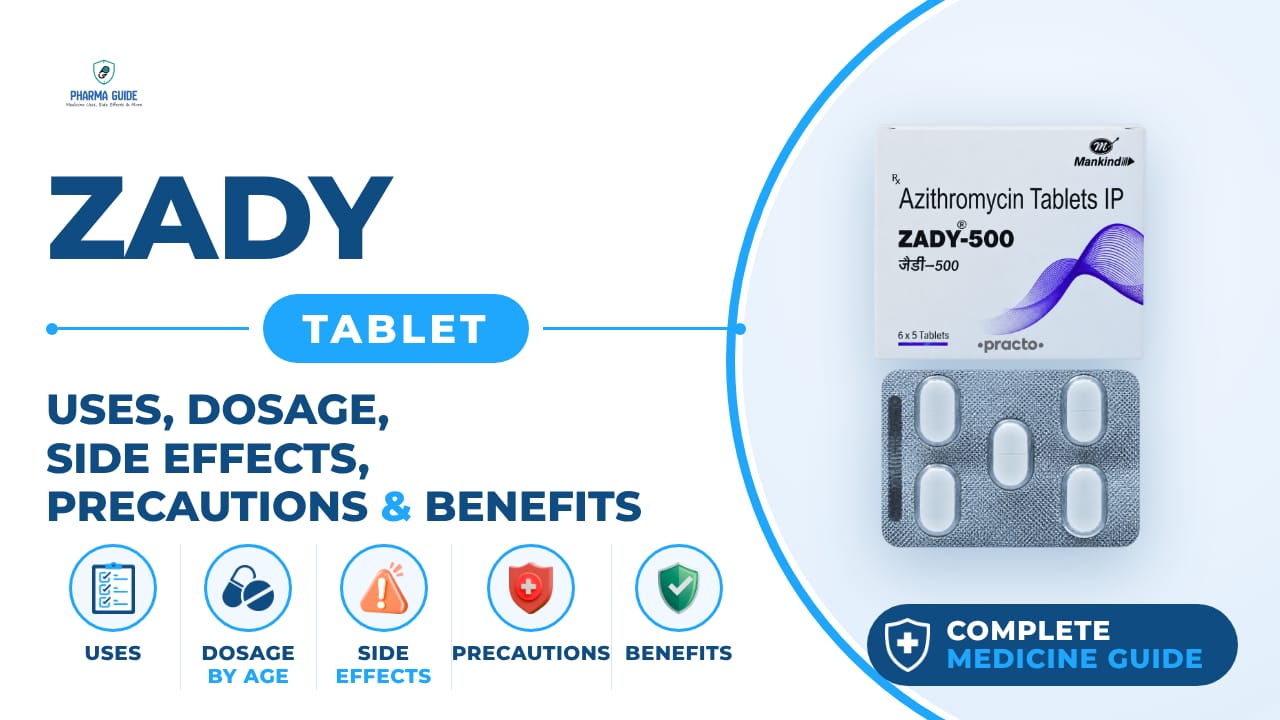
Zady Tablet: Uses, Dosage, Side Effects, Precautions and Alternates
| Generic name | Azithromycin |
|---|---|
| Drug class | Macrolide antibiotic |
| Forms | Tablet, Capsule, Dispersible tablet, Syrup, Dry syrup, Suspension, Oral suspension, Liquid, Injection, Infusion, Gel, Eye ointment, Eye drops |
Quick overview
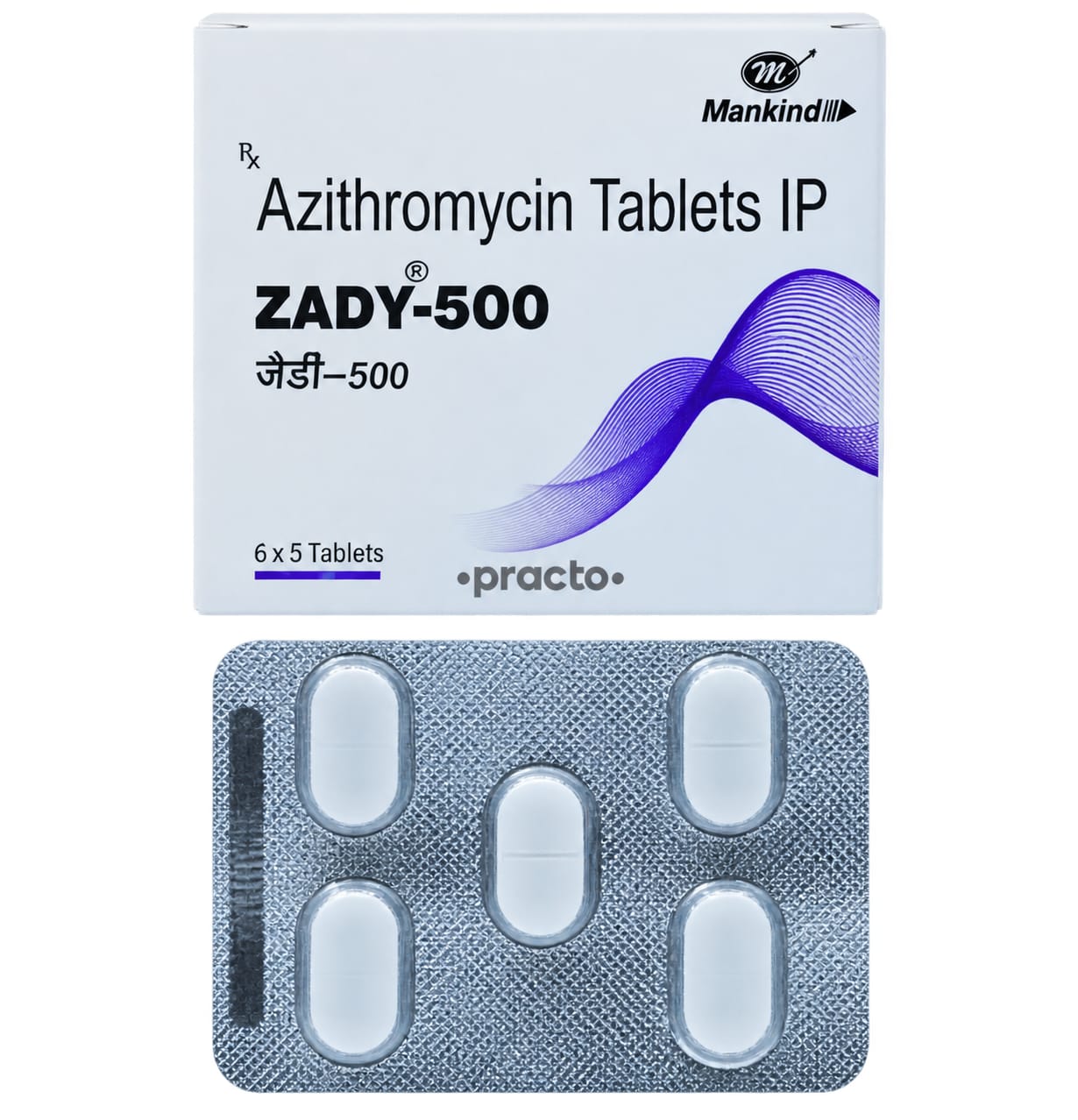
Zady Tablet contains azithromycin, a macrolide antibiotic used to treat infections caused by bacteria. It does not work against infections caused by viruses or fungi. It is used for a range of bacterial infections, including respiratory, skin, and certain sexually transmitted infections, and is available in several forms and strengths.
What is Zady Tablet
Zady Tablet is an antibiotic that contains azithromycin. It is used to treat infections caused by bacteria and does not work against infections caused by viruses or fungi.
Zady Tablet uses
- Community-acquired pneumonia
- Skin and soft tissue infections
- Urethritis and cervicitis
- Pharyngitis/tonsillitis
- Sinusitis
- Bronchitis
- Acute bacterial otitis media (ear infections)
- Certain sexually transmitted infections
- Typhoid fever, where appropriate
Benefits of Zady Tablet
- Allergy Relief: Helps reduce common allergy symptoms such as sneezing, runny nose, and itching.
- Itch Relief: Helps relieve itching associated with allergic skin reactions.
- Skin Allergy Support: Can help manage symptoms of hives and urticaria.
- Nasal Symptom Control: Helps reduce allergy-related nasal congestion and irritation.
How Zady Tablet works
Azithromycin attaches to a part of the bacteria called the 50S ribosomal subunit. This stops the bacteria from making the proteins they need to grow and multiply, which stops the infection from spreading.
Zady Tablet dosage
Swallow the tablet whole with a glass of water; do not crush or chew it. It can be taken with or without food, but taking it with food may help reduce stomach upset. Take the tablet at evenly spaced intervals and at the same time each day, and complete the full course prescribed by your doctor even if you feel better earlier.
Avoid taking antacids that contain aluminium or magnesium within 2 hours of your dose, as they can reduce how well the medicine is absorbed. It is advisable to avoid fruit juices when taking this medicine, as they may reduce absorption.
If you miss a dose, take it as soon as you remember, but skip it if it is almost time for your next dose; do not double up. Caution is needed when giving this medicine to children under 18 years, and it should only be given under a doctor's advice. Older adults should take this medicine under medical supervision, as they may be more likely to experience side effects.
| Age group | Dose |
|---|---|
| Under 6 months | Not established |
| 6 months–11 years | 10 mg/kg once daily; pediatric dosing is weight-based |
| 12–64 years | 500 mg once daily for 3 days, or as prescribed |
| 65+ years | 500 mg once daily for 3 days, or as prescribed |
Available forms and strengths
- Tablet
- Capsule
- Dispersible tablet
- Syrup
- Dry syrup
- Suspension
- Oral suspension
- Liquid
- Injection
- Infusion
- Gel
- Eye ointment
- Eye drops
Side effects of Zady Tablet
Common
- Nausea and vomiting
- Stomach pain or cramps
- Diarrhoea
- Excessive gas (flatulence)
- Headache
- Dizziness
- Fatigue/tiredness/weakness
- Skin rash or itching
- Photosensitivity of skin
- Numbness or tingling sensation
- Loss of appetite
- Taste disturbance
- Visual disturbances
- Joint pain
- Changes in liver test results
Serious
- Signs of a serious allergic reaction such as skin rash, itching or swelling of the face, tongue or throat, severe dizziness, or difficulty breathing
- Severe watery or bloody diarrhoea (a sign of serious bowel inflammation)
- Yellowing of the skin or eyes, or dark urine (signs of liver problems)
- Persistent irregular heartbeat
- Chest pain
Warnings and precautions
- Always complete the full course of treatment, even if you feel better after a few doses, to avoid antibiotic resistance developing.
- Use with caution if you have myasthenia gravis, a condition causing muscle weakness, as this medicine may make it worse.
- This medicine can cause diarrhoea by killing helpful bacteria in the gut. Get emergency medical help for severe watery or bloody diarrhoea, and check with your doctor before taking anti-diarrhoeal medicine.
- Do not take this medicine if you are allergic to azithromycin or to other macrolide or ketolide antibiotics.
- Use with caution if you have heart problems, including conditions affecting heart rhythm, and discuss this with your doctor before taking the medicine.
- This medicine is not recommended for children who weigh less than 45 kg.
- Tell your doctor if you have diabetes or an intolerance to certain sugars before taking this medicine.
- This medicine should be used with caution during pregnancy and only if clearly necessary. Talk to your doctor before taking it if you are pregnant or planning a pregnancy.
- This medicine passes into breast milk in small amounts, so use it with caution while breastfeeding and discuss the risks and benefits with your doctor.
- Use this medicine with caution if you have kidney problems, as it may build up in the body and increase the risk of side effects. Tell your doctor about any kidney issues before starting treatment.
- This medicine is not recommended if you have a history of liver problems related to jaundice or previous liver damage from this medicine. Use with caution for other liver conditions.
- Side effects such as dizziness and nausea may become worse with alcohol, so it is best to avoid alcoholic drinks while taking this medicine.
- This medicine may cause dizziness in some people, so avoid driving or operating machinery if you feel dizzy after taking it.
Storage
- Store below 30°C
- Keep in a dry place away from moisture
- Keep out of reach of children
- Use before the expiry date
When to see a doctor
- Get immediate medical help if you notice sudden wheezing, trouble breathing, swelling of the eyelids, face or lips, or a rash or itching over the whole body.
- Seek medical care right away if you have severe or prolonged diarrhoea, which could be a sign of serious bowel inflammation.
- Get medical help if you notice yellowing of the skin or eyes, or dark urine, which can be signs of liver problems.
- If you or someone else takes too much of this medicine by accident, contact a doctor immediately or go to the nearest hospital.
Alternatives
- Nazi 500 MG
- Azipro 500 MG
- Azomycin 500 mg
Watch the video
FAQs
What is Zady Tablet used for?
Zady Tablet is used to treat bacterial infections including community-acquired pneumonia, skin and soft tissue infections, urethritis and cervicitis, pharyngitis/tonsillitis, sinusitis, bronchitis, ear infections, certain sexually transmitted infections, and typhoid fever where appropriate.
How does Zady Tablet work?
Azithromycin attaches to a part of the bacteria called the 50S ribosomal subunit, stopping bacteria from making the proteins they need to grow and multiply, which stops the infection from spreading.
What is the dosage for Zady Tablet?
For ages 12-64 and 65+, the dose is typically 500 mg once daily for 3 days, or as prescribed. For children aged 6 months-11 years, dosing is weight-based at 10 mg/kg once daily. The tablet should be swallowed whole with water and the full course should be completed.
What are the common side effects of Zady Tablet?
Common side effects include nausea and vomiting, stomach pain or cramps, diarrhoea, excessive gas, headache, dizziness, fatigue, skin rash or itching, photosensitivity, numbness or tingling, loss of appetite, taste disturbance, visual disturbances, joint pain, and changes in liver test results.
Can Zady Tablet be taken during pregnancy?
Zady Tablet should be used with caution during pregnancy and only if clearly necessary. It is advised to talk to your doctor before taking it if you are pregnant or planning a pregnancy.
General information, not medical advice
Your prescriber and the leaflet in your pack know your situation. This page does not.
- Follow your prescriber and the leaflet
- Don't start, stop, or change a dose on your own
- Doses and warnings differ by country and product
Sources
Video
Related medicines

AzaSite Eye Drops: Uses, Dosage, Side Effects, Precautions and Alternates
macrolide antibiotic
AzaSite Eye Drops treat bacterial conjunctivitis with a 7-day course of azithromycin, requiring only once-daily dosing after the first 2 days.
Dificid Tablet: Uses, Dosage, Side Effects, Precautions and Alternates
macrolide antibiotic
Dificid Tablet (fidaxomicin) treats C. difficile diarrhea in adults and children. Learn about dosage, side effects, warnings, and storage tips.