
Safety
General information, not medical advice
Your prescriber and the leaflet in your pack know your situation. This page does not.
- Follow your prescriber and the leaflet
- Don't start, stop, or change a dose on your own
- Doses and warnings differ by country and product
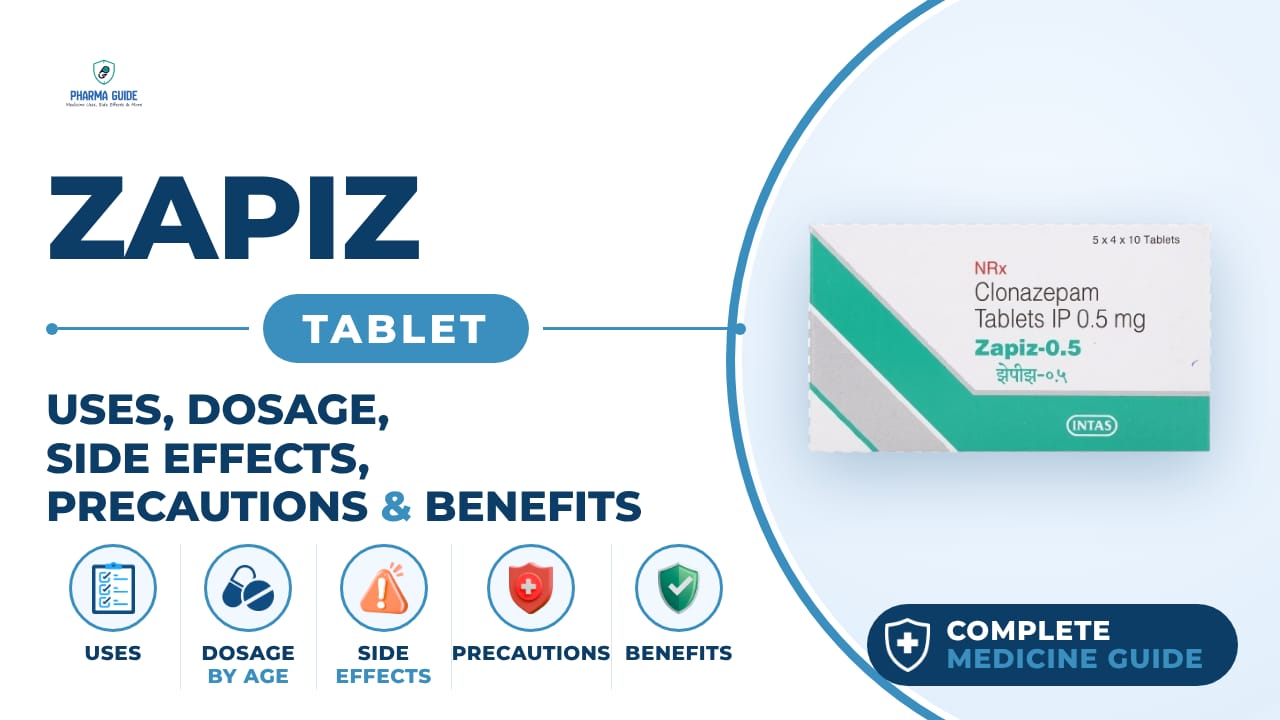
Zapiz Tablet: Uses, Dosage, Side Effects, Precautions and Alternates
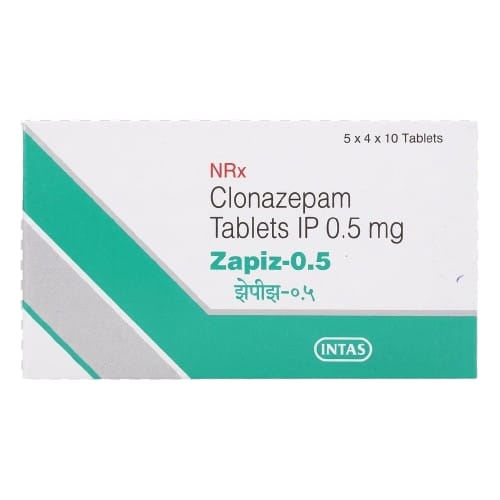
| Generic name | Clonazepam |
|---|---|
| Drug class | Benzodiazepine (anxiolytic and anticonvulsant) |
| Forms | Tablet |
Quick overview
Zapiz Tablet contains clonazepam, a benzodiazepine used for its anxiolytic and anticonvulsant effects. It is mainly used to treat epilepsy and panic disorders and produces calming effects on the brain. It also helps with conditions such as anxiety, insomnia, restless legs syndrome, and burning mouth syndrome. This medicine should be used exactly as prescribed, with care taken regarding dosage, interactions, and withdrawal.
What is Zapiz Tablet
Zapiz Tablet is a medicine that contains clonazepam. It belongs to the benzodiazepine class of medicines, used as an anxiolytic and anticonvulsant. It is used to treat epilepsy and panic disorders, and has calming effects on the brain.
Zapiz Tablet uses
- Anxiety
- Panic Attack and Disorder
- Insomnia
- Epilepsy
- Restless Legs Syndrome
- Burning Mouth Syndrome
- Seizure disorders such as epilepsy in adults and children
- Panic disorder, with or without agoraphobia, in adults
Benefits of Zapiz Tablet
- Helps reduce anxiety and panic symptoms.
- Helps control certain types of seizures.
- Can help reduce muscle spasms.
- May help with short-term sleep problems when prescribed.
- Produces a calming and sedative effect.
How Zapiz Tablet works
Clonazepam works by increasing the activity of a calming brain chemical called GABA, which helps relax the brain and nerves.
Zapiz Tablet dosage
Zapiz Tablet can be taken with or without food. Place the tablet on your tongue; it will dissolve within a few seconds in your mouth. It is usually taken 1 to 3 times a day. Do not stop taking this medicine suddenly without consulting your doctor, as it may cause withdrawal symptoms. Avoid activities that need concentration, such as driving, after taking this medicine. In children, the dose is based on body weight and age.
| Age group | Dose |
|---|---|
| Under 18 years | Not recommended |
| 18–60 years | 0.25–0.5 mg, 1–2 times/day |
| 60+ years | 0.25–0.5 mg, 1 time/day |
Available forms and strengths
Zapiz Tablet is available in tablet form.
Side effects of Zapiz Tablet
Common
- Drowsiness
- Dizziness
- Fatigue
- Irritability
- Headache
- Dry Mouth
- Vertigo
- Cough
- Nervousness
- Allergic reaction
- Blurred vision
- Muscle pain
- Mental Confusion
- Difficulty in speaking
Serious
- Memory problems
- Depression
- Uncoordinated Body Movements
- Constipation
- Weight gain
- Seizures
- Suicidal thoughts
Warnings and precautions
- This medicine can be habit-forming or addictive, so talk to your doctor before taking it. Do not stop taking this medicine suddenly without your doctor's advice, as it may cause withdrawal symptoms like aggressive behavior or blurred vision. There is an increased risk of suicidal thoughts and behavior changes, especially in people with a history of depression or suicidal behavior.
- This medicine has the potential for drug dependence and abuse, especially at higher doses for a long time, so you will be monitored for mood or behavior changes.
- Avoid using this medicine if you have myasthenia gravis, dementia, Parkinson's disease, COPD, glaucoma, alcoholism, drug addiction, respiratory depression, liver disease, or obesity, unless your doctor advises you to. Elderly people should use this medicine with extreme caution due to a higher risk of drowsiness and muscle weakness.
- Avoid this medicine if you have a history of closed-angle glaucoma, due to the risk of severe side effects like breathing difficulties, unconsciousness, or coma.
- Zapiz is not recommended during pregnancy as it may harm the baby. Your doctor may prescribe a safer alternative. If you have any side effects while pregnant, stop taking it and get medical advice before using it again.
- Zapiz is not safe during breastfeeding because it can pass into breast milk and may harm the infant. Your doctor may prescribe a safer alternative.
- If you have kidney problems, use this medicine with caution since it may worsen your condition, and your kidney function should be monitored while taking it.
- This medicine is not recommended if you have active liver problems, since it is processed in the liver and liver damage can cause it to build up and become toxic.
- Drinking alcohol with this medicine may cause severe effects on your health, including dizziness, drowsiness, trouble concentrating, and breathing difficulties.
- This medicine can make you feel sleepy or tired, so it's best to avoid driving or operating machines after taking it.
Storage
- Keep the medicine away from the reach of children and pets.
- Ensure that unused medicine is disposed of properly.
When to see a doctor
- Get medical help right away if you notice signs of an allergic reaction such as skin rash, itching or swelling of the face, throat, or tongue, dizziness, or breathing difficulty.
- Tell your doctor right away if you notice any behavioral changes or suicidal thoughts while taking this medicine.
- If you take more than the prescribed dose, seek emergency medical treatment or contact your doctor immediately.
Alternatives
- Clonotril
- Rivotril
- Clonafit
Watch the video
FAQs
What is Zapiz Tablet used for?
Zapiz Tablet is used to treat anxiety, panic attacks and disorder, insomnia, epilepsy, restless legs syndrome, and burning mouth syndrome.
How does Zapiz Tablet work?
Clonazepam works by increasing the activity of a calming brain chemical called GABA, which helps relax the brain and nerves.
How should Zapiz Tablet be taken?
Zapiz Tablet can be taken with or without food. Place the tablet on your tongue and it will dissolve within a few seconds. It is usually taken 1 to 3 times a day, and should not be stopped suddenly without consulting your doctor.
What are the common side effects of Zapiz Tablet?
Common side effects include drowsiness, dizziness, fatigue, irritability, headache, dry mouth, vertigo, cough, nervousness, blurred vision, muscle pain, mental confusion, and difficulty in speaking.
Is Zapiz Tablet safe during pregnancy and breastfeeding?
Zapiz is not recommended during pregnancy as it may harm the baby, and it is not safe during breastfeeding because it can pass into breast milk and may harm the infant. Your doctor may prescribe a safer alternative.
General information, not medical advice
Your prescriber and the leaflet in your pack know your situation. This page does not.
- Follow your prescriber and the leaflet
- Don't start, stop, or change a dose on your own
- Doses and warnings differ by country and product
Sources
- US Food and Drug Administration (FDA) [Internet]. Maryland. USA; Package leaflet information for the user; Klonopin (clonazepam)
- KD Tripathi. Seventh Edition. New Delhi, India: Jaypee Brothers Medical Publishers; 2013: Page No 418
- April Hazard Vallerand, Cynthia A. Sanoski. Sixteenth Edition. Philadelphia, China: F. A. Davis Company; 2019: Page No 330-332
Video
Related medicines

Injectafer Injection: Uses, Dosage, Side Effects, Precautions and Alternates
Iron products
Injectafer (ferric carboxymaltose) treats iron deficiency anemia and heart failure-related iron deficiency via IV. Learn uses, dosage, side effects, and

Gliclazide Tablet: Uses, Dosage, Side Effects, Precautions and Alternates
Sulfonylurea (hypoglycemic/antidiabetic agent)
Gliclazide Tablet is a sulfonylurea for type 2 diabetes that boosts insulin release. Learn about dosage, side effects, warnings, and precautions.