
Safety
General information, not medical advice
Your prescriber and the leaflet in your pack know your situation. This page does not.
- Follow your prescriber and the leaflet
- Don't start, stop, or change a dose on your own
- Doses and warnings differ by country and product
Zecef Tablet: Uses, Dosage, Side Effects, Precautions and Alternates

| Generic name | Cefuroxime Axetil |
|---|---|
| Drug class | Cephalosporin antibiotic (second-generation) |
| Forms | Injection, Suspension, Tablet |
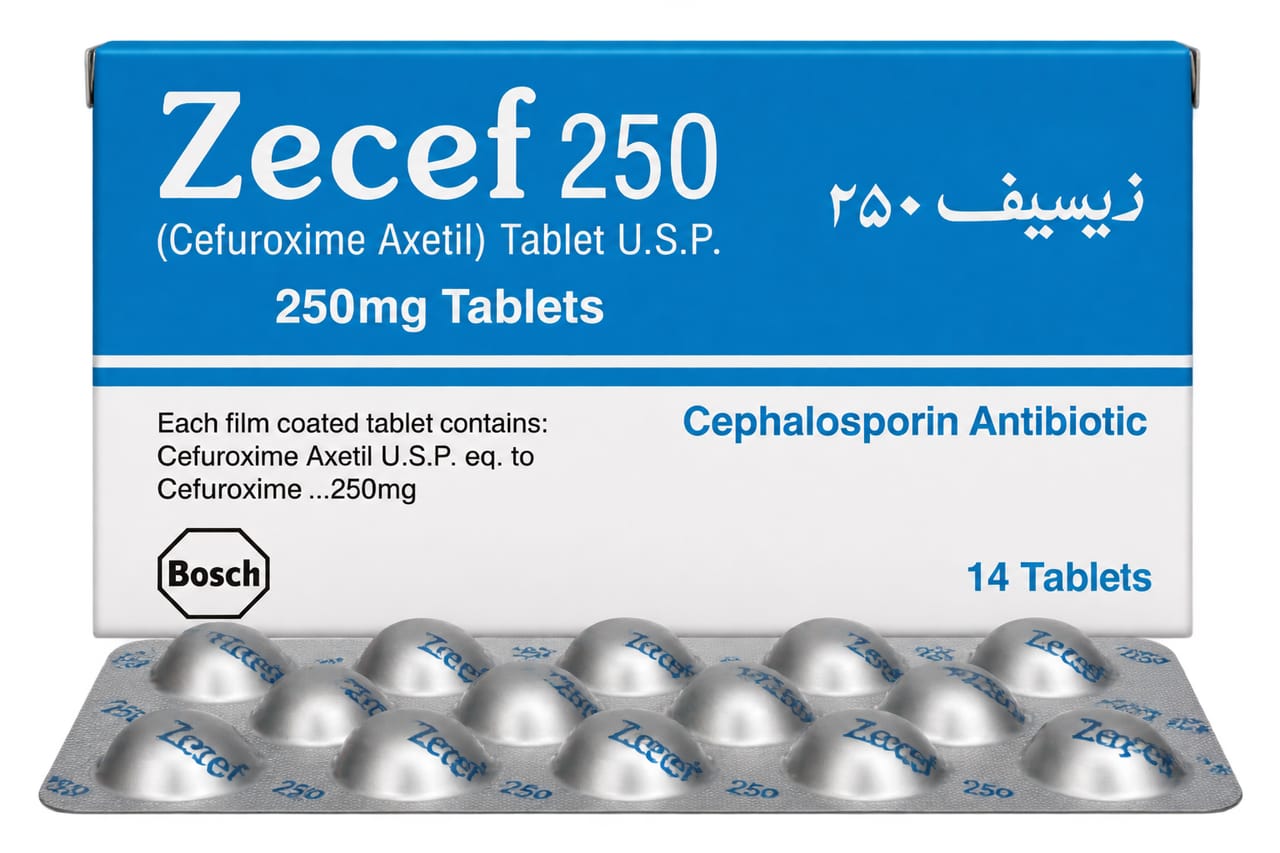
Quick overview
Zecef Tablet contains cefuroxime, given as cefuroxime axetil, a second-generation cephalosporin antibiotic. It is used to treat infections caused by certain bacteria, including infections of the throat, ear, sinus, chest, skin, and urinary tract. It works by stopping bacteria from building their protective outer wall, which weakens and kills the bacteria. It is available as a tablet, suspension, and injection.
What is Zecef Tablet
Zecef is a brand-name antibiotic tablet containing cefuroxime, given as cefuroxime axetil. It belongs to a group of antibiotics called cephalosporins and is used to fight bacterial infections.
Zecef Tablet uses
- Treating mild to moderate pharyngitis/tonsillitis
- Treating acute bacterial ear infections (otitis media)
- Treating acute bacterial sinus infections (maxillary sinusitis)
- Treating flare-ups of chronic bronchitis
- Treating uncomplicated skin infections
- Treating uncomplicated urinary tract infections
- Treating uncomplicated gonorrhea
- Treating early Lyme disease (erythema migrans)
- Treating impetigo
- Treating lung infections, skin and soft tissue infections, meningitis, urinary tract infections, and gonorrhoea
- Used before and after certain surgeries to prevent infection
Benefits of Zecef Tablet
- Bacterial Infection Treatment: Helps treat infections caused by susceptible bacteria.
- Respiratory Infection Support: Used for certain throat, sinus, and chest infections.
- Urinary Infection Treatment: Helps manage selected bacterial urinary tract infections.
- Ear Infection Support: Used for certain bacterial ear infections.
How Zecef Tablet works
Zecef stops bacteria from building their protective outer wall. Without this wall, the bacteria become weak and die, which clears the infection.
Zecef Tablet dosage
Take the tablet with or without food, as directed by your doctor. Swallow the tablet whole with a full glass of water; do not crush, chew, or break it. Try to take the medicine at the same time each day. Finish the full course of treatment even if you start feeling better, to fully clear the infection.
If you miss a dose, take it as soon as you remember, but skip it if it is almost time for your next dose; do not double up. Antacids can lower how well this medicine is absorbed, so leave a gap of at least a few hours before or after taking them.
| Age group | Dose |
|---|---|
| Children | Dose based on body weight and infection type (as prescribed) |
| 12 Years and Above | Usually 200 mg twice daily or 400 mg once daily depending on infection |
| Adults (18–64 Years) | Usually 200–400 mg daily as prescribed |
| Older Adults (65+ Years) | Adult dose; adjustment may be needed with kidney problems |
Available forms and strengths
- Injection
- Suspension
- Tablet
Side effects of Zecef Tablet
Common
- Nausea and vomiting
- Diarrhea
- Abdominal pain
- Skin rash or itching
- Headache
- Dizziness
- Vaginal yeast infection (candidiasis)
- Fatigue
- Transient increases of liver enzyme levels
Serious
- Severe allergic reaction (anaphylaxis)
- Severe diarrhea or colitis caused by Clostridium difficile overgrowth
- Low platelet count (thrombocytopenia)
- Low white blood cell count (leukopenia)
- Haemolytic anaemia
- Jaundice (yellowing of skin/eyes) and hepatitis
- Severe skin reactions such as Stevens-Johnson syndrome or toxic epidermal necrolysis
- Swelling of face, mouth, or throat (angioedema)
- Serum sickness
- Drug fever
Warnings and precautions
- Serious, and occasionally fatal, allergic reactions have happened in people taking this type of antibiotic, especially those with a history of allergies to penicillin or similar drugs.
- This medicine, like almost all antibiotics, can cause diarrhea linked to an overgrowth of a bacteria called Clostridium difficile, which can range from mild to severe and life-threatening.
- Do not take this medicine if you are allergic to it or to other similar antibiotics such as penicillins and cephalosporins.
- This medicine should not be used in people with severe kidney disease or on dialysis without adjusting the dose, and should be avoided in those with a history of liver problems linked to cefuroxime, gastrointestinal disease, or seizures.
- An overdose can cause brain irritation leading to seizures or brain problems (encephalopathy).
- Using this antibiotic without a proven bacterial infection may not help and can increase the risk of bacteria becoming resistant to treatment.
- There is not enough well-controlled research in pregnant women. This medicine should only be used during pregnancy if it is clearly needed, and pregnant women should consult their doctor first.
- This medicine passes into breast milk. Doctors may consider stopping breastfeeding temporarily during treatment.
- This medicine is removed from the body mainly through the kidneys, so people with kidney problems may need a lower dose or less frequent dosing. Talk to your doctor if you have kidney disease.
- This medicine can raise liver enzyme levels and may increase the risk of liver problems. People with liver disease should talk to their doctor before use.
- Drinking alcohol while taking this medicine is not recommended, as it may increase the risk of side effects, including stomach and liver-related issues.
- This medicine can cause dizziness or drowsiness in some people, so avoid driving or using heavy machinery until you know how it affects you.
Storage
- Store below 25°C
- Protect from heat, sunlight & moisture
- Do not take if seal is broken (suspension)
- Before reconstitution protect from heat, sunlight & moisture, store below 30°C (suspension)
- After reconstitution store in refrigerator 2-8°C (do not freeze) and use within 10 days (suspension)
- Close the bottle properly after use
- Keep out of the reach of children
When to see a doctor
- Get medical help right away if you develop a rash, skin irritation, difficulty breathing, or swelling of the mouth or face.
- If you suspect an overdose, with symptoms like nausea, vomiting, diarrhea, and abdominal pain, seek medical advice immediately.
- Contact your doctor if diarrhea gets worse while taking this medicine.
Alternatives
- Cefuroxime
- Cefdinir
- Amoxicillin + Clavulanate
Watch the video
FAQs
What is Zecef Tablet used for?
Zecef Tablet contains cefuroxime and is used to treat bacterial infections such as pharyngitis/tonsillitis, ear infections, sinusitis, chronic bronchitis flare-ups, skin infections, urinary tract infections, gonorrhea, and early Lyme disease. It is also used before and after certain surgeries to prevent infection.
How should I take Zecef Tablet?
Take the tablet with or without food as directed by your doctor. Swallow it whole with a full glass of water without crushing, chewing, or breaking it, and finish the full course even if you feel better. Avoid taking antacids close to the dose, as they can lower absorption.
What are the common side effects of Zecef Tablet?
Common side effects include nausea, vomiting, diarrhea, abdominal pain, skin rash or itching, headache, dizziness, vaginal yeast infection, fatigue, and transient increases in liver enzyme levels.
Can Zecef Tablet be used during pregnancy or breastfeeding?
There isn't enough well-controlled research in pregnant women, so it should only be used during pregnancy if clearly needed and after consulting a doctor. Since it passes into breast milk, doctors may consider stopping breastfeeding temporarily during treatment.
Who should avoid taking Zecef Tablet?
Avoid this medicine if you are allergic to it or to other penicillin or cephalosporin antibiotics. It should not be used in severe kidney disease or on dialysis without dose adjustment, and should be avoided in those with a history of liver problems linked to cefuroxime, gastrointestinal disease, or seizures.
General information, not medical advice
Your prescriber and the leaflet in your pack know your situation. This page does not.
- Follow your prescriber and the leaflet
- Don't start, stop, or change a dose on your own
- Doses and warnings differ by country and product
Sources
- https://bosch-pharma.com/zecef/
- https://dawaai.pk/medicine/zecef-4-27951.html
- Dvago product page for Zecef Tablets 250mg
Video
Related medicines
Zinnat Tablet: Uses, Dosage, Side Effects, Precautions and Alternates
Cephalosporin antibiotic (second-generation)
Zinnat Tablet (cefuroxime axetil) treats throat, sinus, ear, lung, urinary, skin infections and early Lyme disease. Learn uses, dosage, and side effects.

Injectafer Injection: Uses, Dosage, Side Effects, Precautions and Alternates
Iron products
Injectafer (ferric carboxymaltose) treats iron deficiency anemia and heart failure-related iron deficiency via IV. Learn uses, dosage, side effects, and