
Safety
General information, not medical advice
Your prescriber and the leaflet in your pack know your situation. This page does not.
- Follow your prescriber and the leaflet
- Don't start, stop, or change a dose on your own
- Doses and warnings differ by country and product
Zedex Syrup: Uses, Dosage, Side Effects, Precautions and Alternates
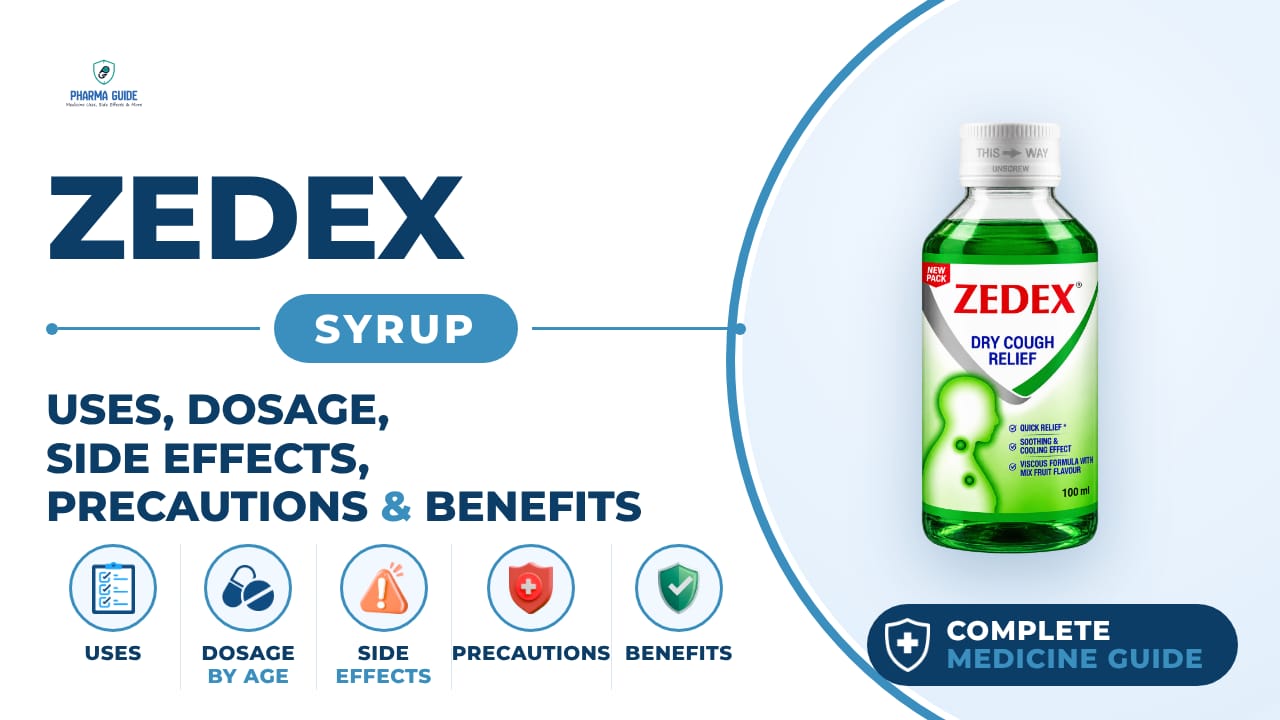
| Generic name | Chlorpheniramine Maleate + Dextromethorphan Hydrobromide |
|---|---|
| Forms | Syrup |
Quick overview
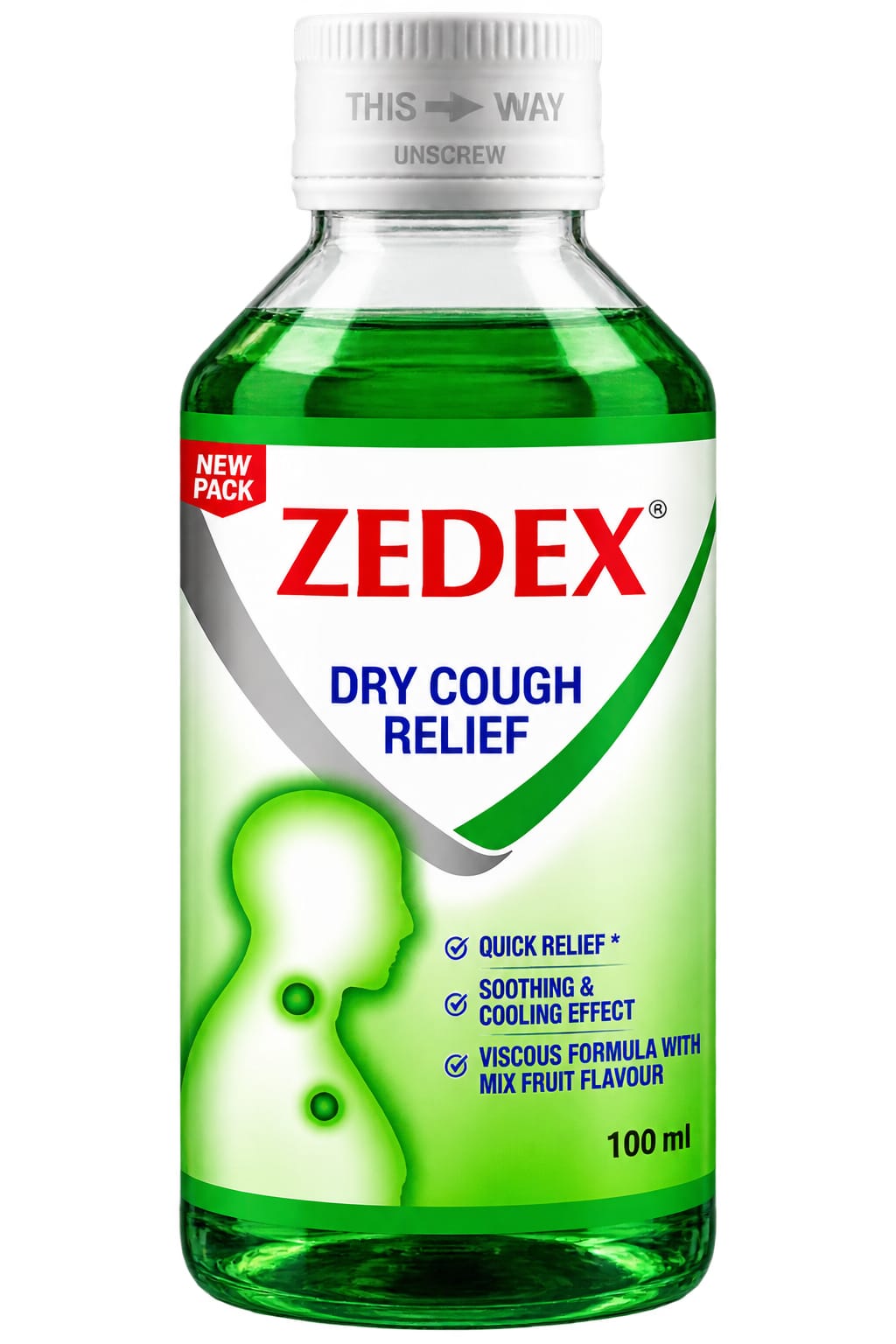
Zedex Syrup is a combination medicine containing Chlorpheniramine Maleate and Dextromethorphan Hydrobromide. It is used to treat dry or irritating cough along with allergy symptoms such as runny nose, sneezing, throat irritation, and watery eyes. The syrup works by blocking histamine to ease allergy symptoms while suppressing the cough reflex in the brain. It should be used as directed by a doctor, with dosing based on age.
What is Zedex Syrup
Zedex Syrup is a combination medicine containing Dextromethorphan and Chlorpheniramine Maleate. It is used to treat dry cough and allergy symptoms like runny nose, sneezing, throat irritation, and watery eyes.
Zedex Syrup uses
- Dry or irritating cough
- Runny nose
- Sneezing
- Allergy-related nasal symptoms
- Cold-related discomfort
Benefits of Zedex Syrup
- Helps reduce dry and irritating cough
- Relieves sneezing and runny nose
- Reduces allergy-related nasal discomfort
- Provides relief from cold-related symptoms
- Helps improve comfort during rest and daily activities
How Zedex Syrup works
Chlorpheniramine Maleate is an antihistamine that blocks histamine, a substance involved in allergic reactions, helping reduce sneezing and runny nose. Dextromethorphan Hydrobromide is a cough suppressant that reduces the urge to cough by acting on the part of the brain involved in the cough reflex.
Zedex Syrup dosage
Zedex Syrup can be taken with or without food. Shake the bottle well before each use, and use a measuring cup or suitable measuring device for accurate dosing. Take doses at the recommended times, and do not take more than the prescribed amount. Do not change the dose or duration of treatment without consulting a healthcare professional. This medicine is not recommended for use in children below two years of age.
Do not stop using this medicine without consulting your doctor even if your symptoms subside after taking a few doses, as stopping suddenly may worsen your condition. If you miss a dose, take it when you remember, but skip it if the next dose is almost due; do not take two doses together.
| Age group | Dose |
|---|---|
| Under 2 Years | Use only if prescribed by a healthcare professional |
| 2–6 Years | 2.5 mL 2–3 times daily (as directed) |
| 6–12 Years | 5 mL 2–3 times daily (as directed) |
| 12 Years and Above | 10 mL 2–3 times daily (as directed) |
Available forms and strengths
- Syrup
Side effects of Zedex Syrup
Common
- Stomach pain
- Dizziness
- Drowsiness
- Restlessness
- Nausea or vomiting
- Lightheadedness
- Nervousness
- Rash
Serious
- Allergic reactions like itching, hives, redness
- Severe breathing problems or serious allergic reaction
Warnings and precautions
- This medicine is not recommended for use in pregnant women because there isn't enough data to show how it affects the baby. Talk to your doctor before taking it if you are pregnant.
- This medicine is not recommended for breastfeeding women, since it passes into breast milk in some amounts and may harm the baby. Consult your doctor before taking it.
- Tell your doctor if you have any kidney problems before taking this medicine. Tell your doctor if you have any liver problems before taking this medicine.
- Avoid or limit alcohol while taking this medicine, as it can increase dizziness, drowsiness, and difficulty concentrating. Do not drive or operate machinery if this medicine makes you drowsy or dizzy.
- Tell your doctor about any known drug allergies, existing medical conditions, and all other medicines you are taking, including prescription, over-the-counter, and herbal products.
- Do not take sedatives or other drowsiness-causing medicines together with this syrup without medical advice.
- This medicine is not recommended for children under two years old.
When to see a doctor
- Get immediate medical help if you have severe breathing problems or signs of a serious allergic reaction.
- If you notice allergic reactions such as itching, hives, or redness, contact your doctor.
Alternatives
- Mucolite Syrup
- Bromhexine Syrup
- Ambrolite Syrup
- Ascoril Syrup
Watch the video
FAQs
What is Zedex Syrup used for?
Zedex Syrup is used to treat dry or irritating cough along with allergy symptoms such as runny nose, sneezing, throat irritation, and watery eyes.
How does Zedex Syrup work?
Chlorpheniramine Maleate blocks histamine to reduce sneezing and runny nose, while Dextromethorphan Hydrobromide suppresses the cough reflex by acting on the part of the brain involved in coughing.
What is the dosage of Zedex Syrup for children?
Dosage varies by age: 2.5 mL 2-3 times daily for 2-6 years, 5 mL 2-3 times daily for 6-12 years, and 10 mL 2-3 times daily for 12 years and above. It is not recommended for children under 2 years unless prescribed.
Can Zedex Syrup be taken during pregnancy?
Zedex Syrup is not recommended for pregnant women because there isn't enough data on how it affects the baby. A doctor should be consulted before taking it.
What are the common side effects of Zedex Syrup?
Common side effects include stomach pain, dizziness, drowsiness, restlessness, nausea or vomiting, lightheadedness, nervousness, and rash.
General information, not medical advice
Your prescriber and the leaflet in your pack know your situation. This page does not.
- Follow your prescriber and the leaflet
- Don't start, stop, or change a dose on your own
- Doses and warnings differ by country and product
Sources
Video
Related medicines

Injectafer Injection: Uses, Dosage, Side Effects, Precautions and Alternates
Iron products
Injectafer (ferric carboxymaltose) treats iron deficiency anemia and heart failure-related iron deficiency via IV. Learn uses, dosage, side effects, and

Gliclazide Tablet: Uses, Dosage, Side Effects, Precautions and Alternates
Sulfonylurea (hypoglycemic/antidiabetic agent)
Gliclazide Tablet is a sulfonylurea for type 2 diabetes that boosts insulin release. Learn about dosage, side effects, warnings, and precautions.