
Safety
General information, not medical advice
Your prescriber and the leaflet in your pack know your situation. This page does not.
- Follow your prescriber and the leaflet
- Don't start, stop, or change a dose on your own
- Doses and warnings differ by country and product
Zegerid Capsule: Uses, Dosage, Side Effects, Precautions and Alternates
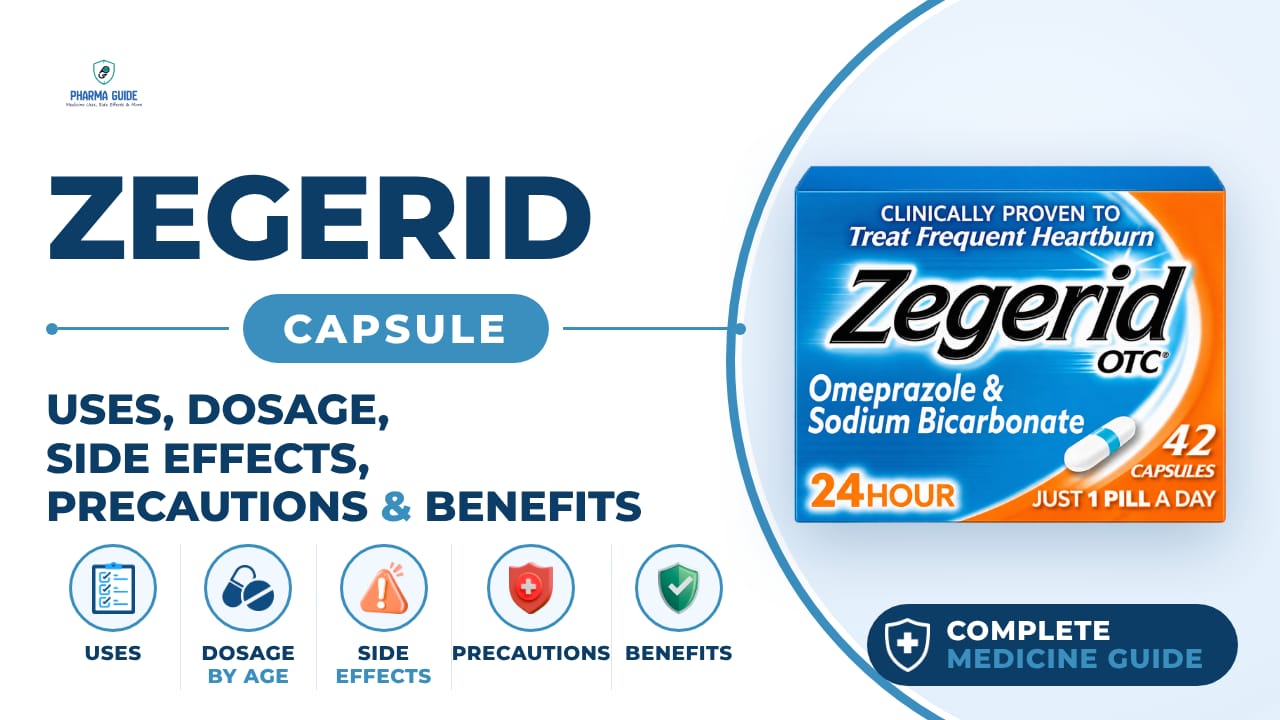
| Generic name | omeprazole and sodium bicarbonate |
|---|---|
| Drug class | Proton pump inhibitor (PPI) combined with an antacid |
| Forms | Capsules (20 mg and 40 mg omeprazole), Powder for oral suspension (20 mg and 40 mg omeprazole, in unit-dose packets) |
Quick overview
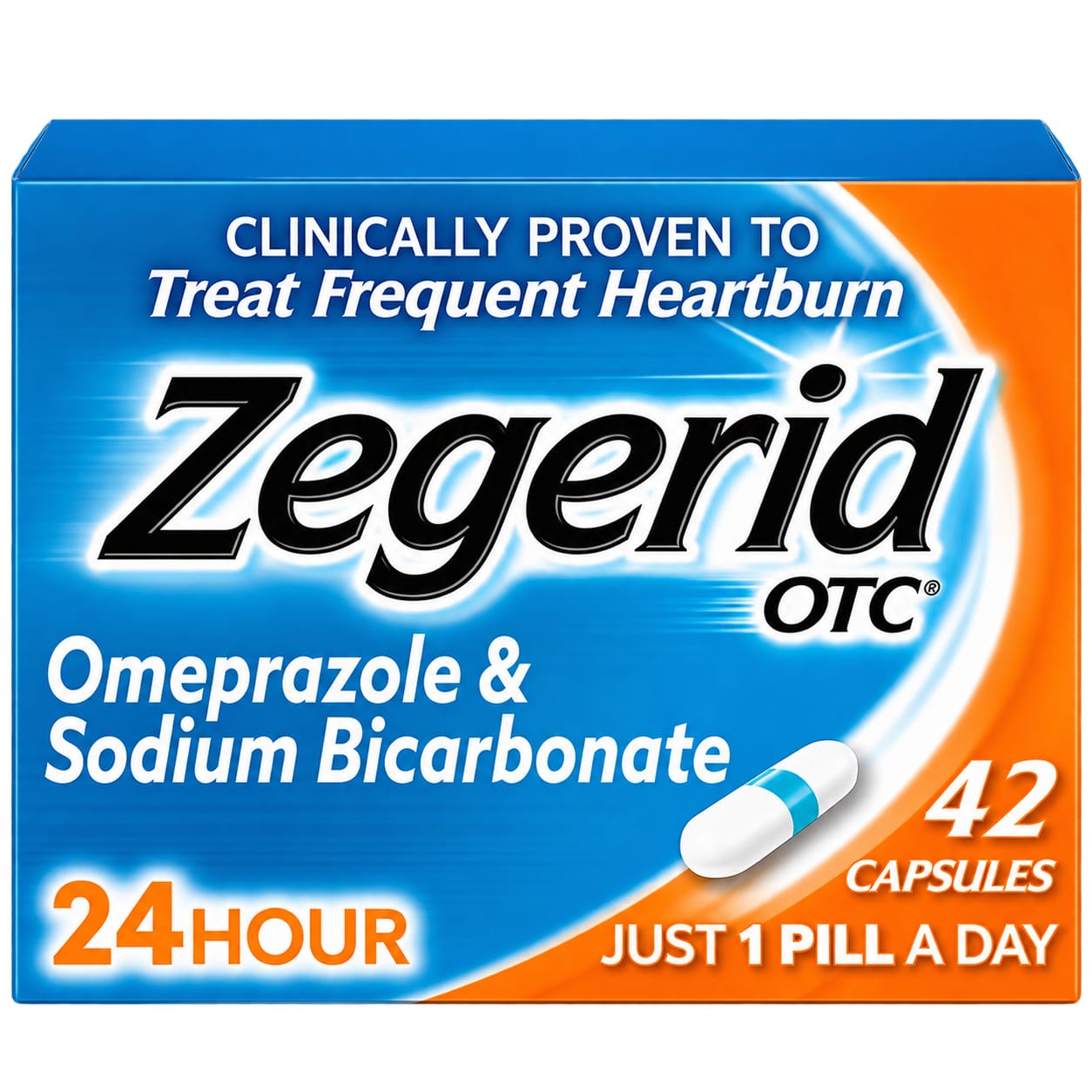
Zegerid Capsule contains omeprazole and sodium bicarbonate, a proton pump inhibitor combined with an antacid. It reduces the amount of acid the stomach makes and is used for conditions such as GERD, heartburn, ulcers, and erosive esophagitis. It is usually intended for short-term use and must be taken on an empty stomach with water. This medicine carries several warnings and should be used exactly as prescribed by a doctor.
What is Zegerid Capsule
Zegerid is a prescription medicine that combines omeprazole, which is a proton pump inhibitor (PPI), with sodium bicarbonate, which is an antacid. It reduces the amount of acid your stomach makes.
Zegerid Capsule uses
- Short-term treatment of active duodenal ulcer
- Short-term treatment (4 to 8 weeks) of active benign gastric ulcer
- Treatment of heartburn and other symptoms of GERD for up to 4 weeks
- Short-term treatment (4 to 8 weeks) of erosive esophagitis (EE) caused by acid-related GERD, diagnosed by endoscopy
- Maintenance treatment to keep erosive esophagitis healed
- Reduction of risk of upper gastrointestinal bleeding in critically ill adult patients (oral suspension only)
Benefits of Zegerid Capsule
- Reduces stomach acid
- Helps relieve heartburn
- Treats GERD
- Helps heal erosive esophagitis
- May help treat certain duodenal or gastric ulcers
How Zegerid Capsule works
Zegerid blocks the final step of acid production in the stomach by stopping a pump in stomach cells that makes acid. The sodium bicarbonate part protects the omeprazole from being broken down by stomach acid so it can work properly.
Zegerid Capsule dosage
Take on an empty stomach, at least one hour before a meal. Swallow capsules whole with water; do not open, crush, or chew the capsule, and do not take with liquids other than water. For the oral suspension, mix the powder only with water, stir well, and drink right away; do not mix with food or other liquids. If a dose is missed, take it as soon as remembered, but skip it if it is almost time for the next dose; do not take two doses at once. Do not substitute two lower-strength capsules or packets for one higher-strength capsule or packet, as this will give too much sodium bicarbonate. This medicine is usually for short-term use.
| Age group | Dose |
|---|---|
| 18–39 years | 20 mg/1100 mg once daily; some conditions may require 40 mg/1100 mg once daily |
| 40–64 years | 20 mg/1100 mg once daily; 40 mg/1100 mg once daily may be prescribed for certain conditions |
Available forms and strengths
- Capsules (20 mg and 40 mg omeprazole)
- Powder for oral suspension (20 mg and 40 mg omeprazole, in unit-dose packets)
Side effects of Zegerid Capsule
Common
- Headache
- Abdominal pain
- Nausea
- Vomiting
- Diarrhea
- Gas (flatulence)
Serious
- Kidney problems (acute tubulointerstitial nephritis) - decreased urination or blood in urine
- Diarrhea caused by Clostridium difficile infection - watery stools or ongoing stomach pain
- Bone fractures of the hip, wrist, or spine
- Low magnesium levels - seizures, dizziness, irregular heartbeat, jitteriness, muscle aches or spasms
- Low vitamin B-12 levels (with long-term use) - shortness of breath, lightheadedness, irregular heartbeat, muscle weakness, pale skin, tiredness, mood changes
- New or worsening lupus symptoms - joint pain, rash on cheeks or arms that worsens in sunlight
- Severe skin reactions - blistering, peeling, or bleeding skin, possibly with fever, chills, body aches, or swollen lymph nodes
- Stomach growths called fundic gland polyps with long-term use
- Allergic reactions - hives, difficulty breathing, swelling of face, lips, tongue, or throat
Warnings and precautions
- This medicine can cause a kidney problem called acute tubulointerstitial nephritis that can occur at any time during treatment.
- This medicine contains sodium bicarbonate. Long-term use with calcium or milk can cause milk-alkali syndrome, and long-term use alone can cause systemic alkalosis. Too much sodium can cause swelling and weight gain.
- This medicine may increase the risk of diarrhea caused by a Clostridium difficile infection, especially in hospitalized patients.
- Long-term, high-dose use of this type of medicine may raise the risk of broken bones in the hip, wrist, or spine.
- This medicine can cause severe skin reactions, including Stevens-Johnson syndrome and toxic epidermal necrolysis, which can be serious.
- This medicine has been linked to new or worsening lupus erythematosus, an autoimmune condition.
- Taking this medicine with clopidogrel can reduce how well clopidogrel works, so this combination should be avoided.
- Long-term use of acid-reducing medicines like this one (more than 3 years) may cause low vitamin B-12 levels.
- Low magnesium levels, sometimes serious, have been reported in people taking this type of medicine for at least three months.
- This medicine should not be combined with St. John's wort or rifampin, as these can make the medicine less effective.
- Taking this medicine long term is linked to a higher chance of developing stomach growths called fundic gland polyps.
- Symptom relief with this medicine does not rule out the possibility of stomach cancer, so your doctor may want more testing if symptoms do not fully improve.
- There isn't enough research in pregnant women to know for sure if this medicine is safe during pregnancy. Ask your doctor before using it if you are pregnant or planning to become pregnant.
- Both parts of this medicine can pass into breast milk. Talk to your doctor about the best way to feed your baby if you are breastfeeding.
- Tell your doctor if you have a kidney disorder called Bartter's syndrome, since this medicine should be avoided in that condition. Also tell your doctor about any kidney problems before starting treatment.
- People with liver problems absorb much more of this medicine into their body, so it should be avoided for long-term maintenance treatment of erosive esophagitis in these patients.
Storage
- Store at room temperature between 68°F to 77°F (20°C to 25°C)
- Keep container tightly closed
- Keep in a dry place and protect from light
- Keep out of the reach of children
When to see a doctor
- Call your doctor right away if you are urinating less than usual or notice blood in your urine.
- Call your doctor right away if you have watery stools or stomach pain that does not go away, with or without fever.
- Tell your doctor if you have a bone fracture, especially in the hip, wrist, or spine.
- Call your doctor right away if you have new or worsening joint pain or a rash on your cheeks or arms that gets worse in the sun.
- Stop taking this medicine and call your doctor right away if you notice a skin rash with blistering, peeling, or bleeding, especially with fever, chills, body aches, shortness of breath, or swollen lymph nodes, as this may be the first sign of a severe skin reaction.
- Tell your doctor if you have symptoms of low vitamin B-12 levels, such as shortness of breath, lightheadedness, irregular heartbeat, muscle weakness, pale skin, tiredness, mood changes, or tingling or numbness in the arms and legs.
- Tell your doctor right away if you have symptoms of low magnesium, such as seizures, dizziness, irregular heartbeat, jitteriness, muscle aches or weakness, or spasms of the hands, feet, or voice.
- Get emergency help right away if you have signs of an allergic reaction, such as hives, trouble breathing, or swelling of the face, lips, tongue, or throat.
- If you take too much of this medicine, seek emergency medical help or contact your local poison control center right away.
Alternatives
- Omeprazole
- Esomeprazole
- Pantoprazole
Watch the video
FAQs
What is Zegerid Capsule used for?
Zegerid is used for short-term treatment of active duodenal and gastric ulcers, heartburn and GERD symptoms, erosive esophagitis healing and maintenance, and reducing the risk of upper GI bleeding in critically ill adults (oral suspension only).
How should I take Zegerid Capsule?
Take it on an empty stomach at least one hour before a meal. Swallow capsules whole with water only; do not open, crush, or chew them. This medicine is usually intended for short-term use.
What are the common side effects of Zegerid Capsule?
Common side effects include headache, abdominal pain, nausea, vomiting, diarrhea, and gas.
Can Zegerid Capsule cause serious side effects?
Yes, serious effects can include kidney problems, C. difficile diarrhea, bone fractures, low magnesium, low vitamin B-12 with long-term use, lupus symptoms, severe skin reactions, and fundic gland polyps.
What should I avoid while taking Zegerid Capsule?
Avoid combining it with clopidogrel, St. John's wort, or rifampin, as these can reduce its effectiveness or interact negatively. Also avoid substituting two lower-strength capsules for one higher-strength capsule.
General information, not medical advice
Your prescriber and the leaflet in your pack know your situation. This page does not.
- Follow your prescriber and the leaflet
- Don't start, stop, or change a dose on your own
- Doses and warnings differ by country and product
Sources
Video
Related medicines

Injectafer Injection: Uses, Dosage, Side Effects, Precautions and Alternates
Iron products
Injectafer (ferric carboxymaltose) treats iron deficiency anemia and heart failure-related iron deficiency via IV. Learn uses, dosage, side effects, and

Gliclazide Tablet: Uses, Dosage, Side Effects, Precautions and Alternates
Sulfonylurea (hypoglycemic/antidiabetic agent)
Gliclazide Tablet is a sulfonylurea for type 2 diabetes that boosts insulin release. Learn about dosage, side effects, warnings, and precautions.