
Safety
General information, not medical advice
Your prescriber and the leaflet in your pack know your situation. This page does not.
- Follow your prescriber and the leaflet
- Don't start, stop, or change a dose on your own
- Doses and warnings differ by country and product
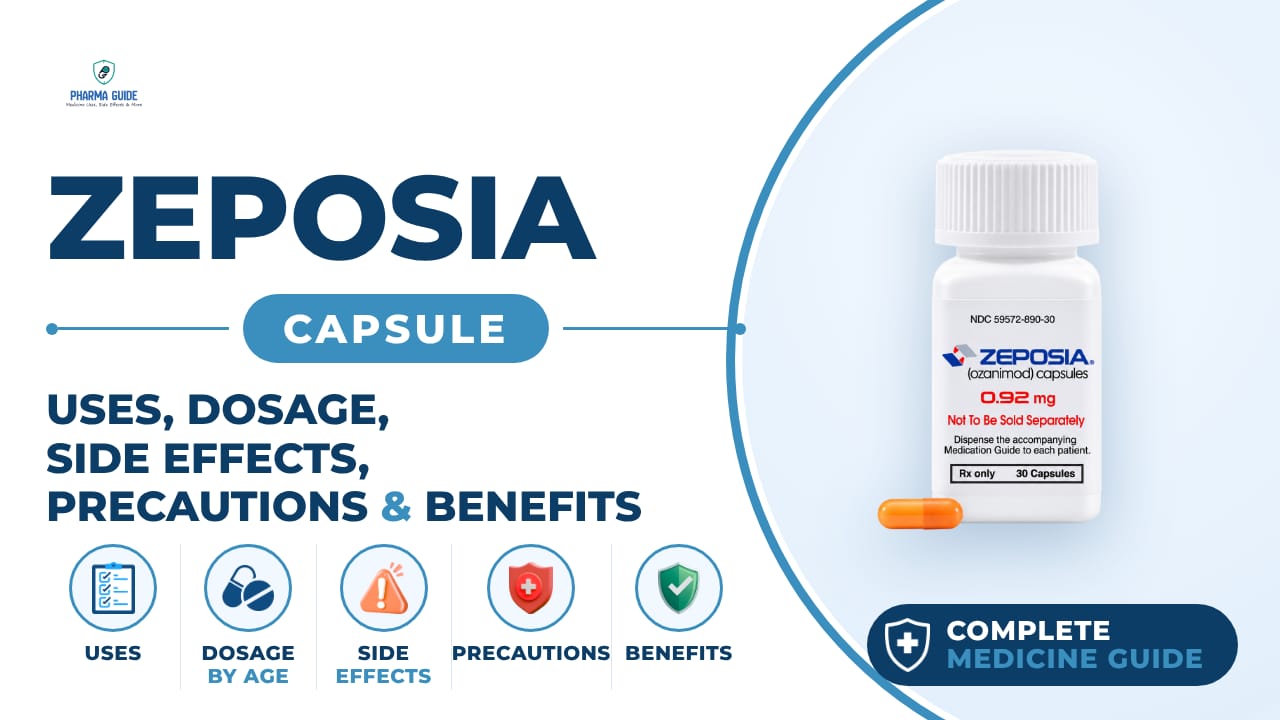
Zeposia Capsule: Uses, Dosage, Side Effects, Precautions and Alternates
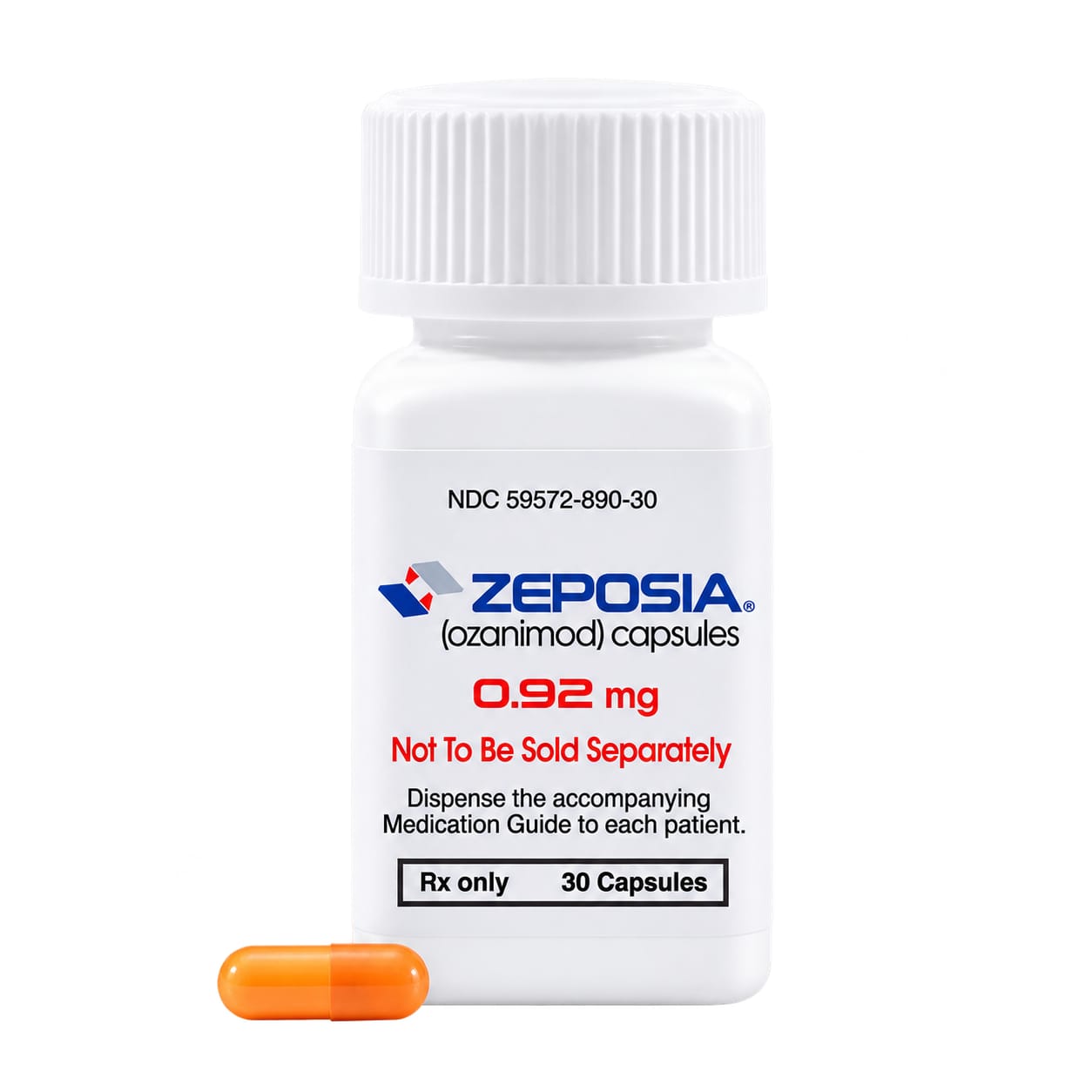
| Generic name | ozanimod |
|---|---|
| Drug class | Selective immunosuppressant (sphingosine 1-phosphate receptor modulator) |
| Forms | Capsules (0.23 mg, 0.46 mg, 0.92 mg) |
Quick overview
Zeposia Capsule contains ozanimod, a selective immunosuppressant from the sphingosine 1-phosphate (S1P) receptor modulator class. It is a prescription medicine used to treat relapsing forms of multiple sclerosis and moderately to severely active ulcerative colitis in adults. Zeposia works by limiting certain immune cells from reaching areas of the body where they cause inflammation. It is taken once daily by mouth, starting with a 7-day dose titration schedule.
What is Zeposia Capsule
Zeposia is a prescription capsule medicine used to treat relapsing forms of multiple sclerosis in adults. It belongs to a class of medicines called sphingosine 1-phosphate (S1P) receptor modulators.
Zeposia Capsule uses
- Treatment of relapsing forms of multiple sclerosis (MS), including clinically isolated syndrome, relapsing-remitting disease, and active secondary progressive disease, in adults
- Treatment of moderately to severely active ulcerative colitis in adults
Benefits of Zeposia Capsule
- Helps reduce the relapse rate in multiple sclerosis
- Reduces the number and size of brain lesions seen on MRI scans
- In a 2-year study, people taking Zeposia had fewer relapses and fewer new or enlarging brain lesions than those taking an injectable interferon medicine
- For ulcerative colitis, helps reduce symptoms and can help achieve and maintain remission
How Zeposia Capsule works
Zeposia works by trapping certain immune cells (lymphocytes) inside the lymph nodes so fewer of them can travel to the brain, spinal cord, or colon and cause inflammation. This is thought to reduce the inflammation that causes MS and ulcerative colitis symptoms.
Zeposia Capsule dosage
Take this medicine one time each day. Swallow the capsule whole; do not chew or crush it. It can be taken with or without food.
Treatment starts with a 7-day starter pack that gradually increases your dose over the first week; follow the dosing schedule exactly as printed on the pack. Do not skip a dose, and do not stop taking this medicine without talking to your healthcare provider first.
If you miss one or more doses during the first 2 weeks of treatment, contact your healthcare provider — you will likely need to restart with a new 7-day starter pack. If you miss a dose after the first 2 weeks of treatment, take your next dose at the regular scheduled time; do not take two doses at once. This medicine is not approved for use in children.
| Age group | Dose |
|---|---|
| Under 18 years | Safety and effectiveness have not been established |
| 18–39 years | Days 1–4: 0.23 mg once daily; Days 5–7: 0.46 mg once daily; Day 8 onward: 0.92 mg once daily |
| 40–64 years | Same 7-day titration, then 0.92 mg once daily |
Available forms and strengths
- Capsules (0.23 mg, 0.46 mg, 0.92 mg)
Side effects of Zeposia Capsule
Common
- Upper respiratory tract infection (colds, stuffy nose, sore throat)
- Elevated liver enzymes
- Orthostatic hypotension (low blood pressure when standing up, causing dizziness or lightheadedness)
- Urinary tract infection (painful, frequent urination)
- Back pain
- High blood pressure
- Headache
Serious
- Serious infections, including life-threatening ones
- Progressive multifocal leukoencephalopathy (PML), a rare brain infection
- Slow heart rate (bradyarrhythmia), especially when starting treatment
- Liver problems/liver injury
- Increased blood pressure, including sudden severe hypertensive crisis
- Breathing problems (shortness of breath)
- Macular edema (swelling in the back of the eye)
- Skin cancers, including basal cell carcinoma, melanoma, and squamous cell carcinoma
- Posterior Reversible Encephalopathy Syndrome (PRES), swelling and narrowing of brain blood vessels
- Severe worsening of MS symptoms after stopping the medicine
- Allergic reactions, including hives, rash, or swelling of the face, lips, tongue, or throat
Warnings and precautions
- This medicine can increase the risk of serious infections, including some that can be life-threatening or fatal. It should not be started in patients with an active infection.
- This medicine may cause a temporary slowing of the heart rate, especially during the first 8 days of treatment, which is why doses are increased gradually.
- This medicine should not be taken by people who have had a heart attack, unstable chest pain, stroke, mini-stroke, or certain types of heart failure in the last 6 months, or who have certain heart rhythm problems without a pacemaker, severe untreated sleep apnea, or who are taking an MAO inhibitor.
- There is a rare but serious risk of PML, a brain infection that usually leads to death or severe disability.
- This medicine may cause liver damage; liver function should be checked before and during treatment.
- This medicine can cause macular edema (swelling in the eye), especially in people with diabetes or a history of uveitis.
- Live vaccines should be avoided for at least 1 month before starting, during treatment, and for 3 months after stopping this medicine, because they may not work properly and could cause infection.
- Eating foods very high in tyramine (such as aged, fermented, cured, smoked, or pickled foods) while taking this medicine may cause a dangerous rise in blood pressure.
- MS symptoms may return and become worse after stopping this medicine; never stop without talking to your doctor first.
- There is an increased risk of certain skin cancers, including basal cell carcinoma and melanoma, so skin should be checked regularly and sun exposure limited.
- This medicine may harm an unborn baby. Women who can become pregnant should use effective birth control during treatment and for 3 months after stopping. Tell your doctor right away if you become pregnant.
- It isn't known if this medicine passes into breast milk. Talk to your doctor about the best way to feed your baby if you are taking this medicine.
- Based on a trial in patients with kidney disease, kidney problems did not meaningfully change how the drug behaves in the body.
- This medicine is not recommended for people with liver impairment. Liver tests are needed before starting and during treatment, and the medicine should be stopped if significant liver injury is confirmed.
- Alcohol should be discussed with the clinician, particularly because Zeposia can affect liver enzymes.
- Avoid driving if dizziness or other symptoms impair alertness.
Storage
- Store at room temperature between 68°F to 77°F (20°C to 25°C)
- Keep this medicine and all medicines out of the reach of children
When to see a doctor
- Get emergency help right away for signs of a severe allergic reaction, such as hives, rash, trouble breathing, or swelling of the face, lips, tongue, or throat.
- Call your doctor right away if you have signs of infection such as fever, feeling very tired, flu-like symptoms, cough, painful or frequent urination, rash, or headache with fever, neck stiffness, sensitivity to light, nausea, or confusion.
- Call your doctor if you feel dizzy, lightheaded, notice your heart beating slowly or skipping beats, have shortness of breath, feel confused, or have chest pain.
- Call your doctor right away if you have unexplained nausea, vomiting, stomach pain, tiredness, loss of appetite, yellowing of the eyes or skin, or dark urine, which may signal liver problems.
- Call your doctor right away if you notice vision changes such as blurriness, shadows, a blind spot in the center of your vision, light sensitivity, or unusual colors in your vision.
- Seek medical help right away for sudden severe headache, sudden confusion, sudden vision changes or loss, or seizures, which could be signs of a rare brain blood vessel condition.
- Call your doctor right away if you have new or worsening shortness of breath.
- Call your doctor right away if you notice new or worsening symptoms that could suggest PML, such as weakness on one side of the body, loss of coordination, vision changes, confusion, or personality changes.
- Tell your doctor if you notice any changes in your skin, such as a new darkened area, a sore that doesn't heal, a changed mole, or a shiny or pearly bump.
- Tell your doctor right away if you become pregnant or think you might be pregnant while taking this medicine or within three months after stopping it.
Alternatives
- Fingolimod
- Siponimod
- Ponesimod
Watch the video
FAQs
What is Zeposia Capsule used for?
Zeposia is used to treat relapsing forms of multiple sclerosis, including clinically isolated syndrome, relapsing-remitting disease, and active secondary progressive disease, as well as moderately to severely active ulcerative colitis in adults.
How does Zeposia Capsule work?
Zeposia works by trapping certain immune cells (lymphocytes) inside the lymph nodes so fewer of them can travel to the brain, spinal cord, or colon and cause inflammation, which is thought to reduce the inflammation that causes MS and ulcerative colitis symptoms.
How is Zeposia Capsule taken?
Zeposia is taken once daily by mouth, swallowed whole without chewing or crushing, with or without food. Treatment starts with a 7-day starter pack that gradually increases the dose, following the schedule printed on the pack.
What happens if I miss a dose of Zeposia Capsule?
If you miss one or more doses during the first 2 weeks of treatment, contact your healthcare provider since you will likely need to restart with a new 7-day starter pack. If you miss a dose after the first 2 weeks, take your next dose at the regular scheduled time without doubling up.
What are the serious side effects of Zeposia Capsule?
Serious side effects include serious infections, progressive multifocal leukoencephalopathy (PML), slow heart rate, liver problems, increased blood pressure, breathing problems, macular edema, skin cancers, Posterior Reversible Encephalopathy Syndrome (PRES), and severe worsening of MS symptoms after stopping the medicine.
General information, not medical advice
Your prescriber and the leaflet in your pack know your situation. This page does not.
- Follow your prescriber and the leaflet
- Don't start, stop, or change a dose on your own
- Doses and warnings differ by country and product
Sources
Video
Related medicines

Injectafer Injection: Uses, Dosage, Side Effects, Precautions and Alternates
Iron products
Injectafer (ferric carboxymaltose) treats iron deficiency anemia and heart failure-related iron deficiency via IV. Learn uses, dosage, side effects, and

Gliclazide Tablet: Uses, Dosage, Side Effects, Precautions and Alternates
Sulfonylurea (hypoglycemic/antidiabetic agent)
Gliclazide Tablet is a sulfonylurea for type 2 diabetes that boosts insulin release. Learn about dosage, side effects, warnings, and precautions.