
Safety
General information, not medical advice
Your prescriber and the leaflet in your pack know your situation. This page does not.
- Follow your prescriber and the leaflet
- Don't start, stop, or change a dose on your own
- Doses and warnings differ by country and product
Zerbaxa Injection: Uses, Dosage, Side Effects, Precautions and Alternates
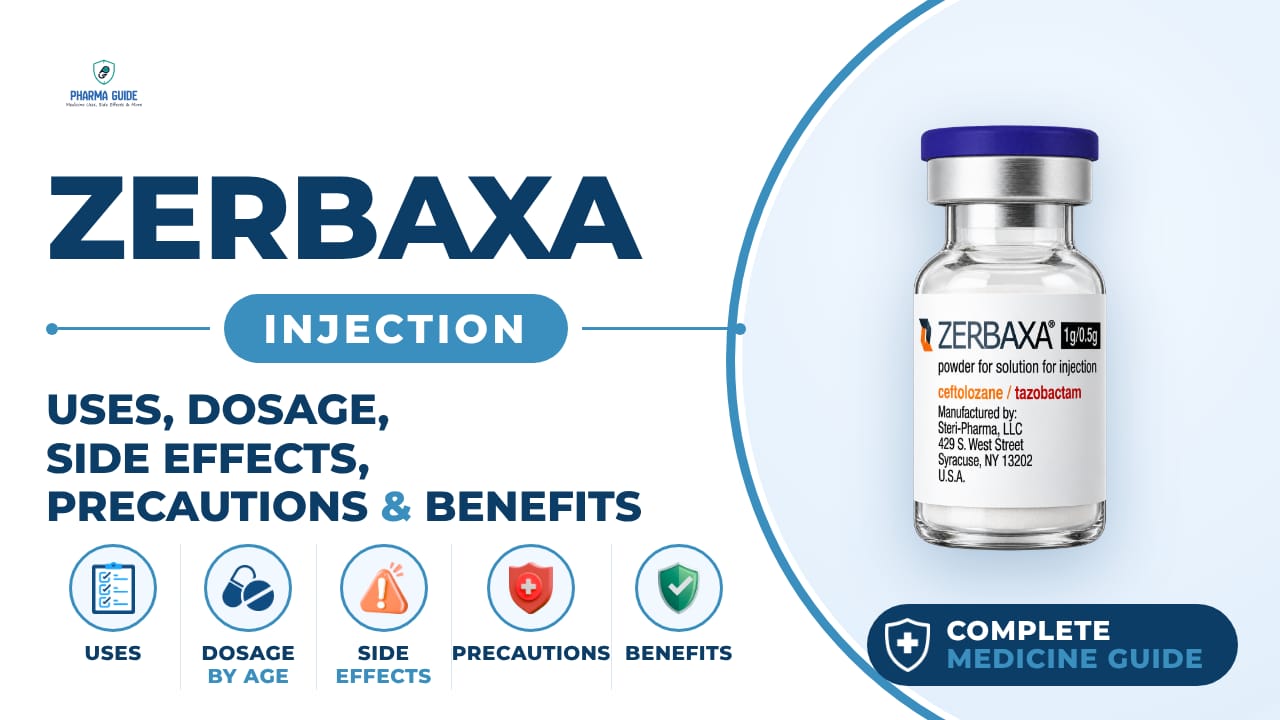
| Generic name | ceftolozane and tazobactam |
|---|---|
| Drug class | Cephalosporins / beta-lactamase inhibitors |
| Forms | Powder for concentrate for solution for infusion (given into a vein) |
Quick overview
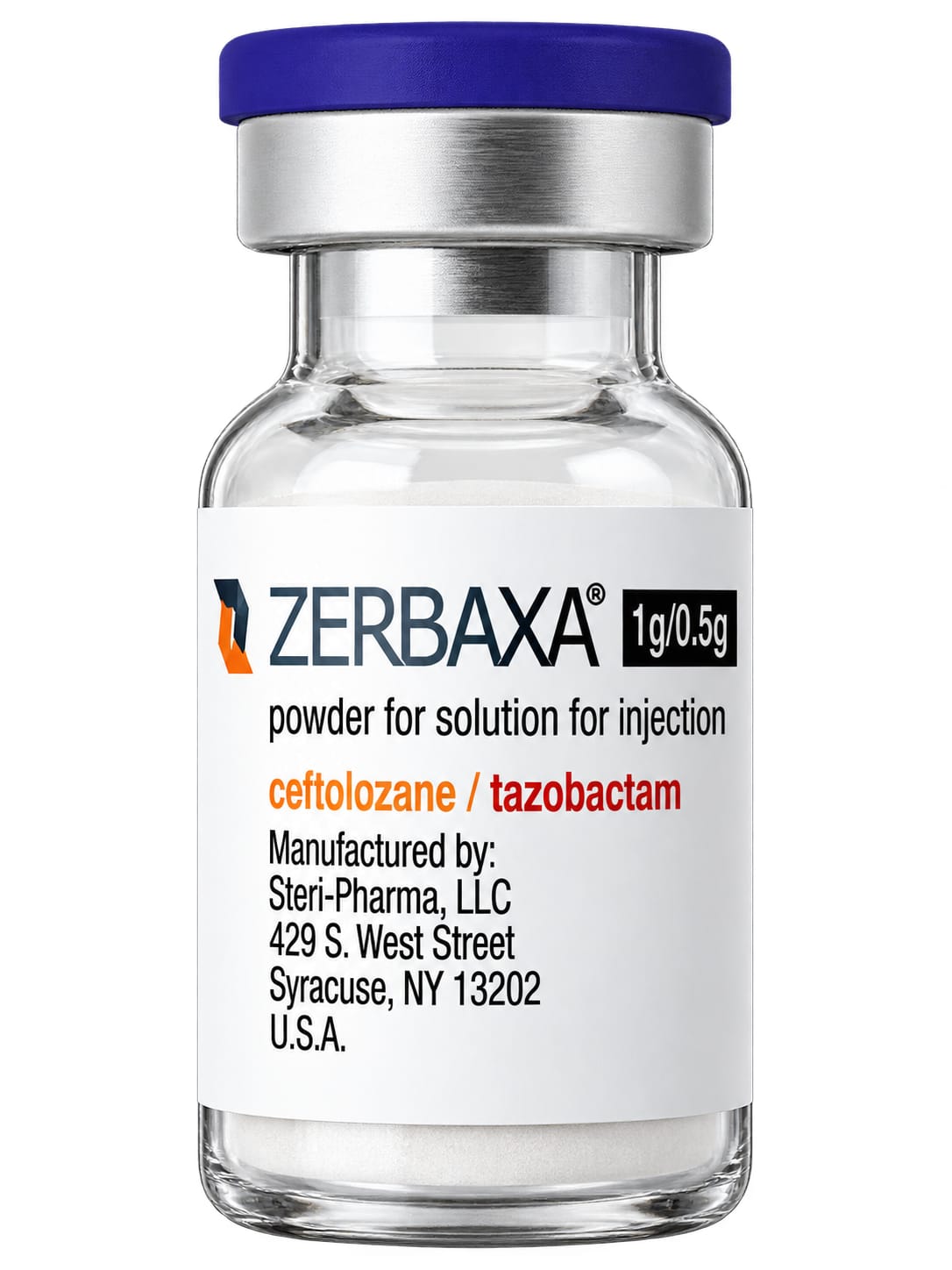
Zerbaxa Injection contains ceftolozane and tazobactam, a combination antibiotic belonging to the cephalosporin and beta-lactamase inhibitor drug class. It is used to treat complicated intra-abdominal infections, acute pyelonephritis, complicated urinary tract infections, and hospital-acquired pneumonia including ventilator-associated pneumonia. It is given as an infusion into a vein and is intended for adults only. As with other antibiotics, it can cause side effects and requires monitoring, particularly of kidney function.
What is Zerbaxa Injection
Zerbaxa is a combination antibiotic medicine containing two active substances: ceftolozane, which belongs to a group of antibiotics called cephalosporins and kills certain bacteria, and tazobactam, which blocks enzymes that bacteria use to resist ceftolozane, helping it work better.
Zerbaxa Injection uses
- Complicated infections within the abdomen (used together with metronidazole)
- Acute pyelonephritis (a kidney infection)
- Complicated urinary tract infections
- Hospital-acquired pneumonia, including ventilator-associated pneumonia
Benefits of Zerbaxa Injection
- Treats certain complicated urinary tract infections
- Treats complicated intra-abdominal infections
- Treats certain hospital-acquired and ventilator-associated pneumonias
- Provides activity against many Gram-negative bacteria
- Has activity against certain Pseudomonas aeruginosa infections
How Zerbaxa Injection works
Ceftolozane stops bacteria from building their cell walls, which kills them. Tazobactam blocks enzymes called beta-lactamases that bacteria use to destroy ceftolozane, so the antibiotic can keep working.
Zerbaxa Injection dosage
This medicine is given into a vein through an infusion (drip) lasting one hour. The dose given depends on whether you have kidney problems. This medicine is for adults only; it should not be given to children under 18 years old because there is not enough information on use in this age group. Treatment normally lasts between 4 and 14 days depending on the infection. Doctors may test your blood to monitor kidney function, especially if you take this medicine for a long time. Use the medicine for the full prescribed length of time, even if your symptoms quickly improve, to avoid infection becoming resistant to treatment.
| Age group | Dose |
|---|---|
| 18–64 years – complicated UTI or intra-abdominal infection | 1.5 g IV every 8 hours |
| 18–64 years – hospital-acquired/ventilator-associated bacterial pneumonia | 3 g IV every 8 hours |
Available forms and strengths
- Powder for concentrate for solution for infusion (given into a vein)
Side effects of Zerbaxa Injection
Common
- Nausea
- Headache
- Constipation
- Diarrhoea
- Vomiting
- Fever (pyrexia)
- Stomach ache (abdominal pain)
- Increase in liver enzymes (from blood tests)
- Rash
- Decrease in blood pressure
- Decrease in potassium levels (from blood tests)
- Increase in platelet count
- Dizziness
- Anxiety
- Difficulty sleeping (insomnia)
- Infusion site reactions
Serious
- Severe allergic reaction (anaphylaxis) - sudden swelling of lips, face, throat or tongue, severe rash, swallowing or breathing problems
- Severe or persistent diarrhoea, or stools containing blood or mucus (possible sign of Clostridioides difficile infection)
- Kidney problems or kidney failure
- Ischemic stroke
- Atrial fibrillation (irregular or fast heartbeat)
- Venous thrombosis (blood clot in a vein)
- Bleeding inside the skull (intracranial hemorrhage) - sudden severe headache, vision or speech problems, numbness or weakness
- Severe skin reactions (such as severe skin peeling or blistering)
Warnings and precautions
- Serious and sometimes fatal allergic reactions can happen with this type of antibiotic. Tell your doctor if you have ever had an allergic reaction to penicillins, cephalosporins, or similar antibiotics before starting treatment.
- This medicine must not be used by anyone who has had a severe allergic reaction to penicillins, carbapenems, or any cephalosporin antibiotics, or who is allergic to the ingredients.
- Severe bowel inflammation caused by a bacteria called C. difficile can happen during or after treatment, ranging from mild to life-threatening. Tell your doctor right away if you get diarrhoea during or after taking this medicine.
- This medicine can cause a decline in kidney function, so your kidney function should be checked regularly, especially if you already have kidney problems.
- This medicine contains sodium, which may matter if you are on a controlled-sodium diet.
- Severe skin reactions affecting other organs have been reported with this type of antibiotic and require immediate medical attention.
- There is not enough information about using this medicine during pregnancy, so your doctor will only prescribe it if the expected benefit outweighs any possible risk to you and your baby.
- It is not known if this medicine passes into breast milk, so your doctor will help you decide whether to stop breastfeeding or stop the medicine, based on the benefits of each.
- Your dose will likely need to be lowered if you have kidney problems, and your kidney function may be monitored regularly during treatment, since this medicine is removed from the body mainly by the kidneys.
- No dose change is needed if you have liver problems, since this medicine is not processed by the liver.
- No major direct interaction is established with alcohol, though avoiding alcohol during serious infection is generally sensible.
- This medicine can cause dizziness, which may affect your ability to drive or use machinery, so be careful until you know how it affects you.
Storage
- Store unopened vials in a refrigerator (2°C – 8°C)
- Store in the original package in order to protect from light
- Keep out of the sight and reach of children
- Do not use this medicine after the expiry date on the carton and vial
- Do not throw away any medicines via wastewater; dispose of unused medicine in accordance with local requirements
When to see a doctor
- Get medical help right away if you notice sudden swelling of your lips, face, throat or tongue, a severe rash, or difficulty swallowing or breathing, as these may be signs of a severe allergic reaction.
- Tell your doctor right away if you develop diarrhoea that is severe, does not go away, or contains blood or mucus, and do not take anti-diarrhoea medicines in this situation.
- Seek urgent medical help if you experience signs of bleeding in the brain, such as sudden vision changes, trouble speaking, severe headache, numbness, weakness in an arm or leg, or seizures.
- Tell your doctor if you notice signs of liver problems such as yellowing of the skin or eyes, dark urine, or pale stools.
Alternatives
- Piperacillin/tazobactam
- Cefepime
- Meropenem
Watch the video
FAQs
What is Zerbaxa Injection used for?
Zerbaxa is used to treat complicated intra-abdominal infections (with metronidazole), acute pyelonephritis, complicated urinary tract infections, and hospital-acquired pneumonia including ventilator-associated pneumonia.
How is Zerbaxa Injection given?
Zerbaxa is given as an infusion into a vein lasting one hour. The dose depends on the type of infection and kidney function, and treatment usually lasts between 4 and 14 days.
What are the common side effects of Zerbaxa Injection?
Common side effects include nausea, headache, constipation, diarrhoea, vomiting, fever, stomach ache, increased liver enzymes, rash, decreased blood pressure, decreased potassium levels, increased platelet count, dizziness, anxiety, insomnia, and infusion site reactions.
Can Zerbaxa Injection be used in children?
No, Zerbaxa is for adults only and should not be given to children under 18 years old because there is not enough information on its use in this age group.
Does Zerbaxa Injection affect the kidneys?
Yes, Zerbaxa can cause a decline in kidney function, so kidney function should be monitored regularly, especially in people who already have kidney problems, since the medicine is removed from the body mainly by the kidneys.
General information, not medical advice
Your prescriber and the leaflet in your pack know your situation. This page does not.
- Follow your prescriber and the leaflet
- Don't start, stop, or change a dose on your own
- Doses and warnings differ by country and product
Sources
Video
Related medicines

Injectafer Injection: Uses, Dosage, Side Effects, Precautions and Alternates
Iron products
Injectafer (ferric carboxymaltose) treats iron deficiency anemia and heart failure-related iron deficiency via IV. Learn uses, dosage, side effects, and

Gliclazide Tablet: Uses, Dosage, Side Effects, Precautions and Alternates
Sulfonylurea (hypoglycemic/antidiabetic agent)
Gliclazide Tablet is a sulfonylurea for type 2 diabetes that boosts insulin release. Learn about dosage, side effects, warnings, and precautions.