
Safety
General information, not medical advice
Your prescriber and the leaflet in your pack know your situation. This page does not.
- Follow your prescriber and the leaflet
- Don't start, stop, or change a dose on your own
- Doses and warnings differ by country and product
Zerodol Tablet: Uses, Dosage, Side Effects, Precautions and Alternates
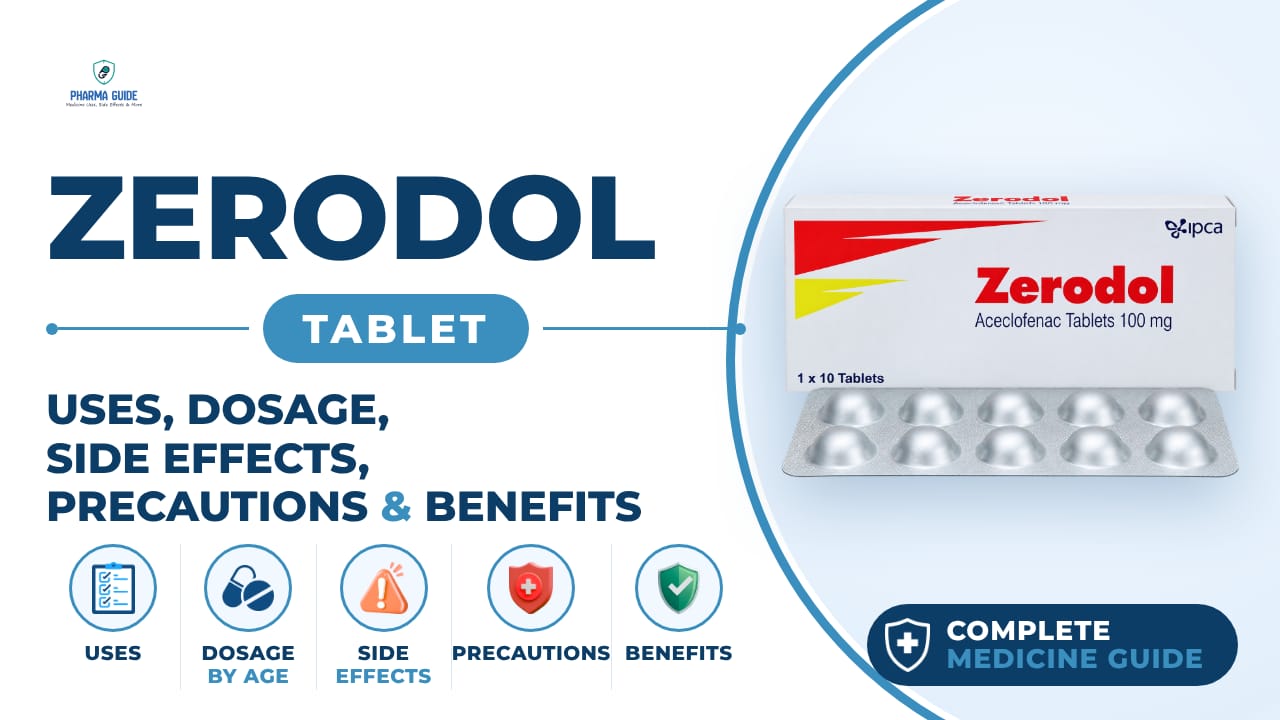
| Generic name | Aceclofenac |
|---|---|
| Drug class | Nonsteroidal anti-inflammatory drug (NSAID) |
| Forms | Tablet, Injection, Tablet SR (sustained release) |
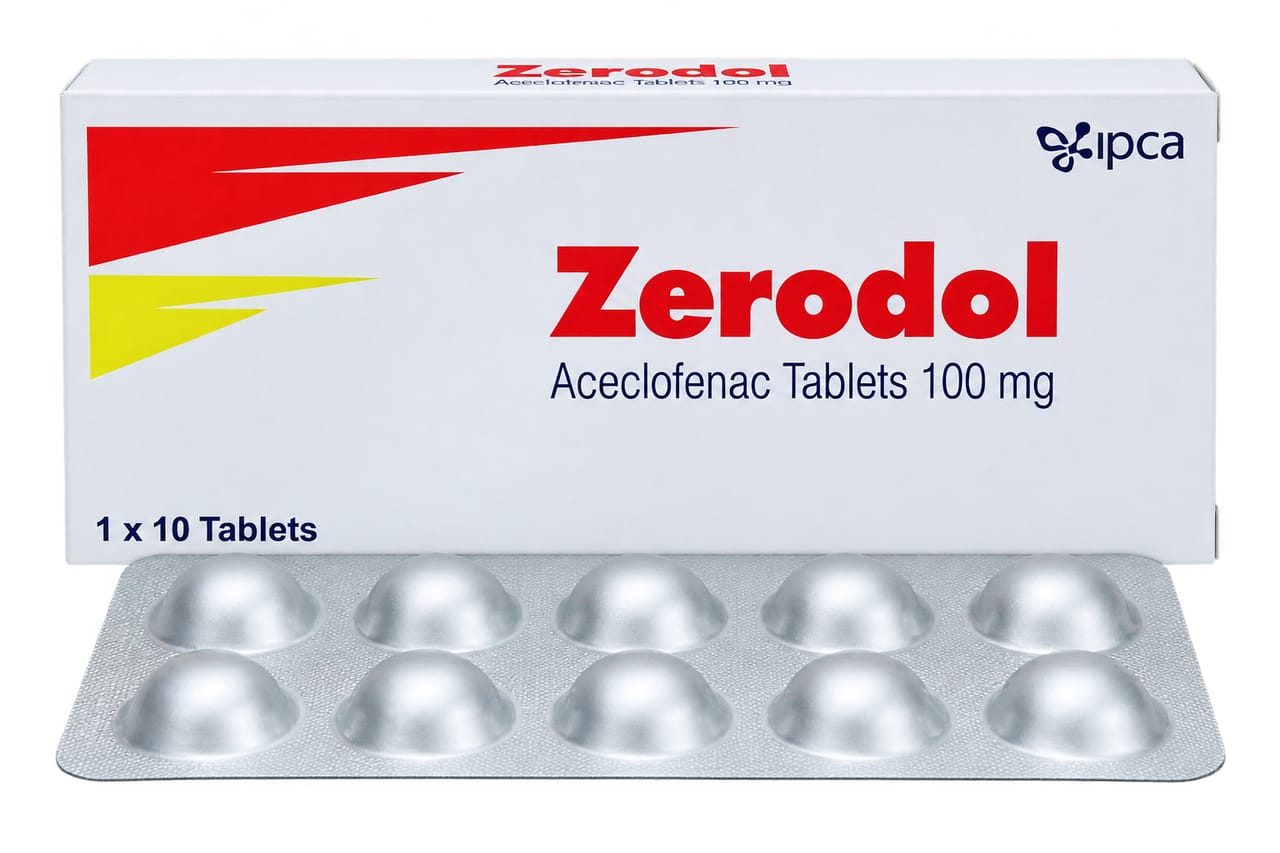
Quick overview
Zerodol Tablet contains aceclofenac, a nonsteroidal anti-inflammatory drug (NSAID). It is used to relieve pain, stiffness, and swelling caused by joint and muscle conditions, as well as short-term pain from injuries, dental work, or surgery. It works by lowering body chemicals called prostaglandins that cause pain and swelling. It is available as a tablet, injection, and sustained-release tablet.
What is Zerodol Tablet
Zerodol Tablet contains aceclofenac, a non-steroidal anti-inflammatory painkiller. It is used to relieve pain, stiffness, and swelling caused by joint and muscle conditions, as well as short-term pain from injuries, dental work, or surgery.
Zerodol Tablet uses
- Relieves pain, swelling, and stiffness from osteoarthritis, rheumatoid arthritis, and ankylosing spondylitis
- Eases back pain, muscle strains, and sprains
- Helps with toothache and pain after dental procedures or surgery
- Used for mild to moderate pain conditions
Benefits of Zerodol Tablet
- Pain Relief: Helps reduce mild to moderate pain.
- Inflammation Reduction: Helps reduce swelling and inflammation.
- Joint Pain Support: Used for arthritis-related pain and stiffness.
- Muscle Pain Relief: Helps relieve pain from strains and injuries.
How Zerodol Tablet works
Zerodol contains aceclofenac, which belongs to a group of medicines called NSAIDs. It works by lowering the amount of certain body chemicals called prostaglandins, which cause pain and swelling. By blocking the enzymes that make these chemicals, the medicine reduces pain and inflammation.
Zerodol Tablet dosage
Swallow the tablet whole with a glass of water. Take it after a meal to help lower the chance of an upset stomach. Do not crush, chew, or break the tablet. Follow your doctor's instructions on how much to take and for how long. Take it at the same time every day if taking it more than once daily. Do not stop taking it early even if you feel better, unless your doctor tells you to.
| Age group | Dose |
|---|---|
| Under 18 Years | Use only if prescribed by a healthcare professional |
| Adults (18–64 Years) | 100 mg twice daily as prescribed |
| Older Adults (65+ Years) | 100 mg once or twice daily; use with caution |
Available forms and strengths
- Tablet
- Injection
- Tablet SR (sustained release)
Side effects of Zerodol Tablet
Common
- Nausea and vomiting
- Stomach pain
- Indigestion
- Diarrhoea (loose motions)
- Headache
- Dizziness
- Skin rash
- Heartburn
- Drowsiness
- Visual disturbances
Serious
- Severe stomach pain
- Black or bloody stools
- Vomiting blood
- Unusual bruising or bleeding
- Signs of allergic reaction such as swelling of face, lips, tongue or throat
- Difficulty breathing
Warnings and precautions
- Do not take this medicine if you are allergic to aceclofenac or other NSAIDs.
- This medicine is not recommended for people with a history of asthma triggered by NSAIDs.
- Avoid this medicine if you have active stomach ulcers or a history of repeated stomach bleeding, as it can make the condition worse.
- This medicine is not recommended if you have severe liver or kidney problems, as it may cause further damage.
- People with heart conditions like heart failure or ischaemic heart disease should avoid long-term high doses, as it may raise heart attack risk and cause fluid build-up.
- Use with caution if you have bleeding disorders, as this medicine can increase bleeding risk.
- Long-term use may damage the stomach and intestines, causing bleeding, ulcers, or holes in the stomach lining.
- Zerodol should generally not be used during pregnancy, especially in the last three months, as it may harm the unborn baby. Use in the first six months should only be under a doctor's advice.
- It is not recommended to take this medicine while breastfeeding. Talk to your doctor about other options.
- If you have kidney problems, especially severe kidney disease or are on dialysis, this medicine may not be right for you. Talk to your doctor first.
- Tell your doctor if you have any liver problems before taking this medicine, as your dose may need to be adjusted.
- Avoid or limit alcohol while taking this medicine, as it raises the risk of stomach bleeding and other side effects.
- This medicine may cause dizziness or drowsiness in some people. Avoid driving or using machinery until you know how it affects you.
Storage
- Store below 30°C
- Store in a cool, dry place
- Protect it from direct sunlight and moisture
- Keep it out of reach of children
- Use the product before its expiry date
When to see a doctor
- Get medical help right away if you notice severe stomach pain, black stools, vomiting blood, skin rash, swelling, trouble breathing, or yellowing of the skin or eyes.
- If you experience symptoms like indigestion, vomiting blood, or dark, tarry stools, contact your doctor immediately as these may signal stomach or intestinal bleeding.
- Seek immediate medical attention if you notice signs of a serious allergic reaction such as rash, swelling of the face or throat, severe dizziness, or difficulty breathing.
- If you accidentally take too much of this medicine, get emergency medical help right away.
Alternatives
- Diclofenac
- Ibuprofen
- Paracetamol
Watch the video
FAQs
What is Zerodol Tablet used for?
It is used to relieve pain, stiffness, and swelling from osteoarthritis, rheumatoid arthritis, ankylosing spondylitis, back pain, muscle strains and sprains, toothache, and pain after dental procedures or surgery.
How does Zerodol Tablet work?
It contains aceclofenac, an NSAID that lowers prostaglandins, the body chemicals that cause pain and swelling, by blocking the enzymes that produce them.
What is the dosage of Zerodol Tablet for adults?
Adults aged 18-64 years are usually prescribed 100 mg twice daily, taken after a meal and swallowed whole with water, as directed by a doctor.
What are the common side effects of Zerodol Tablet?
Common side effects include nausea, vomiting, stomach pain, indigestion, diarrhoea, headache, dizziness, skin rash, heartburn, drowsiness, and visual disturbances.
Can Zerodol Tablet be taken during pregnancy?
It should generally not be used during pregnancy, especially in the last three months, as it may harm the unborn baby, and use in the first six months should only be under a doctor's advice.
General information, not medical advice
Your prescriber and the leaflet in your pack know your situation. This page does not.
- Follow your prescriber and the leaflet
- Don't start, stop, or change a dose on your own
- Doses and warnings differ by country and product
Sources
Video
Related medicines
Relaxyl Capsule: Uses, Dosage, Side Effects, Precautions and Alternates
Nonsteroidal Anti-Inflammatory Drug (NSAID)
Relaxyl Capsule contains diclofenac, an NSAID used to relieve joint and muscle pain, swelling, and inflammation. Learn uses, dosage, and side effects.
Nabumetone Tablet: Uses, Dosage, Side Effects, Precautions and Alternates
Nonsteroidal anti-inflammatory drug (NSAID)
Nabumetone Tablet is an NSAID for osteoarthritis and rheumatoid arthritis pain relief. Learn its dosage, uses, side effects, and safety warnings.