
Safety
General information, not medical advice
Your prescriber and the leaflet in your pack know your situation. This page does not.
- Follow your prescriber and the leaflet
- Don't start, stop, or change a dose on your own
- Doses and warnings differ by country and product
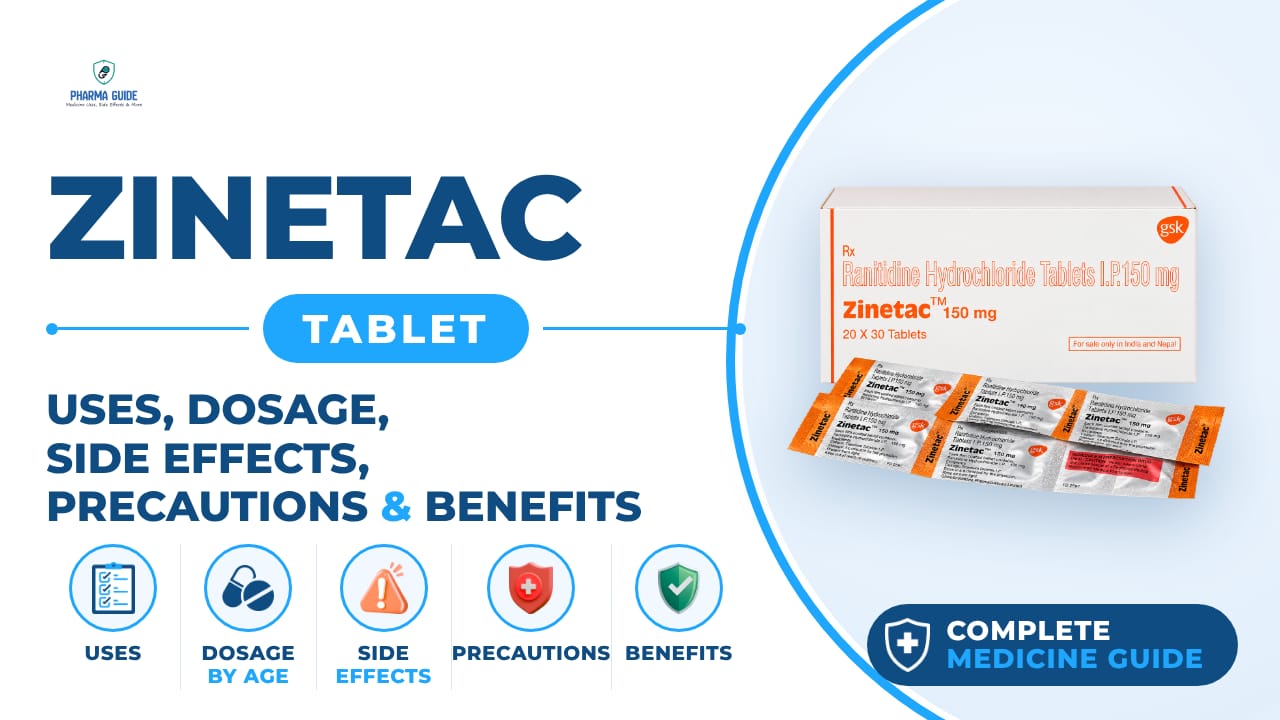
Zinetac Tablet: Uses, Dosage, Side Effects, Precautions and Alternates
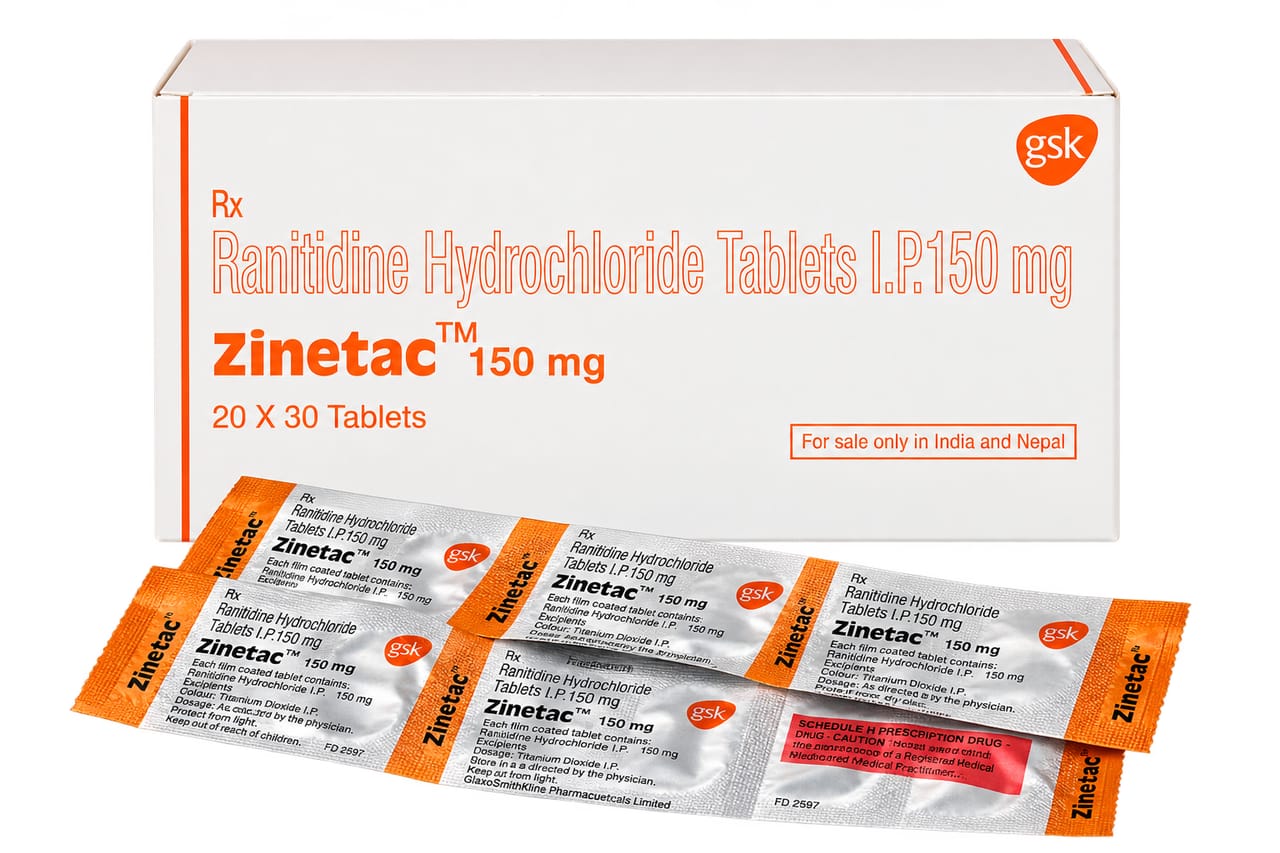
| Generic name | Ranitidine |
|---|---|
| Drug class | H2 antagonist (Histamine H2-receptor antagonist) |
| Forms | Tablet, Injection |
Quick overview
Zinetac Tablet contains ranitidine, an H2 antagonist (histamine H2-receptor antagonist), that is used to lower the amount of acid the stomach makes. It is a prescription medicine available as a tablet and an injection, used for conditions such as acidity, peptic ulcers, heartburn, and GERD. It helps relieve acid-related discomfort and supports the healing of ulcers.
What is Zinetac Tablet
Zinetac is a prescription medicine that contains ranitidine. It is used to lower the amount of acid the stomach makes. It comes as a tablet and an injection.
Zinetac Tablet uses
- Acidity
- Peptic ulcer (stomach and duodenal ulcers)
- Heartburn
- Gastroesophageal reflux disease (GERD)
- Erosive esophagitis
- Zollinger-Ellison syndrome
- Hypersecretory conditions
- Dyspepsia (indigestion)
- Stomach gas
- Hernia-related stomach pain
- Bad breath
- Laryngitis
Benefits of Zinetac Tablet
- Provides quick relief from acid-related discomfort
- Promotes healing of ulcers and helps prevent them from coming back
- Helps manage conditions caused by too much stomach acid
How Zinetac Tablet works
Zinetac blocks a substance called histamine from acting on acid-producing cells in the stomach lining. This lowers the amount of acid the stomach makes, which relieves symptoms and helps ulcers heal.
Zinetac Tablet dosage
Swallow the tablet whole with a full glass of water; do not crush, break, or chew it. Take it at the same time each day for the best results. Take it with some food, as this can help your body absorb the medicine better. It may also be taken before food or at bedtime, or without food, as directed by your doctor. Continue the full course even if you start feeling better, so the digestive tract can heal completely. Do not stop taking this medicine without talking to your doctor first. It can be given to children over one month of age, with dosage decided by the doctor based on age and weight. Older adults with kidney problems should use this medicine carefully and may need a different dose.
| Age group | Dose |
|---|---|
| Under 12 years | Not routinely recommended; doctor-directed |
| 12–17 years | 150 mg twice daily |
| 18–64 years | 150 mg twice daily |
| 65+ years | 150 mg twice daily; adjust if kidney impairment |
Available forms and strengths
- Tablet
- Injection
Side effects of Zinetac Tablet
Common
- Headache
- Dizziness
- Nausea or vomiting
- Diarrhoea
- Stomach pain
- Constipation
- Fatigue
- Drowsiness
- Cough
- Weakness
Serious
- Pancreatic inflammation
- Anaphylactic reaction
- Bradycardia
- Jaundice
- Hepatitis
- Depression
- Mental confusion
- Muscle pain
- Difficulty in breathing
- Gynecomastia (growth of breast tissue in males)
Warnings and precautions
- This medicine is generally not recommended during pregnancy unless your doctor decides it is clearly needed. Talk to your doctor before taking it.
- This medicine passes into breast milk, so it is not recommended while breastfeeding unless your doctor says it is necessary.
- People with kidney disease should use this medicine carefully, as dose adjustments may be needed. Talk to your doctor if you have kidney problems.
- People with liver disease should use this medicine with caution, and liver function may need to be monitored.
- It is best to avoid alcohol while taking this medicine, as it can worsen side effects like drowsiness and dizziness.
- This medicine may cause drowsiness or dizziness in some people, so avoid driving or using machinery if you feel affected.
- This medicine may increase the risk of getting pneumonia. Tell your doctor right away if you get chest pain, fever, trouble breathing, or a cough with green or yellow mucus.
- If you have heartburn that lasts more than 3 months or that keeps coming back or gets worse, see your doctor right away, as this could be a sign of a more serious problem.
- Taking this medicine for a long time may lower the amount of vitamin B12 your body absorbs.
- Do not use nicotine products while taking this medicine, as it may increase the risk of severe side effects.
- This medicine should not be used if you have severe bleeding in the stomach or intestines, as it may make the condition worse.
- Do not take this medicine if you have porphyria, a rare blood disorder, as it may trigger a sudden attack.
Storage
- Store this medicine at a temperature below 30°C
- Protect it from light
- Do not freeze
- Keep away from children
- Do not use this medicine after the expiry date has passed
When to see a doctor
- Get emergency medical help right away if you think you have taken too much of this medicine.
- Tell your doctor immediately if you notice unexpected weight loss or dark, tarry stools, as these could be signs of a more serious condition.
- Contact your doctor if you develop chest pain, fever, difficulty breathing, or a cough with green or yellow mucus.
- If you notice serious side effects such as allergic reactions, yellowing of the skin or eyes, or unusual tiredness, seek medical help.
Alternatives
- Cimetidine
- Omeprazole
- Lansoprazole
Watch the video
FAQs
What is Zinetac Tablet used for?
Zinetac is used for conditions such as acidity, peptic ulcers, heartburn, GERD, erosive esophagitis, Zollinger-Ellison syndrome, and indigestion caused by excess stomach acid.
How does Zinetac Tablet work?
Zinetac contains ranitidine, which blocks histamine from acting on acid-producing cells in the stomach lining, lowering stomach acid and relieving symptoms while helping ulcers heal.
What is the dosage of Zinetac Tablet?
The tablet should be swallowed whole with water, generally taken as 150 mg twice daily for ages 12 and above, though dosing may vary based on age, weight, and kidney function as directed by a doctor.
What are the common side effects of Zinetac Tablet?
Common side effects include headache, dizziness, nausea or vomiting, diarrhoea, stomach pain, constipation, fatigue, drowsiness, cough, and weakness.
Is it safe to drink alcohol while taking Zinetac Tablet?
It is best to avoid alcohol while taking Zinetac, as it can worsen side effects like drowsiness and dizziness.
General information, not medical advice
Your prescriber and the leaflet in your pack know your situation. This page does not.
- Follow your prescriber and the leaflet
- Don't start, stop, or change a dose on your own
- Doses and warnings differ by country and product
Sources
Video
Related medicines

Injectafer Injection: Uses, Dosage, Side Effects, Precautions and Alternates
Iron products
Injectafer (ferric carboxymaltose) treats iron deficiency anemia and heart failure-related iron deficiency via IV. Learn uses, dosage, side effects, and

Gliclazide Tablet: Uses, Dosage, Side Effects, Precautions and Alternates
Sulfonylurea (hypoglycemic/antidiabetic agent)
Gliclazide Tablet is a sulfonylurea for type 2 diabetes that boosts insulin release. Learn about dosage, side effects, warnings, and precautions.