
Safety
General information, not medical advice
Your prescriber and the leaflet in your pack know your situation. This page does not.
- Follow your prescriber and the leaflet
- Don't start, stop, or change a dose on your own
- Doses and warnings differ by country and product
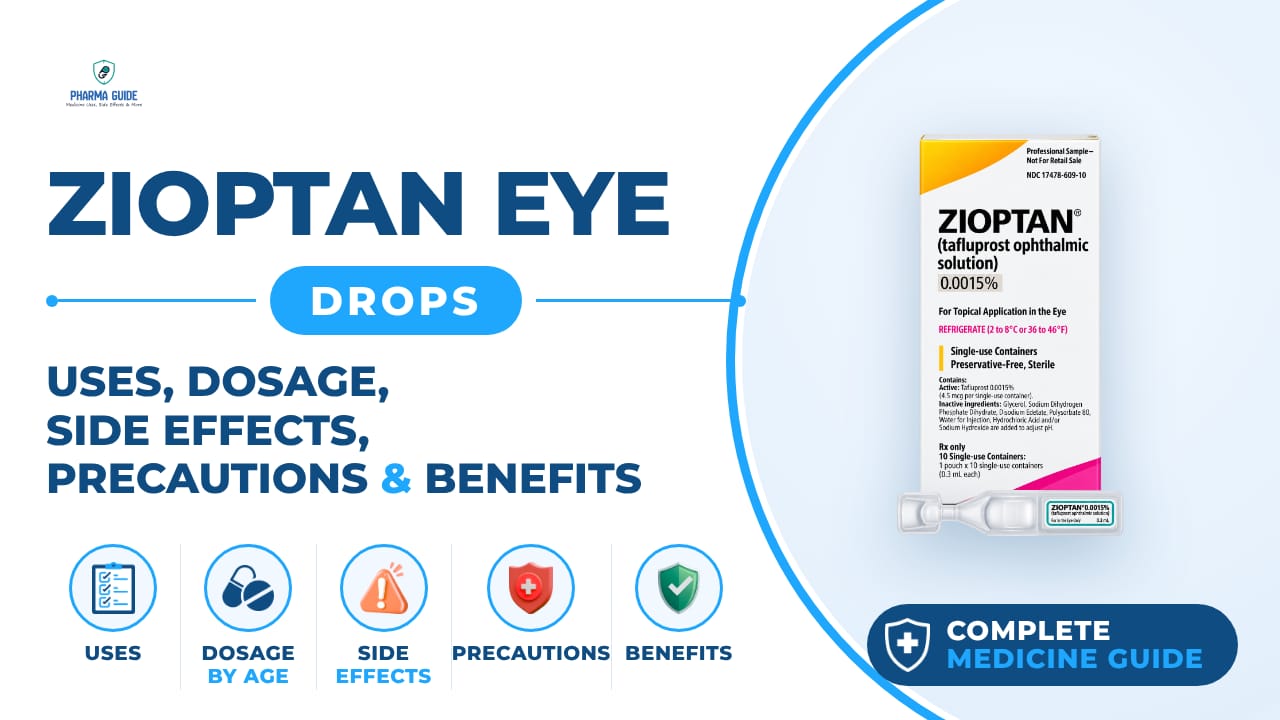
Zioptan Eye Drops: Uses, Dosage, Side Effects, Precautions and Alternates
| Generic name | tafluprost |
|---|---|
| Drug class | Ophthalmic glaucoma agents (Antiglaucoma, Prostaglandin Agonists) |
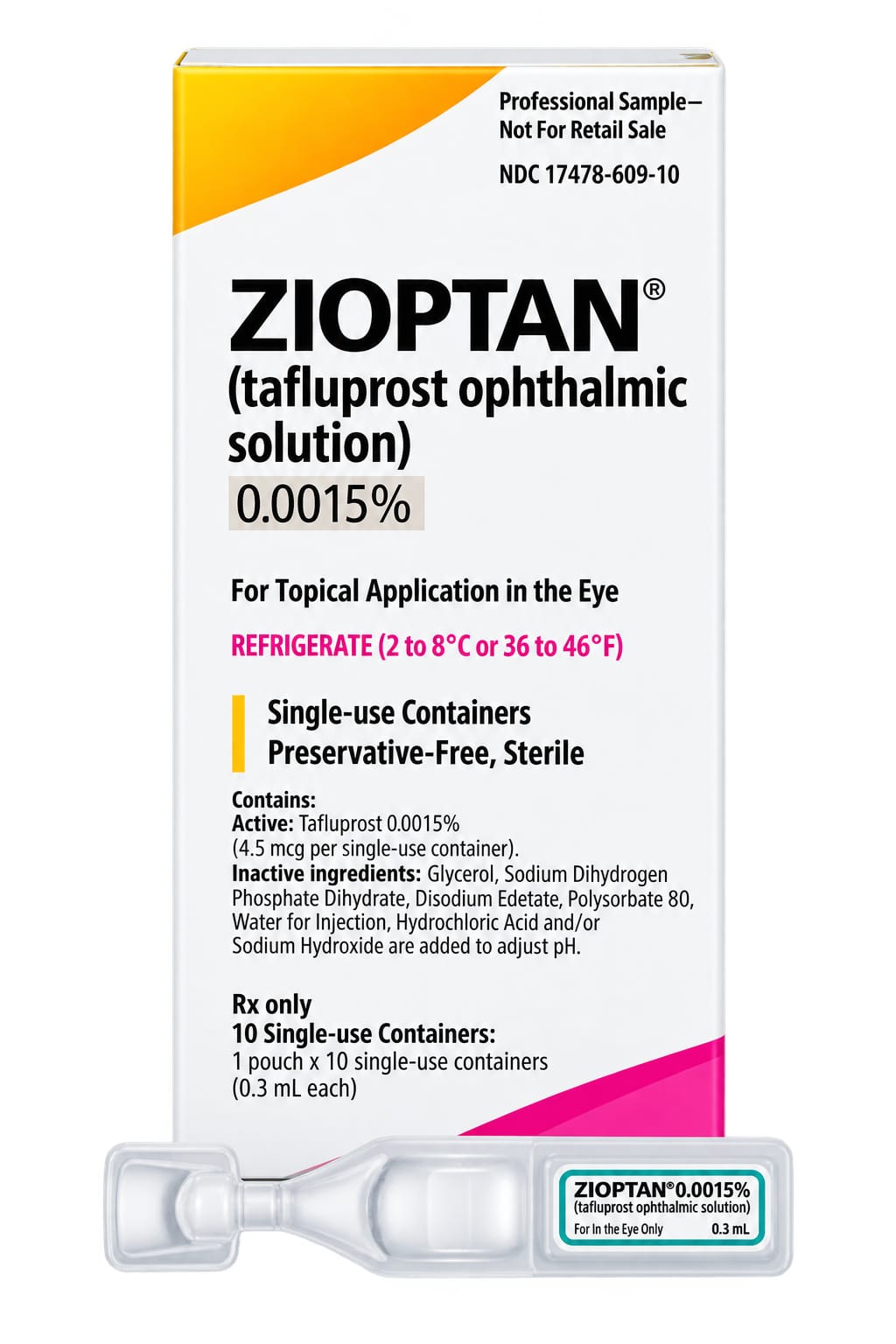
| Forms | Ophthalmic solution (eye drops) in single-use containers |
Quick overview
Zioptan Eye Drops (tafluprost) is a prescription sterile eye drop solution belonging to the prostaglandin analog class. It is used to lower pressure inside the eye in people with open-angle glaucoma or ocular hypertension. Zioptan works by helping more fluid drain out of the eye, and it is typically used once daily in the evening in single-use containers.
What is Zioptan Eye Drops
Zioptan is a prescription sterile eye drop solution used to lower pressure inside the eye in people with open-angle glaucoma or ocular hypertension. It belongs to a group of medicines called prostaglandin analogs.
Zioptan Eye Drops uses
- Treats open-angle glaucoma
- Treats other causes of increased pressure inside the eye (ocular hypertension)
- Open-angle glaucoma — helps lower eye pressure and reduce the risk of glaucoma-related optic nerve damage
- Ocular hypertension — lowers abnormally high pressure inside the eye, even when glaucoma has not yet developed
Benefits of Zioptan Eye Drops
- Lowers high pressure inside the eye, which can help protect vision
- Helps protect the optic nerve by controlling high eye pressure
- Reduces the risk of glaucoma-related vision damage when adequate eye pressure control is maintained
- Provides long-lasting pressure reduction: the effect begins within about 2–4 hours and reaches maximum effect at around 12 hours
How Zioptan Eye Drops works
Zioptan lowers eye pressure by helping more fluid drain out of the eye.
Zioptan Eye Drops dosage
Use exactly as prescribed by your doctor and follow all directions on your prescription label. Do not use in larger or smaller amounts or for longer than recommended, since using more will not improve your condition and may make it less effective.
Wash your hands before using the eye drops. Tilt your head back slightly, pull down the lower eyelid to make a small pocket, hold the dropper above the eye with the tip down, look up and away, and squeeze out a drop. Close your eyes for 2 to 3 minutes with your head tipped down, without blinking or squinting, and gently press a finger to the inside corner of the eye for about a minute to stop the liquid draining into the tear duct.
Wait at least 5 minutes before using any other eye drops your doctor has prescribed. Each single-use container is for one use only, in one or both eyes at one time; throw it away after use even if some medicine is left. Use the solution right away after opening; do not save any leftover medicine because it will no longer be sterile. This medicine is for the eye only and should not be swallowed.
Zioptan is not recommended for use in children. No overall differences in safety or effectiveness have been seen between elderly and other adult patients.
| Age group | Dose |
|---|---|
| Under 18 years | Not recommended; pediatric use is not recommended because of potential long-term pigmentation concerns |
| 18–64 years | 1 drop in affected eye(s) once daily in the evening |
| 65 years and older | 1 drop in affected eye(s) once daily in the evening |
Available forms and strengths
Ophthalmic solution (eye drops) in single-use containers.
Side effects of Zioptan Eye Drops
Common
- Mild eye discomfort
- Blurred vision
- Dry eyes
- Eye redness, stinging, or irritation
- Eye itching
- Cataracts
- Eye pain
- Headache
- Common cold symptoms
- Cough
- Eye inflammation (allergic conjunctivitis)
- Urinary tract infections
- Gradual changes in eyelash length, thickness, color, or number
- Darkening of the skin around the eyelid
- Hair growth on the eyelids
Serious
- Signs of an allergic reaction: hives, difficulty breathing, swelling of the face, lips, tongue, or throat
- Eye pain or redness
- Itchy or watery eyes
- Increased sensitivity to light
- Severe redness or burning of the eyes after using the drops
- Sudden vision loss, blurred vision, tunnel vision, eye pain or swelling, or seeing halos around lights
- Worsening of asthma or shortness of breath
- Permanent change in eye (iris) color
Warnings and precautions
Zioptan may cause a gradual, sometimes permanent, change in eye color, and may only affect the treated eye. Tell your doctor right away about any eye injury or infection, sudden vision changes, or if you need any type of surgery, especially eye surgery.
Zioptan should be used carefully in people with active eye inflammation such as iritis or uveitis, since it may make the inflammation worse. It should also be used carefully in people without a natural lens, with a torn posterior lens capsule, or with risk factors for swelling in the back of the eye (macular edema).
Do not exceed one dose per day, since using it more often may make it work less well. Do not use other eye medications unless your doctor tells you to; if using other ophthalmic medicines, administer them at least 5 minutes apart.
Iris pigmentation: Zioptan can gradually increase brown pigmentation of the iris, and this change may be permanent. Eyelid skin darkening around the eyes may occur and may be reversible after stopping treatment. Eyelashes may become longer, thicker, darker, or more numerous; these changes are usually reversible after discontinuation.
Each single-use container should be used immediately after opening and discarded afterward; do not save leftover solution.
It is not known whether Zioptan will harm an unborn baby. Effective birth control should be used, and pregnancy should be reported to the doctor. Zioptan should not be used during pregnancy unless the potential benefit justifies the potential risk to the fetus. It is not known whether tafluprost passes into breast milk or could harm a nursing baby; tell your doctor if you are breastfeeding.
Zioptan is not recommended for use in children because of potential concerns about pigmentation with long-term use.
Storage
- Store unopened cartons of Zioptan or the foil pouches in the refrigerator; do not freeze
- After opening the foil pouch, store this medicine at room temperature away from moisture and heat
- Once the pouch is opened, use the Zioptan eye drops within 28 days
- Keep the foil pouches and single-use containers dry
- Do not open the pouch until you are ready to use the eye drops
- Keep the single-use containers in their original foil pouch
- After opening the foil pouch, refrigeration is not required
- Keep Zioptan and all medicines out of the reach of children
When to see a doctor
- Get emergency medical help for signs of an allergic reaction such as hives, difficulty breathing, or swelling of the face, lips, tongue, or throat
- Stop using Zioptan and call your doctor right away if you have eye pain or redness, itchy or watery eyes, increased sensitivity to light, or severe redness or burning of the eyes after using the drops
- Seek medical care right away for serious eye symptoms such as sudden vision loss, blurred vision, tunnel vision, eye pain or swelling, or seeing halos around lights
- Seek medical care right away for serious heart symptoms such as a fast, irregular, or pounding heartbeat, fluttering in the chest, shortness of breath, or sudden dizziness or fainting
- Seek medical care right away for a severe headache, confusion, slurred speech, arm or leg weakness, trouble walking, loss of coordination, unsteadiness, very stiff muscles, high fever, heavy sweating, or tremors
- Tell your doctor right away if you develop a new eye problem such as an eye injury or infection, sudden loss of vision, need for eye surgery, or eyelid problems
- If you think someone has swallowed the medication, seek emergency medical attention or contact your local poison control center right away
Alternatives
- Latanoprost
- Bimatoprost
- Dorzolamide
Watch the video
FAQs
What is Zioptan Eye Drops used for?
Zioptan is a prescription prostaglandin analog eye drop used to lower pressure inside the eye in people with open-angle glaucoma or ocular hypertension.
How often should Zioptan be used?
Zioptan is used once daily in the evening, with one drop in the affected eye(s), using a new single-use container each time.
Can Zioptan change eye color?
Yes, Zioptan may cause a gradual, sometimes permanent increase in brown pigmentation of the iris, and this change may affect only the treated eye.
How should Zioptan Eye Drops be stored?
Unopened cartons or foil pouches should be refrigerated, not frozen. After opening the foil pouch, store at room temperature away from moisture and heat, and use within 28 days.
Is Zioptan safe to use in children?
No, Zioptan is not recommended for use in children due to potential long-term pigmentation concerns.
General information, not medical advice
Your prescriber and the leaflet in your pack know your situation. This page does not.
- Follow your prescriber and the leaflet
- Don't start, stop, or change a dose on your own
- Doses and warnings differ by country and product
Sources
- Zioptan Product Label (Drugs.com)
- RxList Zioptan Drug Information
- RxList Zioptan Description and Patient Information
Video
Related medicines

Injectafer Injection: Uses, Dosage, Side Effects, Precautions and Alternates
Iron products
Injectafer (ferric carboxymaltose) treats iron deficiency anemia and heart failure-related iron deficiency via IV. Learn uses, dosage, side effects, and

Gliclazide Tablet: Uses, Dosage, Side Effects, Precautions and Alternates
Sulfonylurea (hypoglycemic/antidiabetic agent)
Gliclazide Tablet is a sulfonylurea for type 2 diabetes that boosts insulin release. Learn about dosage, side effects, warnings, and precautions.