
Safety
General information, not medical advice
Your prescriber and the leaflet in your pack know your situation. This page does not.
- Follow your prescriber and the leaflet
- Don't start, stop, or change a dose on your own
- Doses and warnings differ by country and product
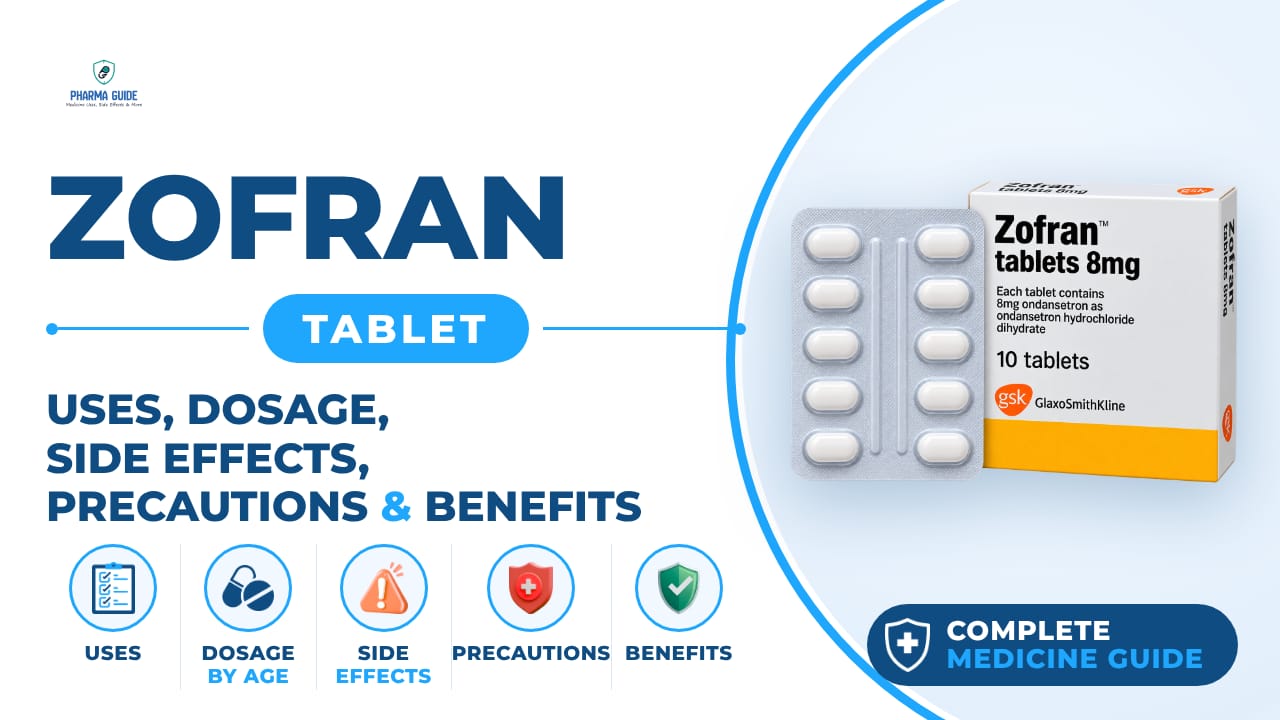
Zofran Tablet: Uses, Dosage, Side Effects, Precautions and Alternates
| Generic name | Ondansetron |
|---|---|
| Drug class | 5HT3 receptor antagonist (serotonin receptor-3 antagonist) |
| Forms | Tablet, Orally disintegrating tablet (Zofran ODT), Liquid (oral solution), Injection |
Quick overview
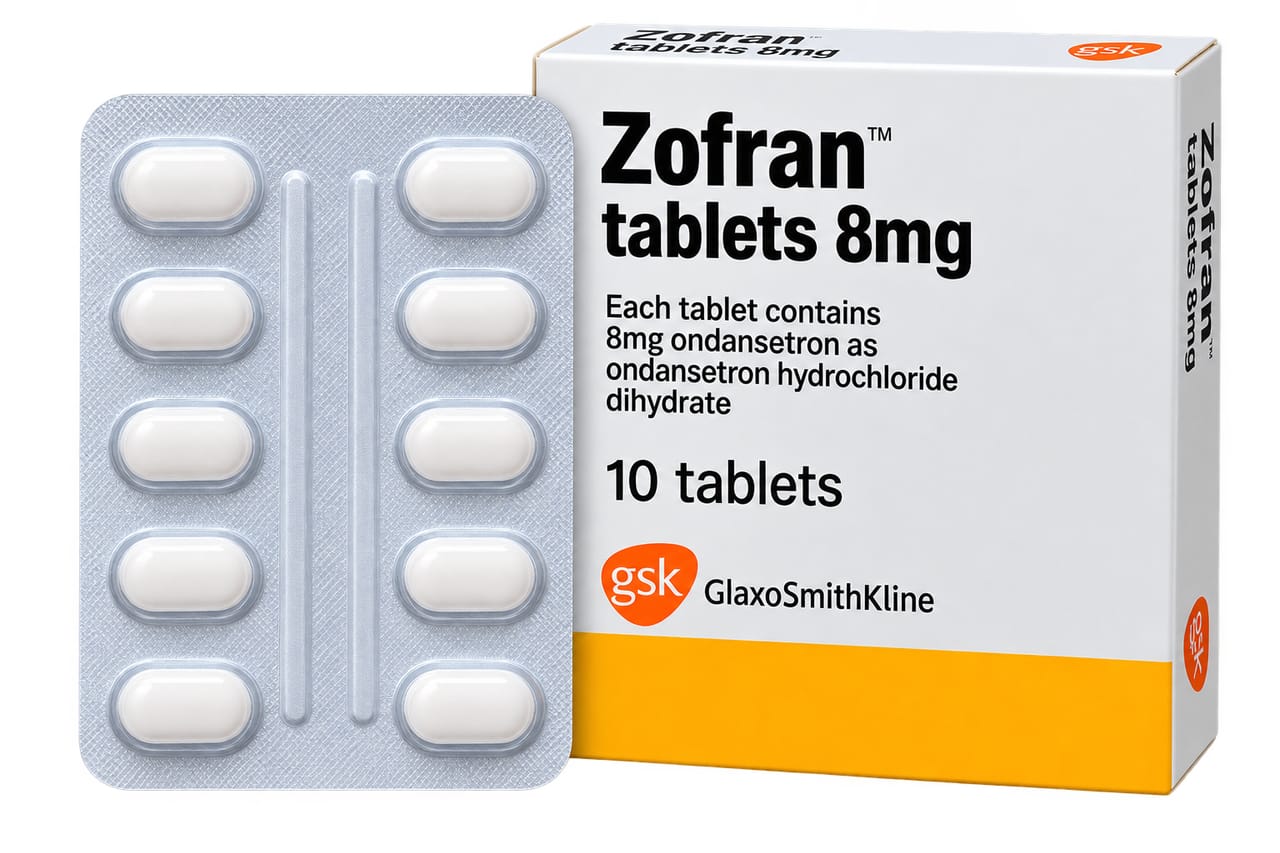
Zofran Tablet contains ondansetron, a medicine from the anti-emetic group known as 5HT3 receptor antagonists. It is used to prevent and manage nausea and vomiting caused by chemotherapy, radiotherapy, surgery, and certain medical conditions in both adults and children. It works by blocking serotonin, a body chemical that triggers nausea and vomiting signals to the brain. Zofran should always be used exactly as prescribed, with attention to certain precautions and possible side effects.
What is Zofran Tablet
Zofran is a medicine that contains ondansetron. It belongs to a group of medicines called anti-emetics, which help stop nausea and vomiting.
Zofran Tablet uses
- Prevents nausea and vomiting caused by cancer chemotherapy or radiotherapy in adults
- Prevents nausea and vomiting after surgery in adults
- Prevents nausea and vomiting caused by chemotherapy in children and adolescents aged 6 months to 17 years
- Used for managing nausea and vomiting associated with acute and chronic medical conditions
- Used to control symptoms of cyclic vomiting syndrome
- Used to alleviate symptoms of gastroenteritis, including persistent vomiting
- Used for the prevention of motion sickness and related nausea
Benefits of Zofran Tablet
- Prevents nausea and vomiting caused by chemotherapy
- Prevents nausea and vomiting associated with radiotherapy
- Helps prevent nausea and vomiting after surgery
- Helps improve comfort and the ability to eat and drink when treatment-related nausea is controlled
How Zofran Tablet works
Zofran blocks the action of a body chemical called serotonin that triggers nausea and vomiting, stopping the signals that tell the brain's vomiting center to act.
Zofran Tablet dosage
Zofran can be taken with or without food. The first dose is usually taken before the start of surgery, chemotherapy, or radiation treatment. Take the regular tablet with a full glass of water, and do not crush it; swallow it whole with a drink of water. For the orally disintegrating tablet, keep it in the blister pack until ready to use, open with dry hands, place it on the tongue, and let it dissolve without chewing, swallowing several times as it dissolves.
If you vomit within one hour of taking your first tablet of a course, take the same dose again and tell your doctor if vomiting continues. If you miss a dose and feel sick, take the missed dose as soon as possible, then continue your normal schedule; if it is almost time for the next dose, skip the missed one. Do not take a double dose to make up for a missed one. A minimum time interval must be allowed between doses. Zofran is not approved for use in children younger than 4 years old (or under 6 months old for chemotherapy-induced nausea, per some sources).
| Age group | Dose |
|---|---|
| Under 4 years | Tablet dosing generally not established for labeled chemotherapy indications; specialist dosing required |
| 4–11 years | 4 mg, with timing/repeat doses depending on indication |
| 12–17 years | 8 mg, with timing/repeat doses depending on indication |
| 18–64 years | Commonly 8 mg per dose; regimen depends on chemotherapy, radiotherapy, or surgery |
Available forms and strengths
- Tablet
- Orally disintegrating tablet (Zofran ODT)
- Liquid (oral solution)
- Injection
Side effects of Zofran Tablet
Common
- Diarrhea or constipation
- Headache
- Drowsiness
- Tired feeling
- A sensation of warmth or flushing
- Mild stomach cramps
- Dry mouth
- Hiccups
- Dizziness
- Fatigue
- Abdominal pain or discomfort
- Skin rashes or itching
Serious
- Blurred vision or temporary vision loss (lasting from only a few minutes to several hours)
- Slow heart rate
- Trouble breathing
- Anxiety, agitation, shivering
- Feeling like you might pass out
- Urinating less than usual or not at all
- Severe constipation, stomach pain, or bloating
- Headache with chest pain and severe dizziness, fainting, fast or pounding heartbeats
- Jaundice (yellowing of the skin or eyes)
- Signs of high serotonin levels: agitation, hallucinations, fever, fast heart rate, overactive reflexes, nausea, vomiting, diarrhea, loss of coordination, fainting
- Signs of allergic reaction: rash, hives, fever, chills, difficult breathing, swelling of face, lips, tongue, or throat
- Wheezy symptoms, chest pain or tightness of the chest
- Changes in heart rhythm, including beating faster, slower, irregularly, or throbbing
- Disturbance in heart rhythm, sometimes causing sudden loss of consciousness
- Severe skin reaction where the top layer of skin detaches from the lower layers
- Low blood pressure
- Fits or convulsions
- Swelling of the eyelids, face, lips, mouth, or throat causing difficulty swallowing or breathing
- Sudden chest pain or chest tightness (myocardial ischemia)
Warnings and precautions
- Zofran should not be used during the first three months of pregnancy because it may slightly increase the risk of a baby being born with a cleft lip or cleft palate. Talk to your doctor before taking Zofran if you are or might be pregnant.
- Zofran should not be used while breastfeeding because it is not known if it can harm a nursing baby.
- People with moderate or severe liver problems should not take more than a set total daily dose, and should use this medicine with caution under medical supervision.
- Alcohol may increase side effects like dizziness and drowsiness and should be avoided or limited during treatment.
- This medicine may affect your thinking, reactions, or cause dizziness and blurred vision, so be careful when driving or doing tasks that require alertness until you know how it affects you.
- Do not use Zofran if you are also using apomorphine, a medicine for Parkinson's disease
- Do not use Zofran if you are allergic to ondansetron or similar medicines
- Orally disintegrating tablets may contain phenylalanine, so tell your doctor if you have phenylketonuria (PKU)
- Taking Zofran with certain other medicines can lead to a serious and potentially fatal build-up of serotonin in the body, called serotonin syndrome
- Zofran can cause a serious heart problem, especially when combined with certain other medicines such as antibiotics, antidepressants, heart rhythm medicines, antipsychotics, and some cancer, malaria, or HIV medicines
- Tell your doctor before taking Zofran if you have liver disease, an electrolyte imbalance, congestive heart failure, slow heartbeats, or a personal or family history of long QT syndrome
- Do not use if you have a blockage in your digestive tract (stomach or intestines)
Storage
- Store at room temperature away from moisture, heat, and light
- Keep in a cool, dry place where it stays below 30°C and away from bright sunlight
- Keep in the original pack until it is time to take it
- Do not store in the bathroom or near a sink, or in the car or on window sills
- Keep out of reach and sight of children
- If no longer needed or out of date, take it to any pharmacy for safe disposal
- Do not throw away medicines via wastewater or household waste; ask your pharmacist how to dispose of unused medicine
When to see a doctor
- Stop taking Zofran and call your doctor right away if you have blurred vision or temporary vision loss, a slow heart rate, trouble breathing, anxiety, agitation, shivering, feeling like you might pass out, or urinating less than usual
- Get emergency medical help right away if you have signs of an allergic reaction such as rash, hives, fever, chills, difficulty breathing, or swelling of your face, lips, tongue, or throat
- Call your doctor immediately or go to the Emergency Department if you notice wheezing, chest pain or tightness, changes in heartbeat, sudden loss of consciousness, signs of serotonin syndrome, a severe skin reaction, low blood pressure, seizures, swelling of the eyelids, face, lips, mouth, or throat, or a skin rash, lumps, or hives
- If you think you have taken too much Zofran, seek urgent medical attention immediately, even if you feel fine
- Tell your doctor immediately if you experience sudden chest pain or chest tightness during or after treatment
Alternatives
- Prochlorperazine
- Metoclopramide
- Dolasetron
- Palonosetron
- Granisetron
Watch the video
FAQs
What is Zofran Tablet used for?
Zofran is used to prevent and manage nausea and vomiting caused by chemotherapy, radiotherapy, surgery, cyclic vomiting syndrome, gastroenteritis, and motion sickness in adults and children.
How does Zofran Tablet work?
Zofran blocks serotonin, a body chemical that triggers nausea and vomiting signals to the brain, stopping these signals from reaching the brain's vomiting center.
How should Zofran Tablet be taken?
Zofran can be taken with or without food, usually starting before surgery, chemotherapy, or radiation. Swallow regular tablets whole with water, while orally disintegrating tablets should be placed on the tongue to dissolve without chewing.
What are the common side effects of Zofran Tablet?
Common side effects include diarrhea or constipation, headache, drowsiness, tiredness, flushing, mild stomach cramps, dry mouth, hiccups, dizziness, and skin rashes or itching.
Is Zofran Tablet safe during pregnancy?
Zofran should not be used during the first three months of pregnancy as it may slightly increase the risk of cleft lip or cleft palate; talk to your doctor if you are or might be pregnant.
General information, not medical advice
Your prescriber and the leaflet in your pack know your situation. This page does not.
- Follow your prescriber and the leaflet
- Don't start, stop, or change a dose on your own
- Doses and warnings differ by country and product
Sources
Video
Related medicines

Injectafer Injection: Uses, Dosage, Side Effects, Precautions and Alternates
Iron products
Injectafer (ferric carboxymaltose) treats iron deficiency anemia and heart failure-related iron deficiency via IV. Learn uses, dosage, side effects, and

Gliclazide Tablet: Uses, Dosage, Side Effects, Precautions and Alternates
Sulfonylurea (hypoglycemic/antidiabetic agent)
Gliclazide Tablet is a sulfonylurea for type 2 diabetes that boosts insulin release. Learn about dosage, side effects, warnings, and precautions.