
Safety
General information, not medical advice
Your prescriber and the leaflet in your pack know your situation. This page does not.
- Follow your prescriber and the leaflet
- Don't start, stop, or change a dose on your own
- Doses and warnings differ by country and product
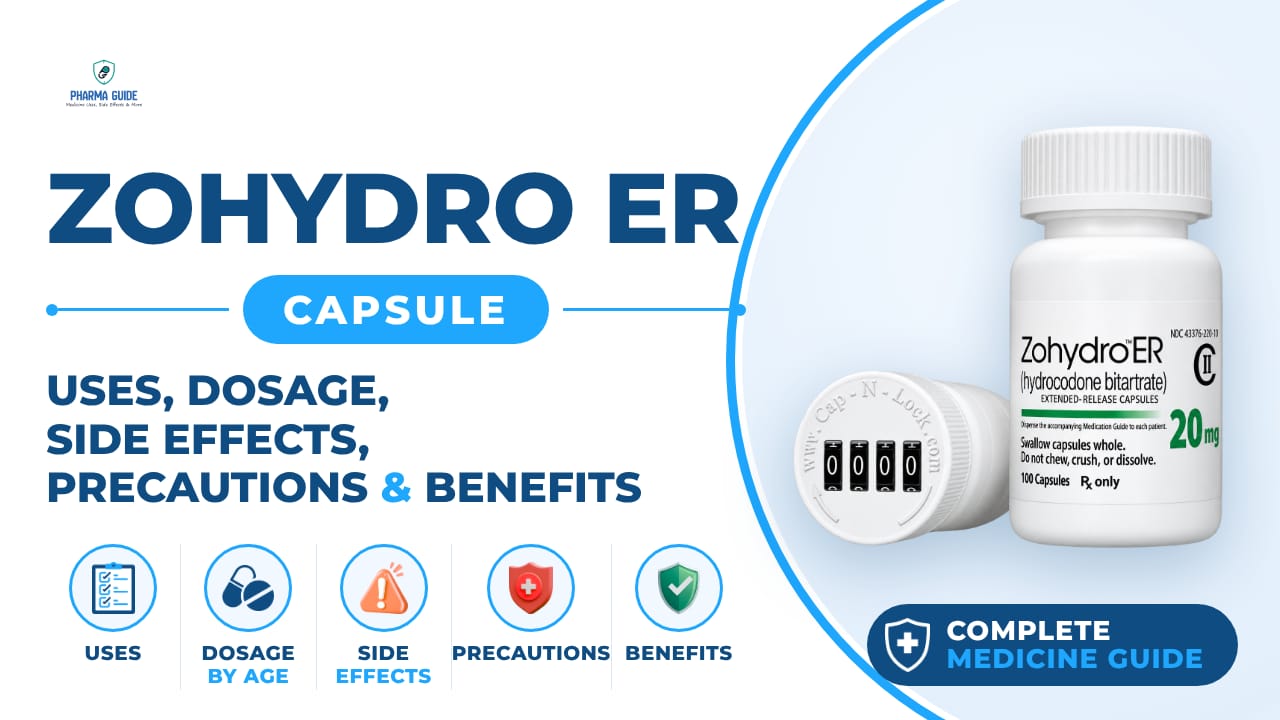
Zohydro ER Capsule: Uses, Dosage, Side Effects, Precautions and Alternates
| Generic name | hydrocodone bitartrate |
|---|---|
| Drug class | Opioid Analgesics |
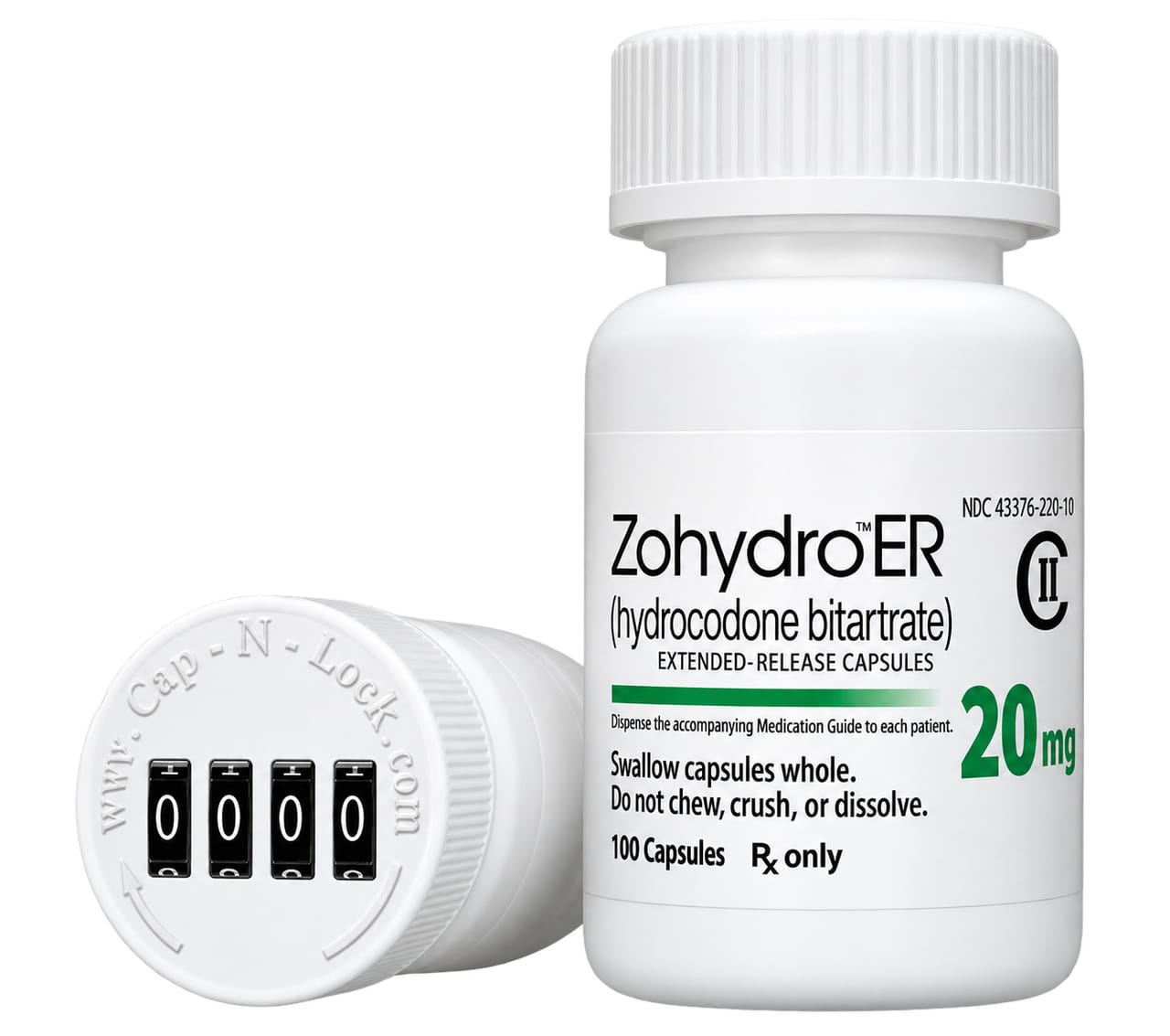
| Forms | Extended-release capsules (10 mg, 15 mg, 20 mg, 30 mg, 40 mg, and 50 mg strengths) |
Quick overview
Zohydro ER Capsule contains hydrocodone bitartrate, an opioid analgesic. It is a long-acting, extended-release capsule used to manage pain severe enough to require daily, around-the-clock, long-term opioid treatment when other pain treatments do not work well enough or cannot be tolerated. It is not meant for pain that is not around-the-clock. It carries serious risks, including breathing problems and the potential for addiction, abuse, and misuse.
What is Zohydro ER Capsule
Zohydro ER is a strong prescription pain medicine that contains an opioid (narcotic). It is a long-acting, extended-release capsule used for pain that needs around-the-clock treatment with an opioid.
Zohydro ER Capsule uses
- Management of pain severe enough to require daily, around-the-clock, long-term opioid treatment when other pain treatments (non-opioid medicines or immediate-release opioids) do not work well enough or cannot be tolerated
- Not for use to treat pain that is not around-the-clock (not meant to be taken as needed)
Benefits of Zohydro ER Capsule
- Provides long-lasting relief of severe, persistent pain that requires an opioid analgesic
- Helps reduce continuous pain intensity when other treatment options are inadequate or not tolerated
- Provides around-the-clock pain control through its extended-release formulation
- May improve comfort and daily functioning when severe chronic pain is appropriately controlled
- Is intended for patients who need daily, long-term opioid treatment, rather than occasional as-needed pain relief
How Zohydro ER Capsule works
Hydrocodone attaches to specific pain receptors in the brain and spinal cord to reduce the feeling of pain. There is no upper limit to its pain-relieving effect, but higher doses also increase the risk of side effects like slowed breathing and drowsiness.
Zohydro ER Capsule dosage
Take exactly as prescribed by your healthcare provider; do not change your dose on your own. Take your dose every 12 hours, at the same time each day; do not take more than your prescribed amount within 12 hours. If you miss a dose, take your next dose at your usual scheduled time.
Swallow the capsule whole; do not cut, break, chew, crush, dissolve, snort, or inject it, as this can cause a fatal overdose. Do not stop taking this medicine without first talking to your healthcare provider; stopping suddenly can cause withdrawal symptoms. Call your healthcare provider if your prescribed dose is not controlling your pain instead of taking extra.
| Age group | Dose |
|---|---|
| Under 18 years | Safety and effectiveness not established |
| 18–64 years – Opioid-naïve | Usually 10 mg every 12 hours when extended-release opioid therapy is appropriate |
| Opioid-tolerant adults | Dose must be individualized according to the previous opioid regimen |
| 65+ years | Start at the lowest appropriate dose and titrate cautiously |
| Kidney/liver impairment | A lower starting dose and close monitoring may be required |
Available forms and strengths
Extended-release capsules (10 mg, 15 mg, 20 mg, 30 mg, 40 mg, and 50 mg strengths).
Side effects of Zohydro ER Capsule
Common
- Constipation
- Nausea
- Sleepiness
- Vomiting
- Tiredness
- Headache
- Dizziness
- Abdominal pain
- Dry mouth
- Itching
- Swelling of legs and feet
- Upper respiratory tract infection
- Muscle spasms
- Urinary tract infection
- Back pain
- Tremor
- GERD (heartburn/reflux)
- Non-cardiac chest pain
- Fever
- Increased blood cholesterol
- Dehydration
- Joint pain
- Muscle pain
- Neck pain
- Pain in arms or legs
- Migraine
- Numbness and tingling
- Anxiety
- Depression
- Insomnia
- Cough
- Shortness of breath
- Increased sweating
- Night sweats
- Rash
- Hot flashes
Serious
- Trouble breathing or shortness of breath
- Fast heartbeat or chest pain
- Swelling of face, tongue, or throat
- Extreme drowsiness
- Light-headedness when changing positions or feeling faint
- Agitation, high body temperature, trouble walking, stiff muscles, or mental changes such as confusion (possible signs of serotonin syndrome)
- Signs of adrenal insufficiency such as nausea, vomiting, loss of appetite, fatigue, weakness, dizziness, and low blood pressure
Warnings and precautions
- This medicine can cause serious or life-threatening breathing problems that can lead to death, especially when starting treatment, after a dose change, or if too much is taken.
- Even when taken exactly as prescribed, this medicine carries a risk of opioid addiction, abuse, and misuse that can lead to death.
- Never give this medicine to anyone else, as it could cause their death. Keep it stored safely away from children and in a place where it cannot be stolen or misused. Selling or giving this medicine to others is against the law.
- Do not take this medicine if you have severe asthma, trouble breathing, other lung problems, or a bowel blockage or narrowing of the stomach or intestines.
- Combining this medicine with other opioids, benzodiazepines, alcohol, or other central nervous system depressants (including street drugs) can cause severe drowsiness, reduced awareness, breathing problems, coma, and death.
- Accidentally swallowing even one dose, especially by a child, can result in a fatal overdose.
- Do not suddenly stop taking this medicine without talking to your healthcare provider, since it needs to be tapered off gradually to avoid withdrawal symptoms.
- Tell your healthcare provider if you are pregnant or planning to become pregnant. Using this medicine for a long time during pregnancy can cause withdrawal symptoms in the newborn baby that could be life-threatening if not recognized and treated.
- Breastfeeding is not recommended while taking this medicine because it passes into breast milk and may harm the baby.
- Tell your healthcare provider if you have kidney problems. People with kidney impairment can have higher levels of the drug in their blood, so a lower starting dose and close monitoring are needed.
- Tell your healthcare provider if you have liver problems. Severe liver impairment can raise drug levels in the blood, so a lower dose and careful monitoring are needed; no dose change is needed for mild or moderate liver problems.
- Do not drink alcohol or use products (prescription or over-the-counter) that contain alcohol while taking this medicine. Combining alcohol with this drug can lead to overdose and death.
- Do not drive or operate heavy machinery until you know how this medicine affects you, because it can make you sleepy, dizzy, or lightheaded.
Storage
- Store away from children and in a safe place to prevent theft or misuse
- Store at controlled room temperature (about 25°C/77°F, with allowed range of 15°-30°C/59°-86°F)
- Keep in a tightly closed container with a child-resistant cap
- After you stop taking it, flush any unused capsules down the toilet
- Dispose of unused capsules from a prescription as soon as they are no longer needed, following local state guidelines and regulations
When to see a doctor
- Get emergency medical help if you have trouble breathing, shortness of breath, a fast heartbeat, chest pain, swelling of the face, tongue, or throat, extreme drowsiness, light-headedness when changing positions, or feel faint.
- Get emergency help right away if you think you have taken too much of this medicine (overdose).
- Seek medical attention if you develop agitation, high body temperature, trouble walking, stiff muscles, or mental changes such as confusion, which could be signs of a serious drug interaction.
- Seek medical attention if you notice symptoms of adrenal insufficiency such as nausea, vomiting, loss of appetite, fatigue, weakness, dizziness, and low blood pressure.
Alternatives
- Hysingla ER
- Xtampza ER
- OxyContin
- Morphine Extended-Release
Watch the video
FAQs
What is Zohydro ER Capsule used for?
It is used to manage pain severe enough to require daily, around-the-clock, long-term opioid treatment when other pain treatments do not work well enough or cannot be tolerated. It is not meant for pain that is not around-the-clock.
How often should Zohydro ER Capsule be taken?
It should be taken exactly as prescribed, every 12 hours at the same time each day, without taking more than the prescribed amount within that time.
Can Zohydro ER capsules be crushed or chewed?
No, the capsule must be swallowed whole. Cutting, breaking, chewing, crushing, dissolving, snorting, or injecting it can cause a fatal overdose.
What are the serious risks of Zohydro ER Capsule?
It can cause life-threatening breathing problems, and even when taken as prescribed, it carries a risk of opioid addiction, abuse, and misuse that can lead to death.
What are the common side effects of Zohydro ER Capsule?
Common side effects include constipation, nausea, sleepiness, vomiting, tiredness, headache, dizziness, and dry mouth, among others.
General information, not medical advice
Your prescriber and the leaflet in your pack know your situation. This page does not.
- Follow your prescriber and the leaflet
- Don't start, stop, or change a dose on your own
- Doses and warnings differ by country and product
Sources
Video
Related medicines

Injectafer Injection: Uses, Dosage, Side Effects, Precautions and Alternates
Iron products
Injectafer (ferric carboxymaltose) treats iron deficiency anemia and heart failure-related iron deficiency via IV. Learn uses, dosage, side effects, and

Gliclazide Tablet: Uses, Dosage, Side Effects, Precautions and Alternates
Sulfonylurea (hypoglycemic/antidiabetic agent)
Gliclazide Tablet is a sulfonylurea for type 2 diabetes that boosts insulin release. Learn about dosage, side effects, warnings, and precautions.