
Safety
General information, not medical advice
Your prescriber and the leaflet in your pack know your situation. This page does not.
- Follow your prescriber and the leaflet
- Don't start, stop, or change a dose on your own
- Doses and warnings differ by country and product
Zonisamide Capsule: Uses, Dosage, Side Effects, Precautions and Alternates
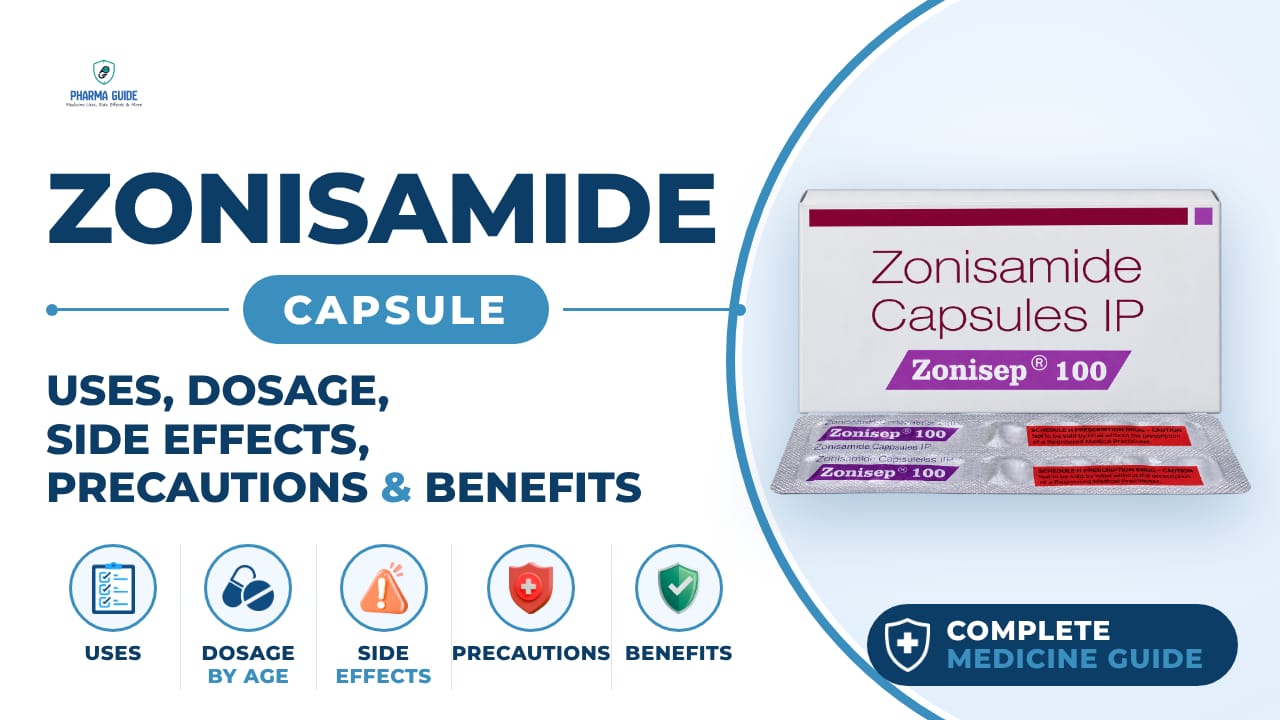
| Generic name | Zonisamide |
|---|---|
| Drug class | Antiepileptic (anticonvulsant); carbonic anhydrase inhibitor |
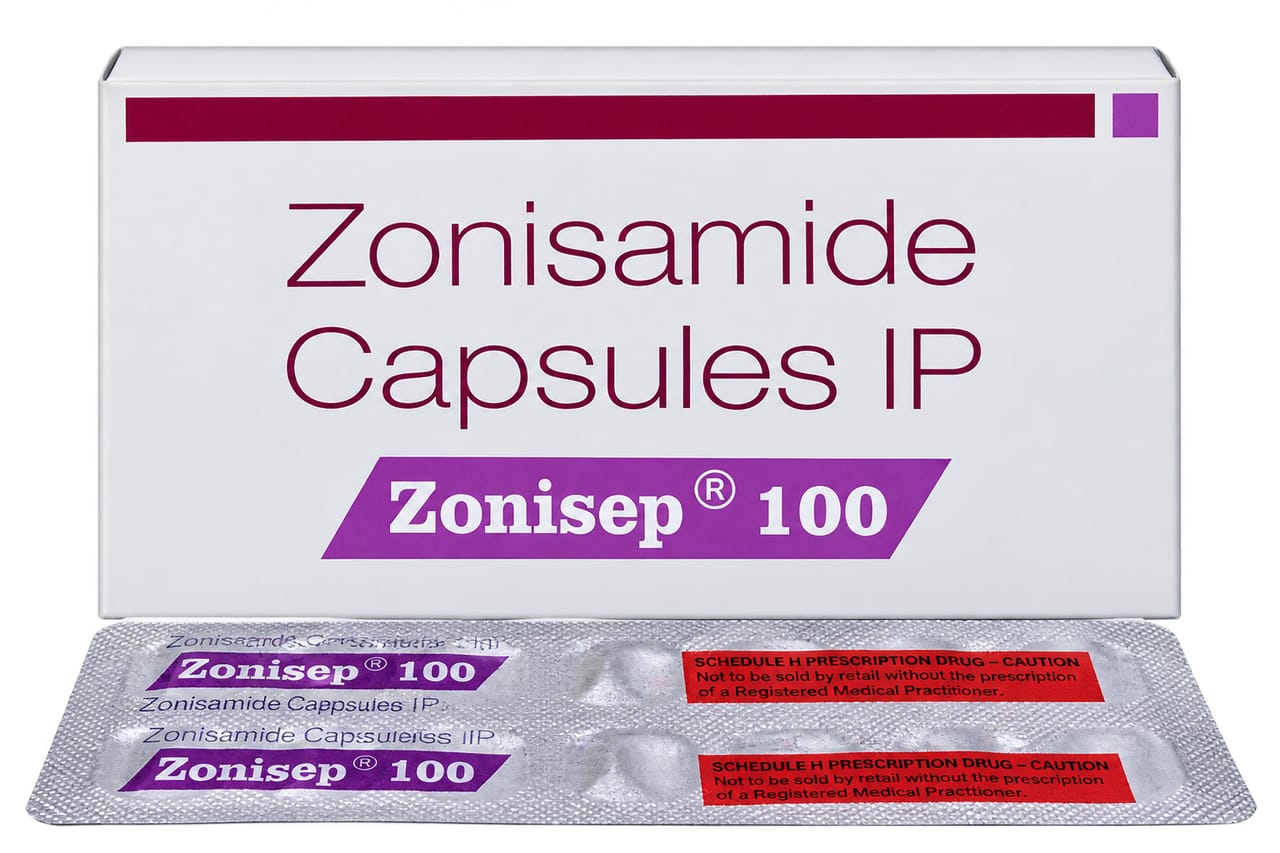
| Forms | Capsule (25 mg, 50 mg, 100 mg) |
Quick overview
Zonisamide Capsule contains zonisamide, an antiepileptic (anticonvulsant) medicine that also acts as a carbonic anhydrase inhibitor. It is a prescription anti-seizure medicine chemically classified as a sulfonamide, used together with other seizure medicines to treat certain seizures in people with epilepsy. It helps control partial-onset seizures and supports long-term epilepsy management.
What is Zonisamide Capsule
Zonisamide is a prescription anti-seizure medicine chemically classified as a sulfonamide. It is used together with other seizure medicines to treat certain seizures in people with epilepsy.
Zonisamide Capsule uses
- Treats partial-onset seizures in epilepsy.
- Used alone or with other anti-seizure medicines, depending on approval and patient age.
- Helps manage recurrent seizures.
- Used to control seizures that begin in one area of the brain.
- Supports long-term epilepsy treatment.
Benefits of Zonisamide Capsule
- Helps control partial-onset seizures.
- May reduce seizure frequency.
- May help prevent seizures from disrupting daily activities.
- Supports long-term epilepsy management.
- May improve daily functioning when seizures are controlled.
How Zonisamide Capsule works
Zonisamide is thought to calm overactive electrical signals in the brain. It may work by blocking sodium and calcium channels in nerve cells, which helps stabilize brain cell membranes and reduce abnormal, overactive nerve firing that leads to seizures.
Zonisamide Capsule dosage
Take zonisamide exactly as prescribed by your healthcare provider. It can be taken with or without food. Swallow the capsule whole; do not crush or open it. It may be taken once or twice a day depending on your prescriber's instructions.
Do not stop taking this medicine suddenly without talking to your healthcare provider, as this can cause seizures to return or worsen. If you miss a dose, take it as soon as you remember; if it is almost time for your next dose, skip the missed dose and continue your regular schedule — do not take double doses. Zonisamide is not approved for use in children under 16 years of age.
| Age group | Dose |
|---|---|
| Under 18 years | Not recommended |
| 18–64 years | 100 mg, once/day |
| 65+ years | 100 mg, once/day |
Available forms and strengths
Capsule (25 mg, 50 mg, 100 mg)
Side effects of Zonisamide Capsule
Common
- Drowsiness/sleepiness
- Dizziness
- Loss of appetite
- Headache
- Nausea
- Agitation or irritability
- Fatigue/tiredness
- Stomach/abdominal pain
- Confusion
- Depression
- Trouble sleeping (insomnia)
- Problems with concentration or memory
- Clumsiness/trouble with coordination or walking
- Double vision
Serious
- Serious skin reactions (Stevens-Johnson syndrome, toxic epidermal necrolysis) with rash, blisters, or peeling skin
- Serious allergic reactions including DRESS syndrome (fever, rash, swollen glands, facial swelling, organ involvement)
- Decreased sweating and increased body temperature, risk of heat stroke, especially in children
- Serious eye problems including sudden vision changes, eye pain or redness, and secondary angle closure glaucoma which can cause permanent vision loss
- Suicidal thoughts or actions
- Metabolic acidosis (too much acid in the blood) which can cause fast breathing, fatigue, loss of appetite, or irregular heartbeat
- Blood cell problems such as reduced red or white blood cell counts, agranulocytosis, or aplastic anemia
- Kidney stones (back pain, stomach pain, blood in urine)
- Kidney function problems
- High blood ammonia levels and encephalopathy (confusion, vomiting, unusual tiredness)
- Hallucinations or psychotic-like behavior
Warnings and precautions
- Zonisamide is a sulfonamide and can cause rare but potentially fatal reactions, including severe skin reactions and blood disorders, similar to those seen with sulfa drugs. Stopping zonisamide suddenly can cause seizures to come back or lead to a dangerous condition called status epilepticus (seizures that won't stop). Dose changes should always be done gradually under medical supervision.
- Like other antiseizure drugs, zonisamide can increase the risk of suicidal thoughts or behavior. Patients and caregivers should watch for new or worsening depression or unusual mood or behavior changes. Zonisamide can cause metabolic acidosis, which may lead to kidney stones, weak bones, or slowed growth in children if untreated. It can also reduce sweating and raise body temperature, which can lead to heat stroke, especially in children.
- Zonisamide can cause acute myopia and secondary angle closure glaucoma, which can cause permanent vision loss if not treated promptly. It can cause drug reaction with eosinophilia and systemic symptoms (DRESS), a serious hypersensitivity reaction that can be fatal and affect multiple organs. It can also cause hyperammonemia and encephalopathy, which may be more likely if combined with certain other medicines.
- Zonisamide may cause serious harm to an unborn baby and caused birth defects in animal studies. It should only be used during pregnancy if the benefits outweigh the risks, and women who can become pregnant should use effective birth control. Zonisamide passes into breast milk, and it is not known if this can harm a nursing baby. Talk to your healthcare provider about the best way to feed your baby if you are taking this medicine.
- Zonisamide is removed from the body by the kidneys, so people with kidney problems should be treated cautiously. It should not be used in patients with significant kidney failure. Zonisamide is processed by the liver, so caution is needed in patients with liver problems, and they may need slower dose increases and closer monitoring.
- It is best to avoid alcohol while taking zonisamide, because it can worsen drowsiness and dizziness caused by the medicine. Do not drive, operate machinery, or do other activities that require alertness until you know how zonisamide affects you, since it can cause drowsiness and slow your thinking and coordination.
Storage
- Store at 25°C (77°F), with excursions permitted to 15°C to 30°C (59°F to 86°F)
- Store in a dry place and protect from light
- Keep capsules and all medicines out of the reach of children
When to see a doctor
- Get medical help right away if you develop a skin rash, as this could be a sign of a serious skin reaction.
- Seek immediate medical attention for blurred vision, visual disturbances, or pain around the eyes, which could indicate a serious eye problem.
- Contact your doctor immediately if you have sudden back pain, abdominal pain, or blood in the urine, which could be signs of a kidney stone.
- If a child taking zonisamide is not sweating normally, with or without fever, contact the physician immediately.
- Contact a doctor immediately if you develop fever, sore throat, mouth sores, or unusual bruising, which could indicate a blood problem.
- Report any new or worsening suicidal thoughts, behavior, depression, or unusual mood/behavior changes to a healthcare provider right away.
- Contact your physician if you experience unexplained lethargy, vomiting, or changes in mental status, which could signal high ammonia levels affecting the brain.
- Seek medical attention immediately for fast breathing, fatigue, loss of appetite, or irregular heartbeat, which may indicate metabolic acidosis.
- If you think you have taken too much zonisamide, seek emergency medical care right away.
Alternatives
- Oxcarbazepine
- Lacosamide
- Levetiracetam
Watch the video
FAQs
What is Zonisamide Capsule used for?
Zonisamide is a prescription anti-seizure medicine used together with other seizure medicines to treat partial-onset seizures in people with epilepsy, helping manage recurrent seizures and support long-term epilepsy treatment.
How does Zonisamide Capsule work?
Zonisamide is thought to calm overactive electrical signals in the brain by blocking sodium and calcium channels in nerve cells, stabilizing brain cell membranes and reducing abnormal nerve firing that leads to seizures.
What is the dosage of Zonisamide Capsule?
Zonisamide should be taken exactly as prescribed, with or without food, swallowing the capsule whole. Adults 18 years and older typically take 100 mg once a day. It is not approved for use in children under 16 years of age.
What are the serious side effects of Zonisamide Capsule?
Serious side effects include severe skin reactions like Stevens-Johnson syndrome, DRESS syndrome, decreased sweating with risk of heat stroke, serious eye problems, suicidal thoughts, metabolic acidosis, blood cell problems, kidney stones, and high ammonia levels with encephalopathy.
Can I stop taking Zonisamide Capsule suddenly?
No, you should not stop taking zonisamide suddenly without talking to your healthcare provider, as this can cause seizures to return or worsen, including a dangerous condition called status epilepticus.
General information, not medical advice
Your prescriber and the leaflet in your pack know your situation. This page does not.
- Follow your prescriber and the leaflet
- Don't start, stop, or change a dose on your own
- Doses and warnings differ by country and product
Sources
Video
Related medicines

Injectafer Injection: Uses, Dosage, Side Effects, Precautions and Alternates
Iron products
Injectafer (ferric carboxymaltose) treats iron deficiency anemia and heart failure-related iron deficiency via IV. Learn uses, dosage, side effects, and

Gliclazide Tablet: Uses, Dosage, Side Effects, Precautions and Alternates
Sulfonylurea (hypoglycemic/antidiabetic agent)
Gliclazide Tablet is a sulfonylurea for type 2 diabetes that boosts insulin release. Learn about dosage, side effects, warnings, and precautions.