
Safety
General information, not medical advice
Your prescriber and the leaflet in your pack know your situation. This page does not.
- Follow your prescriber and the leaflet
- Don't start, stop, or change a dose on your own
- Doses and warnings differ by country and product
Zosyn Injection: Uses, Dosage, Side Effects, Precautions and Alternates
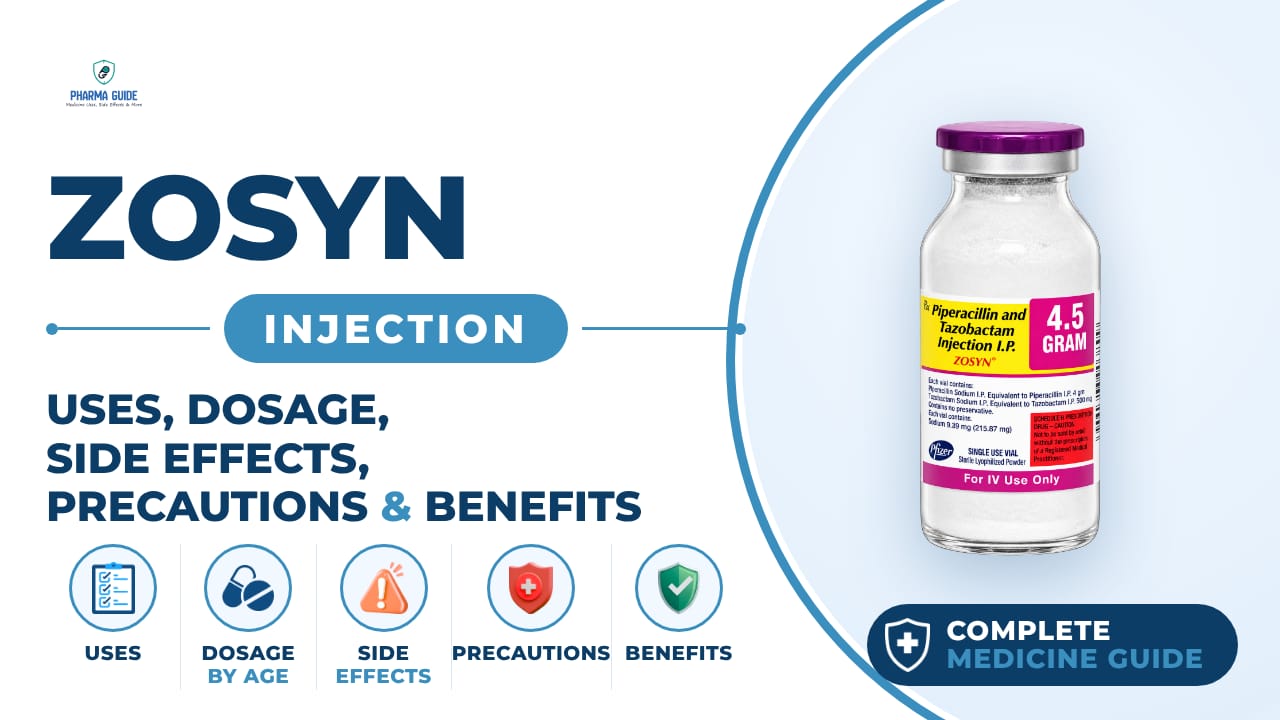
| Generic name | piperacillin and tazobactam |
|---|---|
| Drug class | Penicillin-class antibacterial combined with a beta-lactamase inhibitor |
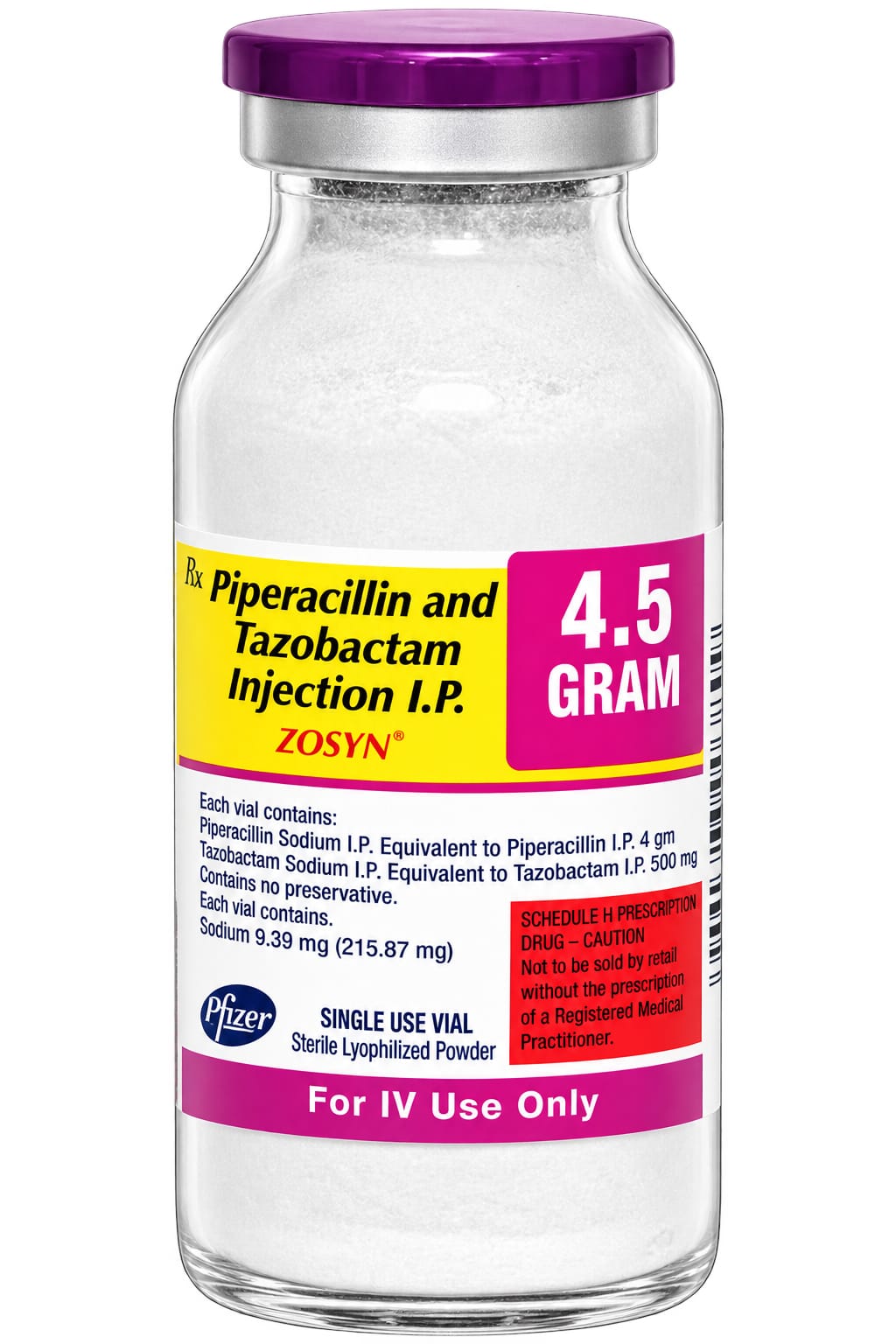
| Forms | Frozen injection solution in single-dose plastic (GALAXY) containers, Lyophilized powder for reconstitution in single-dose vials, Lyophilized powder for reconstitution in pharmacy bulk vials |
Quick overview
Zosyn Injection contains piperacillin and tazobactam, a penicillin-class antibacterial combined with a beta-lactamase inhibitor. It is given as an infusion into a vein to treat serious bacterial infections such as stomach infections, hospital-acquired pneumonia, skin infections, and certain pelvic and respiratory infections. Tazobactam helps piperacillin remain effective against bacteria that would otherwise resist it.
What is Zosyn Injection
Zosyn contains a combination of piperacillin and tazobactam. Piperacillin is a penicillin-type antibiotic and tazobactam is a beta-lactamase inhibitor that helps piperacillin work against bacteria that would otherwise resist it. It is given as an infusion into a vein.
Zosyn Injection uses
- Stomach (intra-abdominal) infections such as appendicitis with rupture or abscess, and peritonitis
- Hospital-acquired (nosocomial) pneumonia
- Skin and skin structure infections, including cellulitis, skin abscesses, and diabetic or poor-circulation foot infections
- Female pelvic infections, including postpartum womb infections or pelvic inflammatory disease
- Community-acquired pneumonia of moderate severity
Benefits of Zosyn Injection
- Treats serious bacterial infections
- Covers many Gram-positive and Gram-negative bacteria
- Provides activity against Pseudomonas aeruginosa
- Treats certain intra-abdominal infections
- Used for hospital-acquired pneumonia
- Treats selected skin, pelvic, and respiratory infections
How Zosyn Injection works
Piperacillin kills bacteria by stopping them from building their cell walls. Tazobactam blocks an enzyme that bacteria use to destroy piperacillin, which helps piperacillin keep working against bacteria that would otherwise be resistant.
Zosyn Injection dosage
Zosyn is given as an infusion into a vein, usually over at least 30 minutes. A healthcare provider will give the first dose and may teach you how to give it to yourself if needed. Take or use this medicine for the complete length of time your doctor prescribes, even if you start feeling better early, because stopping too soon can let the infection come back or become resistant to treatment. This medicine does not treat viral infections like the common cold or flu.
If you miss a dose, use it as soon as you can, but skip it if it is almost time for your next dose; do not use two doses at once. Prepare an injection only when you are ready to give it; do not use the medicine if it has changed color or has particles in it.
| Age group | Dose |
|---|---|
| 2–9 months | 90 mg/kg IV every 6–8 hours, depending on the infection |
| Over 9 months to 17 years, ≤40 kg | 112.5 mg/kg IV every 6–8 hours, depending on the infection |
| Adults 18+ | Usually 3.375 g IV every 6 hours; 4.5 g every 6 hours for hospital-acquired pneumonia |
Available forms and strengths
- Frozen injection solution in single-dose plastic (GALAXY) containers
- Lyophilized powder for reconstitution in single-dose vials
- Lyophilized powder for reconstitution in pharmacy bulk vials
Side effects of Zosyn Injection
Common
- Diarrhea
- Constipation
- Nausea
- Vomiting
- Indigestion
- Headache
- Insomnia
- Rash
- Itching
- Fever
Serious
- Severe allergic reactions (anaphylaxis), including shock
- Severe skin reactions such as Stevens-Johnson syndrome, toxic epidermal necrolysis, DRESS, and acute generalized exanthematous pustulosis
- Hemophagocytic lymphohistiocytosis (excess immune activation) with fever, rash, swollen glands, or enlarged liver/spleen
- Rhabdomyolysis (muscle breakdown) with muscle pain, tenderness, weakness, or dark urine
- Bleeding problems, low white blood cell counts, or low platelet counts
- Seizures or neuromuscular excitability, especially with high doses or kidney problems
- Kidney problems, including kidney failure
- Clostridioides difficile-associated diarrhea, which can be watery or bloody and may occur even months after stopping the drug
- Low potassium levels
Warnings and precautions
- Serious and sometimes fatal allergic reactions, including shock, have happened with this medicine, especially in people with a history of allergy to penicillins, cephalosporins, or other allergens. Stop the medicine and get medical help if a reaction happens.
- This medicine can cause severe skin reactions including Stevens-Johnson syndrome and toxic epidermal necrolysis. If a rash appears, it should be watched closely and the medicine stopped if it gets worse.
- A serious immune condition called hemophagocytic lymphohistiocytosis (HLH) has occurred with this medicine; symptoms include fever, rash, swollen glands, and enlarged liver or spleen. The medicine should be stopped right away if this is suspected.
- Muscle breakdown (rhabdomyolysis) has been reported. Signs include muscle pain, tenderness or weakness, and dark urine.
- This medicine can cause bleeding problems and low blood cell counts, especially with long-term use or in people with kidney failure. Blood tests should be done regularly during prolonged treatment.
- Like other penicillins, this medicine can cause overexcited nerves or seizures, especially at higher doses or in people with kidney problems.
- In critically ill patients, this medicine has been linked to a higher risk of kidney failure and slower kidney recovery compared to other similar antibiotics. Other treatments should be considered for critically ill patients when possible, and kidney function should be monitored if this medicine is used.
- Diarrhea caused by C. difficile bacteria can occur with this medicine, ranging from mild to life-threatening, and can happen even two or more months after stopping treatment.
- This medicine should not be combined with probenecid unless the benefits outweigh the risks, because probenecid increases levels of the medicine in the body.
- Taking this medicine together with vancomycin may increase the risk of kidney injury, so kidney function should be monitored.
- This medicine can increase the effects of blood thinners like heparin or warfarin, so blood clotting tests should be checked more often.
- This medicine may prolong the muscle-relaxing effects of vecuronium and similar drugs used during surgery.
- Piperacillin and tazobactam can cross the placenta. There isn't enough human data to know the exact risk to a pregnancy, so this medicine should only be used in pregnancy if clearly needed.
- Piperacillin passes into breast milk; it isn't known whether tazobactam does. Talk with your doctor about the benefits of breastfeeding against your need for this medicine.
- People with reduced kidney function or on dialysis need a lower dose, based on how severe their kidney problem is.
- No dose change is needed for people with liver cirrhosis.
Storage
- Store the frozen injection container in a freezer at or below -20°C (-4°F)
- Thaw the frozen container at room temperature (20°C to 25°C / 68°F to 77°F) or under refrigeration (2°C to 8°C / 36°F to 46°F)
- Do not force thaw by immersion in water baths or by microwave irradiation
- Once thawed, the solution is stable for 21 days under refrigeration or 24 hours at room temperature
- Do not refreeze thawed solution
- Handle frozen containers carefully, as they may be fragile when frozen
- Check for minute leaks by squeezing the container firmly; discard if leaks are found or if the solution is cloudy or has visible particles
- Single-dose vials should be used immediately after mixing; discard unused portion after 24 hours at room temperature or 48 hours if refrigerated
- Mixed medicine in an IV bag can be stored in a refrigerator for up to 7 days, or used within 24 hours at room temperature
- Mixed medicine in an infusion pump must be used within 12 hours at room temperature
- Discard any unused portion of the injection
When to see a doctor
- Get emergency help right away for signs of a severe allergic reaction: hives, difficulty breathing, or swelling of the face or throat.
- Seek medical care immediately for a severe skin reaction: fever, sore throat, burning eyes, skin pain, or a red or purple rash with blistering and peeling.
- Get medical help if you notice signs of a serious whole-body drug reaction, such as rash, fever, swollen glands, muscle aches, severe weakness, unusual bruising, or yellowing of the skin or eyes.
- Contact your doctor if you have severe stomach pain or watery or bloody diarrhea, even if this happens months after your last dose.
- Tell your doctor about confusion, muscle twitching or stiffness, trouble walking, or a seizure.
- Seek medical attention for signs of muscle breakdown: unexplained muscle pain, tenderness, or weakness, especially with fever, unusual tiredness, or dark urine.
- Tell your doctor if you have signs of low white blood cell counts, such as fever, mouth sores, skin sores, sore throat, cough, or trouble breathing.
- Tell your doctor if you have signs of low potassium, such as leg cramps, constipation, irregular heartbeat, fluttering in the chest, increased thirst or urination, numbness or tingling, or muscle weakness.
- If you think you have used too much of this medicine, get emergency medical help or contact a poison control center right away.
Alternatives
- Cefepime
- Ceftriaxone
- Meropenem
Watch the video
FAQs
What is Zosyn Injection used for?
Zosyn is used to treat serious bacterial infections such as stomach infections, hospital-acquired pneumonia, skin and skin structure infections, female pelvic infections, and community-acquired pneumonia of moderate severity.
How does Zosyn Injection work?
Piperacillin kills bacteria by stopping them from building their cell walls, while tazobactam blocks an enzyme bacteria use to destroy piperacillin, helping it stay effective against resistant bacteria.
What are the common side effects of Zosyn Injection?
Common side effects include diarrhea, constipation, nausea, vomiting, indigestion, headache, insomnia, rash, itching, and fever.
How is Zosyn Injection given?
Zosyn is given as an infusion into a vein, usually over at least 30 minutes, with dosing based on age and weight, and the full prescribed course should be completed even if symptoms improve early.
Can Zosyn Injection cause kidney problems?
Yes, Zosyn can cause kidney problems including kidney failure, and in critically ill patients it has been linked to a higher risk of kidney failure and slower kidney recovery, so kidney function should be monitored.
General information, not medical advice
Your prescriber and the leaflet in your pack know your situation. This page does not.
- Follow your prescriber and the leaflet
- Don't start, stop, or change a dose on your own
- Doses and warnings differ by country and product
Sources
- FDA prescribing information for ZOSYN (piperacillin sodium and tazobactam sodium injection, solution), Baxter Healthcare Corporation, revised 5/2026
- FDA prescribing information for ZOSYN, Pfizer/Wyeth, revised 7/2021
- FDA prescribing information for ZOSYN Pharmacy Bulk Package, Wyeth Piperacillin Division of Wyeth Holdings Corporation, a subsidiary of Pfizer, revised 9/2012
Video
Related medicines

Injectafer Injection: Uses, Dosage, Side Effects, Precautions and Alternates
Iron products
Injectafer (ferric carboxymaltose) treats iron deficiency anemia and heart failure-related iron deficiency via IV. Learn uses, dosage, side effects, and

Gliclazide Tablet: Uses, Dosage, Side Effects, Precautions and Alternates
Sulfonylurea (hypoglycemic/antidiabetic agent)
Gliclazide Tablet is a sulfonylurea for type 2 diabetes that boosts insulin release. Learn about dosage, side effects, warnings, and precautions.