
Safety
General information, not medical advice
Your prescriber and the leaflet in your pack know your situation. This page does not.
- Follow your prescriber and the leaflet
- Don't start, stop, or change a dose on your own
- Doses and warnings differ by country and product
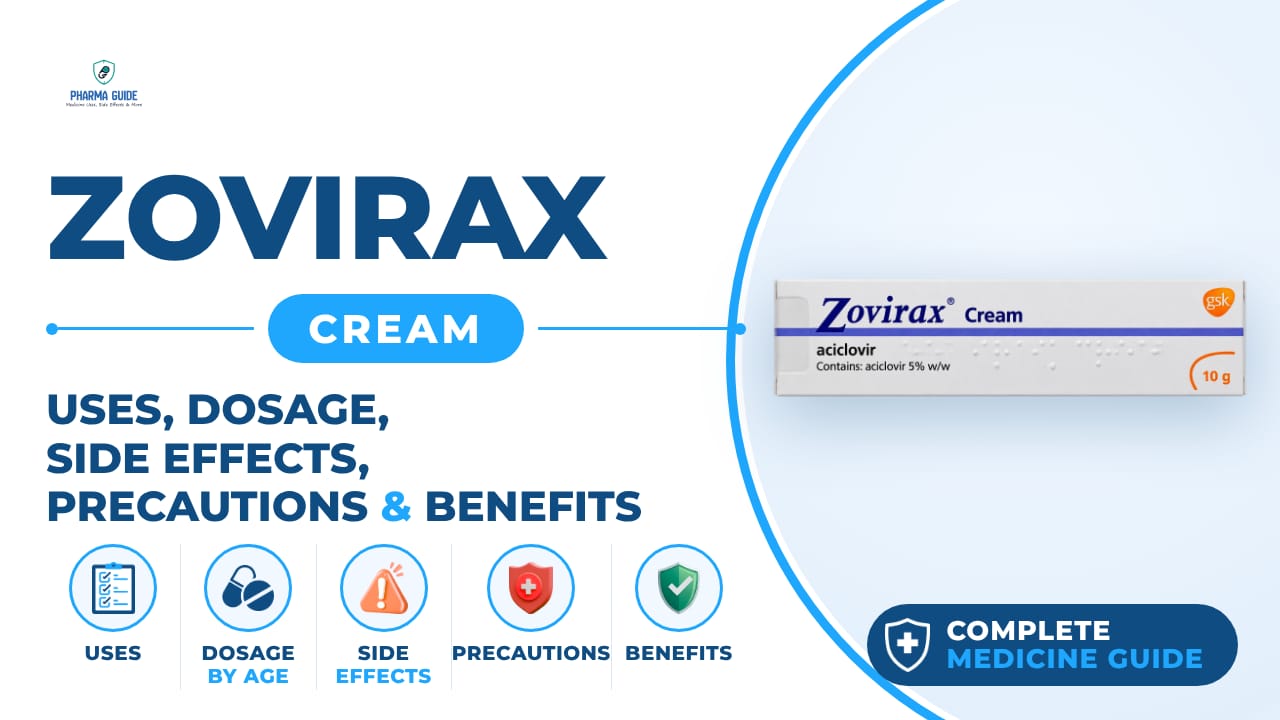
Zovirax Cream: Uses, Dosage, Side Effects, Precautions and Alternates
| Generic name | Acyclovir |
|---|---|
| Drug class | Antiviral Cream |
| Forms | Cream, Ointment |
Quick overview
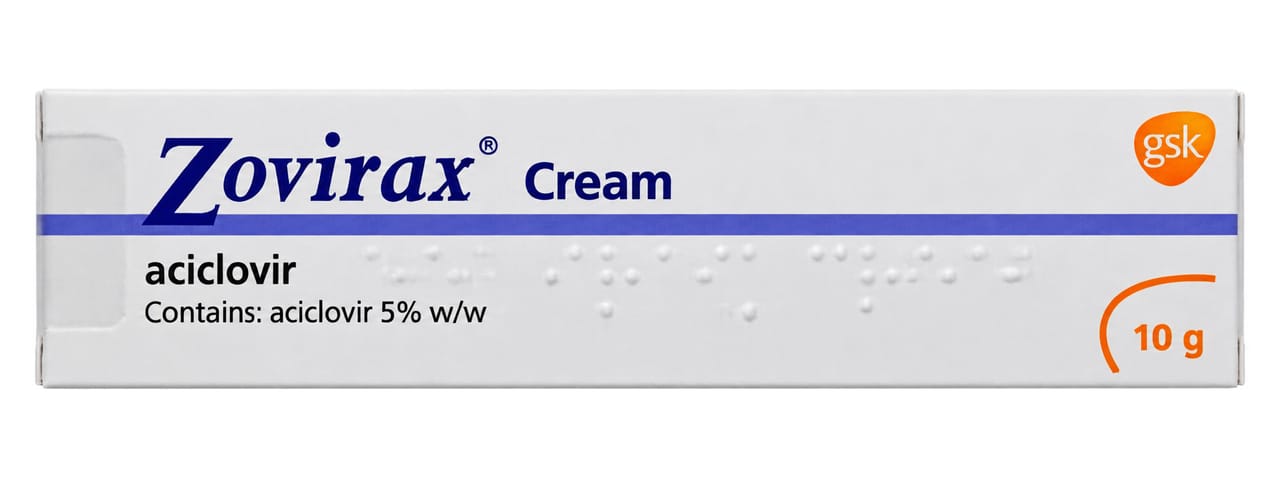
Zovirax Cream is a topical antiviral medicine containing acyclovir, used on the skin to treat cold sores and genital herpes caused by the herpes simplex virus. It helps relieve symptoms, speed up healing of sores, and manage recurrent outbreaks. The cream is applied directly to the affected skin and is available in cream and ointment forms.
What is Zovirax Cream
Zovirax Cream is a topical antiviral medicine that contains acyclovir. It is used on the skin to treat cold sores and genital herpes caused by the herpes simplex virus.
Zovirax Cream uses
- Treating genital herpes, providing relief from symptoms and helping sores heal faster
- Managing recurrent genital herpes outbreaks, reducing their frequency and severity
- Soothing skin irritation and promoting healing in affected areas
- Preventing the spread of the herpes virus to reduce transmission risk
- Alleviating pain and discomfort associated with genital herpes lesions
- Accelerating the healing process, shortening outbreak duration
- Minimizing the risk of viral shedding, lowering the chances of infecting others
- Improving overall comfort and quality of life during genital herpes episodes
- Cold sores that keep coming back in people 12 years and older - cream only
Benefits of Zovirax Cream
- Can lessen the symptoms of the infection
- Helps sores heal faster
- Shortens outbreak duration
How Zovirax Cream works
Acyclovir works by blocking a key enzyme the herpes virus needs to copy its DNA. This stops the virus from multiplying and spreading in the body, which helps control symptoms and speeds healing.
Zovirax Cream dosage
Clean and dry the affected area before applying a thin layer of the cream, as directed by your healthcare provider. Wash your hands before and after applying the cream. Apply only to cold sores on the face and lips; do not put it in the eyes, mouth, nose, or genitals.
Start using the cream as soon as symptoms appear, such as tingling, burning, or blisters, for best effectiveness. Avoid touching or scratching the affected area to prevent further irritation or spreading the infection.
Do not cover the treated area with bandages or tight clothing, as this may increase how much medication is absorbed. Avoid using other creams, ointments, or lotions on the same treated area.
Use the cream for the full length of time recommended by your healthcare provider, even if symptoms improve quickly. If a dose is missed, apply it as soon as you remember, but skip it if it is almost time for the next dose; do not apply a double amount.
| Age group | Dose |
|---|---|
| Under 2 years | Use only under medical supervision |
| 2–11 years | Apply a thin layer 5 times daily for 4 days, if prescribed |
| 12–17 years | Apply a thin layer 5 times daily for 4 days |
| Adults ≥18 years | Apply a thin layer 5 times daily, approximately every 4 hours while awake, for 4 days |
Available forms and strengths
- Cream
- Ointment
Side effects of Zovirax Cream
Common
- Itching or irritation at the application site
- Redness or swelling of the skin
- Dry or flaky skin
- Burning or stinging sensation
- Pain or tenderness in the affected area
- Mild skin peeling
- Application site reaction
Serious
- Allergic reactions (skin rash, hives)
- Severe or persistent skin reactions
Warnings and precautions
- This cream is for use on the skin only. Do not put it in your eyes, mouth, or nose, since this can cause more side effects.
- Do not use the cream if you have a known allergy or severe reaction to acyclovir or similar antiviral medicines, and avoid it on open wounds, cuts, or severely inflamed skin.
- Herpes infections are contagious and can spread to other people even while you are being treated. Avoid letting infected areas touch other people, avoid touching an infected area and then your eyes, and wash your hands often.
- Using this cream will not stop you from passing genital herpes to a sexual partner. Avoid sexual contact while you have active sores or first symptoms of an outbreak, since the virus may still spread even without symptoms.
- Do not cover the treated skin with bandages or tight clothing, since this may increase how much of the medicine is absorbed.
- Talk with your doctor if you are pregnant or planning to become pregnant, since acyclovir may pose risks to the fetus.
- Talk with your doctor before using this cream if you are breastfeeding, since it may pose risks to the infant.
- For external use only. Do not swallow or apply inside the mouth, nose, or vagina.
- Avoid the eyes. Do not apply to or near the eye; accidental eye contact may cause irritation.
- Do not apply to open wounds or severely damaged skin unless advised by a healthcare professional.
- Wash your hands before and after application to avoid spreading the infection to other areas.
Storage
- Store in a cool and dry place, preferably at room temperature (around 25°C or 77°F)
- Protect the cream from excessive heat, direct sunlight, and moisture to maintain its effectiveness
- Keep the tube tightly sealed when not in use to prevent contamination
- Dispose of any expired or unused cream properly; do not flush it down the toilet or pour it into drains
- For safe disposal methods, consult your pharmacist or healthcare professional
- Keep this medication out of children's reach to prevent accidental exposure, as it is meant for external use only
When to see a doctor
- Get emergency medical help right away if you have signs of an allergic reaction such as hives, difficulty breathing, or swelling of the face, lips, tongue, or throat.
- Stop using the cream and get medical attention if you have severe or ongoing skin reactions, or if your condition gets worse.
- If the cream is swallowed in large amounts, it can cause stomach upset such as nausea and vomiting; contact a healthcare professional or your local poison control center for guidance.
Alternatives
- Famciclovir
- Valacyclovir (Valtrex)
Watch the video
FAQs
What is Zovirax Cream used for?
It is a topical antiviral containing acyclovir used to treat cold sores and genital herpes caused by the herpes simplex virus, relieving symptoms and speeding up healing of sores.
How does Zovirax Cream work?
Acyclovir blocks a key enzyme the herpes virus needs to copy its DNA, stopping the virus from multiplying and spreading, which helps control symptoms and speeds healing.
How should Zovirax Cream be applied?
Clean and dry the affected area, then apply a thin layer as directed, starting as soon as symptoms like tingling or burning appear. Apply only to cold sores on the face and lips, not in the eyes, mouth, nose, or genitals, and avoid covering the area with bandages or tight clothing.
What are the common side effects of Zovirax Cream?
Common side effects include itching or irritation at the application site, redness or swelling, dry or flaky skin, burning or stinging, pain or tenderness, mild peeling, and application site reactions.
Can Zovirax Cream prevent spreading herpes to a partner?
No, using this cream will not stop you from passing genital herpes to a sexual partner, and you should avoid sexual contact during active sores or first symptoms of an outbreak.
General information, not medical advice
Your prescriber and the leaflet in your pack know your situation. This page does not.
- Follow your prescriber and the leaflet
- Don't start, stop, or change a dose on your own
- Doses and warnings differ by country and product
Sources
Video
Related medicines

Injectafer Injection: Uses, Dosage, Side Effects, Precautions and Alternates
Iron products
Injectafer (ferric carboxymaltose) treats iron deficiency anemia and heart failure-related iron deficiency via IV. Learn uses, dosage, side effects, and

Gliclazide Tablet: Uses, Dosage, Side Effects, Precautions and Alternates
Sulfonylurea (hypoglycemic/antidiabetic agent)
Gliclazide Tablet is a sulfonylurea for type 2 diabetes that boosts insulin release. Learn about dosage, side effects, warnings, and precautions.