
Safety
General information, not medical advice
Your prescriber and the leaflet in your pack know your situation. This page does not.
- Follow your prescriber and the leaflet
- Don't start, stop, or change a dose on your own
- Doses and warnings differ by country and product
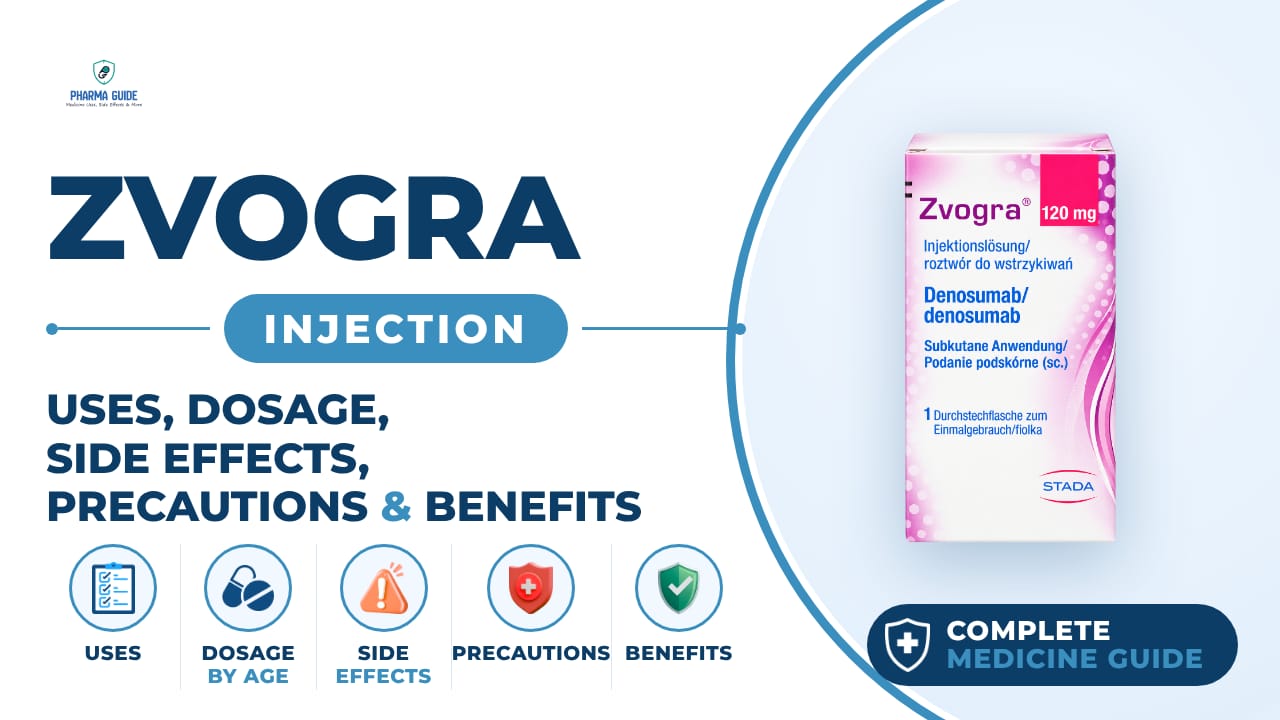
Zvogra Injection: Uses, Dosage, Side Effects, Precautions and Alternates
| Generic name | denosumab |
|---|---|
| Drug class | Bone resorption inhibitor (RANKL inhibitor) - Drugs for treatment of bone diseases |
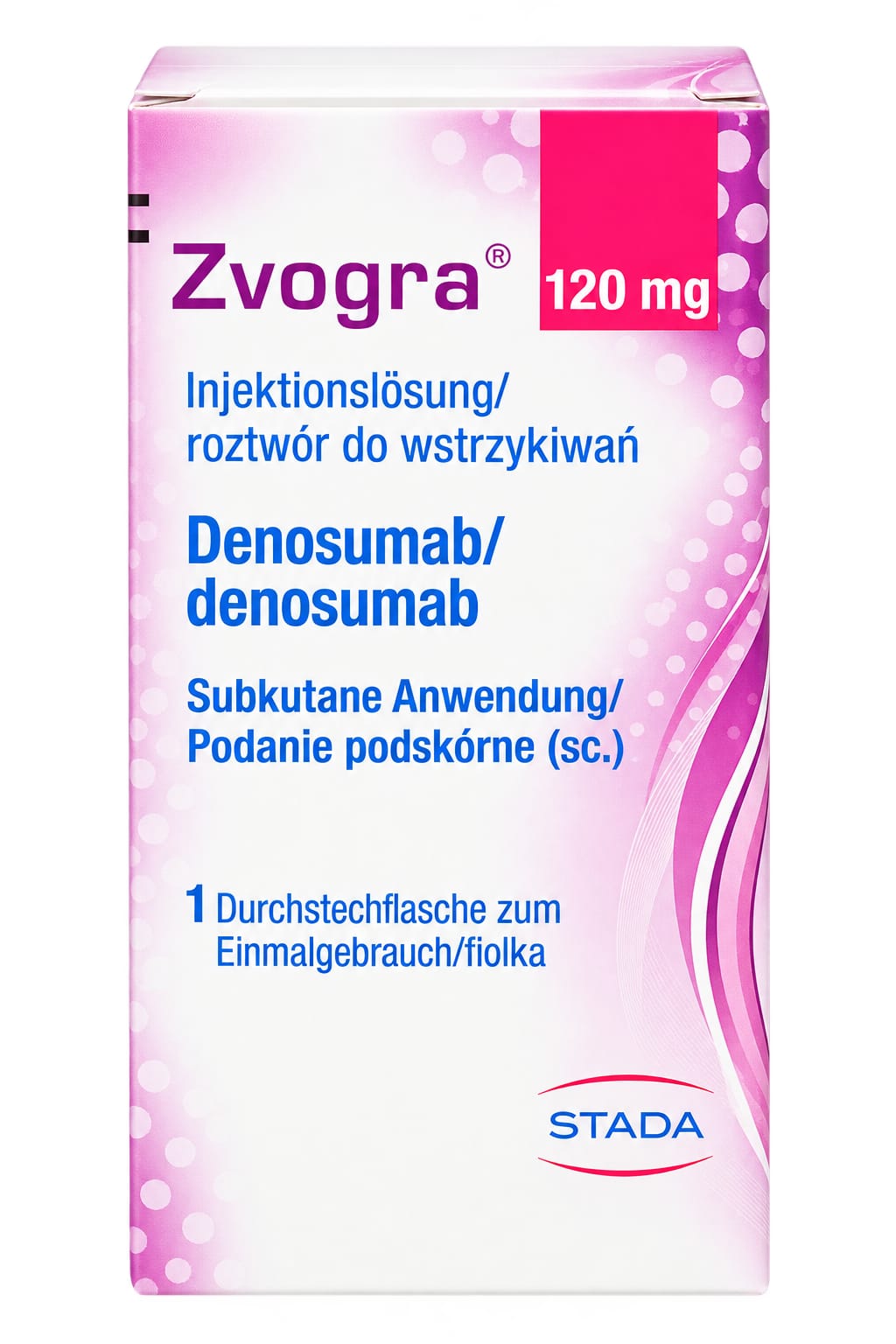
| Forms | Solution for injection in a single-use vial |
Quick overview
Zvogra Injection contains denosumab, a man-made protein that slows down bone destruction caused by cancer that has spread to bone or by giant cell tumour of bone. It is a biosimilar medicine, highly similar to the already approved biological medicine Xgeva. It is given as an injection under the skin by a healthcare professional, and it works by blocking a protein called RANKL that bone-destroying cells need to form and function.
What is Zvogra Injection
Zvogra contains denosumab, a man-made protein (monoclonal antibody) that works to slow down bone destruction caused by cancer spreading to the bone or by giant cell tumour of bone. It is a biosimilar medicine, meaning it is highly similar to another biological medicine called Xgeva that is already approved.
Zvogra Injection uses
- Prevention of serious bone-related problems (such as fracture, pressure on the spinal cord, or the need for radiation therapy or surgery to bone) in adults with advanced cancer that has spread to the bone
- Treatment of giant cell tumour of bone that cannot be treated by surgery or where surgery is not the best option, in adults and adolescents whose bones have stopped growing
Benefits of Zvogra Injection
- Reduces the risk of bone fractures, spinal cord compression, and the need for radiation or surgery to bone in people with advanced cancer involving bone
- Reduces or eliminates abnormal bone-destroying cells in giant cell tumour of bone, allowing new bone to form
- Can help avoid or delay surgery in some patients with giant cell tumour of bone
- May reduce bone pain related to these conditions
How Zvogra Injection works
Denosumab blocks a protein called RANKL that is needed for bone-destroying cells (osteoclasts) to form and work. By blocking RANKL, the medicine reduces the number and activity of these cells, which slows down bone breakdown. In giant cell tumour of bone, this also reduces the abnormal cells in the tumour and allows new, healthy bone to form.
Zvogra Injection dosage
Zvogra is given as an injection under the skin (subcutaneous) into the thigh, abdomen, or upper arm. It must be given by a healthcare professional, not self-administered. For prevention of bone complications in advanced cancer, it is given once every 4 weeks. For giant cell tumour of bone, extra doses are given on day 8 and day 15 of the first month of treatment, then once every 4 weeks.
You should take calcium and vitamin D supplements while being treated with Zvogra unless your blood calcium is too high. Do not shake the vial before use. Before injecting, the vial may be allowed to reach room temperature to make the injection more comfortable, and it should be injected slowly. The whole contents of the vial should be used for the injection. This medicine is not recommended for children and adolescents under 18, except adolescents with giant cell tumour of bone whose bones have stopped growing.
| Age group | Dose |
|---|---|
| Adults 18–64 years – advanced cancer involving bone | 120 mg subcutaneously every 4 weeks |
| Adults 18–64 years – giant cell tumor of bone | 120 mg every 4 weeks, plus 120 mg on Days 8 and 15 during Month 1 |
Available forms and strengths
- Solution for injection in a single-use vial
Side effects of Zvogra Injection
Common
- Bone, joint, and muscle pain, sometimes severe
- Shortness of breath
- Diarrhoea
- Low phosphate levels in the blood
- Removal of a tooth
- Excessive sweating
- Development of another form of cancer in patients with advanced cancer
Serious
- Low calcium levels in the blood (can cause muscle spasms, twitches, cramps, numbness or tingling in fingers, toes, or around the mouth, seizures, confusion, or loss of consciousness)
- Osteonecrosis of the jaw (bone damage in the jaw) - signs include persistent mouth/jaw pain, swelling, non-healing sores, discharge, numbness, or loose teeth
- Unusual fractures of the thigh bone - signs include new or unusual pain in hip, groin, or thigh
- High calcium levels in the blood after stopping treatment, especially in patients with giant cell tumour of bone
- Rash or sores in the mouth (lichenoid drug eruptions)
- Severe allergic reactions (wheezing, difficulty breathing, swelling of face/lips/tongue/throat, rash, itching or hives)
- Bone damage in the ear (osteonecrosis of the external auditory canal) - signs include ear pain, discharge, or infection
Warnings and precautions
- Low calcium levels in the blood can occur at any time during treatment and can be severe, including fatal cases, usually in the first weeks of treatment. Calcium levels should be checked before starting treatment and monitored during treatment.
- Bone damage in the jaw (osteonecrosis of the jaw) is a commonly reported side effect. Good oral hygiene and dental check-ups are recommended, and dental surgery should be avoided close to treatment.
- Bone damage in the ear canal has been reported, so patients with ear symptoms such as chronic ear infections should be evaluated.
- Unusual fractures of the thigh bone can occur with little or no trauma. Report new or unusual thigh, hip, or groin pain to your doctor.
- High calcium levels requiring hospitalisation, sometimes with kidney injury, have occurred weeks to months after stopping treatment in patients with giant cell tumour of bone.
- This medicine should not be used together with other medicines containing denosumab or with bisphosphonates.
- This medicine should not be given to people with unhealed wounds from dental or oral surgery, or with untreated very low blood calcium.
- This medicine is not recommended during pregnancy. Women who could become pregnant should use effective contraception during treatment and for at least 5 months after the last dose.
- It is not known if this medicine passes into breast milk; your doctor will help you decide whether to stop breastfeeding or stop treatment, weighing the benefits of each.
- People with severe kidney problems or who are on dialysis have a higher risk of low blood calcium levels and need regular calcium monitoring.
- This medicine has not been studied in people with liver problems, so its safety and effectiveness in this group are not known. This medicine has little or no effect on your ability to drive or use machines.
Storage
- Keep this medicine out of the sight and reach of children
- Do not use this medicine after the expiry date shown on the label and carton after EXP; the expiry date refers to the last day of that month
- Store in a refrigerator (2°C – 8°C)
- Do not freeze
- Keep the vial in the outer carton to protect from light
- The vial may be left outside the refrigerator to reach room temperature (up to 25°C) before injection; once removed from the refrigerator, it must not be put back and must be used within 30 days
- Do not throw away medicines via wastewater or household waste; ask your pharmacist how to dispose of medicines you no longer use
When to see a doctor
- Get medical help immediately if you have muscle spasms, twitches, cramps, numbness or tingling in your fingers, toes, or around your mouth, seizures, confusion, or loss of consciousness - these may be signs of low blood calcium.
- Contact your doctor and dentist immediately if you have persistent mouth or jaw pain, swelling, non-healing sores, discharge, numbness, a feeling of heaviness in the jaw, or a loose tooth - these could be signs of bone damage in the jaw.
- Contact your doctor if you have new or unusual pain in your hip, groin, or thigh, as this may be an early sign of a thigh bone fracture.
- Seek medical attention if you have signs of a severe allergic reaction such as wheezing, difficulty breathing, swelling of the face, lips, tongue, or throat, rash, itching, or hives.
- Talk to your doctor if you have ear pain, discharge from the ear, or an ear infection, as these could be signs of bone damage in the ear.
Alternatives
- Xgeva (denosumab)
- Zoledronic acid
- Pamidronate
Watch the video
FAQs
What is Zvogra Injection used for?
It is used to prevent serious bone-related problems like fracture, spinal cord pressure, or need for radiation/surgery in adults with advanced cancer that has spread to bone, and to treat giant cell tumour of bone that cannot be treated by surgery.
How is Zvogra Injection given?
It is given as a subcutaneous injection into the thigh, abdomen, or upper arm by a healthcare professional. For bone complications from cancer, it is given once every 4 weeks; for giant cell tumour of bone, extra doses are given on days 8 and 15 of the first month, then every 4 weeks.
What are the serious side effects of Zvogra Injection?
Serious side effects include low blood calcium, osteonecrosis of the jaw, unusual thigh bone fractures, high calcium levels after stopping treatment, rash or mouth sores, severe allergic reactions, and bone damage in the ear canal.
Should I take calcium and vitamin D with Zvogra Injection?
Yes, you should take calcium and vitamin D supplements while being treated with Zvogra unless your blood calcium is too high.
Can Zvogra Injection be used during pregnancy?
It is not recommended during pregnancy, and women who could become pregnant should use effective contraception during treatment and for at least 5 months after the last dose.
General information, not medical advice
Your prescriber and the leaflet in your pack know your situation. This page does not.
- Follow your prescriber and the leaflet
- Don't start, stop, or change a dose on your own
- Doses and warnings differ by country and product
Sources
Video
Related medicines

Injectafer Injection: Uses, Dosage, Side Effects, Precautions and Alternates
Iron products
Injectafer (ferric carboxymaltose) treats iron deficiency anemia and heart failure-related iron deficiency via IV. Learn uses, dosage, side effects, and

Gliclazide Tablet: Uses, Dosage, Side Effects, Precautions and Alternates
Sulfonylurea (hypoglycemic/antidiabetic agent)
Gliclazide Tablet is a sulfonylurea for type 2 diabetes that boosts insulin release. Learn about dosage, side effects, warnings, and precautions.