
Safety
General information, not medical advice
Your prescriber and the leaflet in your pack know your situation. This page does not.
- Follow your prescriber and the leaflet
- Don't start, stop, or change a dose on your own
- Doses and warnings differ by country and product
Zyflo Tablet: Uses, Dosage, Side Effects, Precautions and Alternates
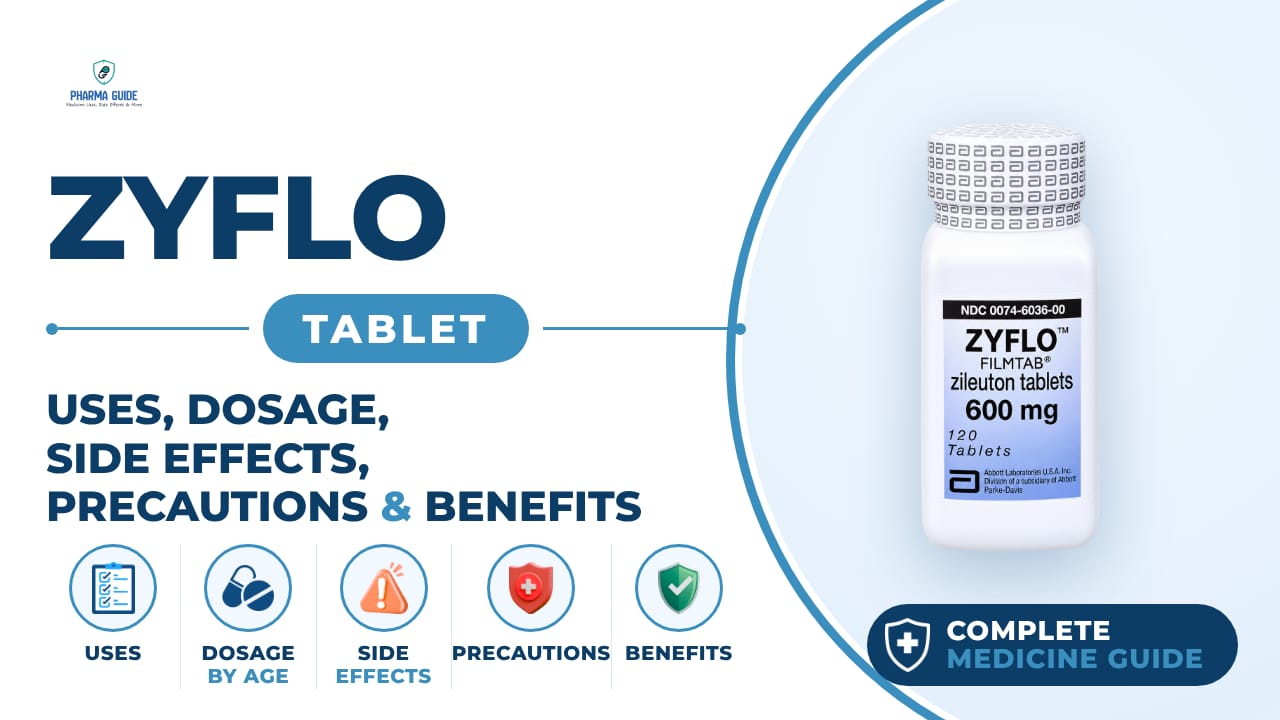
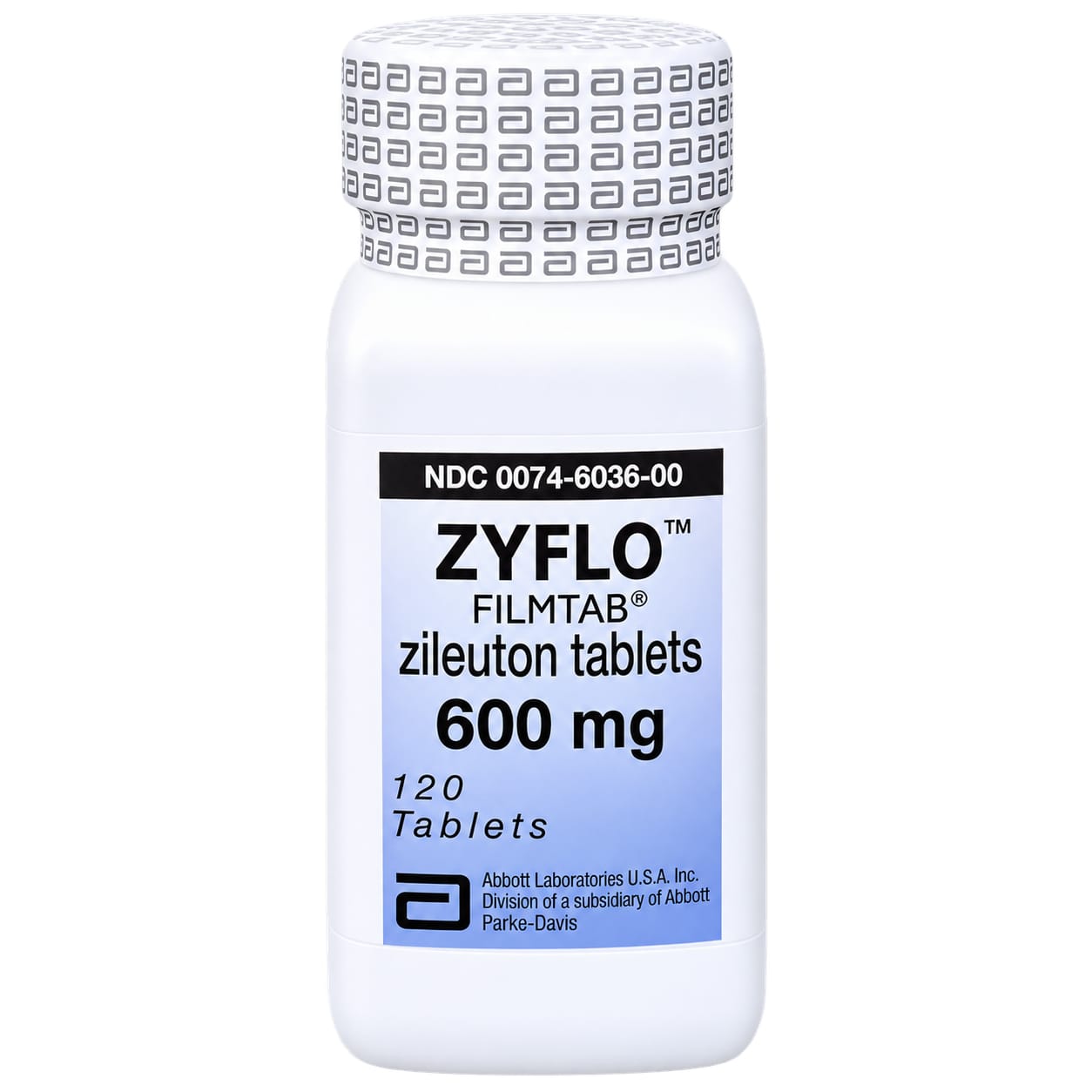
| Generic name | zileuton |
|---|---|
| Drug class | Leukotriene synthesis inhibitor (leukotriene modifier) |
| Forms | Tablets (600 mg) |
Quick overview
Zyflo Tablet contains zileuton, a leukotriene synthesis inhibitor used to help prevent asthma attacks and manage asthma over the long term in adults and children 12 years and older. It is not a quick-relief medicine for sudden asthma attacks. Zyflo is taken regularly, usually four times a day, as part of an ongoing asthma care plan.
What is Zyflo Tablet
Zyflo is a prescription tablet that contains zileuton, which belongs to the leukotriene synthesis inhibitor (leukotriene modifier) drug class. It is used to help prevent asthma attacks and manage asthma over the long term in adults and children 12 years and older. It is not a quick-relief medicine for sudden asthma attacks.
Zyflo Tablet uses
- Prophylaxis and chronic treatment of asthma in adults and children 12 years of age and older
Benefits of Zyflo Tablet
- Helps reduce asthma symptoms and improve lung function over time
- Can reduce the need for rescue bronchodilator use
- Reduced the need for systemic corticosteroid treatment for asthma flare-ups in clinical studies
How Zyflo Tablet works
Zyflo blocks the body from making substances called leukotrienes, which are chemicals that cause airway inflammation, swelling, mucus buildup, and tightening of the airway muscles in people with asthma. By blocking leukotriene production, Zyflo helps reduce these effects.
Zyflo Tablet dosage
Zyflo immediate-release tablets are usually taken four times a day at the same times each day, with or without food. It may help to take doses with meals and at bedtime to make it easier to remember. If you cannot swallow a tablet whole, it may be split in half to make it easier to swallow.
Keep taking Zyflo every day, even if you have no asthma symptoms, since this is a sign the medicine is working; do not change the dose or stop without talking to your doctor. Zyflo is not a fast-acting rescue medicine and will not relieve an asthma attack that has already started; keep taking your other asthma medicines as directed. It may take several days or a few weeks to get the full benefit, so do not stop taking it if you do not feel better right away.
If you miss a dose, take your next dose at the regular scheduled time; do not take two doses at once.
| Age group | Dose |
|---|---|
| Under 12 years | Not established |
| 12–17 years | Not established; specialist-directed |
| 18–64 years | 600 mg, 4 times daily |
| 65+ years | 600 mg, 4 times daily; doctor-directed |
Available forms and strengths
- Tablets (600 mg)
Side effects of Zyflo Tablet
Common
- Headache
- Abdominal pain
- Dyspepsia (upset stomach)
- Nausea
- Muscle aches (myalgia)
- Diarrhea
- Runny or stuffy nose, sinus pain, sneezing, sore throat
Serious
- Signs of liver problems: pain in the upper right side of the stomach, nausea, tiredness, itching, dark urine, clay-colored stools, yellowing of the skin or eyes (jaundice)
- Worsening asthma symptoms
- Sleep problems or changes in behavior
- Allergic reaction: hives, difficulty breathing, swelling of the face, lips, tongue, or throat
- Low white blood cell count (usually without symptoms, found on blood tests)
Warnings and precautions
- Zyflo is not meant to stop a sudden asthma attack that is already happening. It only works to prevent attacks over time, and other medicines should be used for sudden symptoms.
- Zyflo can raise the levels of certain other drugs in the body, including theophylline, warfarin (a blood thinner), and propranolol (a blood pressure medicine). Doses of these drugs may need to be lowered and monitored closely if taken with Zyflo.
- Zyflo can cause liver enzyme elevations and, in rare cases, serious liver injury. Regular blood tests are needed to monitor liver function during treatment.
- Sleep problems and changes in behavior have been reported in people taking zileuton. Tell your doctor right away if these occur.
- Zyflo should only be used during pregnancy if your doctor decides the benefit is greater than the possible risk to the baby. There isn't enough research in pregnant women to know for sure if it's safe.
- It is not known whether zileuton passes into human breast milk. You and your doctor should decide together whether you should take Zyflo or breastfeed, weighing the importance of the medicine to you.
- No dose adjustment is needed for people with kidney problems, including those on dialysis, because zileuton levels were not significantly affected.
- Zyflo should not be used by people with active liver disease or significantly elevated liver enzyme tests. Liver enzyme levels should be checked before starting Zyflo and regularly during treatment, since the medicine can cause liver enzyme elevations and, rarely, serious liver injury.
- Drinking alcohol may increase the risk of liver damage while taking Zyflo, so it should be avoided, and your doctor should know how much and how often you drink.
Storage
- Store tablets at controlled room temperature between 20°-25°C (68°-77°F).
- Protect from light.
- Replace the child-resistant cap each time after use.
- Keep Zyflo and all medicines out of the reach of children.
When to see a doctor
- Get emergency help right away if you have signs of an allergic reaction, such as hives, trouble breathing, or swelling of your face, lips, tongue, or throat.
- Seek medical help immediately if you need more puffs of your rescue inhaler than usual, or if you use the maximum number of inhalations prescribed for a 24-hour period, since this may mean your asthma is getting worse and your treatment needs to change.
- Contact your doctor immediately if you notice symptoms of liver problems, such as pain on the right side of your stomach, nausea, tiredness, itching, yellow skin or eyes, or dark urine.
- Tell your healthcare provider right away if you notice any sleep problems or changes in your behavior while taking this medicine.
Alternatives
- Zyflo CR
- Montelukast
- Zafirlukast
- Fluticasone
Watch the video
FAQs
What is Zyflo Tablet used for?
Zyflo Tablet is used for the prophylaxis and chronic treatment of asthma in adults and children 12 years of age and older. It is not meant to treat a sudden asthma attack.
How is Zyflo Tablet taken?
Zyflo immediate-release tablets are usually taken four times a day at the same times each day, with or without food. It may help to take doses with meals and at bedtime to make it easier to remember.
What is the dosage of Zyflo for adults?
For adults aged 18 to 64 years, and for those 65 and older under doctor guidance, the usual dose is 600 mg taken four times daily.
What are the common side effects of Zyflo?
Common side effects include headache, abdominal pain, dyspepsia, nausea, muscle aches, diarrhea, and symptoms like runny or stuffy nose, sinus pain, sneezing, and sore throat.
Can Zyflo affect the liver?
Yes, Zyflo can cause liver enzyme elevations and, in rare cases, serious liver injury. Regular blood tests are needed to monitor liver function, and it should not be used by people with active liver disease.
General information, not medical advice
Your prescriber and the leaflet in your pack know your situation. This page does not.
- Follow your prescriber and the leaflet
- Don't start, stop, or change a dose on your own
- Doses and warnings differ by country and product
Sources
Video
Related medicines

Injectafer Injection: Uses, Dosage, Side Effects, Precautions and Alternates
Iron products
Injectafer (ferric carboxymaltose) treats iron deficiency anemia and heart failure-related iron deficiency via IV. Learn uses, dosage, side effects, and

Gliclazide Tablet: Uses, Dosage, Side Effects, Precautions and Alternates
Sulfonylurea (hypoglycemic/antidiabetic agent)
Gliclazide Tablet is a sulfonylurea for type 2 diabetes that boosts insulin release. Learn about dosage, side effects, warnings, and precautions.