
Safety
General information, not medical advice
Your prescriber and the leaflet in your pack know your situation. This page does not.
- Follow your prescriber and the leaflet
- Don't start, stop, or change a dose on your own
- Doses and warnings differ by country and product
Zylet Eye Drops: Uses, Dosage, Side Effects, Precautions and Alternates
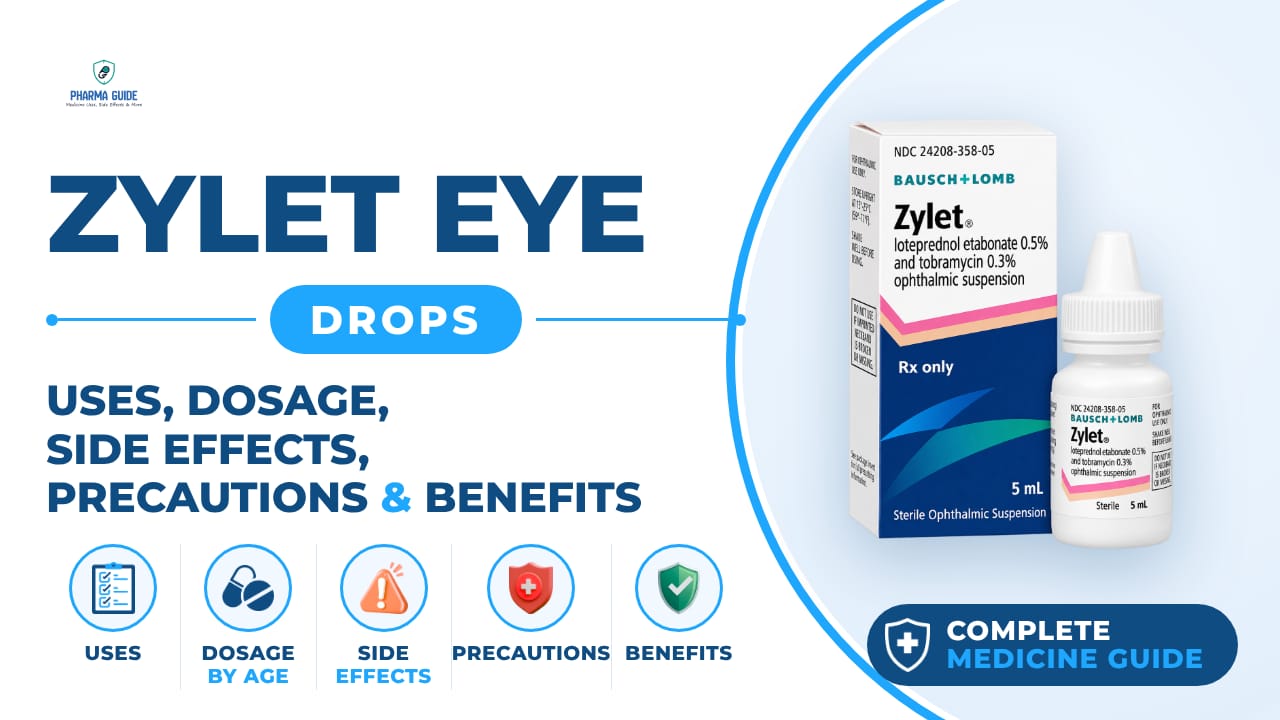
| Generic name | loteprednol and tobramycin ophthalmic |
|---|---|
| Drug class | Ophthalmic steroids with anti-infectives |
| Forms | Ophthalmic suspension (eye drops) |
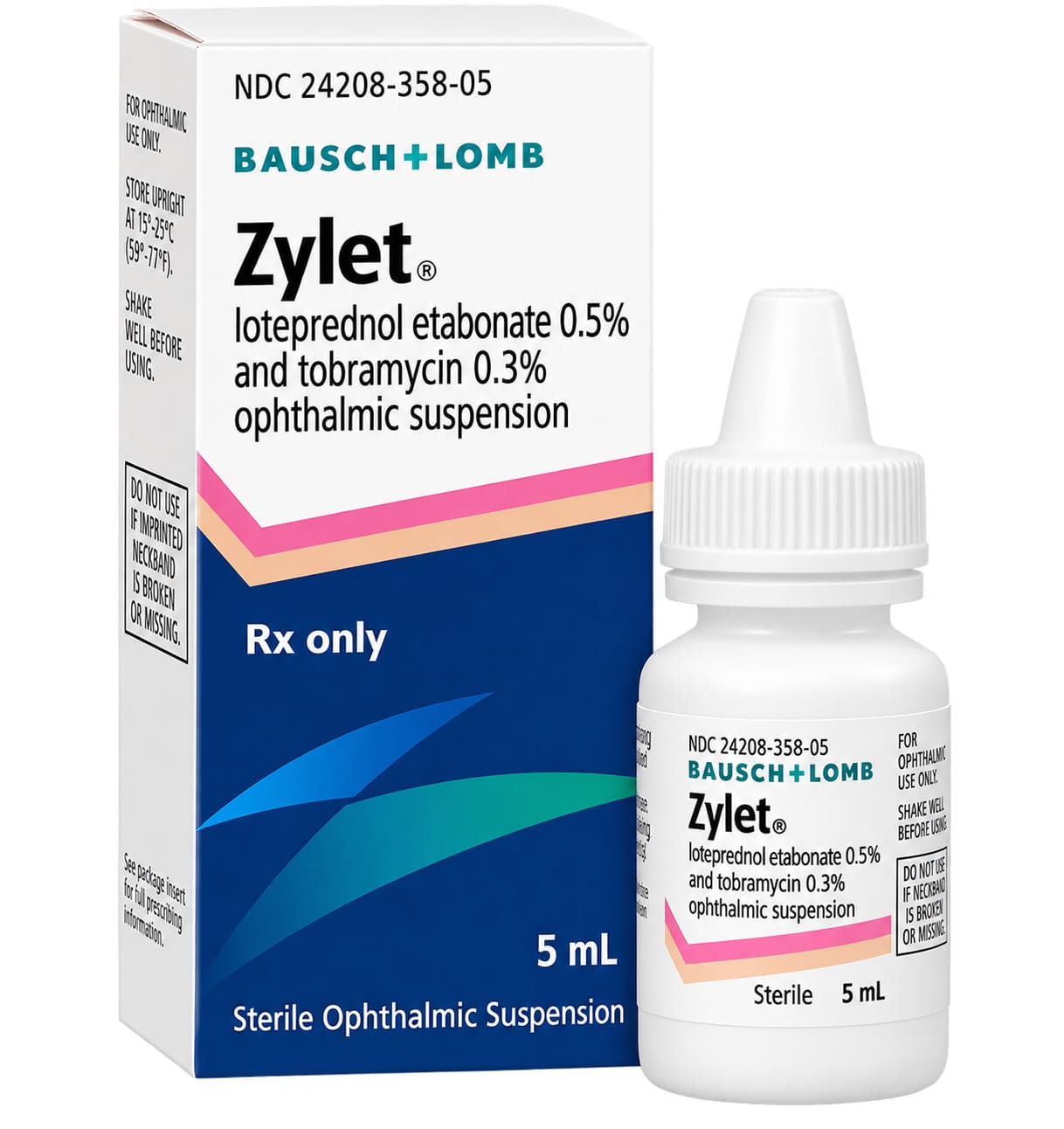
Quick overview
Zylet Eye Drops combine loteprednol, a steroid that reduces inflammation, and tobramycin, an antibiotic that fights bacteria. It is used in the eye to treat inflammation linked to bacterial infection or risk of infection. The combination provides both anti-inflammatory and antibacterial action in one formulation.
What is Zylet Eye Drops
Zylet eye drops contain a combination of loteprednol, a steroid that reduces inflammation, and tobramycin, an antibiotic that fights bacteria. It is used in the eye to treat inflammation linked to bacterial infection or risk of infection.
Zylet Eye Drops uses
- Eye inflammation caused by surgery, infection, allergies, and other conditions
- Eye inflammation from a bacterial infection in the eye
- Eye inflammation when there's a risk for a bacterial infection in the eye
Benefits of Zylet Eye Drops
- Helps reduce eye inflammation, redness, swelling, and irritation
- Treats or helps prevent certain bacterial eye infections when inflammation is also present
- Loteprednol helps control steroid-responsive eye inflammation
- Tobramycin helps kill susceptible bacteria causing eye infection
- Provides combined anti-inflammatory and antibiotic treatment in one eye-drop formulation
How Zylet Eye Drops works
Loteprednol is a steroid that stops the body from releasing substances that cause swelling, redness, itching, and pain in the eye. Tobramycin is an antibiotic that works by blocking bacteria from making proteins they need to survive, which stops them from growing.
Zylet Eye Drops dosage
Use the eye drops exactly as directed by your doctor and follow all directions on your prescription label. Do not use in larger or smaller amounts or for longer than recommended. Shake the bottle well just before each use, and wash your hands before using the eye drops.
Do not wear contact lenses while using this medicine; wait at least 15 minutes after using it before putting in contact lenses. Tilt your head back, pull down the lower eyelid to make a small pocket, look up and away, and place a drop into the pocket without letting the dropper touch the eye or any surface. Close your eyes for 2 to 3 minutes with your head tipped down, without blinking or squinting, and gently press a finger to the inside corner of the eye for about a minute to keep the drops from draining away.
If more than one drop is needed, wait about 5 minutes between drops. Wait at least 10 minutes before using any other prescribed eye drops, or at least 5 minutes if directed otherwise. Do not use the eye drops if the liquid has changed color or has particles in it.
Use the medicine for the full length of time prescribed, even if symptoms improve early, since stopping early may let the infection come back or become harder to treat. Tell your doctor if symptoms do not improve or get worse while using this medicine. Do not use this medicine for longer than two weeks unless your doctor tells you to.
Do not give to a child younger than 6 years old without medical advice. Wait several minutes for vision to clear before driving or operating machinery after use.
| Age group | Dose |
|---|---|
| Under 2 years | Safety and effectiveness not established |
| 2–11 years | 1–2 drops into affected eye(s) every 4–6 hours when prescribed |
| 12–17 years | 1–2 drops into affected eye(s) every 4–6 hours |
| 18–64 years | 1–2 drops into affected eye(s) every 4–6 hours |
| 65+ years | 1–2 drops into affected eye(s) every 4–6 hours |
Available forms and strengths
- Ophthalmic suspension (eye drops)
Side effects of Zylet Eye Drops
Common
- Minor burning or stinging when using the eye drops
- Increased sensitivity to light
- Watery eyes
- Puffy eyelids
- Headache
- Redness and swelling of the cornea of the eye
- Higher eye pressure
- Eye irritation or itching
- Discharge from the eye
Serious
- Signs of allergic reaction: hives; difficult breathing; swelling of the face, lips, tongue, or throat
- Eye swelling, redness, severe discomfort, crusting or drainage (may be signs of infection)
- Blurred vision, eye pain, or seeing halos around lights
- A cloudy or hazy appearance over the eye or in vision
- Severe pain, burning, or stinging when using the eye drops
- New or worsening eye pain, redness, irritation, or discharge
- Vision loss
Warnings and precautions
- Do not use Zylet if you have any type of fungal, viral, or bacterial infection in your eye, including herpes or chickenpox
- Do not let the dropper touch any surface, including your eyes or hands, because a contaminated dropper could cause an eye infection
- If you wear contact lenses, take them out before using Zylet, since the medicine may contain a preservative that can discolor soft contact lenses
- Using this medicine for a long time can raise the risk of new or worsening eye infections, glaucoma, cataracts, and vision problems, especially with long-term use, a history of glaucoma or cataracts, past herpes eye infections, or recent corneal surgery
- Steroid eye drops like this one can slow healing after eye surgery, such as cataract surgery
- This medicine can possibly cause eye injury or damage, including thinning of the outer layer of the eye
- People allergic to aminoglycoside antibiotics like tobramycin may also be allergic to this medicine, and serious allergic reactions can be life-threatening
- This medicine is only for use in the eye and should not be placed on or in any other part of the body
- It is not known whether Zylet will harm an unborn baby. Tell your doctor if you are pregnant or plan to become pregnant while using this medicine.
- It is not known whether loteprednol and tobramycin pass into breast milk or if they could harm a nursing baby. Tell your doctor if you are breastfeeding.
- This medicine may cause blurred vision and may impair your reactions. Be careful if you drive or do anything that requires clear vision.
Storage
- Store upright at 15–25°C (59–77°F) at controlled room temperature
- Keep the bottle tightly closed when not in use
- Protect from excessive heat and direct sunlight
- Do not freeze, and avoid touching the dropper tip to prevent contamination
- Keep out of reach and sight of children and pets
When to see a doctor
- Get emergency medical help if you have signs of an allergic reaction such as hives, difficulty breathing, or swelling of your face, lips, tongue, or throat
- Stop using the medicine and call your doctor right away if you notice eye swelling, redness, severe discomfort, crusting or drainage, blurred vision, eye pain, seeing halos around lights, a cloudy or hazy appearance, or severe burning or stinging
- Call your doctor if your symptoms do not improve, or if they get worse, while using this medicine
- Seek emergency medical attention if someone accidentally swallows this medicine, though an overdose is not expected to be dangerous
Alternatives
- Loteprednol Eye Drops
- Tobramycin Eye Drops
- Maxitrol Eye Drops
- Tobradex Eye Drops
Watch the video
FAQs
What is Zylet Eye Drops used for?
Zylet Eye Drops treat eye inflammation caused by surgery, infection, allergies, or other conditions, including inflammation from a bacterial infection or when there's a risk of one.
How does Zylet Eye Drops work?
Loteprednol, a steroid, stops the body from releasing substances that cause swelling, redness, itching, and pain in the eye, while tobramycin, an antibiotic, blocks bacteria from making proteins they need to survive, stopping them from growing.
How long can you use Zylet Eye Drops?
Use the medicine for the full length of time prescribed, even if symptoms improve early. Do not use it for longer than two weeks unless your doctor tells you to.
Can I wear contact lenses while using Zylet Eye Drops?
No, you should not wear contact lenses while using this medicine. Take them out before using Zylet and wait at least 15 minutes after using it before putting lenses back in.
Who should not use Zylet Eye Drops?
Do not use Zylet if you have any type of fungal, viral, or bacterial infection in your eye, including herpes or chickenpox, or if you are allergic to aminoglycoside antibiotics like tobramycin.
General information, not medical advice
Your prescriber and the leaflet in your pack know your situation. This page does not.
- Follow your prescriber and the leaflet
- Don't start, stop, or change a dose on your own
- Doses and warnings differ by country and product
Sources
- https://www.drugs.com/zylet.html
- https://www.goodrx.com/zylet/what-is
- https://www.healio.com/clinical-guidance/drugs/zylet
- DailyMed - Zylet Product Label
Video
Related medicines

Injectafer Injection: Uses, Dosage, Side Effects, Precautions and Alternates
Iron products
Injectafer (ferric carboxymaltose) treats iron deficiency anemia and heart failure-related iron deficiency via IV. Learn uses, dosage, side effects, and

Gliclazide Tablet: Uses, Dosage, Side Effects, Precautions and Alternates
Sulfonylurea (hypoglycemic/antidiabetic agent)
Gliclazide Tablet is a sulfonylurea for type 2 diabetes that boosts insulin release. Learn about dosage, side effects, warnings, and precautions.