
Safety
General information, not medical advice
Your prescriber and the leaflet in your pack know your situation. This page does not.
- Follow your prescriber and the leaflet
- Don't start, stop, or change a dose on your own
- Doses and warnings differ by country and product
Zyrtec-D Tablet: Uses, Dosage, Side Effects, Precautions and Alternates
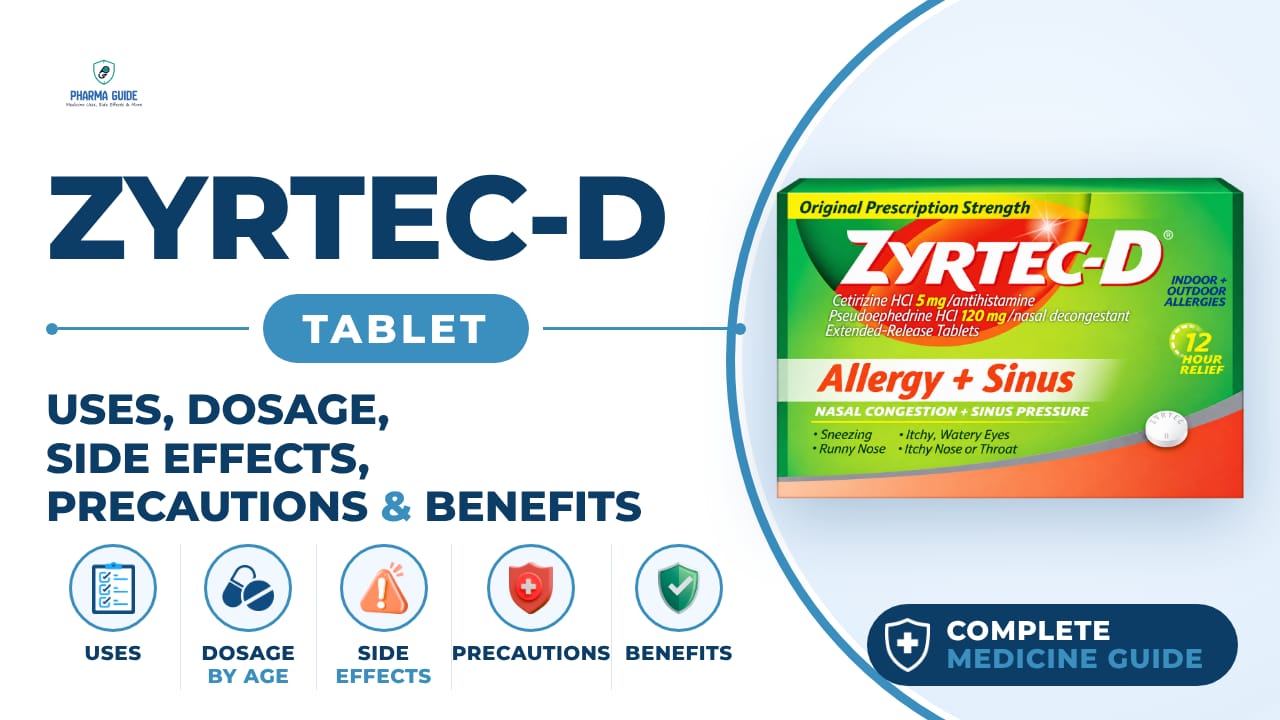
| Generic name | cetirizine and pseudoephedrine |
|---|---|
| Drug class | Antihistamine / Decongestant (Upper respiratory combinations) |
| Forms | Extended-release tablet |
Quick overview
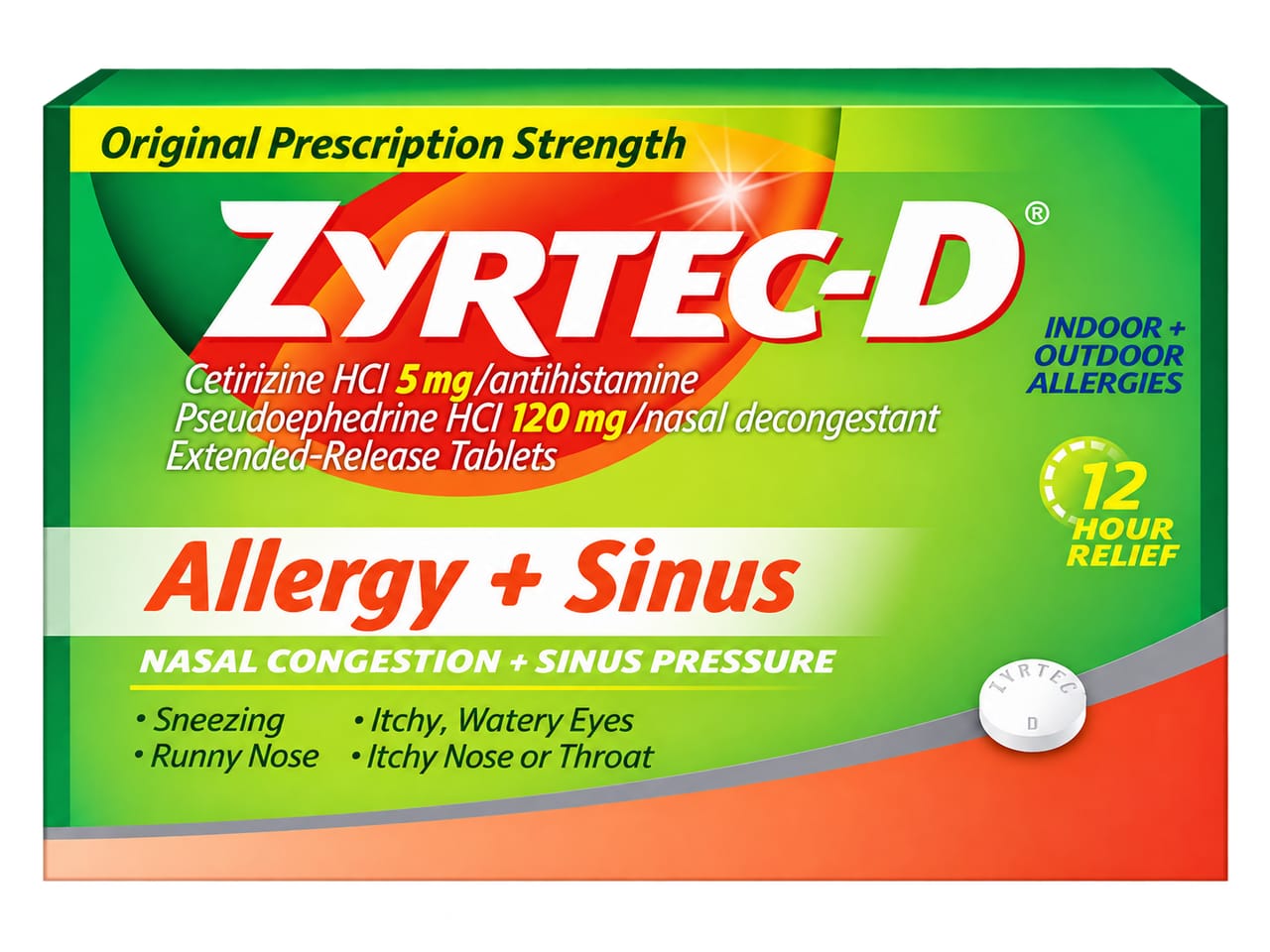
Zyrtec-D Tablet contains cetirizine and pseudoephedrine, combining an antihistamine with a decongestant. It is used to relieve allergy and cold symptoms such as sneezing, runny nose, and stuffy nose in adults and children 12 years and older. The extended-release tablet is usually taken every 12 hours and should be swallowed whole without crushing, chewing, or breaking it.
What is Zyrtec-D Tablet
Zyrtec-D is a combination medicine with two active ingredients: cetirizine, an antihistamine, and pseudoephedrine, a decongestant. It is used to relieve allergy and cold symptoms like sneezing, runny nose, and stuffy nose in adults and children 12 years and older.
Zyrtec-D Tablet uses
- Short-term relief of allergy symptoms in adults and children 12 years and older
- Itchy nose or throat
- Sneezing
- Itchy or watery eyes
- Runny or stuffy nose
- Sinus congestion or pressure
- Nasal and sinus congestion from colds or allergies
Benefits of Zyrtec-D Tablet
- Relieves allergy symptoms
- Reduces nasal congestion
- Helps with sneezing and runny nose
- Reduces itchy or watery eyes
- Combines an antihistamine with a decongestant
How Zyrtec-D Tablet works
Zyrtec-D combines two medicines that work differently. Cetirizine blocks histamine, the substance in your body that causes allergy symptoms like itching and runny nose. Pseudoephedrine narrows swollen blood vessels in your nose to reduce congestion and pressure so you can breathe easier.
Zyrtec-D Tablet dosage
Swallow the extended-release tablet whole. Do not crush, chew, or break it, since this changes how the medicine is released into your body. It can be taken with or without food. Take one tablet every 12 hours unless your doctor tells you otherwise. This medicine is not recommended for children under 12 years of age.
If you miss a dose, take it as soon as you remember, but skip it if it's almost time for your next dose — do not take extra medicine to make up for it. Call your doctor if your symptoms don't improve, get worse, or if you develop a fever.
| Age group | Dose |
|---|---|
| 12–17 years | Usually 1 extended-release tablet every 12 hours |
| 18–64 years | Usually 1 extended-release tablet every 12 hours |
Available forms and strengths
- Extended-release tablet
Side effects of Zyrtec-D Tablet
Common
- Trouble sleeping (insomnia)
- Dry mouth
- Feeling tired or drowsy
- Sore throat
- Dizziness
- Nausea, stomach pain, constipation
- Trouble concentrating
Serious
- Fast, pounding, or uneven heartbeat
- Weakness or tremors (uncontrolled shaking)
- Severe restlessness, hyperactivity, extreme fear or confusion
- Problems with vision
- Little or no urinating
- High blood pressure signs: severe headache, buzzing in ears, chest pain, shortness of breath, uneven heartbeat
- Signs of allergic reaction: hives, difficulty breathing, swelling of face, lips, tongue, or throat
Warnings and precautions
- It is not known whether this medicine will harm an unborn baby. Do not use it during pregnancy without talking to a doctor first.
- The ingredients in this medicine can pass into breast milk and may harm a nursing baby. It may also reduce breast milk supply. Talk to a doctor before using it while breastfeeding.
- People with reduced kidney function should use caution, as the body clears this medicine more slowly, increasing the risk of side effects. A lower dose may be needed.
- People with liver problems should use caution, since liver disease can increase levels of this medicine in the body. A dose adjustment may be needed.
- Avoid drinking alcohol while taking this medicine, as it can increase drowsiness and other side effects.
- This medicine can make you drowsy or dizzy and affect your ability to focus or react. Be careful driving or operating machinery until you know how it affects you.
- Do not use this medicine if you have narrow-angle glaucoma, severe high blood pressure, severe coronary artery disease, trouble urinating, or an allergy to hydroxyzine.
- Do not take this medicine if you have used a certain type of antidepressant (MAO inhibitor) within the past 14 days, since a dangerous drug interaction could occur.
- Use caution if you have heart disease, high blood pressure, diabetes, thyroid problems, glaucoma, kidney or liver disease, an enlarged prostate, or urination problems — ask your doctor first.
- Older adults may be more likely to experience side effects from this medicine.
- Check with a doctor or pharmacist before combining this medicine with other cold or allergy products, since taking more than one antihistamine or decongestant at a time can lead to serious overdose effects.
- Do not crush, chew, or break the tablets, since this is designed to release the medicine slowly over time.
Storage
- Store at room temperature away from moisture and heat.
- Store at 20-25°C (68-77°F); excursions permitted to 15-30°C (59-86°F)
When to see a doctor
- Get emergency help right away if you have signs of an allergic reaction, such as hives, difficulty breathing, or swelling of the face, lips, tongue, or throat.
- Stop taking this medicine and call your doctor right away if you have a fast, pounding, or uneven heartbeat; weakness or shaking; severe restlessness or confusion; vision problems; or little or no urination.
- Seek emergency medical attention if you think you have taken too much of this medicine.
- If severe headaches, nosebleeds, trouble breathing, irregular heartbeat, or chest pain occur while taking this medicine, stop taking it and get medical attention right away, as these can signal dangerously high blood pressure.
Alternatives
- Cetirizine
- Loratadine
- Fexofenadine
Watch the video
FAQs
What is Zyrtec-D Tablet used for?
It is used for short-term relief of allergy and cold symptoms such as sneezing, runny nose, stuffy nose, itchy or watery eyes, and sinus congestion in adults and children 12 years and older.
How should I take Zyrtec-D Tablet?
Swallow the extended-release tablet whole without crushing, chewing, or breaking it. It can be taken with or without food, usually one tablet every 12 hours unless your doctor advises otherwise.
What are the common side effects of Zyrtec-D Tablet?
Common side effects include trouble sleeping, dry mouth, drowsiness, sore throat, dizziness, nausea, stomach pain, constipation, and trouble concentrating.
Can Zyrtec-D Tablet be used during pregnancy or breastfeeding?
It is not known if it harms an unborn baby, so it should not be used during pregnancy without a doctor's advice. Its ingredients can pass into breast milk and may harm a nursing baby or reduce milk supply, so consult a doctor before breastfeeding.
Is Zyrtec-D Tablet safe for children under 12?
No, this medicine is not recommended for children under 12 years of age.
General information, not medical advice
Your prescriber and the leaflet in your pack know your situation. This page does not.
- Follow your prescriber and the leaflet
- Don't start, stop, or change a dose on your own
- Doses and warnings differ by country and product
Sources
Video
Related medicines

Injectafer Injection: Uses, Dosage, Side Effects, Precautions and Alternates
Iron products
Injectafer (ferric carboxymaltose) treats iron deficiency anemia and heart failure-related iron deficiency via IV. Learn uses, dosage, side effects, and

Gliclazide Tablet: Uses, Dosage, Side Effects, Precautions and Alternates
Sulfonylurea (hypoglycemic/antidiabetic agent)
Gliclazide Tablet is a sulfonylurea for type 2 diabetes that boosts insulin release. Learn about dosage, side effects, warnings, and precautions.