Amoxiclav Tablet: Uses, Dosage, Side Effects, Precautions and Alternates
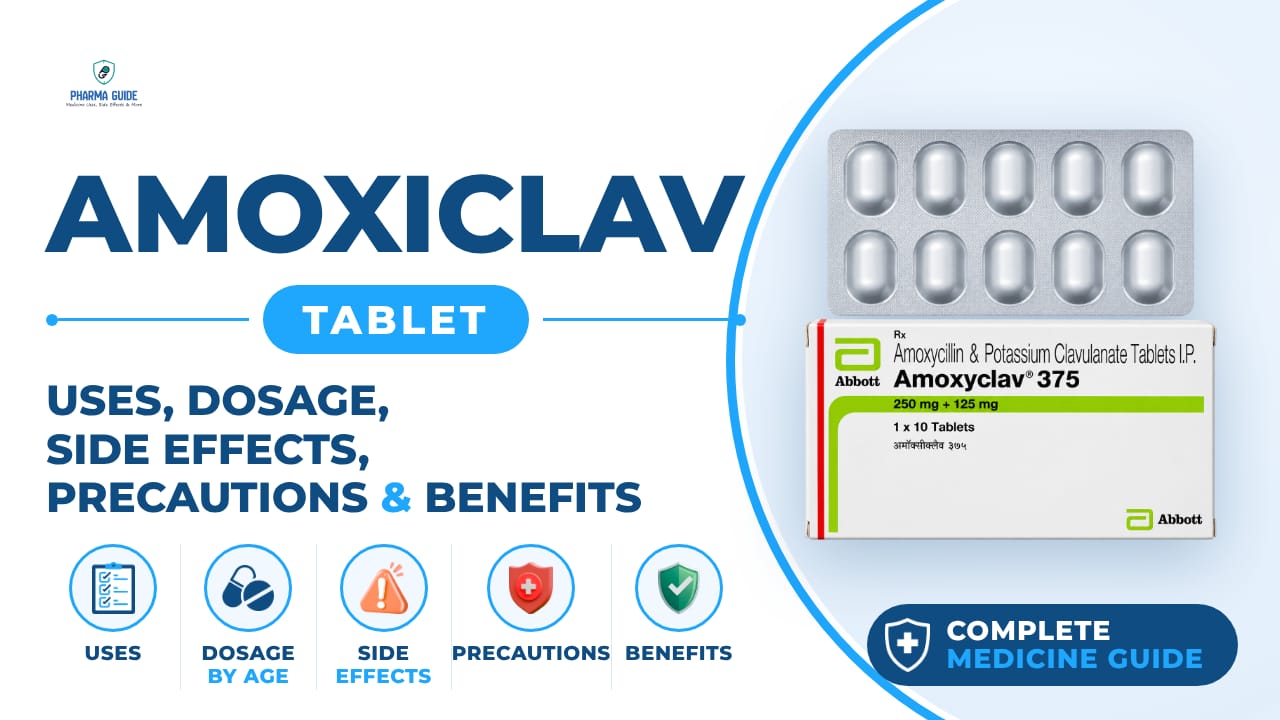
| Generic name | Amoxicillin and Clavulanic Acid |
|---|---|
| Drug class | Penicillin-like antibiotic combined with a beta-lactamase inhibitor |
| Forms | Tablet, Chewable tablet, Extended-release tablet, Powder for suspension (oral liquid) |
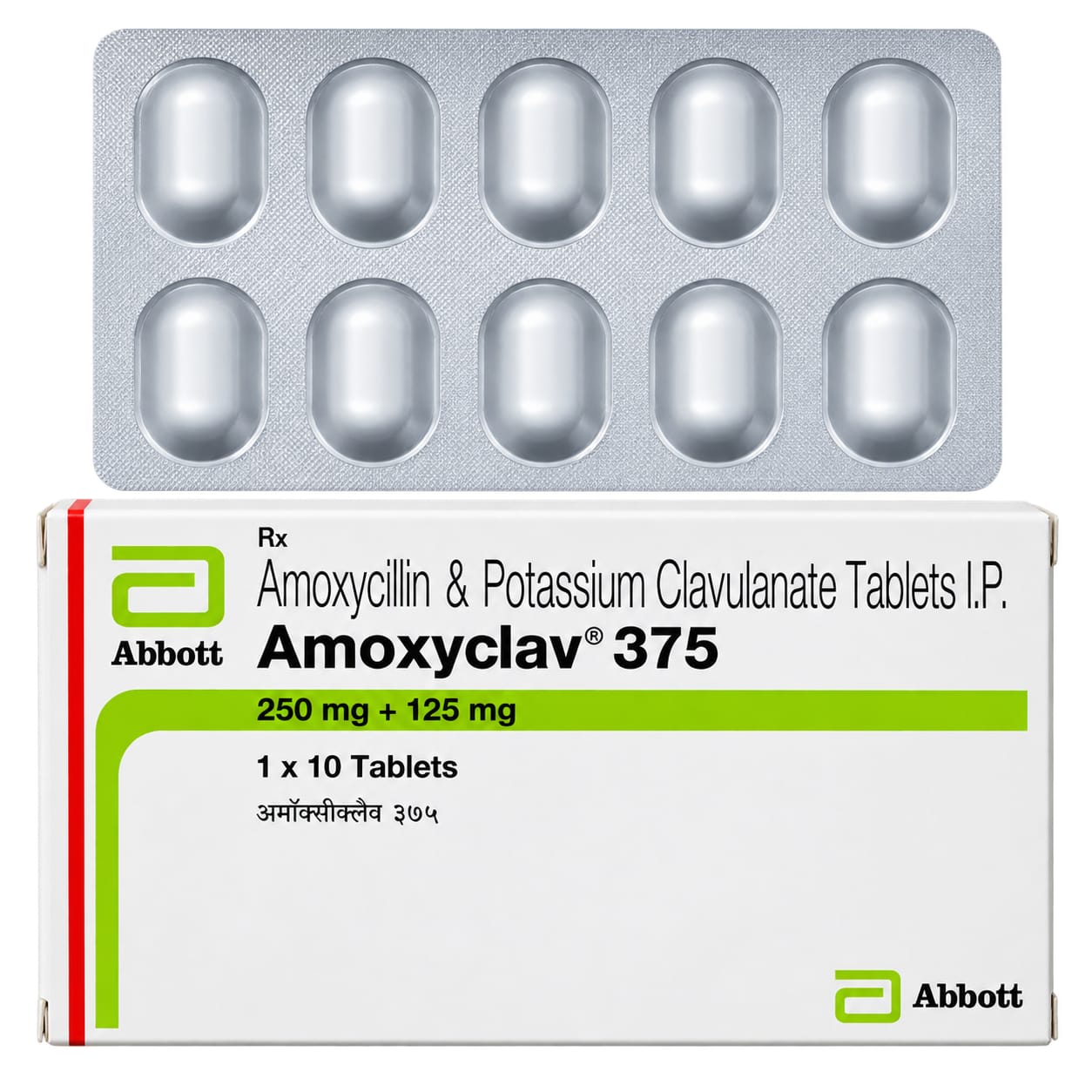
Quick overview
Amoxiclav Tablet contains amoxicillin and clavulanic acid, a penicillin-like antibiotic combined with a beta-lactamase inhibitor. It is used for the short-term treatment of a wide range of bacterial infections, including ear, lung, sinus, skin, and urinary tract infections. It will not work against infections caused by viruses such as colds or flu. The medicine should be taken exactly as directed, and the full course should be completed even if symptoms improve.
What is Amoxiclav Tablet
Amoxiclav contains two active ingredients: amoxicillin, a penicillin-type antibiotic, and clavulanic acid, a beta-lactamase inhibitor. It is used for the short-term treatment of a wide range of infections caused by bacteria. It will not work against infections caused by viruses such as colds or flu.
Amoxiclav Tablet uses
- Ear infections
- Lung infections such as bronchitis or pneumonia
- Sinus infections
- Skin infections
- Urinary tract or bladder infections (cystitis)
Benefits of Amoxiclav Tablet
- Treats a wide range of bacterial infections in the body
- Clavulanic acid helps stop bacteria from breaking down amoxicillin, so the antibiotic keeps working
How Amoxiclav Tablet works
Amoxicillin stops the growth of and kills the bacteria that cause the infection. Clavulanic acid stops bacteria from breaking down amoxicillin so it can keep working.
Amoxiclav Tablet dosage
- Take this medicine with a meal or snack, or immediately before or with the first mouthful of food, to help avoid an upset stomach.
- It will still work if taken without food. Swallow the tablets with a full glass of water or other liquid.
- Space your doses as evenly as possible throughout the day.
- If taking it twice a day, take a dose about every twelve hours.
- Some tablets can be broken in half along the score line but should not be chewed.
- Swallow extended-release tablets whole; do not crush, break, or chew them.
- If using chewable tablets, chew them completely before swallowing.
- Shake the liquid well before each use to mix the medication evenly, and use a proper measuring device rather than a household spoon.
- Take this medicine exactly as directed and finish the full course, even if you feel better, so the infection is fully treated.
- Do not stop taking it or change the dose without first checking with your doctor.
- Tell your doctor if your symptoms do not improve within a few days or get worse.
| Age group | Dose |
|---|---|
| Under 3 months | Dose is weight-based and should be prescribed by a doctor |
| 3 months–11 years | Dose is weight-based; pediatric formulations are usually preferred |
| 12–17 years | If 40 kg or more, adult dosing may be used depending on the infection |
| 18–64 years | Common adult doses include 500/125 mg every 8 hours or 875/125 mg every 12 hours, depending on the infection |
| 65+ years | Usually the same adult dosing, but kidney function should be assessed and the dose adjusted if necessary |
Available forms and strengths
- Tablet
- Chewable tablet
- Extended-release tablet
- Powder for suspension (oral liquid)
Side effects of Amoxiclav Tablet
Common
- Diarrhoea
- Nausea and upset stomach
- Vomiting
- Indigestion or stomach pain
- Vaginal itching, soreness or discharge (vaginal thrush)
- White, furry, sore tongue and mouth (oral thrush)
- Dizziness
- Headache
- Tiredness
- Tooth discolouration
Serious
- Watery or bloody stools, stomach cramps, or fever during treatment or for up to two or more months after stopping treatment
- Severe vomiting that may occur 1 to 4 hours after taking the medicine
- Rash, itching, or hives
- Difficulty breathing or swallowing, wheezing, or swelling of the face, throat, tongue, lips, and eyes
- Peeling, blistering, or shedding skin
- A return of fever, sore throat, chills, or other signs of infection
- Yellowing of the skin or eyes, pain in the upper right stomach area, dark urine, pale stools, fatigue, loss of appetite, or easy bleeding or bruising (signs of a liver problem)
- Seizures or fits
- Aseptic meningitis
- Inflammation of the bowel, liver, or kidney; blood disorders; or crystals in the urine
Warnings and precautions
- Do not use this medicine if you are allergic to amoxicillin, clavulanic acid, penicillin, or similar antibiotics such as cephalosporins, or to any of the ingredients.
- This medicine may decrease the effectiveness of oral contraceptives.
- Use another method of birth control while taking it.
- Antibiotics will not work for colds, flu, or other viral infections, and using them when not needed raises your risk of a future infection that resists treatment.
- Take the medicine until the full course is finished, even if you feel better, or the infection may not be fully treated and bacteria may become resistant.
- If you develop severe diarrhoea during treatment or within several weeks after, tell your doctor and do not take any medicine to stop the diarrhoea without checking first.
- Do not give this medicine to anyone else, even if their symptoms seem similar to yours.
- Serious skin reactions such as Stevens-Johnson syndrome and toxic epidermal necrolysis can occur with this medicine.
- Tell your doctor if you are pregnant or plan to become pregnant.
- Your doctor will discuss the risks and benefits. If you become pregnant while taking this medicine, call your doctor.
- Tell your doctor if you are breastfeeding or plan to breastfeed.
- This medicine can pass to your baby through breast milk, though studies suggest it poses minimal risk to the infant.
- Tell your doctor if you have or have ever had kidney disease.
- The dose may need to be changed because the medicine is removed from the body more slowly.
- Extended-release tablets should not be used in severe kidney disease.
- Tell your doctor if you have or have ever had liver disease, or if you had liver problems after previously taking this medicine.
- Use with caution as it may make the condition worse.
- Alcohol should be avoided during and for several days after treatment with this medicine.
- Some people who drink alcohol while taking similar antibiotics have experienced adverse effects.
- These tablets do not usually affect your ability to drive or use machines, but they may cause dizziness or tiredness in some people.
- Be careful until you know how the medicine affects you.
Storage
- Keep this medicine in the container or original pack it came in, tightly closed, and out of reach of children.
- Store the tablets at room temperature in a cool dry place, away from excess heat, moisture, and direct light or sunlight; do not store in the bathroom or near a sink.
- Keep from freezing.
- Keep liquid medication in the refrigerator, tightly closed, and dispose of any unused liquid after 10 days.
- Do not use this medicine after the expiry date.
- Do not flush this medicine down the toilet. Take unneeded or out-of-date medicine to a pharmacy for safe disposal or use a medicine take-back program.
When to see a doctor
Get emergency help right away if you have signs of a serious allergic reaction such as difficulty breathing or swallowing, wheezing, or swelling of the face, throat, tongue, lips, and eyes.
Stop taking the medicine and call your doctor straight away, or go to the nearest hospital emergency department, if you notice a serious allergic reaction or serious side effect.
In case of overdose, call your local poison control center. If the person has collapsed, had a seizure, has trouble breathing, or cannot be woken, call emergency services right away.
Call your doctor right away if you have symptoms of a serious liver problem, such as pain in the upper stomach, pale stools, dark urine, loss of appetite, nausea, vomiting, or yellow eyes or skin.
Alternatives
- Amoxicillin
- Cefuroxime
- Cefixime
- Cefpodoxime
- Cefdinir
- Azithromycin
- Clarithromycin
Watch the video
FAQs
What is Amoxiclav Tablet used for?
It is used for short-term treatment of bacterial infections including ear, lung (bronchitis or pneumonia), sinus, skin, and urinary tract or bladder infections. It does not work against viral infections like colds or flu.
How should I take Amoxiclav Tablet?
Take it with a meal or snack to avoid upset stomach, though it works without food too. Swallow with a full glass of water, space doses evenly (about every 12 hours if twice daily), and complete the full course even if you feel better.
Can Amoxiclav Tablet affect birth control pills?
Yes, this medicine may decrease the effectiveness of oral contraceptives, so another method of birth control should be used while taking it.
What are the common side effects of Amoxiclav Tablet?
Common side effects include diarrhoea, nausea, vomiting, indigestion or stomach pain, vaginal or oral thrush, dizziness, headache, tiredness, and tooth discolouration.
Is it safe to drink alcohol while taking Amoxiclav Tablet?
Alcohol should be avoided during treatment and for several days after, as some people have experienced adverse effects when drinking alcohol with similar antibiotics.
Sources
Video
Related medicines

Mefenamic Acid Capsule: Uses, Dosage, Side Effects, Precautions and Alternates
Nonsteroidal anti-inflammatory drug (NSAID)
Mefenamic Acid Capsule is an NSAID for mild to moderate pain and menstrual cramps. Learn uses, dosage, side effects, and important safety warnings.

Augmentin Syrup: Uses, Dosage, Side Effects, Precautions and Alternates
Penicillins / beta-lactamase inhibitors
Augmentin Syrup combines amoxicillin and clavulanic acid to treat bacterial infections. Learn about dosage, side effects, and precautions before use.