
Safety
General information, not medical advice
Your prescriber and the leaflet in your pack know your situation. This page does not.
- Follow your prescriber and the leaflet
- Don't start, stop, or change a dose on your own
- Doses and warnings differ by country and product
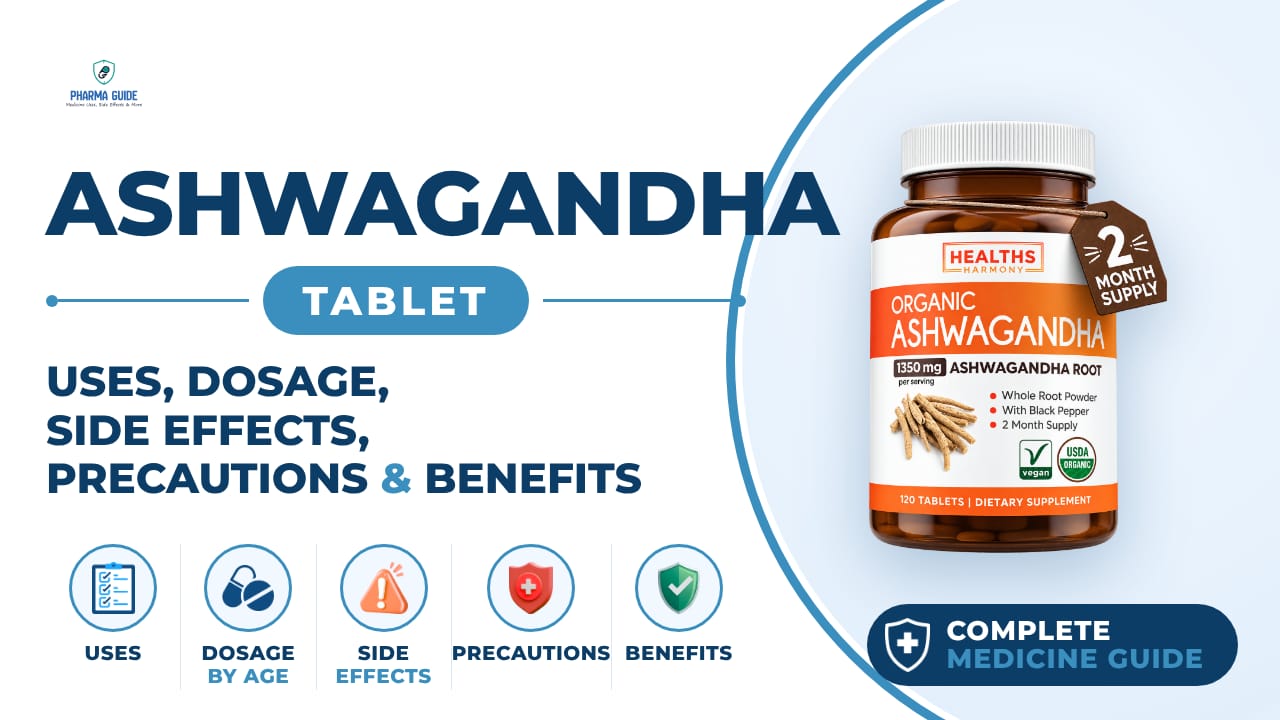
Ashwagandha Tablet: Uses, Dosage, Side Effects, Precautions and Alternates
| Forms | Capsules, Tablets, Gummies, Liquid drops, Powder |
|---|
Quick overview
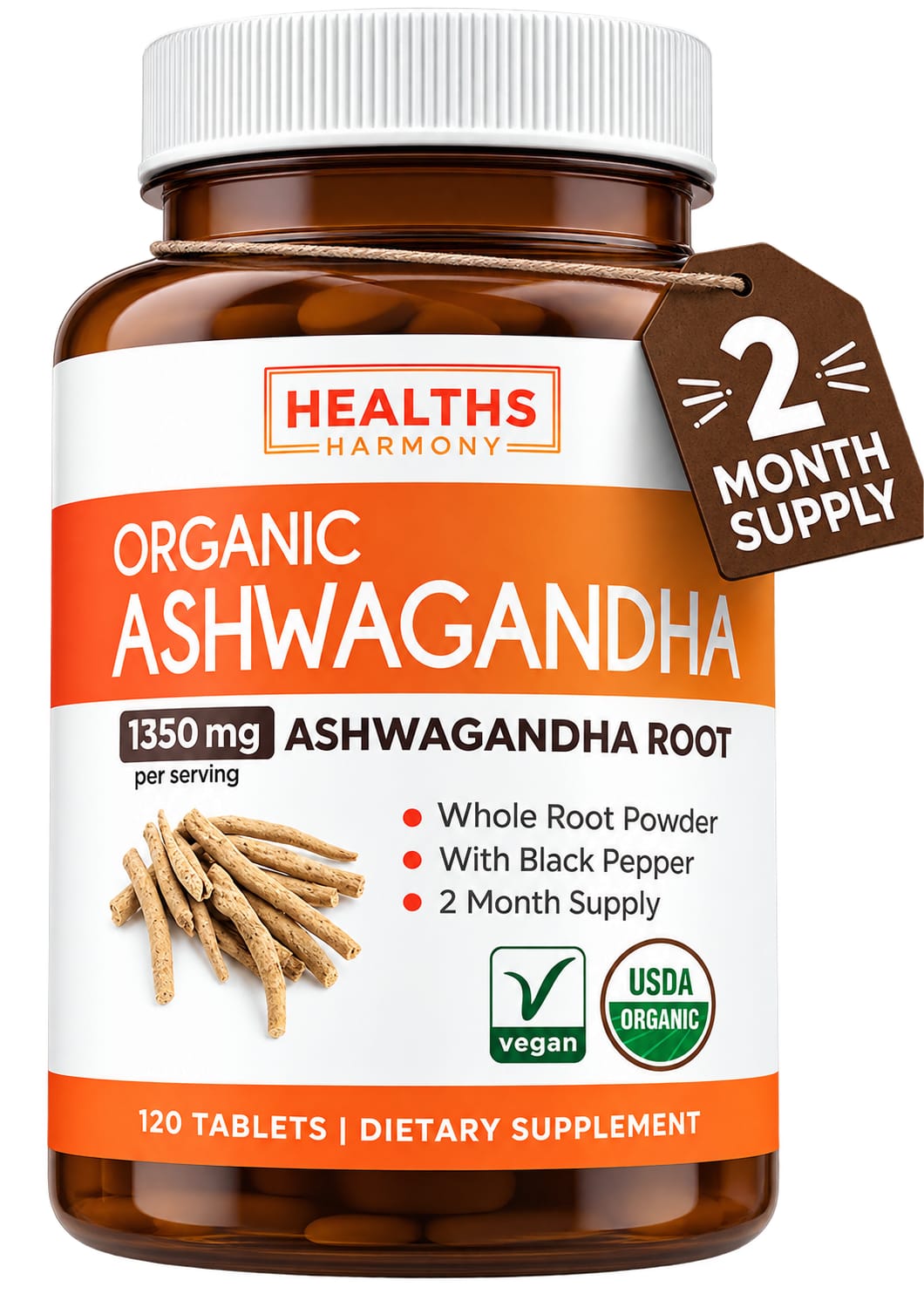
Ashwagandha Tablet is an herbal supplement made mainly from the root of the Withania somnifera plant, a shrub long used in Ayurvedic medicine. It is commonly used to help the body manage stress, ease anxiety, support sleep, reduce fatigue, and support male fertility. It is available in tablets, capsules, gummies, liquid drops, and powder, and comes with specific precautions, including avoidance during pregnancy and breastfeeding.
What is Ashwagandha Tablet
Ashwagandha (Withania somnifera) is an evergreen shrub used for thousands of years in Ayurvedic medicine, the traditional medicine system of India. It is also called winter cherry or Indian ginseng. It is sold as a food supplement/herbal remedy in tablets, capsules, gummies, liquid drops, and powders made mostly from the plant's root.
Ashwagandha Tablet uses
- Helping the body manage and adapt to stress
- Easing feelings of anxiety and tension
- Supporting better sleep quality and helping with insomnia
- Reducing mental and physical fatigue
- Supporting male fertility (sperm count and motility) and testosterone levels
- Traditionally used for joint pain, general debility, and as a tonic
Benefits of Ashwagandha Tablet
- May act as an adaptogen, helping the body resist and adapt to stress
- May lower cortisol (stress hormone) levels
- May improve sleep quality in people with and without insomnia
- May support cognitive function and memory in some studies
- May support male fertility by improving sperm count, motility, and testosterone levels
- May help with mild joint/knee pain and stiffness in some studies
How Ashwagandha Tablet works
Ashwagandha is thought to work as an adaptogen, a substance that helps balance the body's stress-response system. It appears to act on the hypothalamus-pituitary-adrenal (HPA) axis, helping to lower cortisol levels, and it may also affect GABA pathways in the brain, which can have a calming effect.
Ashwagandha Tablet dosage
Take after a meal and wash down with a sufficient amount of water. Do not exceed the recommended daily dose. Some product directions suggest taking one dose in the morning and one in the evening. Tablets should be swallowed whole, not chewed or crushed, and may be taken with warm water. This product is not intended to replace a varied, balanced diet.
| Age group | Dose |
|---|---|
| Under 18 years | There is no well-established standard pediatric dose |
| 18–39 years | Adult studies have used widely varying preparations, commonly around 240–600 mg/day of standardized extract |
| 40–64 years | Same studied adult range; there is no specific age-based dose |
Available forms and strengths
- Capsules
- Tablets
- Gummies
- Liquid drops
- Powder
Side effects of Ashwagandha Tablet
Common
- Mild digestive upset (nausea, diarrhea, stomach cramps, or loose stools)
- Drowsiness, fatigue, or lightheadedness
- Headache
- Vomiting
- Stomach upset
Serious
- Liver damage/injury (rare), which may cause yellowing of the skin or eyes, dark urine, or upper stomach pain
- Severe allergic reactions, difficulty breathing, or facial swelling
- Abnormal thyroid hormone levels
Warnings and precautions
- Ashwagandha should not be used during pregnancy because it may increase the risk of miscarriage. There isn't enough safety information about using ashwagandha while breastfeeding, so it should be avoided.
- At high doses, ashwagandha may have a negative effect on the kidneys, based on changes seen in blood tests during a safety study. Ashwagandha has been linked to rare cases of liver injury, including jaundice and other symptoms.
- People with liver problems should use caution and monitor liver function, especially with long-term use.
- Combining it with alcohol may worsen drowsiness or impairment. Ashwagandha can cause drowsiness or sedation in some people, so caution is advised with activities like driving until you know how it affects you.
- Do not use ashwagandha together with sedative or anti-anxiety medications, as it may increase sedation.
- People with thyroid conditions, including hyperthyroidism, hypothyroidism, or borderline thyroid function, should avoid or use caution with ashwagandha because it can alter thyroid hormone levels.
- People with autoimmune conditions should use ashwagandha with care because it may increase immune system activity and interfere with immunosuppressant drugs.
- Ashwagandha may interact with medications for diabetes, high or low blood pressure, thyroid conditions, seizures, and sedatives, so caution and monitoring are advised.
- People with prostate cancer should not take ashwagandha.
- Ashwagandha should be stopped about two weeks before planned surgery because of its sedative effects.
- Long-term safety of ashwagandha beyond three to twelve months has not been well studied.
Storage
- Store in a dry place at temperatures up to 25°C
- Protect from direct sunlight
- Keep out of reach of children
- The manufacturer is not liable for damages caused by improper use or storage
When to see a doctor
- Seek medical care if you notice yellowing of your skin or eyes, dark urine, or pain in the upper stomach area, as these may be signs of liver injury.
- Get emergency help if you have signs of a severe allergic reaction, such as difficulty breathing or swelling of the face.
- If you become pregnant while taking ashwagandha, stop the product immediately and tell your doctor.
Alternatives
- Rhodiola rosea
- Holy basil (Tulsi)
- Valerian root
Watch the video
FAQs
What is Ashwagandha Tablet used for?
It is commonly used to help the body manage stress, ease anxiety, support sleep quality, reduce mental and physical fatigue, and support male fertility, including sperm count, motility, and testosterone levels. It has also been used traditionally for joint pain and general debility.
How should Ashwagandha Tablet be taken?
It should be taken after a meal with enough water, swallowed whole without chewing or crushing, and not exceed the recommended daily dose. Some directions suggest one dose in the morning and one in the evening. Adult studies have commonly used around 240–600 mg/day of standardized extract.
What are the side effects of Ashwagandha Tablet?
Common side effects include mild digestive upset such as nausea, diarrhea, or stomach cramps, as well as drowsiness, fatigue, lightheadedness, headache, and vomiting. Rare but serious effects include liver injury, severe allergic reactions, and abnormal thyroid hormone levels.
Can Ashwagandha Tablet be taken during pregnancy?
No, it should not be used during pregnancy because it may increase the risk of miscarriage. There is also not enough safety information about use while breastfeeding, so it should be avoided.
Who should avoid taking Ashwagandha Tablet?
People with thyroid conditions, autoimmune conditions, liver problems, or prostate cancer should avoid or use caution with ashwagandha. It should also be stopped about two weeks before planned surgery due to its sedative effects.
General information, not medical advice
Your prescriber and the leaflet in your pack know your situation. This page does not.
- Follow your prescriber and the leaflet
- Don't start, stop, or change a dose on your own
- Doses and warnings differ by country and product
Sources
Video
Related medicines

Injectafer Injection: Uses, Dosage, Side Effects, Precautions and Alternates
Iron products
Injectafer (ferric carboxymaltose) treats iron deficiency anemia and heart failure-related iron deficiency via IV. Learn uses, dosage, side effects, and

Gliclazide Tablet: Uses, Dosage, Side Effects, Precautions and Alternates
Sulfonylurea (hypoglycemic/antidiabetic agent)
Gliclazide Tablet is a sulfonylurea for type 2 diabetes that boosts insulin release. Learn about dosage, side effects, warnings, and precautions.