
Safety
General information, not medical advice
Your prescriber and the leaflet in your pack know your situation. This page does not.
- Follow your prescriber and the leaflet
- Don't start, stop, or change a dose on your own
- Doses and warnings differ by country and product
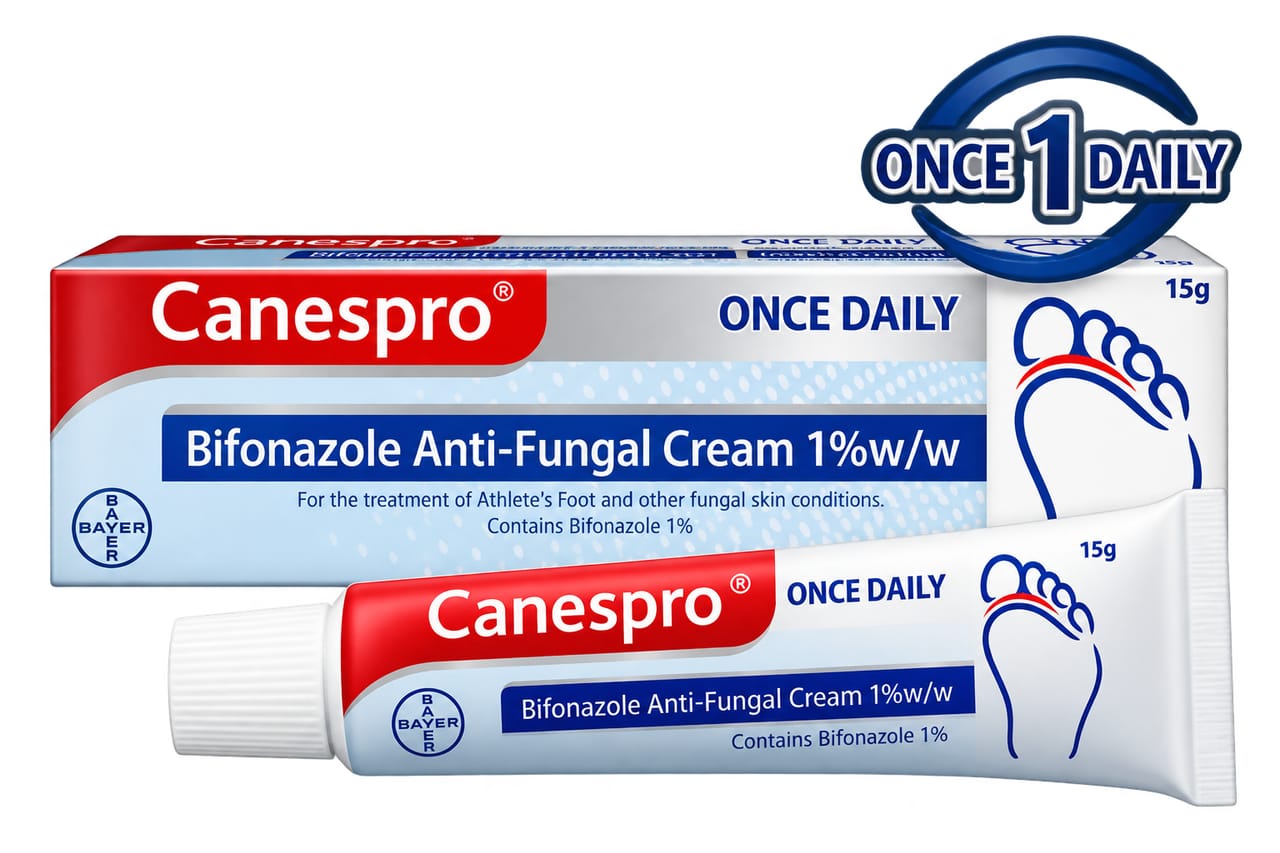
Canespro Cream: Uses, Dosage, Side Effects, Precautions and Alternates
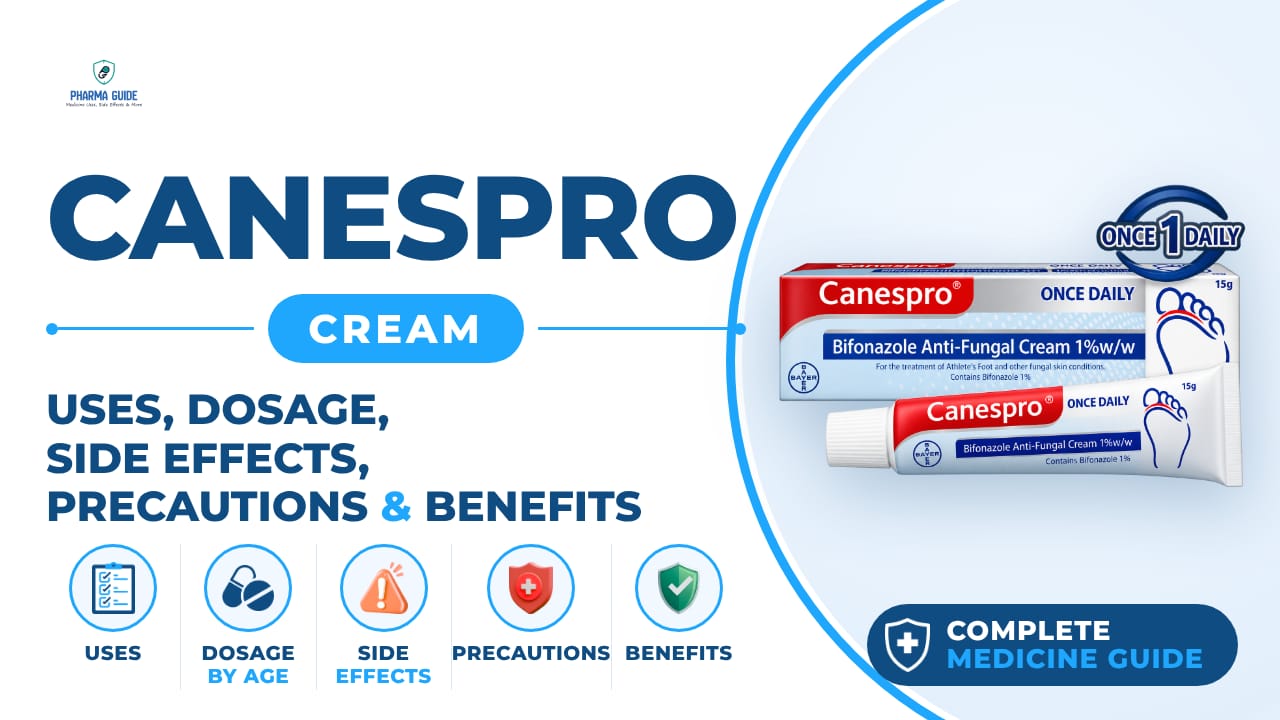
| Generic name | Urea 40% |
|---|---|
| Drug class | Topical keratolytic agent / nail-softening preparation |
| Forms | Ointment (with plasters and a plastic nail scraper) |
Quick overview
Canespro Cream is a topical treatment containing 40% urea, used for mild to moderate fungal nail infections. It softens the infected part of the nail so it can be gently removed, while keeping the healthy nail intact. It is applied once daily, usually in the evening, as part of a treatment set that includes a waterproof plaster and a plastic nail scraper.
What is Canespro Cream
Canespro is a topical treatment for mild to moderate fungal nail infections. It contains a 40% urea ointment that softens the infected part of the nail so it can be gently removed, while keeping the healthy part of the nail intact.
Canespro Cream uses
- Mild to moderate fungal nail infections
Benefits of Canespro Cream
- Helps treat fungal skin infections caused by susceptible fungi.
- Can relieve symptoms such as itching, redness, scaling, and irritation.
- Is effective against infections caused by dermatophytes, yeasts, and some moulds.
- Can be used for conditions such as athlete's foot and other superficial fungal infections, depending on local labeling.
- Works by damaging the fungal cell membrane and stopping the fungus from growing and surviving.
- Many Canespro cream formulations are designed for once-daily application.
How Canespro Cream works
The urea ointment softens the fungal-infected nail, making the infected part easier to remove while leaving the healthy nail intact.
Canespro Cream dosage
Soak the affected hand or foot in warm water for about 10 minutes before applying the treatment. Apply a thin layer of the ointment to the surface of the infected nail once a day, preferably in the evening. Cover the treated nail with the provided waterproof plaster and leave it on for 24 hours. After removing the plaster, soak the nail in warm water again for about 10 minutes. Use the plastic scraper provided to gently remove the softened, infected part of the nail. Clean the scraper with water after each use and dry it thoroughly; keep it until treatment is complete. Repeat this process daily for 2-3 weeks, or until the infected part of the nail has been fully removed, using a fresh plaster each time. Do not use on nails that are less than half infected; check with a pharmacist or doctor if unsure. After the infected part of the nail is removed, continue with a follow-up antifungal nail cream as advised. This product is not suitable for children under 18 years of age.
| Age group | Dose |
|---|---|
| Infants/young children | Use only under medical supervision |
| 2–11 years | Apply a thin layer once daily when recommended by a healthcare professional |
| 12–17 years | Apply a thin layer once daily, preferably in the evening |
| 18–64 years | Apply a thin layer once daily to the affected area, usually in the evening |
| 65+ years | Same general adult application |
Available forms and strengths
- Ointment (40% urea), supplied with plasters and a plastic nail scraper
Side effects of Canespro Cream
Common
- Mild burning or stinging
- Skin redness
- Itching or irritation
- Dryness or peeling
- Mild pain or tenderness at the application site
Serious
- Severe allergic skin reaction
- Hives, swelling, or blistering
- Severe or spreading rash
- Swelling of the face, lips, tongue, or throat
- Difficulty breathing or fainting
Warnings and precautions
- For external use only - do not swallow or apply it to any other part of the body.
- Do not use if you are allergic to urea or any of the other ingredients.
- Not suitable for children under 18 years old.
- Avoid contact with eyes and mucous membranes; if the product gets into the eyes, rinse immediately with water.
- Do not use this treatment on nails that are less than half infected; check with a pharmacist or doctor if unsure.
- Talk to your doctor or pharmacist before using this product if you are pregnant, breastfeeding, or planning to become pregnant.
- No specific kidney-related dose adjustment is listed for normal topical use.
- No specific liver-related dose adjustment is listed for normal topical use.
- No known direct interaction with drinking alcohol.
- Bifonazole cream has no or negligible effect on driving or operating machinery.
Storage
- Store below 25°C (77°F) or as directed on the product label.
- Keep in a cool, dry place away from excessive heat.
- Protect from direct sunlight and extreme temperatures.
- Keep the tube tightly closed after each use.
- Do not freeze and avoid storing in very hot or humid areas.
- Keep out of reach and sight of children.
When to see a doctor
- Stop using the product and get medical help right away if you notice swelling, a rash, or difficulty breathing.
- See your doctor if symptoms persist or get worse after using the treatment set, or if more than one nail is affected.
Alternatives
- Luliconazole Cream
- Econazole Cream
- Terbinafine Cream
- Ketoconazole Cream
- Clotrimazole Cream
Watch the video
FAQs
How often should Canespro Cream be applied?
Apply a thin layer once daily, preferably in the evening, as part of the daily treatment routine.
How long does it take for Canespro Cream to work?
The treatment is typically repeated daily for 2-3 weeks, or until the infected part of the nail has been fully removed.
Can Canespro Cream be used by children?
No, this product is not suitable for children under 18 years of age.
What should I do after soaking my nail before applying Canespro Cream?
Soak the affected hand or foot in warm water for about 10 minutes, then apply a thin layer of ointment and cover with the provided waterproof plaster for 24 hours.
Can Canespro Cream be used on nails that are mostly infected?
No, it should not be used on nails that are less than half infected; check with a pharmacist or doctor if unsure.
General information, not medical advice
Your prescriber and the leaflet in your pack know your situation. This page does not.
- Follow your prescriber and the leaflet
- Don't start, stop, or change a dose on your own
- Doses and warnings differ by country and product
Sources
Video
Related medicines

Injectafer Injection: Uses, Dosage, Side Effects, Precautions and Alternates
Iron products
Injectafer (ferric carboxymaltose) treats iron deficiency anemia and heart failure-related iron deficiency via IV. Learn uses, dosage, side effects, and

Gliclazide Tablet: Uses, Dosage, Side Effects, Precautions and Alternates
Sulfonylurea (hypoglycemic/antidiabetic agent)
Gliclazide Tablet is a sulfonylurea for type 2 diabetes that boosts insulin release. Learn about dosage, side effects, warnings, and precautions.