
Safety
General information, not medical advice
Your prescriber and the leaflet in your pack know your situation. This page does not.
- Follow your prescriber and the leaflet
- Don't start, stop, or change a dose on your own
- Doses and warnings differ by country and product
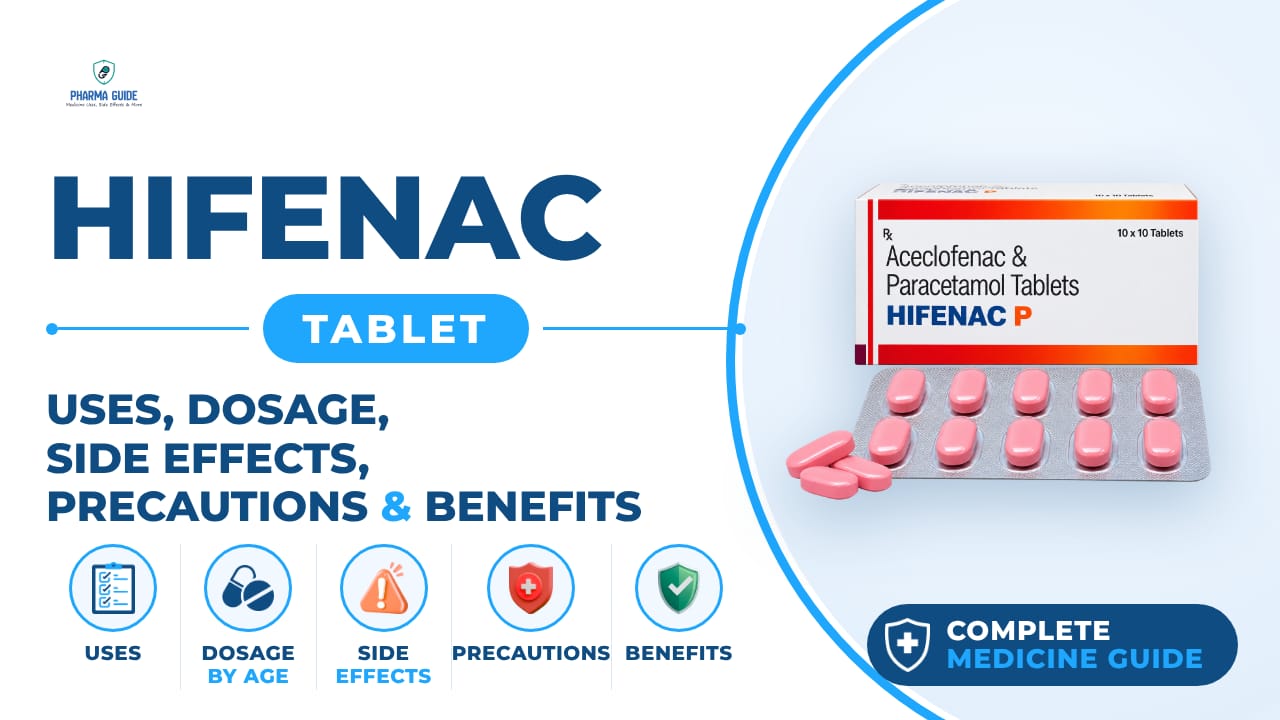
Hifenac Tablet: Uses, Dosage, Side Effects, Precautions and Alternates
| Generic name | Aceclofenac (some forms combine aceclofenac and paracetamol) |
|---|---|
| Drug class | Nonsteroidal anti-inflammatory agents, Analgesics |
| Forms | Tablet, Sustained-release (SR) tablet, Injection |
Quick overview
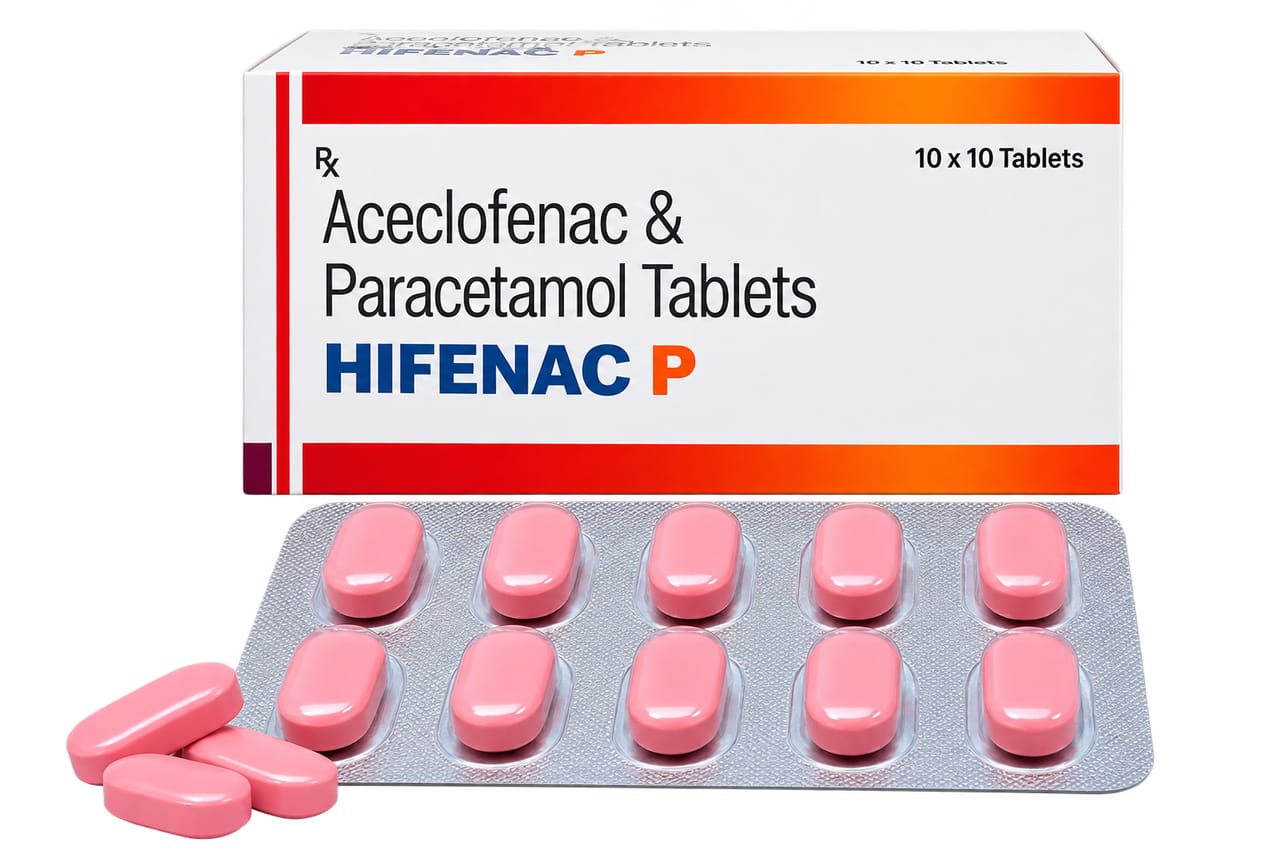
Hifenac Tablet contains aceclofenac, a nonsteroidal anti-inflammatory drug (NSAID) used to relieve pain, stiffness, and swelling linked to bone and joint conditions. The Hifenac-P version combines aceclofenac with paracetamol to relieve pain and lower fever. It is available as a tablet, sustained-release tablet, and injection, and should be used exactly as prescribed by your doctor.
What is Hifenac Tablet
Hifenac is a non-steroidal anti-inflammatory drug (NSAID) used as a painkiller. It relieves pain, stiffness, and swelling from conditions affecting the bones and joints. The Hifenac-P version combines aceclofenac with paracetamol to relieve pain and lower fever.
Hifenac Tablet uses
- Rheumatoid arthritis
- Osteoarthritis
- Ankylosing spondylitis
- Mild to moderate pain
- Joint pain and stiffness
- Muscle pain and soft tissue injuries
- Back pain and neck pain
- Dental pain such as toothache
- Headache
- Menstrual pain
- Sprains and strains
- Fever associated with pain or inflammation (Hifenac-P)
Benefits of Hifenac Tablet
- Relieves pain and reduces inflammation
- Reduces swelling and stiffness
- Helps improve joint and muscle movement
- Lowers fever associated with pain (in combination form)
How Hifenac Tablet works
Hifenac stops the release of a chemical called prostaglandins, which cause pain and swelling in the body. This provides relief from pain and helps you feel better.
Hifenac Tablet dosage
Take Hifenac with food or a meal to avoid stomach irritation. Do not break, chew or crush the tablet. Take it at around the same time every day so it is easier to remember. Take this medicine for the complete duration of treatment and do not stop it without consulting your doctor, as your symptoms may return. Your doctor will advise the lowest possible dose for the shortest possible time. This medicine is not recommended for children below 18 years of age as safety and efficacy data is not established.
| Age group | Dose |
|---|---|
| Under 18 years | Generally not recommended unless specifically prescribed by a doctor |
| 18–64 years | Common dose: 100 mg twice daily, preferably with or after food |
| 65+ years | Usually the lowest effective dose for the shortest possible duration, with medical supervision |
Available forms and strengths
- Tablet
- Sustained-release (SR) tablet
- Injection
Side effects of Hifenac Tablet
Common
- Nausea
- Vomiting
- Stomach pain
- Loss of appetite
- Heartburn
- Diarrhoea
- Dizziness
- Indigestion
- Mild skin reactions
Serious
- Constipation
- Skin rashes
- Increased liver enzyme levels
- Headache
- Drowsiness
- Breathing difficulty
- Black stools
- Visual disturbances
Warnings and precautions
- Hifenac is not recommended during pregnancy, especially in the last 3 months, as it may harm the baby. During the first 6 months of pregnancy, use it only if your doctor recommends it.
- It is not known if Hifenac passes into breast milk, so it is not recommended while breastfeeding. If needed, use it only on your doctor's advice.
- Hifenac is not recommended if you have severe kidney problems, as it may cause further damage. Use with caution and monitoring if you have mild to moderate kidney problems.
- Use Hifenac with caution if you have liver problems, as the medicine is broken down in your liver and may build up and cause further liver damage. Your doctor may check your liver function during treatment.
- Avoid alcohol while taking Hifenac, as it increases the risk of stomach bleeding and may make you dizzy or sleepy.
- Hifenac may cause sleepiness, blurred vision, or dizziness in some people. Avoid driving or operating heavy machines if you feel these effects.
- Avoid Hifenac if you are allergic to it. Serious allergic reactions are rare but need immediate care.
- Do not use Hifenac if you have a history of asthma after taking NSAIDs.
- Do not use Hifenac if you have active or repeated peptic ulcers and bleeding, as it may worsen your condition.
- Avoid long-term high doses if you have existing heart conditions, as it may cause fluid retention and increase the risk of a heart attack.
- Use with caution if you have bleeding or clotting problems, as it may prolong clotting time and increase bleeding risk.
- Avoid long-term use as it may damage the stomach and intestine, causing bleeding, ulcers, or holes in the stomach wall.
- Not recommended for children below 18 years, as safety and efficacy are not established.
When to see a doctor
- Seek immediate medical attention if you notice symptoms such as skin rash, itching or swelling (especially of the face, tongue, or throat), severe dizziness, or breathing difficulty.
- Consult your doctor immediately if you have indigestion, vomit with blood, or coffee-coloured dried blood in your stools.
- Seek emergency medical attention in case of an overdose for further guidance.
- Call your doctor if symptoms like lowered alertness or affected vision persist.
Alternatives
- Diclofenac
- Ibuprofen
- Naproxen
- Meloxicam
- Celecoxib
- Etoricoxib
- Ketoprofen
Watch the video
FAQs
What is Hifenac Tablet used for?
Hifenac is used to relieve pain, stiffness, and swelling from conditions like rheumatoid arthritis, osteoarthritis, ankylosing spondylitis, back and neck pain, muscle pain, dental pain, headache, and menstrual pain. The Hifenac-P version also helps lower fever.
How should I take Hifenac Tablet?
Take Hifenac with food or a meal to avoid stomach irritation, without breaking, chewing, or crushing the tablet. Take it at the same time daily and complete the full course as prescribed by your doctor.
What is the common dose of Hifenac for adults?
For adults aged 18–64 years, the common dose is 100 mg twice daily, preferably with or after food. Older adults are usually given the lowest effective dose for the shortest duration under medical supervision.
What are the side effects of Hifenac Tablet?
Common side effects include nausea, vomiting, stomach pain, loss of appetite, heartburn, diarrhoea, dizziness, and indigestion. Serious effects can include constipation, skin rashes, raised liver enzymes, breathing difficulty, black stools, and visual disturbances.
Is Hifenac safe during pregnancy?
Hifenac is not recommended during pregnancy, especially in the last 3 months, as it may harm the baby. In the first 6 months, it should only be used if your doctor recommends it.
General information, not medical advice
Your prescriber and the leaflet in your pack know your situation. This page does not.
- Follow your prescriber and the leaflet
- Don't start, stop, or change a dose on your own
- Doses and warnings differ by country and product
Sources
- https://www.dawaadost.com/blog/hifenac-p-tablet-uses-benefits-medical-applications-and-pain-relief-guide
- https://www.yashodahospitals.com/medicine-faqs/hifenac/
- https://www.practo.com/medicine-info/hifenac-100-mg-tablet-20595
- Medicines.org.uk. 2021. Aceclofenac 100 mg Film-coated Tablets - Summary of Product Characteristics (SmPC)
- DailyMed - CLANZA CR- aceclofenac tablet, film coated
- Pubchem.ncbi.nlm.nih.gov. 2021. Aceclofenac
Video
Related medicines

Injectafer Injection: Uses, Dosage, Side Effects, Precautions and Alternates
Iron products
Injectafer (ferric carboxymaltose) treats iron deficiency anemia and heart failure-related iron deficiency via IV. Learn uses, dosage, side effects, and

Gliclazide Tablet: Uses, Dosage, Side Effects, Precautions and Alternates
Sulfonylurea (hypoglycemic/antidiabetic agent)
Gliclazide Tablet is a sulfonylurea for type 2 diabetes that boosts insulin release. Learn about dosage, side effects, warnings, and precautions.