
Safety
General information, not medical advice
Your prescriber and the leaflet in your pack know your situation. This page does not.
- Follow your prescriber and the leaflet
- Don't start, stop, or change a dose on your own
- Doses and warnings differ by country and product
Pneumococcal Vaccine Injection: Uses, Dosage, Side Effects, Precautions and Alternates
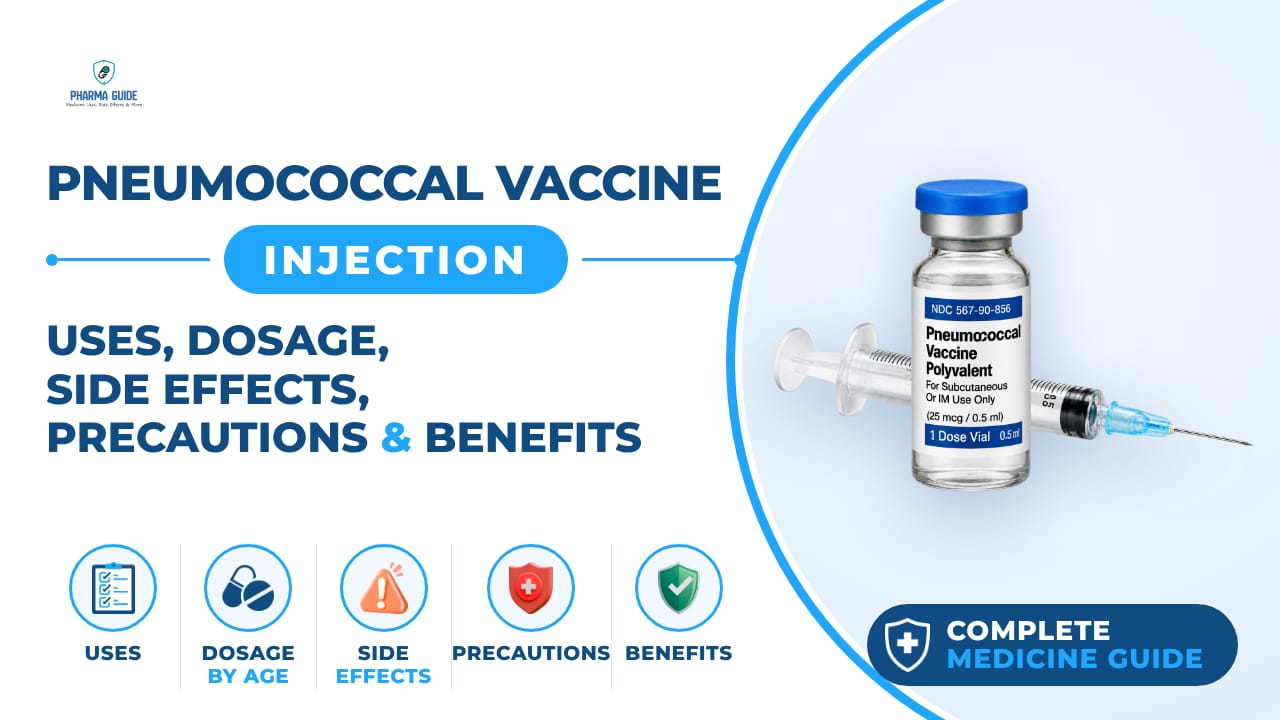
| Generic name | Pneumococcal polysaccharide conjugate vaccine |
|---|---|
| Drug class | Vaccine (pneumococcal conjugate and polysaccharide vaccines) |
| Forms | Suspension for injection (pre-filled syringe) |
Quick overview
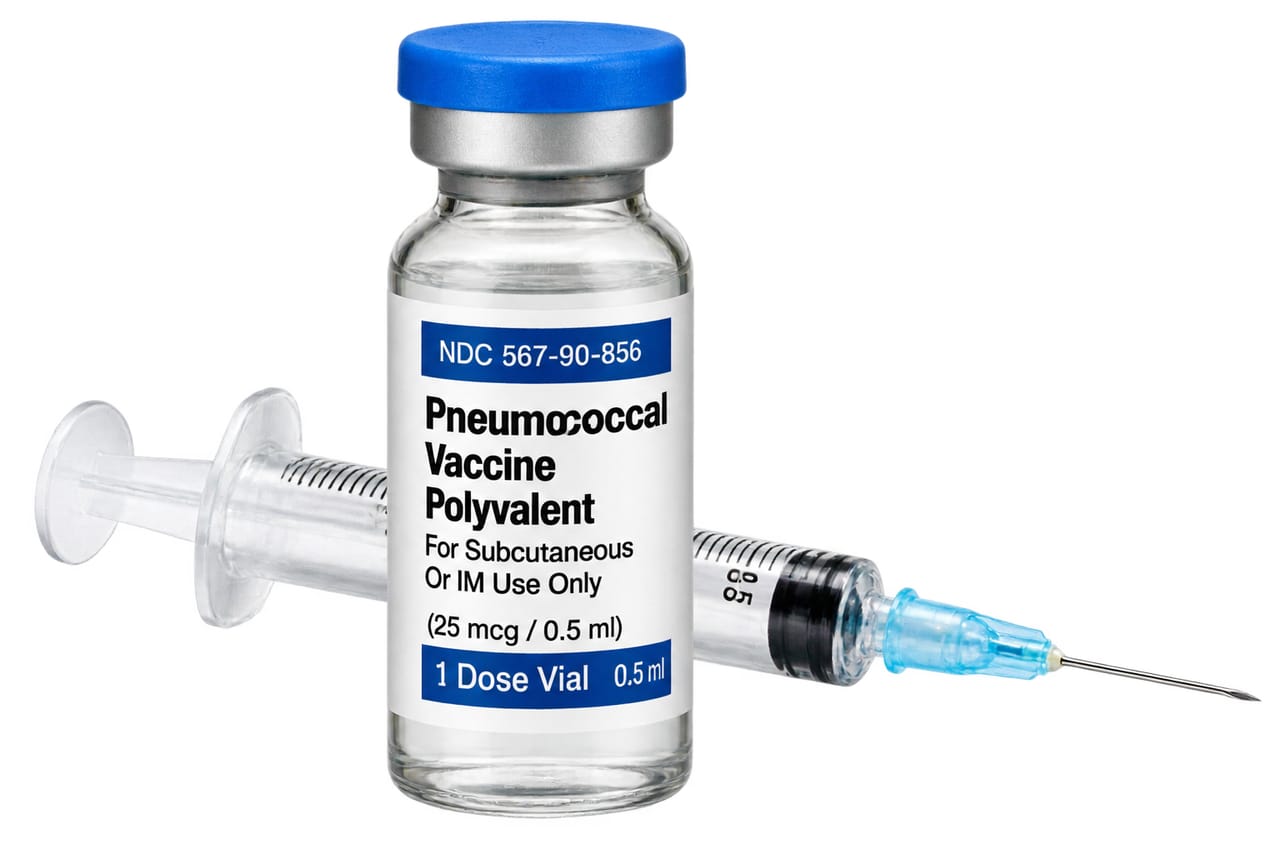
Pneumococcal Vaccine Injection is a pneumococcal polysaccharide conjugate vaccine used to protect against infections caused by Streptococcus pneumoniae bacteria. It includes conjugate vaccines (such as PCV13, PCV15, PCV20, PCV21) and a polysaccharide vaccine (PPSV23/PPV), given to children, adults, and older people. It is given as an injection into the muscle of the arm or leg by a doctor or nurse. It helps protect against serious conditions such as meningitis, sepsis, pneumonia, and ear infections.
What is Pneumococcal Vaccine Injection
Pneumococcal vaccines protect against infections caused by Streptococcus pneumoniae bacteria (pneumococcus). There are pneumococcal conjugate vaccines (PCVs, such as PCV13, PCV15, PCV20, PCV21) and a pneumococcal polysaccharide vaccine (PPSV23/PPV). They are given to children, adults, and older people to prevent serious illnesses caused by this bacteria.
Pneumococcal Vaccine Injection uses
- Helps protect against meningitis (inflammation around the brain)
- Helps protect against sepsis or bacteraemia (bacteria in the blood stream)
- Helps protect against pneumonia (lung infection)
- Helps protect against ear infections (otitis media) in children
- Helps protect against sinus infections
Benefits of Pneumococcal Vaccine Injection
- Reduces the risk of invasive pneumococcal disease, which can be severe and life-threatening
- Has led to large declines in pneumococcal disease in vaccinated and unvaccinated age groups due to herd effect
- Reduces hospitalisations due to pneumonia and middle ear infections
How Pneumococcal Vaccine Injection works
The vaccine works by helping the body make its own antibodies that protect against pneumococcal bacteria. Conjugate vaccines link small pieces of the bacteria to a carrier protein, which creates a stronger, longer-lasting immune response, including in infants.
Pneumococcal Vaccine Injection dosage
The vaccine is given as an injection into the muscle of the arm or leg by a doctor or nurse. Infants typically receive an initial series of injections followed by a booster dose, with each injection in the infant series usually given at least one month apart. Older children and adults usually need only one injection.
People who have previously received a different pneumococcal vaccine should tell their doctor, pharmacist, or nurse before receiving another dose. Vaccination can be given at the same time as other age-appropriate vaccines, using different injection sites, and if more than one vaccine is given in the same limb, the injection sites should be spaced apart. Vaccination may be postponed if a person has a severe infection with a high temperature, but a minor illness like a cold is not usually a reason to delay.
| Age group | Dose |
|---|---|
| Infants (6 Weeks–6 Months) | 0.5 mL injection according to the recommended vaccination schedule |
| Children (7 Months–17 Years) | 0.5 mL injection; number of doses depends on age and vaccination history |
| Adults (18–64 Years) | 0.5 mL injection when recommended based on health condition or vaccination status |
| Older Adults (65+ Years) | 0.5 mL injection according to adult vaccination guidelines |
Available forms and strengths
- Suspension for injection (pre-filled syringe)
Side effects of Pneumococcal Vaccine Injection
Common
- Pain, tenderness, redness, swelling or hardness at the injection site
- Fever or chills
- Decreased appetite
- Irritability or fussiness in young children
- Tiredness or drowsiness
- Headache
- Muscle aches or joint pain
- Restless sleep
- Vomiting or diarrhoea
- Rash
Serious
- Seizures (fits), including those caused by a high temperature
- Hives (urticaria)
- Collapse or shock-like state (hypotonic-hyporesponsive episode)
- Severe allergic reaction, including swelling of the face and/or lips and difficulty breathing
- Severe allergic reaction including shock (cardiovascular collapse) and angioedema
- Enlarged lymph nodes or glands near the injection site
- A rash causing itchy red blotches (erythema multiforme)
Warnings and precautions
- Tell your doctor, pharmacist, or nurse before vaccination if you or your child have had any past problems after a previous dose of this vaccine, such as an allergic reaction or breathing problems.
- Tell your doctor if you or your child have any bleeding problems or bruise easily.
- If you have a weakened immune system, such as from HIV infection, you may not get the full benefit from the vaccine.
- Tell your doctor if you or your child has had seizures, as fever-lowering medicine may need to be given before vaccination. Contact a doctor immediately if your child becomes unresponsive or has seizures after vaccination.
- Talk to your doctor before vaccination if your child was born very prematurely, as longer gaps than normal between breaths may occur for a couple of days after vaccination.
- As with any vaccine, this vaccine will not protect everyone who is vaccinated, and it only protects against ear infections caused by the specific bacteria types covered by the vaccine.
- The only absolute reason not to receive pneumococcal vaccines is a history of a severe allergic reaction (anaphylaxis) after a previous dose of the relevant vaccine or its components.
- If you are pregnant, think you may be pregnant, or are planning a pregnancy, ask your doctor or pharmacist for advice before receiving this vaccine. In most cases, women who are recommended a pneumococcal vaccine should wait until after pregnancy, though vaccination may be considered for those at high risk who were not vaccinated beforehand.
- If you are breast-feeding, ask your doctor or pharmacist for advice before receiving this vaccine.
- People with chronic kidney disease may need an extra dose of the polysaccharide vaccine after five years.
- This vaccine has no or negligible influence on the ability to drive and use machines, though some side effects may temporarily affect this ability.
Storage
- Keep this medicine out of the sight and reach of children
- Do not use after the expiry date stated on the carton and label
- Store in a refrigerator (2C–8C)
- Do not freeze
- Do not throw away any medicines via wastewater or household waste; ask your pharmacist how to dispose of medicines you no longer use
When to see a doctor
- Contact your doctor immediately if your child becomes unresponsive or has seizures after vaccination.
- Talk to your doctor, pharmacist, or nurse if you or your child experience any side effects, including ones not listed in the leaflet.
- Seek medical care for signs of a severe allergic reaction, such as swelling of the face and/or lips or difficulty breathing.
Alternatives
- PCV13 (Prevnar 13)
- PCV15 (Vaxneuvance)
- PPSV23 (Pneumovax 23)
Watch the video
FAQs
What is Pneumococcal Vaccine Injection used for?
It helps protect against meningitis, sepsis or bacteraemia, pneumonia, ear infections in children, and sinus infections caused by Streptococcus pneumoniae bacteria.
How is Pneumococcal Vaccine Injection given?
It is given as an injection into the muscle of the arm or leg by a doctor or nurse. Infants typically receive an initial series followed by a booster, while older children and adults usually need only one injection.
What are the common side effects of Pneumococcal Vaccine Injection?
Common side effects include pain, tenderness, redness, swelling or hardness at the injection site, fever or chills, decreased appetite, irritability, tiredness, headache, muscle or joint aches, restless sleep, vomiting or diarrhoea, and rash.
Can pregnant women receive Pneumococcal Vaccine Injection?
Women should ask their doctor or pharmacist for advice first. In most cases, those recommended a pneumococcal vaccine should wait until after pregnancy, though it may be considered for high-risk women not previously vaccinated.
How should Pneumococcal Vaccine Injection be stored?
It should be kept out of the sight and reach of children, stored in a refrigerator between 2C and 8C, not frozen, and not used after the expiry date on the carton and label.
General information, not medical advice
Your prescriber and the leaflet in your pack know your situation. This page does not.
- Follow your prescriber and the leaflet
- Don't start, stop, or change a dose on your own
- Doses and warnings differ by country and product
Sources
Video
Related medicines

Injectafer Injection: Uses, Dosage, Side Effects, Precautions and Alternates
Iron products
Injectafer (ferric carboxymaltose) treats iron deficiency anemia and heart failure-related iron deficiency via IV. Learn uses, dosage, side effects, and

Gliclazide Tablet: Uses, Dosage, Side Effects, Precautions and Alternates
Sulfonylurea (hypoglycemic/antidiabetic agent)
Gliclazide Tablet is a sulfonylurea for type 2 diabetes that boosts insulin release. Learn about dosage, side effects, warnings, and precautions.