
Safety
General information, not medical advice
Your prescriber and the leaflet in your pack know your situation. This page does not.
- Follow your prescriber and the leaflet
- Don't start, stop, or change a dose on your own
- Doses and warnings differ by country and product
Psyllium Husk Powder: Uses, Dosage, Side Effects, Precautions and Alternates
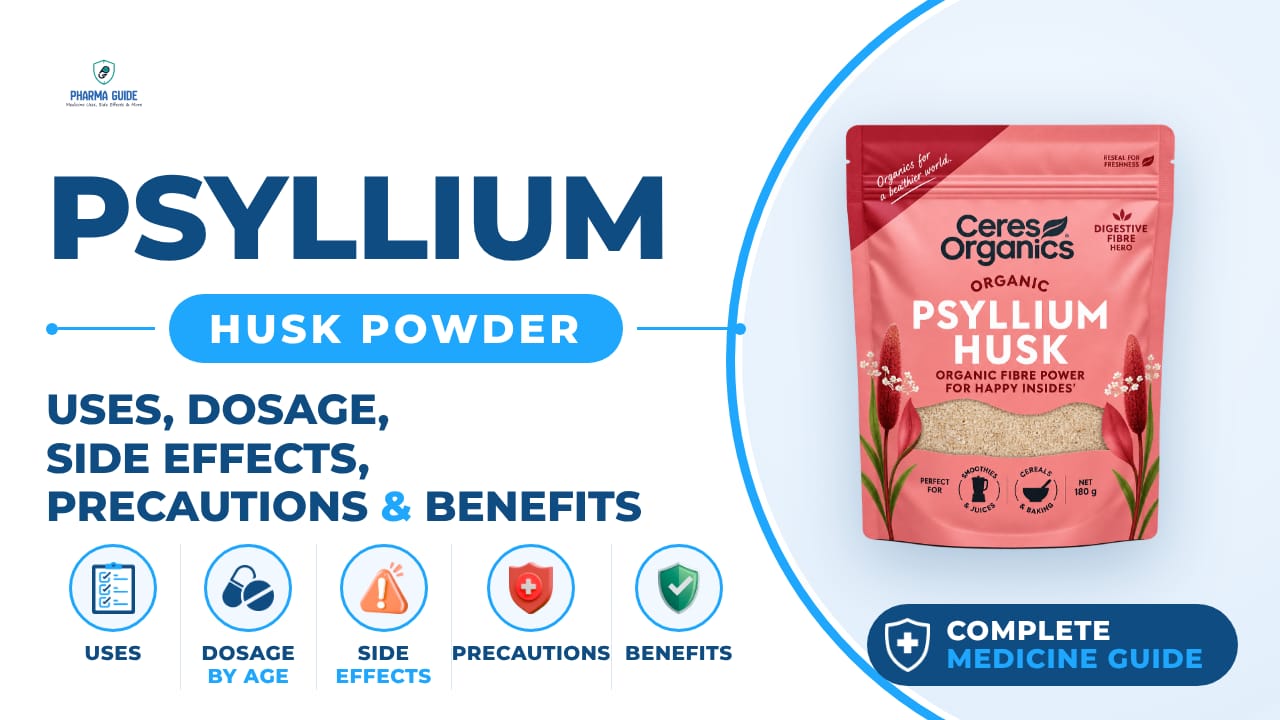
| Generic name | psyllium, psyllium fiber, psyllium husk, psyllium seed |
|---|---|
| Drug class | bulk-forming fiber laxative, bulk-producing laxative |
| Forms | capsule, powder |
Quick overview
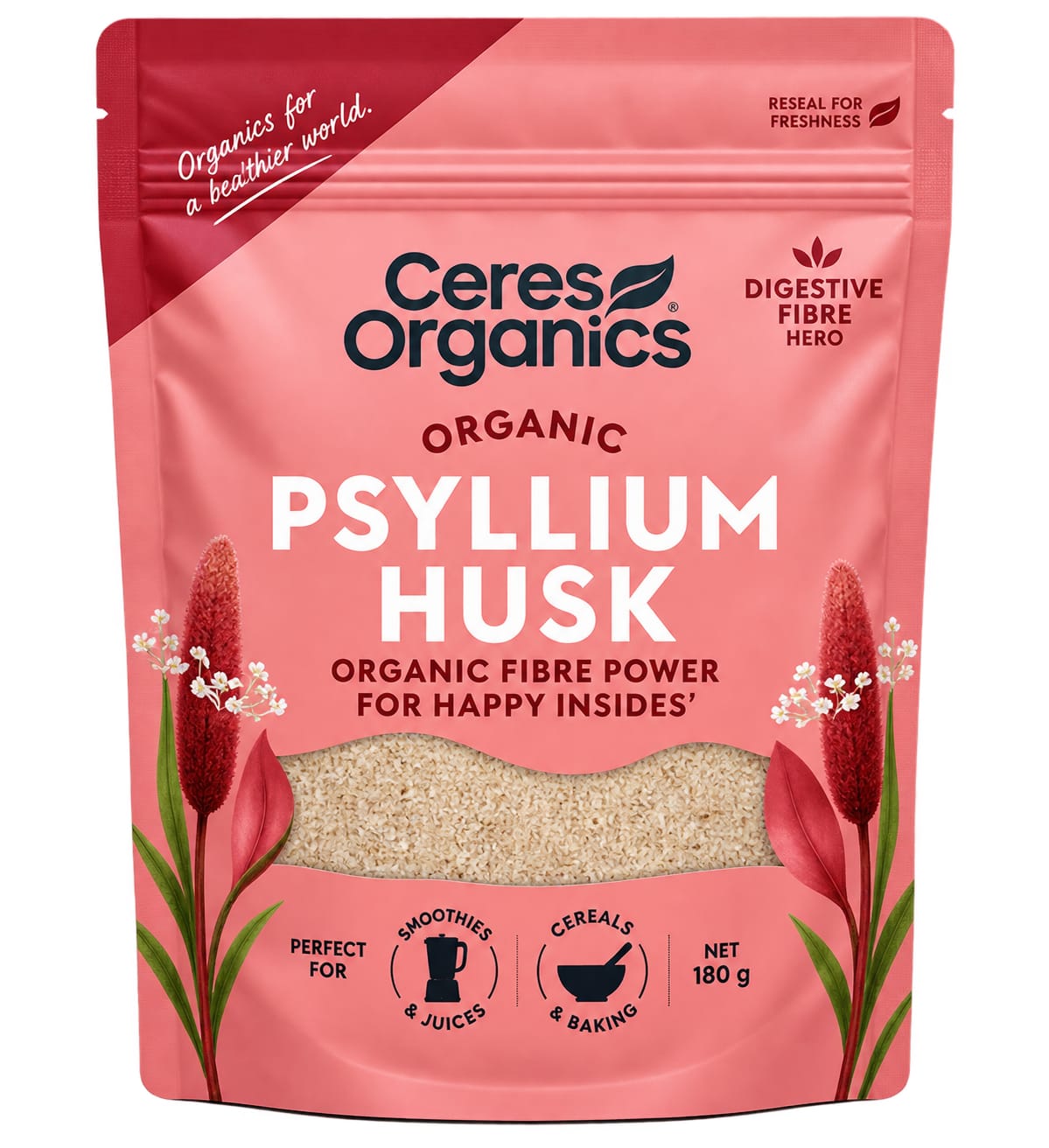
Psyllium Husk Powder is a natural soluble fiber made from the seeds of the Plantago ovata plant, used as a bulk-forming fiber laxative. When mixed with water, it forms a gel-like substance that passes through the gut without being absorbed, helping to regulate bowel movements. It is commonly used for constipation, diarrhea, and irritable bowel syndrome, and may also support cholesterol and blood sugar management as part of a broader approach.
What is Psyllium Husk Powder
Psyllium husk is a natural soluble fiber made from the seeds of the Plantago ovata plant. When mixed with water, it forms a gel-like substance that passes through the gut without being absorbed, helping to regulate bowel movements. It belongs to the bulk-forming fiber laxative, bulk-producing laxative drug class, and is also known by the generic names psyllium, psyllium fiber, psyllium husk, and psyllium seed.
Psyllium Husk Powder uses
- Helps prevent and relieve occasional constipation
- Used as a fiber supplement
- May help with diarrhea by firming loose stools
- May support cholesterol management alongside lifestyle changes and prescribed medicines
- May support blood sugar control as part of a broader dietary approach
- Used for irritable bowel syndrome (IBS)
Benefits of Psyllium Husk Powder
- Relieves constipation by softening stools and reducing straining
- Can help both constipation and diarrhea
- Well tolerated, especially in IBS, when introduced gradually
- May help lower LDL (bad) cholesterol as part of a broader approach
- May help reduce blood sugar spikes after meals as part of a broader dietary approach
- Has prebiotic effects that support healthy gut bacteria
How Psyllium Husk Powder works
Psyllium is a bulking laxative. It soaks up water in the gut to form a gel, making stool bulkier and softer so it passes more easily. This is why it's often described as a bowel regulator rather than just a laxative.
Psyllium Husk Powder dosage
Read and follow the directions on the product label or take psyllium as directed by your health care provider. If you have not taken psyllium before, start at a low dose and slowly increase it to help your body adjust to more fiber. Mix psyllium powder with a full glass of cold water or another fluid, stir quickly, and drink it right away. Take each dose with plenty of water or another liquid to reduce the risk of choking.
If you take other medicines by mouth, separate them from psyllium, generally taking psyllium at least 2 hours before or after other medicines. After taking psyllium, it is normal to have a bowel movement within about 12 to 72 hours. Psyllium is usually meant to be taken only when needed; follow product instructions and do not take double or extra doses if you miss one.
| Age group | Dose |
|---|---|
| Under 6 years | Use only on medical advice |
| 6–11 years | About 2.5–5 g, 1–2 times daily, depending on product |
| 12–17 years | About 5–10 g, 1–2 times daily |
| 18–64 years | About 5–10 g, 1–2 times daily |
Available forms and strengths
- Capsule
- Powder
Side effects of Psyllium Husk Powder
Common
- Feeling bloated or gassy
- Stomach cramps
- Changes in your pooping habits
- Abdominal pain and cramps
- Diarrhea
- Loose stools
- More frequent bowel movements
- Nausea and vomiting
Serious
- Severe allergic reactions, including breathing problems or wheezing, racing heart, fever or general ill feeling, swollen lymph nodes, swelling of the face, lips, mouth, tongue, or throat, trouble swallowing or throat tightness, itching or skin rash, hives, nausea or vomiting, dizziness or fainting, stomach cramps, joint pain
- Choking, if psyllium is taken without enough fluid, which may cause it to swell and block the throat or food pipe
Warnings and precautions
- Do not take psyllium if you have trouble swallowing or narrowing of your esophagus, since the medicine may swell and make swallowing more difficult.
- Do not take psyllium without talking to your health care provider first if you have symptoms of a serious stomach problem, such as stomach pain, nausea, vomiting, blood in your stool, or a sudden change in bowel habits lasting 2 weeks or more.
- People allergic to psyllium or any ingredient in a specific product should not take it.
- If you have phenylketonuria (PKU), check the ingredients on your psyllium product, as some may contain phenylalanine, which can be dangerous for people with PKU.
- Keep psyllium out of the reach of children.
- Psyllium is not recommended for people with certain conditions such as bowel obstruction or colonic atony.
- Tell your health care provider if you are pregnant or plan to become pregnant. They will let you know if you should take psyllium.
- Tell your health care provider if you are breastfeeding or plan to breastfeed. They will let you know if you should take psyllium.
- People with kidney disease should be careful about taking psyllium.
- There are no known interactions between psyllium and alcohol, though alcohol may possibly worsen constipation.
Storage
- Store at room temperature, between 59 F and 86 F (15 C and 30 C)
- Keep the container tightly closed to protect it from moisture
- Store in a cool, dry place
- Do not flush psyllium down the toilet or wash it down the sink, as it may cause a clog; instead, throw it away in the trash
When to see a doctor
- Stop taking psyllium and get help right away if you have symptoms of a serious allergic reaction, such as breathing problems, wheezing, racing heart, fever, swollen lymph nodes, swelling of the face, lips, mouth, tongue or throat, trouble swallowing, throat tightness, itching, rash, hives, nausea, vomiting, dizziness, lightheadedness, fainting, stomach cramps, or joint pain.
- Get medical help right away if you have chest pain, vomiting, or trouble swallowing or breathing after taking psyllium.
- Stop taking psyllium and contact your health care provider if you have rectal bleeding or blood in your stool, constipation lasting 7 days or longer, or if you do not have a bowel movement after taking the medicine.
- If you or someone else has used too much psyllium, get medical help right away.
- Seek medical advice if you have persistent change in bowel habit, rectal bleeding, iron deficiency anaemia, unintentional weight loss, or ongoing symptoms despite treatment.
Alternatives
- Methylcellulose
- Calcium Polycarbophil
- Wheat Dextrin
- Lactulose
- Polyethylene Glycol (Macrogol)
Watch the video
FAQs
What is Psyllium Husk Powder used for?
It is used to prevent and relieve occasional constipation, as a fiber supplement, to firm loose stools in diarrhea, for irritable bowel syndrome, and may support cholesterol and blood sugar management alongside lifestyle changes.
How does Psyllium Husk Powder work?
It is a bulking laxative that soaks up water in the gut to form a gel, making stool bulkier and softer so it passes more easily, acting more like a bowel regulator than just a laxative.
How should I take Psyllium Husk Powder?
Mix the powder with a full glass of cold water or another fluid, stir quickly, and drink it right away, taking it with plenty of liquid to reduce choking risk. Start at a low dose and increase slowly, and separate it from other oral medicines by at least 2 hours.
What are the common side effects of Psyllium Husk Powder?
Common side effects include bloating, gas, stomach cramps, changes in bowel habits, diarrhea, loose stools, more frequent bowel movements, and nausea or vomiting.
Who should not take Psyllium Husk Powder?
People with trouble swallowing or esophageal narrowing, those allergic to psyllium, and people with bowel obstruction or colonic atony should not take it. Those with PKU should check for phenylalanine content, and people with kidney disease should use it carefully.
General information, not medical advice
Your prescriber and the leaflet in your pack know your situation. This page does not.
- Follow your prescriber and the leaflet
- Don't start, stop, or change a dose on your own
- Doses and warnings differ by country and product
Sources
Video
Related medicines

Injectafer Injection: Uses, Dosage, Side Effects, Precautions and Alternates
Iron products
Injectafer (ferric carboxymaltose) treats iron deficiency anemia and heart failure-related iron deficiency via IV. Learn uses, dosage, side effects, and

Gliclazide Tablet: Uses, Dosage, Side Effects, Precautions and Alternates
Sulfonylurea (hypoglycemic/antidiabetic agent)
Gliclazide Tablet is a sulfonylurea for type 2 diabetes that boosts insulin release. Learn about dosage, side effects, warnings, and precautions.