Ketorolac Injection: Uses, Dosage, Side Effects, Precautions and Alternates
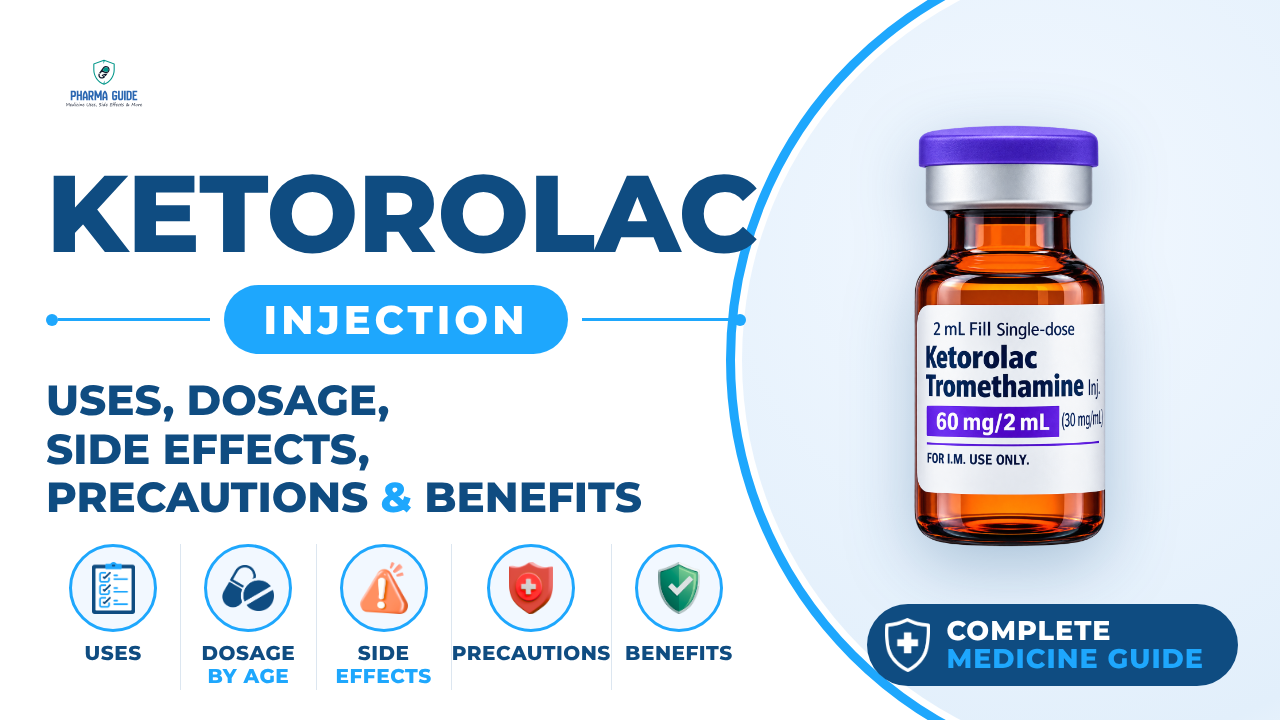
| Generic name | Ketorolac tromethamine |
|---|---|
| Drug class | Non-steroidal anti-inflammatory drug (NSAID) |
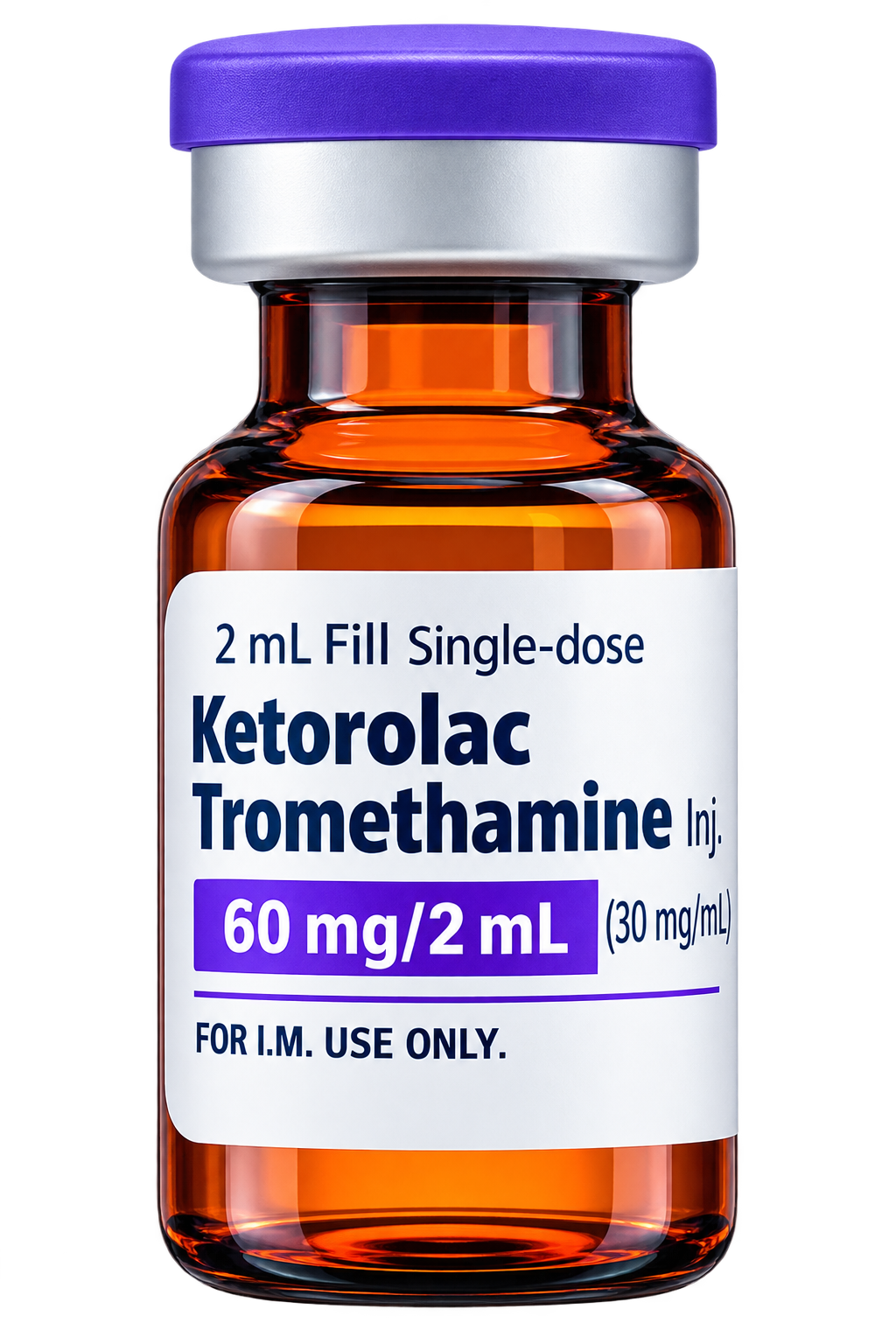
| Forms | Solution for injection (30 mg/mL) for intramuscular or intravenous use |
Quick overview
Ketorolac injection is a non-steroidal anti-inflammatory drug (NSAID) given to relieve moderately severe pain, usually after surgery. It is given in a hospital or medical office and is meant for short-term use only. It relieves pain and reduces swelling but does not cure the underlying illness or stop it from getting worse.
What is Ketorolac Injection
Ketorolac injection is a non-steroidal anti-inflammatory drug (NSAID) given to relieve moderately severe pain, usually after surgery. It is given in a hospital or medical office and is meant for short-term use only. It relieves pain and reduces swelling but does not cure the underlying illness or stop it from getting worse.
Ketorolac Injection uses
- Short-term relief of moderately severe pain in people who are at least 17 years of age
- Short-term management of moderate to severe acute pain, including pain following major abdominal, orthopedic and gynecological operations
Benefits of Ketorolac Injection
- Relieves moderate to severe pain, usually after surgery
- Reduces swelling and inflammation while you continue to take it
- Can reduce the need for opioid pain medicine after surgery
How Ketorolac Injection works
Ketorolac is an NSAID. It works by reducing the chemicals your body makes that cause pain, fever and inflammation. This effect is believed to be related to blocking prostaglandin production.
Ketorolac Injection dosage
You will receive your first doses by injection into a vein or into a muscle in a hospital or medical office. After that, your doctor may continue your treatment with oral ketorolac. It is usually given every 6 hours on a schedule or as needed for pain by a healthcare provider.
Use should be limited to the shortest possible duration; it should not be used longer than the recommended treatment period. You should stop using ketorolac and talk to your doctor if you still have pain after the treatment period ends.
Do not use ketorolac for mild pain or for long-term (chronic) pain. Do not take aspirin or other NSAIDs such as ibuprofen and naproxen while using ketorolac. Do not drink alcohol while using this medicine because it increases the risk of stomach problems. Unless your doctor tells you otherwise, continue your normal diet.
| Age group | Dose |
|---|---|
| Under 17 years | Not routinely recommended; pediatric use requires specialist guidance |
| 17–64 years, ≥50 kg | 30 mg every 6 hours; max 120 mg/day |
| 17–64 years, <50 kg | 15 mg every 6 hours; max 60 mg/day |
| 65+ years | 15 mg every 6 hours; max 60 mg/day |
| Renal impairment | 15 mg every 6 hours; max 60 mg/day, with medical supervision |
Available forms and strengths
- Solution for injection (30 mg/mL) for intramuscular or intravenous use
Side effects of Ketorolac Injection
Common
- Headache
- Dizziness
- Drowsiness
- Diarrhea
- Constipation
- Gas
- Sores in the mouth
- Sweating
- Ringing in the ears
- Pain at injection site
- Small red or purple dots on the skin
- Nausea
- Vomiting
Serious
- Yellowing of the skin or eyes
- Excessive tiredness
- Unusual bleeding or bruising
- Lack of energy
- Nausea
- Loss of appetite
- Pain in the upper right part of the stomach
- Flu-like symptoms
- Pale skin
- Fast heartbeat
- Chest pain, shortness of breath, weakness on one side of the body, or slurred speech (heart attack or stroke)
- Stomach pain, heartburn, bloody or coffee-ground vomit, blood in stool, or black tarry stools (stomach or intestinal bleeding)
- Unexplained weight gain, swelling of the hands, arms, feet, ankles or lower legs, confusion, or seizures (kidney failure)
- Rash, fever, peeling or blistering skin, hives, itching, swelling of the eyes, face, throat, tongue or lips, difficulty breathing or swallowing, or hoarseness (allergic reaction)
- Stiff neck, severe headache, nausea, vomiting or clouding of consciousness (aseptic meningitis)
Warnings and precautions
- NSAIDs like ketorolac may increase the risk of a heart attack or stroke, which can happen without warning and may cause death.
- This risk may be higher with longer use. Get emergency help for chest pain, shortness of breath, weakness on one side of the body, or slurred speech.
- NSAIDs such as ketorolac may cause ulcers, bleeding, or holes in the stomach or intestine. These may happen at any time without warning and can cause death.
- The risk is higher with long-term use, in older people, in poor health, and in people who smoke or drink alcohol.
- Receiving ketorolac injection increases the risk of severe or uncontrolled bleeding. Tell your doctor if you have or have ever had a bleeding or clotting problem.
- You should not use ketorolac injection right before or right after coronary artery bypass graft (CABG) heart surgery.
- Rare but serious, sometimes fatal, skin reactions such as Stevens-Johnson syndrome and toxic epidermal necrolysis have been reported.
- Stop the medicine and contact your doctor right away at the first sign of a skin rash or other sign of an allergic reaction.
- Tell your doctor if you are 65 years or older or weigh less than 110 lb (50 kg), as you will need a lower dose.
- Ketorolac is not as safe as some other medicines for older adults.
- Do not use ketorolac at 28 weeks of pregnancy or later.
- It is not recommended around or after 20 weeks of pregnancy unless your doctor tells you to, because it may harm the unborn baby and cause problems with delivery.
- Tell your doctor if you are pregnant, think you may be pregnant, or plan to become pregnant. You should not receive ketorolac during labor or delivery.
- Do not breast-feed while you are using ketorolac injection because of the potential for serious harm to a nursing baby.
- Ketorolac may cause kidney failure. It should not be used in people with moderate to severe kidney impairment.
- Tell your doctor if you have kidney disease, urine problems, or think you may be dehydrated.
- People with lesser kidney problems need a reduced dose and close monitoring.
- Ketorolac should not be used in people with severe liver impairment or active liver disease.
- Tell your doctor if you have or have ever had liver disease. Severe liver reactions, including jaundice and liver failure, have rarely been reported with NSAIDs.
- Do not drink alcohol while using this medicine because it makes stomach problems, including ulcers and bleeding, more likely.
- Ketorolac may cause drowsiness, dizziness, vertigo, blurred vision or other effects.
- If you feel drowsy, dizzy or light-headed, do not drive or operate machinery, and be careful with activities that require alertness.
Storage
- Store at room temperature (between 15°C and 30°C).
- Protect from light.
- Discard 28 days after initial use.
- Do not keep outdated or unused medicine; return it to your pharmacist.
- Keep out of reach and sight of children.
When to see a doctor
- Get emergency medical help right away if you have chest pain, shortness of breath, weakness in one part or side of the body, or slurred speech.
- Stop using ketorolac and call your doctor if you have stomach pain, heartburn, bloody or coffee-ground vomit, blood in your stool, or black tarry stools.
- Stop using ketorolac and call your doctor if you have unexplained weight gain; swelling of the hands, arms, feet, ankles or lower legs; confusion; or seizures.
- Stop using ketorolac and call your doctor right away if you have a rash; fever; peeling or blistering skin; hives; itching; swelling of the eyes, face, throat, tongue or lips; difficulty breathing or swallowing; or hoarseness.
- In case of an overdose, call your local poison control center. If the person has collapsed, had a seizure, has trouble breathing, or cannot be awakened, call emergency services right away.
Alternatives
- Diclofenac injection
- Ketoprofen injection
- Paracetamol (acetaminophen) IV
- Tramadol injection
- Morphine injection
- Fentanyl injection
FAQs
What is Ketorolac Injection used for?
It is used for short-term relief of moderately severe pain in people at least 17 years old, including pain following major abdominal, orthopedic and gynecological operations.
How is Ketorolac Injection given?
It is given by injection into a vein or muscle in a hospital or medical office, usually every 6 hours on a schedule or as needed, and treatment may later continue with oral ketorolac. It should be used for the shortest possible duration.
What is the dosage of Ketorolac Injection?
Adults 17–64 years weighing 50 kg or more typically receive 30 mg every 6 hours (max 120 mg/day), while those under 50 kg, people 65 and older, and those with renal impairment typically receive 15 mg every 6 hours (max 60 mg/day).
What are the serious side effects of Ketorolac Injection?
Serious side effects include stomach or intestinal bleeding, kidney failure, allergic reactions, aseptic meningitis, liver problems, and increased risk of heart attack or stroke.
Can Ketorolac Injection be used during pregnancy?
No, it should not be used at 28 weeks of pregnancy or later, is not recommended around or after 20 weeks unless directed by a doctor, and should not be given during labor or delivery.
Sources
- MedlinePlus (https://medlineplus.gov/druginfo/meds/a614011.html)
- SteriMax Inc. Ketorolac Tromethamine Injection USP Product Monograph (https://pdf.hres.ca/dpd_pm/00037942.PDF)
- Sandoz Canada Inc. Ketorolac Tromethamine Injection USP Product Monograph (https://pdf.hres.ca/dpd_pm/00073291.PDF)
Video
Related medicines
Non-Steroidal Anti-Inflammatory Drug (NSAID)
Ponstan Capsule: Uses, Dosage, Side Effects, Precautions and Alternates
Ponstan Capsule (mefenamic acid) relieves period pain, heavy periods, muscle and joint injuries, and dental pain. Learn dosage, side effects, and precautions.
Non-steroidal anti-inflammatory drug (NSAID)
Ibuprofen Gel: Uses, Dosage, Side Effects, Precautions and Alternates
Ibuprofen Gel is a topical NSAID for muscle and joint pain, strains, sprains and backache. Learn uses, dosage, side effects and precautions.
Non-Steroidal Anti-Inflammatory Drug (NSAID)
Naprosyn Tablet: Uses, Dosage, Side Effects, Precautions and Alternates
Naprosyn Tablet (naproxen) relieves pain and inflammation in arthritis, period pain and muscle conditions. Learn dosage, side effects, and precautions.
Non-Steroidal Anti-Inflammatory Drug (NSAID)
Ketorolac Tablet: Uses, Dosage, Side Effects, Precautions and Alternates
Ketorolac Tablet is an NSAID for short-term relief of moderate to severe acute pain. Learn about its uses, dosage, side effects, and warnings.